Home Blog Page 280

Iran’s Government and Trafficking of Women

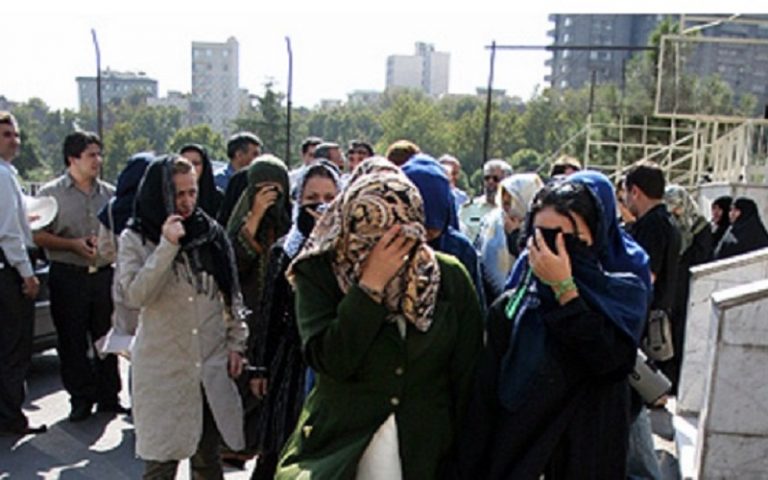
The human trafficking of Iranian women and girls has become one of the country’s main social crises. One of the destinations of these women and girls is Turkey. Recently the country’s Head of the State Penitentiary Organization spoke about the different kinds of products and commodities that have been smuggled inside and outside the country.

The shocking part of his speeches was the retrogradation of these events to the traffic of women and girls to the neighboring countries. According to the country’s news agencies, Alireza Jamshidi’s statement in this regard, although not a new word, but in terms of attention to this great problem and more importantly, it was for the first time a document and proof of what the ruling regime has been rejected constantly in recent years and denied the involvement of the rule in this disaster.

In this regard, the state-run news agency website Yekta Press pointed in an article published on June 29 to this disaster, although parts of this report are very shameful, to show the depth of this disaster we have translated it.

“The story of trafficking of women and girls in Iran is one of the biggest personal and social crises of us Iranians, especially in recent years.

“On the other hand, when it comes to trafficking girls to other countries, the regret and conscience of every Iranian must be hurt. But on the other hand, this wounded Iranian conscience and zeal has not done anything and cannot do anything while acting in social and political affairs.

“Meanwhile, Iranian girls, young and vulnerable women are trafficked to other countries. Their photos and videos are published on social networks and documentaries, and finally, because some Iranians are undoubtedly involved in this program, the mirage of earning high and instant income, as well as creating suitable living conditions for trafficked people in those countries, in a short period of time, not only it does not create any contradictions or even problems in the way of this sinister smuggling, but we also see the diversity and expansion of this process every day.”

This outlet revealed a glimpse of the regime’s ideology against the women and wrote: “Another problematic point here is that the trafficking of women and girls is classified in the criteria of measurement and statistics, along with the statistics and the problem of smuggling of goods and commodities. While this may have legal and functionalist justification, human dignity is degraded to the value and price of commodity.”

About the government’s will in dealing with this disaster, this agency wrote: “No action or activity is taken and will not be taken seriously in dealing with or modifying and controlling this trade. Therefore, it is natural to see the spread of this smuggling and illegal trade every day.

“Unemployment and lack of sufficient income for people, the spread of addiction in the country and most importantly the unfortunate statistics of divorce, are one of the most important factors in the trafficking of girls and the export of women to other countries.

“It is natural that by not reducing the number of problems caused corruption, we will not be able to see a decrease in this horrible number of young girls and women who are sold organized and group prostitution in neighboring countries.”

The report about the gained money by the regime’s elements and people close to them wrote: “The other biggest problem is that although this money is illegally acquired as the result of the prostitution of these women, it is used as the currency imported in the country in the housing, beauty and even luxury shopping sectors. Understanding such issues, as well as using coherent and enacted laws to distinguish between currencies imported into the country through legitimate means, and these in a subject requires an efficient and effective economy, which our current economy only mimics its name.”

The article added, “the situation of trafficking in women and girls is much more critical than what is being said” and added:

“The situation of girl trafficking to the Persian Gulf countries has created a very toxic competitive arena. But in Turkey, especially in the region of Analia and Antalya, the situation of trafficked Iranians is much worse. Most of them are engaged in organized activities without a license and under the supervision of health and medical care.

“Although this situation has undoubtedly created full-fledged sexual slavery for Iranian girls and women, the income of this work and even the amount of money in this sinister trade has led many of them to such unhealthy sexual situations.

“In Georgia, too, due to the boom in the country’s cities in recent years, and in order to attract tourists and set up gambling and prostitution centers, there has been a shameful competition between female traffickers and the heads of the country’s internal gangs.

“One of the therapists in Tehran, who did not want to be named in the report, said: ‘He is currently facing prostitutes seeking psychological treatment when they return to the country. High-risk sexual situations and the frequent repetition of this process make them patients who are in a very uncomfortable and dangerous situation.’ According to this psychotherapist, many of them have even lost control of their normal and social behaviors and can now act as a sex bomb in Tehran.

Finally expressing the result of this crisis, it wrote: “Hence, the biggest moral crisis in the country has not only been formed but is also progressing and increasing.” (Yekta Press, 29 June 2021)

Interestingly, right one day after the publication of this report, the state-run website Salam-e-no on June 30 in a short report about the trial of a human trafficker named Alex wrote: “This criminal group, led by a person nicknamed ‘Alex’, trafficked and sold Iranian girls abroad for sexual exploitation for 3 years due to their extensive connections in different countries.

“But in order to secure his elements in Iran, Alex found some influential supporters among the authorities. One of the supporters, nicknamed ‘Doki’, was an influential government official who on several occasions released Alex gang girls from police custody.” (Salameno, June 30, 2021)

The U.S. Department of State in its report of human trafficking, ‘2021 Trafficking in Persons Report’ included the Iranian government under the section of government’s involved in trafficking and wrote:

“The 2020 Trafficking in Persons Report marked the first time the U.S. Department of State applied this new provision, finding 12 governments had a “policy or pattern” of trafficking, including:  Afghanistan, Belarus, Burma, China, Cuba, Eritrea, Iran, North Korea, Russia, South Sudan, Syria, and Turkmenistan.

“The 2021 Trafficking in Persons Report includes the following 11 governments with a documented “policy or pattern” of human trafficking, trafficking in government-funded programs, forced labor in government-affiliated medical services or other sectors, sexual slavery in government camps, or the employment or recruitment of child soldiers:

  • Afghanistan
  • Burma
  • China
  • Cuba
  • Eritrea
  • Korea, North
  • Iran
  • Russia
  • South Sudan
  • Syria
  • Turkmenistan”

Iran’s Government Gambles Over People’s Lives

The propaganda machine of the Iranian government is advertising constantly its homemade vaccine and claims that these vaccines are even more effective than their competitors in other countries.

And in this show, the supreme leader Ali Khamenei took the first role and used one of these vaccines in an appearance on state TV.

But the amazing part of this story is that the government-controlled institutions who claimed to have produced the vaccine did not dare and accept to give their product for approval to international institutions and get verification.

Observers believe that Khamenei’s focus on producing the so-called domestic coronavirus vaccine is first to cover up the election scandal and second to plunder the pockets of the people while presenting the vaccine at higher prices than foreign vaccines.

Their exaggeration reached such a level that the even regime’s IRGC ridiculous claimed that “it is time for us to give the United States the coronavirus vaccine, and if Americans are short of vaccines, we’re ready to help.” (State-run daily Arman, June 28, 2021)

On this exaggeration, Minoo Mohraz, head of the Iranian Centre for HIV/AIDS, said: “The United States itself has enough vaccines and has even given 500 million doses of the vaccine to Covax to help other countries.” (State-run website Emtedad, June 29, 2021)

The fact is that the hype and propaganda about making vaccines are so ridiculous that even the state-run media has challenged it.

The state-run newspaper Arman questioned the production of vaccines and wrote in this regard:

“Technology in the form of social, cultural, economic and even political network data has exposed the real size and coordinates of countries to the public, and in the current situation, societies correctly recognize their size in the international system and are not influenced by propaganda.

“Because they believe in what they perceive with their skin and bones like a real meter and scale! Today’s Iranian society is no exception to this global rule. Accordingly, decision-makers and have a duty to speak and act in accordance with the realities of society.

“Fortunately, these days, advertising works in the field of discovering and producing all kinds of Iranian vaccines; But when the nation sees that the previous promises of some officials for public vaccination have not been fulfilled, they are worried about the promises of these days of the officials as well as the propagandas for the production of various Iranian vaccines!” (State-run daily Arman, June 29, 2021)

The state-run Jahan-e-Sanat newspaper also mocked these claims that several vaccines had been made and wrote:

“Iran has unveiled seven vaccines so far: Cuvbarkat, Pasteur, Razi, Fakhra, Sinagen, Iranian Sputnik, and now Nora. But vaccination process almost zero!”

“As the officials of the Ministry of Health claimed, Iran will soon become one of the poles of the coronavirus vaccine in the world. Three days ago, it was announced that approximately 5.5 percent of the country’s population had been vaccinated, while the vaccination process in neighboring countries, where no one had claimed or attempted to produce the vaccine, had reached the vaccination of the children.” (Jahan-e-Sanat, June 30, 2021)

Earlier, health ministry officials announced that a homemade vaccine would be launched in mid-spring and people would be vaccinated, but public vaccination in the spring failed.

And the small number of people who are being vaccinated is irregular and chaotic, Resalat newspaper wrote in this regard:

“Officials in Iran still do not have a specific plan for vaccination, and there is severe congestion and disorder at many vaccination sites. (State-run daily Resalat, June 30, 2021)

And state-run daily Mardom Salari on July 1, 2021, wrote:

“Iran is the only country that has not had a specific program to produce or import vaccines, contrary to promises, from the beginning of the coronavirus epidemic until today.

“During this period, it has been repeatedly mentioned about the manufacture, self-sufficiency, and export of coronavirus vaccine, while the rate of vaccinated in Iran is less than 5% and the elderly also get infected with the coronavirus in the vaccine injection queues.

“To date, the scientific report of the results of even one of the vaccines made in the country has not been published and has not received international approval.”

Comparing Iran with other countries, this outlet admitted that the haste for the announcement of the production of home-made vaccine is because of millions of dollars worth of profit and wrote:

“What is the reason for all this enthusiasm for making vaccines in the country, which has led companies belonging to various organizations and institutions to make vaccines in any way possible, while in none of the developed countries in the world that have produced vaccines has seen such a multiplicity in their production?

“Why do Germany, Japan, South Korea, Sweden, Switzerland, Italy, France, Turkey, and other countries that are ahead of us in terms of pharmaceutical and medical products do not claim to be trying to build and successfully produce seven vaccines for the Covid 19 virus? Nowadays, do we claim?

“One of the issues that are being raised as a reason for Iranian companies to be eager to make vaccines is government financial support.”

About the government’s negligence, this daily added: “As Iranian seniors line up to receive the coronavirus vaccine and are infected in such queues with the coronavirus, Europeans are flocking to stadiums today to watch the EU2020 matches.” (State-run daily Mardom Salari, July 1, 2021)

Iran’s Economy Not Likely To Improve

Reports from almost all of Iran’s economic centers and the government’s economists indicate a dark situation for the regime’s supreme leader Ali Khamenei and his new president-elect Ebrahim Raisi.

Iran’s statistic center in its latest report announced the annual inflation rate for Iranian households in May of 2021 at 43 percent.

Even the IMF did not predict that Iran’s inflation will surpass 40 percent. But the inflation in Iran has reached its highest rate in the past 26 years.

According to the country’s statistic center, the inflation rate of food items was much higher than other goods and services and has reached 52 percent.

The question is, will this situation change with the presence of Raisi who in the last 42 years was one of the government’s officials and one of the main causes of this situation.

At least one state-run outlet has answered this question: “Like all the years we have had elections in the country. Statelessness and indecision are expected to continue this year. Therefore, it is unlikely that we will have less inflation than last year.” (state-run website Tejarat-e-Farda, June 22, 2021)

The reality is that the country’s economy has become a sunless sky for the government, “Unfavorable economic governance, which has manifested itself mainly since the 70s, has created and accumulated challenges in the Iranian economy, and governments have not sought basic treatment of challenges and super-challenges until now in 2021.” (State-run daily Iran, June 22, 2021)

Even the government’s economic slogans have lost their value, and as the officials said they are not effective anymore:

“The quality of policy-making in the Iranian economy has fallen to its lowest level in the last half-century, i.e., since the late 1980s, and the cross-cutting efforts of governments to improve the quality of policy-making have been unsustainable and failed for various reasons.

“The main reason for this instability and failure is the rooting of a ‘rent-protecting’ layer in the fabric of the country’s bureaucracy, which has a rent-seeking instruction on the table for all good slogans. Governments come and go, but this middle layer is always there, transforming any reform in a way that is compatible with the rent-consuming structure existing in the economy.” (Donya-e-Eghtesad, June 22, 2021)

Happy officials, miserable people

Calling the people miserable in the presidential debates was so insulting that even some of the regime’s elements could not endure such an insult. One of them in an article written in the state-run daily SMT News on June 22, 2021, said:

“The debate of the presidential candidates was an opportunity to see the view of some of the country’s top officials towards me and those around me, when the country’s top executives, who once came from the lowest strata of society and were supposed to remain our defenders forever, stared into the camera, and in the verbal war with its rival, they called us people miserable, and when they said that their hearts burn because our misery and they will try to bring a piece of bread to our tables and give us subsidies, with all my skin, flesh, bones, soul and spirit, I felt this miserable.

“If we were not miserable, an official who becomes an official with the support of the people and during these years has done whatever he wants with us and our city and country, he could not simply play us with the morally unfortunate word misery.

“If we were not miserable, we would not have spent hours in front of the national media watching the bleak image of corruption, rent-seeking, and shortcoming painted by unique individuals, which from the 85 million people only they were approved by the Guardian Council.

“If we were not miserable, we would at least ask you, nobles, who have been ministers, lawyers, mayors, judges, governors, doctors, and engineers all these years, and you are one of the highest officials in our country, how did you have all this information about rent-seeking, corruption, lies, and hypocrisy yet kept silent?”

13th Day of Oil Workers Strike in Iran

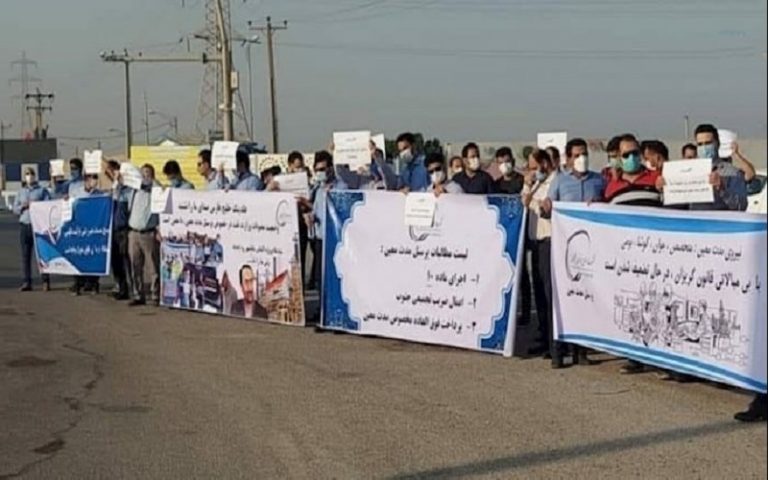
Wednesday was the 13th consecutive day of strikes by oil-sector workers in Iran, as they demand higher wages and better working conditions because of the financial pressure they are faced with as a result of the officials’ dire policies and corruption.

The economy in Iran is in dire straights with inflation rising at a horrendous rate, which has caused the price of all goods to rise considerably, while workers have not seen an increase in their wages to match this. This means that the vast majority of Iranians are living in poverty, unable to even afford the necessities like food and shelter.

The protesters, who come from a massive 70 companies across 12 cities, vowed to continue and expand their strikes if the bosses and the authorities fail to meet their demands. Currently, protests are happening in the following areas: Arak, Ahvaz, Abadan, Behbehan, Bandar Abbas, Bushehr, Damavand, Gachsaran, Isfahan, Ilam, Jask, Kangan, Kerman, Khark, Mahshahr, Qeshm, Tehran, and Urmia.

On Tuesday, the workers of Arta Energy in Ardebil’s petrochemical factory, workers of Gama company in Jask, Lordegan’s petrochemical company, Sadaf Jahanpars, Goharzamin in Sirjan. and the Parsian Gas Refinery in Lamerd declared that they were joining the nationwide strike and repeated the demands of the protesters.

The same day, the British labour union, the National Shop Stewards Network, voiced its support for the nationwide strikes by Iran’s oil, gas, and petrochemical workers in a statement. The syndicate explained that the workers deserve a response to their demands, which includes a wage increase in line with inflation, permanent contracts, and better working conditions.

Of course, the oil and gas sector workers are not the only ones who have been out protesting in recent days.

Also, on Wednesday, pensioners of Sherkat-e Vahed, the Tehran bus company, protested outside the company’s offices to restate the demands that they’ve been making for months now with no response from officials. The retirees are demanding that their work insurance premiums, experience bonuses, and share from the Tehran Municipality fund be paid in full and without further delay.

While the workers of the Sepahan Cement Factory in Isfahan rallied in protest to the dismissal of their coworkers for participating in protest rallies last week. The mass firings were a way for the officials to intimidate other workers and quash protests, but it didn’t work.

The fact is that the problems faced by the Iranian workers will not be fixed while the mullahs are in power and regime overthrow is the only option.

Iran Economy Needs “Major Surgery”

The Iranian economy is getting worse every day and there is little hope for the magic recovery promised by officials who are flogging the dead horse of the 2015 nuclear deal, and even the state-run media and officials are now reporting on this.

The head of Iran’s Chamber of Commerce told the semi-official ISNA news agency on June 24 that “emergency treatment” will not sort out the economy, which now requires “major surgery” because the current patch-up treatment is not working to treat the root causes.

He said: “A study of the country’s economic situation in the second half of the 20th century shows a vicious and recurring cycle of mistakes that have resulted in problems such as inflation, rising unemployment, economic instability, persistent poverty, and high inequalities in our society, and from a macro perspective Iran’s economic growth in the last ten years has been almost zero.”

The previous day, the Iran Chamber of Commerce, Industries, Mines, and Agriculture noted that domestic production is unstable because the heads of production spend each day not knowing whether directives will be issued each day that contrast to the previous one.

International affairs expert Hamid Asefi said that if the government wants to improve the economy, it must “forgo ambitious objectives” because not even China, which holds $20 billion in frozen Iranian oil funds, is able to circumvent the US sanctions.

He said: “The period when sanctions were imposed showed that Iran’s economy would be paralyzed without a connection to the outside world. We might make money through smuggling, but as they used to say, smuggling is like stolen property. Stolen property can be bought for free. For example, if oil is selling at $60 on the global market, we would sell it for $40, with all the risks it had.”

The smuggling and other plundering of the Iranian people’s wealth are done by officials linked to the government.

Government economist Atta Bahrami explained that “lawlessness is rampant in [Iran’s] money market” with the majority of loans (73%) given to just 500 families since the 1979 revolution. Many of these loans are defaulted upon, which leads to more loans and increased printing of money. This causes inflation.

He said: “[This] is a betrayal and a crime against the people. It is an obvious theft from the people’s pocket in broad daylight! … While people try desperately for weeks for a loan of 20 million rials (about $80), some are receiving two trillion rials (about $80 million) with just one phone call!”

Iran’s Inaction on COVID Leads to Protests

The Iranian Health Ministry reported 142 deaths from coronavirus on Monday, bringing the death toll to 83,985, but these figures are incredibly low, with the Iranian Resistance reporting that over 319,000 have perished from the virus.

Many countries have taken robust action to stop the virus through mass vaccination, but the pandemic is still ravaging the country because the mullahs have failed to take the appropriate action.

Iranian officials have recently started to talk about how the vaccination process has been slowed down considerably because of the mullahs’ insistence on using the domestic vaccine after Supreme Leader Ali Khamenei banned the import of Western vaccines. Only 5.7% of the population has been vaccinated, which is much lower than that of surrounding countries.

This slow rollout means that the country may soon be experiencing its fifth wave, something unheard of in the rest of the world, especially because the Indian and South African variants are spreading fast.

Alireza Naji, head of the Beheshti University Research Center, said Thursday: “If we delay in taking necessary measures, we will have a fifth peak with the Indian or delta variant.”

Now, of course, other officials have claimed that they worked hard to provide vaccines, but the truth is that they did everything in their power to prevent people from getting vaccinated with safe and effective jabs.

Instead, they have used the “COVIran Barakat” vaccine, which does not have the approval of the World Health Organization or even Iranian health experts, and are even charging people 196,000 tomans to be vaccinated, meaning that the mullahs are once again profiting from the people.

The Iranian Resistance wrote: “Khamenei and his regime face a restive society. The recent nationwide boycott of the regime’s sham election and daily protests are testaments to the explosive state of society.  The regime started an inhumane Covid-19 policy centered on inaction, deception, and plundering to quell this society. Khamenei banned the entry of vaccines because he wants to use the deadly virus and its rising death toll as a barrier against another nationwide uprising.”

Simply, the mullahs are the cause of the rising coronavirus death toll because they want to use the pandemic to suppress the people’s protests, which is why Khamenei described it as a “blessing”. However, the people’s rising protests show that this has failed because understandably Iranians aren’t happy to keep being killed by their government’s inaction on the pandemic.

Raisi’s Crimes Must Be Responded to by the West

The Iranian regime appointed noted criminal  Ebrahim Raisi as president earlier this month; a man best known for his role on the death commissions in the 1988 massacre of 30,000 political prisoners and his violent crackdown on the November 2019 uprising where 1,500 protesters were shot dead in the streets.

While most people would have been ashamed of their crimes against humanity, Raisi has expressed his pride in these killings and everything else he has done to serve the regime. He wrongly claimed that his crimes somehow defended human rights, as if massacres and extrajudicial killings don’t violate the most basic of all rights; the right to life. While there is no need to respond to this, we do need to point out that, as the regime will never hold itself accountable, the international community must bring the mullahs to justice.

Ali Safavi, a member of the National Council of Resistance of Iran’s (NCRI) Foreign Affairs Committee, moderated a panel on the response that is required to Raisi’s election. The participants, including British human rights barrister Geoffrey Robertson, US ambassador Lincoln Bloomfield, and former United Nations human rights official Tahar Boumedra, urged the UN to launch a formal investigation into the 1988 massacre and other crimes, with diplomatic isolation and sanctions used to punish the mullahs.

Next month, the Free Iran World Summit will also highlight Raisi’s crimes in the three-day annual virtual conference that brings together Iranian expatriate communities. Therefrom July 10-12, Iranian activists will shed light on his crimes and the resistance to them. This is vital for the international community to hear with the hope that they will not support Raisi’s rule.

The Iranian Resistance wrote: “One way or another, Western powers must respond to the regime’s decision to elevate Raisi’s legacy. The proper response may be made easier by knowing that the Iranian people have already condemned Raisi on their own, both through protests branding him the “henchman of 1988” and through an electoral boycott that resulted in the lowest electoral turnout ever for this month’s presidential election. Western isolation and sanction of the Iranian regime’s president-elect would only reinforce the message already delivered by the Iranian people, and in so doing it would finally make clear to them that in a conflict between those people and the clerical regime, the international community will stand firmly on the side of freedom.”

Javaid Rehman Called for an Investigation Into Iran’s President Raisi’s Role in the 1988 Executions

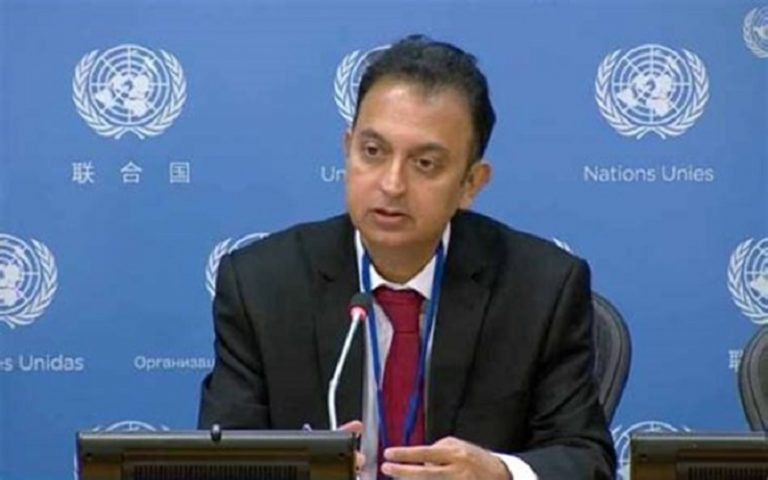
Javaid Rehman, the UN investigator on human rights in Iran, called for an independent inquiry into the role of Ebrahim Raisi in the execution of thousands of political prisoners in 1988.

Reuters wrote on Tuesday, June 29, 2021:

“The U.N. investigator on human rights in Iran has called for an independent inquiry into allegations of state-ordered executions of thousands of political prisoners in 1988 and the role played by President-elect Ebrahim Raisi as Tehran deputy prosecutor.

“Javaid Rehman, in an interview with Reuters on Monday, said that over the years his office has gathered testimonies and evidence. It was ready to share them if the United Nations Human Rights Council or other body sets up an impartial investigation.

Then in the interview, he added: “I think it is time and it’s very important now that Mr. Raisi is the president (-elect) that we start investigating what happened in 1988 and the role of individuals,” Rehman said from London, where he teaches Islamic law and international law.”

He added: “Otherwise we will have very serious concerns about this president and the role, the reported role, he has played historically in those executions.”

Rehman said: “We have made communications to the Islamic Republic of Iran because we have concerns that there is again a policy to actually destroy the graves or there may be some activity to destroy evidence of mass graves.”

“I will campaign for justice to be done,” he added.

Javaid Rehman, in an interview with Reuters on Monday, said that over the years his office has gathered testimonies and evidence. It was ready to share them if the United Nations Human Rights Council or other body sets up an impartial investigation.
He said he was concerned at reports that some “mass graves” are being destroyed as part of a continuing cover-up.

It should be noted that on June 19, 2021, Amnesty International’s Secretary General Agnès Callamard, said in response to the news of the announcement of Ebrahim Raisi as the next President of Iran:

“That Ebrahim Raisi has risen to the presidency instead of being investigated for the crimes against humanity of murder, enforced disappearance, and torture, is a grim reminder that impunity reigns supreme in Iran. In 2018, our organization documented how Ebrahim Raisi had been a member of the ‘death commission’ which forcibly disappeared and extrajudicially executed in secret thousands of political dissidents in Evin and Gohardasht prisons near Tehran in 1988. The circumstances surrounding the fate of the victims and the whereabouts of their bodies are, to this day, systematically concealed by the Iranian authorities, amounting to ongoing crimes against humanity.”

“We continue to call for Ebrahim Raisi to be investigated for his involvement in past and ongoing crimes under international law, including by states that exercise universal jurisdiction.

“It is now more urgent than ever for member states of the UN Human Rights Council to take concrete steps to address the crisis of systematic impunity in Iran including by establishing an impartial mechanism to collect and analyse evidence of the most serious crimes under international law committed in Iran to facilitate fair and independent criminal proceedings.”

Iran Protests Since Election

Following the widely-boycotted presidential elections in Iran earlier this month, the Iranian people took to the streets to express their distaste for the government over many different issues.

On Sunday, June 27, the country was rocked by protests from pensioners of the Steel Company, Social Security Organization, and Homa Airlines, as well as dairy farmers, Isfahan pharmacists, Bushehr Petrochemical structural workers, Gama company workers, oil and petrochemical workers, and the plundered investors of the Azico credit institution.

Of course, many of these groups have been protesting since the election on June 19, with contract workers demanding higher wages and better working conditions. The authorities tried to intimidate these workers by threatening to fire them if they didn’t return to work. The strikers were soon joined by full-time workers, whom the officials cannot threaten with losing their jobs.

The strikes are putting pressure on the economy, which depends on oil exports, and therefore the government. The mullahs rely on the oil and petrochemical industries to finance their terrorism and warmongering, so strikes and international sanctions are crushing the mullahs.

The state-run Asr Khabar wrote: “The strike of thousands of contract workers of oil, gas, and petrochemical entered its eighth day, and now workers of about 61 contractors are on strike.”

The truth is that the workers are facing increased pressure because the economy, already pushed to the brink by officials’ corruption and mismanagement, has declined due to the coronavirus pandemic.

Over the past seven months, people from all walks of life have been protesting constantly, which shows the precarious situation that the officials find themselves in now. As the Iranian people suffer under the economic conditions caused by the officials’ corruption, while also suffering under the social conditions that have left over 300,000 Iranians dead from the authorities’ inaction on Covid-19.

The Iranian Resistance wrote: “The Iranian people’s hatred toward the regime has reached a new level. The recent nationwide boycott of the regime’s sham election, and the mullahs’ decision to appoint the notorious Ebrahim Raisi as their new president to oppress people more, are testaments that people do not want this regime.”

The recent protests have terrified the officials and state media, who fear major protests that would mean their overthrow. The Sharq daily warned on Sunday that if the regime fails to pay attention to the dissent of the people, then the political divide will increase, along with the public’s dissatisfaction and anger.

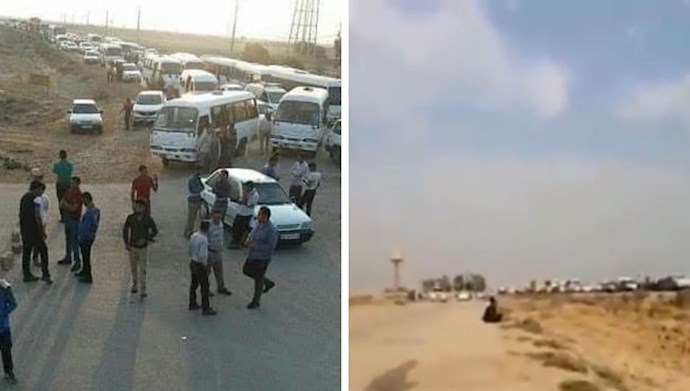
The villages of Jofair in the Azadegan Plain, 50 km west of Ahvaz, gathered on Monday, June 28, to protest the water cut and blocked the main road.
There are several oil and gas companies in the lands of these villages. The villagers complained several times and the oil companies promised them that they would solve the water problem for them, but so far they have not taken any action.

اعتراضات

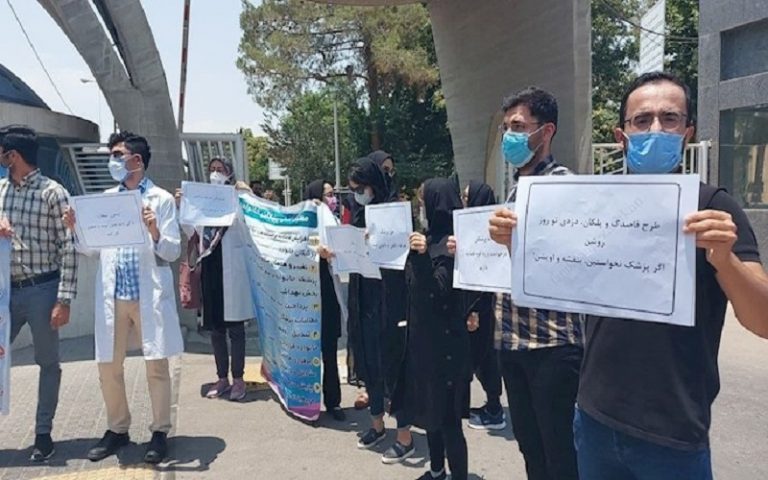
On Tuesday, June 29, doctors and medical students protested against the disregard for the rights of the medical community, disregard for public health, the spread of corruption in the health-related sector, and widespread violations by the Ministry of Health in various cities, including Tehran, Hamadan, Kermanshah, and Isfahan. Sanandaj, Shiraz, Yasuj, Lorestan, etc. held protest rallies.

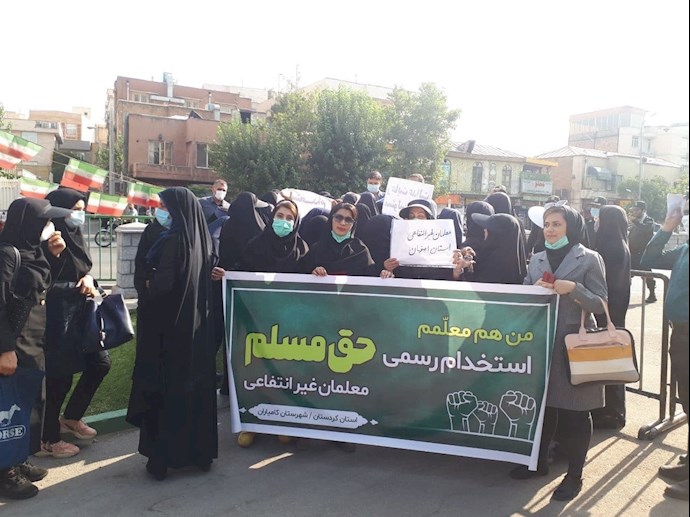
On Tuesday, June 29, a group of non-profit school teachers gathered in front of the regime parliament building to protest their non-employment by the Ministry of Education in Tehran. These teachers are from different parts and cities of the country.

-معلمین جلوی مجلس ارتجاع


The JCPOA and Iran Regime’s Terrified Face

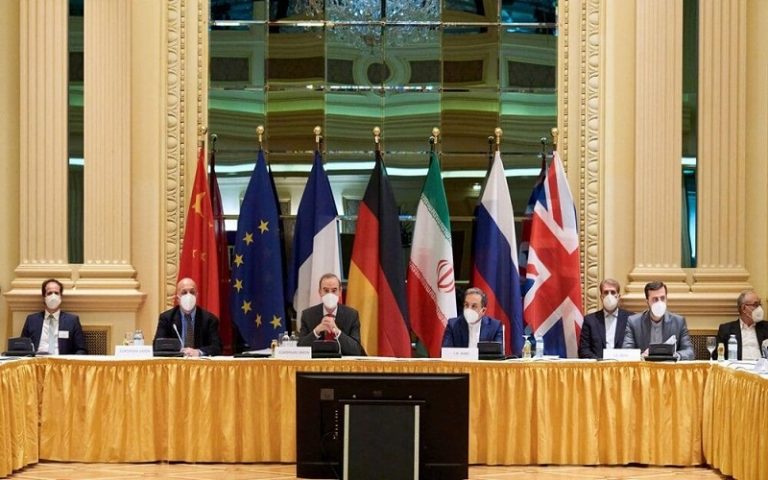
The consequences of the sanctions on Iran’s bankrupt economy and the unfortunate outcome of the 2015 Iran nuclear deal known as the JCPOA, on the one hand, and the uncertainty of the prospects of Iran’s Vienna talks with world powers, on the other, have caused panic among Iran’s state-run media and the country’s rulers.

Speaking about their concerns, they are asking the new government of Ebrahim Raisi to follow and obey the will of the world powers.

As a reason for such a request, they are pointing to the bad economic situation, which is tightening every day, and there no chance of this government to solve these problems and normalize the livelihood situation of the people.

And if they do not obey the world power’s request, they must face much severe political and economic pressure, while having not the ability and power to withstand such a situation.

The state-run daily Arman took a step further from the economic and political pressure, warned and remembered the regime that if they do not obey these requests spoken in the Vienna JCPOA talks, there is the possibility that the regime may again include under Chapter 7 of the Security Council, which means that it has been formally recognized as a ‘threat to world peace and security’, in which case it Requests all UN member states to implement all coercive measures it has adopted against you.’

This newspaper, affiliated with Hassan Rouhani’s government, recalled the case of Iraq being attacked, noting that being under Chapter 7 means that it could ‘begin a mounting process of escalating pressure that could lead to military action. And that under the umbrella of the protection of international law, the United Nations and public opinion.’

Concerns about this situation have prompted the state-run daily Arman to warn the Raisi and his government, ‘should not fall into the trap of factional games,’ and should not allow that, ‘biased political analyses’ of the media, ‘to minimize the consequences of re-engaging with the Security Council in the next government.’ (Arman daily, 26 June 2021)

Etemad newspaper, while acknowledging the current dire economic situation and the danger that threatens the clerical government in this regard and the social uprising, advised, especially the elements of the new government, not to insist on the current position and, ‘if the parties insist on the current positions, the seventh round of negotiations, will be also fruitless.’

A subject that according to the author of this article, is dangerous for the current state of the economy, while it will have much worse and unpredictable consequences for both the economy and the regime, because the economy, ‘is in a complicated strait’ and every day ‘the continuation of sanctions will cause great damage to Iran’s economy, and assessments show that it is not possible to continue the current situation for a long time.’

Another direction that this state-run newspaper is concerned about is that the UN nuclear watchdog’s chief ‘Rafael Grossi submits a negative report to the Board of Governors to change the situation so that the Board of Governors declares it impossible to resolve the Iranian case through the IAEA and refers the matter to the UN Security Council.’ (Etemad, June 26, 2021)

Based on these concerns, Jahan-e-Sanat daily advised the Raisi to consider these facts: ‘There are some facts that Raisi should pause about and think carefully about the consequences of these facts before saying or doing anything.

‘One of the realities that have obscured Iran these days is the outcome of indirect talks between Iran and the Americans. The fact is that the Iranian economy, with the continuation of sanctions and without sanctions, will have at least two forms and nature with significant differences in terms of foreign exchange earnings. Iran is no longer alive enough to include more resilience in the equations, and that is what if being ignored will face the future with unintended consequences. Unknown days and unforeseen consequences will make things difficult.’ (Jahan-e-Sanat, June 26, 2021)

The concerns cited by the media affiliated with the Rouhani faction are real and indicate that the government is at a crossroads of choice, and, in fact, a dead end is predicted.

Resalat newspaper wrote about the Americans’ expectations from the regime: ‘The Democrats’ view of the nuclear deal with Iran is clear. The leaders of the Democratic Party believe that if they want to return to the JCPOA, they must get new and more concessions from the Islamic Republic! The Democrats’ new concessions mean perpetuating the time limits set by the JCPOA and, subsequently, missile disarming Iran. This view was institutionalized among Democrats even during Trump’s presidency.’ (Resalat, June 26, 2021)

Before the third round of debates, Hassan Rouhani asked the candidates to state their position on the JCPOA: ‘Do you agree with the JCPOA or not, say it.” (State TV News Channel, June 9, 2021)

In the third debate, Raisi explicitly responded to Rouhani, saying that he agreed with the JCPOA, ‘I explicitly say that we adhere to the JCPOA as a contract that has been ratified with the 9 clauses of the Supreme Leader. Like any obligation and any contract, governments must abide by it, but you cannot implement the JCPOA. The JCPOA needs a powerful government to be implemented.’ (State TV News Channel, June 12, 2021)

At that time, some believed that Supreme Leader Ali Khamenei had expressed his intentions by the language of his preferred candidate, and it became clear that he wanted to be directly involved in the JCPOA negotiation without any middleman. Just as Khamenei started negotiations in Oman during Ahmadinejad’s time and away from his eyes.

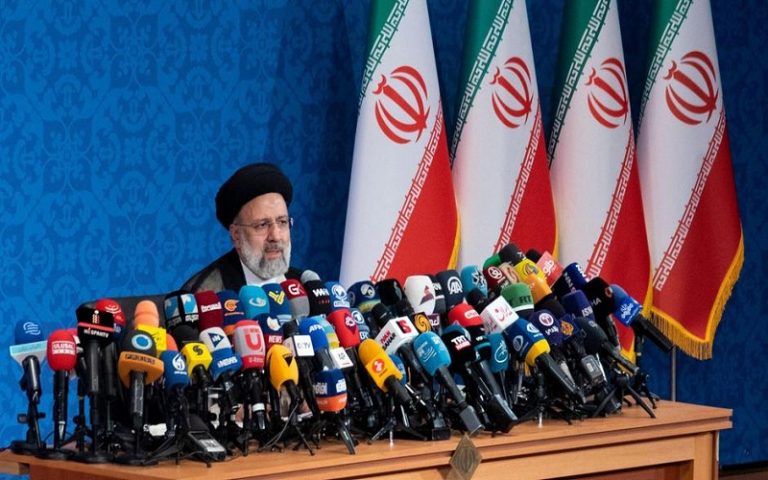
In his first press conference on June 21, Raisi also said about the current negotiations of the JCPOA: ‘We will pursue interaction with the whole world and with all countries of the world as a broad and balanced principle of interaction in foreign policy, God willing, and in the negotiations of any negotiation in which national interests are guaranteed, this negotiation will definitely be supported.’ (State TV News Channel, June 21, 2021)

The fact is that Iran’s regime, in a state of economic stagnation and facing an explosive society, seeks to loosen some of the sanctions at any cost. But the other side of this desk also has conditions that if accepted by Khamenei means new poison chalices and ‘endless degradation.