


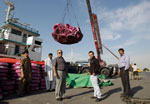
 Reuters: Indian tea exports to Iran are facing payment hurdles, the trade secretary said on Thursday, the latest sign that Western sanctions are biting the Islamic Republic which is struggling to pay to keep its trade flowing. NEW DELHI Feb 9 (Reuters) – Indian tea exports to Iran are facing payment hurdles, the trade secretary said on Thursday, the latest sign that Western sanctions are biting the Islamic Republic which is struggling to pay to keep its trade flowing.
Tehran’s trade problems have been triggered by U.S. sanctions targeting Iran’s central bank and the European Union deciding to ban Iran crude imports in an effort to force the country to abandon a suspected nuclear weapons programme.
While Asian buyers have cut crude imports from Iran due to payment issues, the sanctions have helped plunge the rial and raise costs of imports for Tehran. The sanctions have also made it more difficult for Dubai-based middlemen to process payments.
The payments row has already triggered problems as Iranian buyers have defaulted on about 200,000 tonnes of rice from their top supplier India.
Payment problems have also seen Malaysia halting palm oil exports to Iran.
“There were just handful, or a clutch of rice payments which are stuck … more important than the rice payment is the tea payment,” Indian Trade Secretary Rahul Khullar said.
“Private traders are not dumb. They stop exports when the payment system run into trouble. The actual shipments of rice to Iran are much lower than they had been in previous years,” Khullar said referring to rice exports.
“There are a handful of guys … who have actually exported, whose payment settlement has got stuck in transit because of the change in the settlement system.”
Rahul Khullar also said he saw scope for exporting wheat, pharmaceuticals, steel and more rice to Iran.
India is considering stepping up exports in a range of goods, including farm products such as wheat and rice, to settle part of its oil dues to Iran. (Reporting by Matthias Williams; writing by Krittivas Mukherjee; editing by Malini Menon)


