


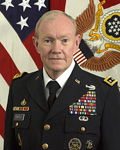
 AFP: The United States and Israel have different interpretations of the same intelligence reports on Iran’s nuclear programme, the US military’s top general said.
  BAGRAM, Afghanistan (AFP)— The United States and Israel have different interpretations of the same intelligence reports on Iran’s nuclear programme, the US military’s top general said.
General Martin Dempsey, at the start of a trip to Afghanistan and Iraq, said late Sunday that Israel viewed the threat posed by Tehran’s atomic ambitions with more urgency, as a nuclear-armed Iran could endanger Israel’s very existence.
Dempsey, the chairman of the US Joint Chiefs of Staff, said he conferred with his Israeli counterpart Benny Gantz on a regular, “bi-weekly” basis.
“We compare intelligence, we discuss regional implications. And we’ve admitted to each other that our clocks are turning at different rates,” he said.
“They are living with an existential concern that we are not living with.”
Amid intense speculation in the Israeli press that Israel soon may launch a unilateral strike against Iran’s nuclear sites, Dempsey said the US military felt no pressure from Israel to back possible bombing raids.
Speaking to reporters aboard his plane before landing Sunday night at Bagram air base in Afghanistan, Dempsey reiterated his view that any air strikes by Israel would delay but not destroy Iran’s disputed nuclear project.
Similar remarks by the general last week were widely analysed in the Israeli media but Dempsey said his comments were not designed with an Israeli audience in mind.
“You can take two countries and interpret the same intelligence and come out with two different conclusions. I’d suggest to you that’s what’s really happening here,” he said.
The four-star general also struck a cautious note on any possible US military action against the Syrian regime.
Asked about the possibility of the United States backing a no-fly zone over Syria, Dempsey hinted that such a move might draw away military resources needed to deter Iran in the Gulf.
“I am helping shape the discussion (on potential military options for Syria),” he said.
“And I’ll tell you we have to clearly define our national interest. What you do in one place, whether it’s Syria or the Strait of Hormuz, there are trade offs.
“It’s a conversation that we should proceed with cautiously.”


