


 New York Post: International Women’s Day, celebrated Saturday for the 106th year, marks continued progress for women across the world, but that progress has been reversed in countries where Islamic fundamentalism has taken hold.
New York Post
By Linda Chavez
International Women’s Day, celebrated Saturday for the 106th year, marks continued progress for women across the world, but that progress has been reversed in countries where Islamic fundamentalism has taken hold.And nowhere is women’s freedom more under official assault than in Iran.
Prior to the Islamic Revolution in 1979, women in Iran had significant personal freedom and protection under the law. One of the first changes Ayatollah Khomeini made after taking power was to revoke the 1967 Family Protection Law, which governed marriage, divorce and family custody.
Today, women have less than second-class status in Iran. Their husbands may divorce them at will and take as many as four concurrent wives; divorced women have no custody rights to their own children once the child reaches age 2. Women are denied the right to study what they choose and are forbidden from entering certain professions and from studying abroad unless accompanied by their husbands. Their testimony in court is devalued: Two women must testify to carry the same weight as one man.
The court system is an arm of fundamentalist Islam. Female victims of crime receive less justice than male victims. Punishment for harming or even killing a woman is less harsh than if the victim is a man.
What we in the West might consider moral transgressions, such as adultery, incur the severest criminal penalties, including the stoning to death of female adulterers. Even minor transgressions, such as failing to wear the hijab, can result in beatings and imprisonment.
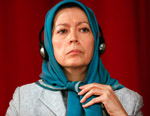
Last week in Paris, I joined a group of prominent women gathered to draw attention to the plight of women in Iran and under other Islamic extremist governments. The conference theme, “Women Leading the Fight Against Islamic Fundamentalism,” drew speakers including former Canadian Prime Minister Kim Campbell, former president of the German Bundestag Rita Sussmuth, South African activist Nontombi Naomi Tutu and Mariane Pearl, journalist and widow of reporter Daniel Pearl, whose videotaped execution by Khalid Sheik Mohammed became a symbol of the barbarity of al Qaeda.
Maryam Rajavi, the conference organizer and president-elect of the National Council of Resistance of Iran, described the outrageous misogyny that the mullahs inflict on Iran: an acid attack against a woman and her daughter in the streets of Tehran, forced marriages for girls under 15 and new laws (unopposed by “moderate” President Hassan Rouhani) that allow men to marry their adopted daughters at age 13.
But Rajavi’s message was not one of despair. “Iranian women and all women in the region must move from being hopeless to being hopeful. They have to move from simply being angry to becoming inspired to change and to bring about change.”
It was the same message Tutu invoked. Recalling her famous father, Archbishop Desmond Tutu, she described a visit he made to Alaska during the apartheid era where he met a woman who told him that she woke every morning at 3 o’clock to pray for the liberation of South Africa. “And he said, ‘What chance does the apartheid regime have when we were being prayed for at 3 o’clock in the morning in Alaska?’ . . . What chance does the regime stand when there are young women inside Iran leading protests on college campuses? What chance does the regime stand when the opposition is lead by a woman named Mrs. Rajavi? No chance! No chance!”
Pearl spoke of resistance in personal terms. “The women that we talked about today are those ordinary women with a mighty heart — and they can defeat terrorism,” she said. “They also know that we have no choice but to win that fight.”
Women make up more than half of the population of Iran. The mullahs may try to silence them, deprive them of their rights, even take away their children. But women will be the face of change in Iran. And it is time feminists in the West stood by their side in the fight against Islamic extremism.


