


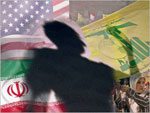
 Time: President Barack Obama considers his limited options in Iraq. Both the U.S. and Iran have said they will provide qualified military support to the government of Nouri al-Maliki. But Iranian military assistance in Iraq carries substantial risks. Done improperly, it could inflame sectarian tensions or even start an all-out war in the region.
If Iran comes to the assistance of the Shi’ite-dominated Iraqi government it could fan further sectarian violence
The Time
By Aryn Baker
As U.S. President Barack Obama considers his limited options in Iraq, the United States is considering holding talks with Iran later this week on how to counter the militant threat. Both the U.S. and Iran have said they will provide qualified military support to the government of Prime Minister Nouri al-Maliki, should he request it, a turn of events that could suddenly see the two foes fighting on the same side. But while such an alignment might improve the relationship between the U.S. and Iran going forward, Iranian military assistance in Iraq carries substantial risks. Done improperly, it could inflame sectarian tensions or even start an all-out war in the region.
The rapid advance of the Sunni militant group, the Islamic State of Iraq and Syria (ISIS), into Iraq’s Sunni-dominated north was a result partly of local dissatisfaction with the Shi’ite-dominated central government in Baghdad. Iraq’s Sunni minority, which had ruled Iraq for decades until the fall of the Sunni dictator President Saddam Hussein in 2003, still seethes with resentment over what they see as their loss of power and dignity. Many dismiss Maliki as an Iranian stooge, set in place to advance Shi’ite interests in the name of a greater Iranian plot to extend Iran’s influence across the region. “Iranian troops operating in Iraq will confirm everything the Sunnis have always suspected, that the Maliki regime is an extension of Iranian power. So it will become a self-fulfilling dynamic,” warns Peter Harling, Middle East Project Director of the International Crisis Group.
The closer ISIS gets to the Iraqi capital, and the sacred Shi’ite shrine of the Mosque of the Golden Dome in the city of Samarra, the more likely Iran will feel that it has no choice but to intervene. Iranians, says Philip Smyth, an expert on Shi’ite militias at the Washington Institute for Near East Policy, sees ISIS “as an existential threat to the Shi’ite population of Iraq, and are trying to grab the bull by the horns.” When ISIS’s predecessor, the Islamic State of Iraq, attacked the shrine in 2006 it unleashed a spasm of sectarian violence that resulted in the deaths of tens of thousands of Iraqis of both sects, and left more than four million displaced.
But an Iranian military presence would not only alarm Iraqi Sunnis, it would be a major affront to the U.S.’s Sunni allies in the Gulf, like Saudi Arabia, Bahrain and the United Arab Emirates. “When you start seeing Iranian aircraft, [Iranian Revolutionary Guard Corps] forces on the ground, Iranian advisors training the Iraqi military, it could easily devolve into a regional conflagration,” says Smyth. “It’s not like Riyadh wants to back ISIS, but what are they going to do when they see a mobilization like this, and no other outside force to quell it?”
Baghdad-based independent politician Ali Mehdi Jawad Al-Dabbagh, a former spokesman for the Maliki government, says Iran has an important role to play. “No one should be blocked from helping Iraq, especially not Iran,” he says. But Al-Dabbagh believes that all assistance be funneled through the Iraqi government. He says that accounts of Iranian trainers and troops on the ground in Iraq are “just rumors,” but he does worry about the visible presence of Iranian trained and funded proxy militias in the country. Left to their own devices, and not controlled by the government, they could further provoke Sunnis. Al-Dabbagh believes the militias should be used judicially, for the protection of the Samarra shrine, for example. “The shrine cannot be attacked. That would absolutely ignite a huge sectarian war. So it is in everyone’s interest that the shrine be protected, and I think Sunnis would agree also.”
But Iran’s possible role has already evolved beyond Samarra. ISIS must be stopped, says Smyth. The U.S. may not be willing to intervene militarily, but it may not have a choice. The U.S., he says, cannot afford to let Iran take the lead in stopping ISIS. “Both [Iran and ISIS] are bad for American policy and American interests in the region.” Sectarian war, however, will be bad for all concerned.


