


The 90th week of the “No to Execution Tuesdays” campaign was held in 52 prisons across Iran, with participating prisoners going on a hunger strike. A part of the statement referring to the World Day Against the Death Penalty reads:
“Coinciding with the World Day Against the Death Penalty, prisoners participating in the ‘No to Execution Tuesdays ‘ campaign in Ghezel Hesar Prison chanted slogans against the death penalty, expressing their disgust and abhorrence for these cruel and inhumane sentences.”
The full statement of the 90th week of the “No to Execution Tuesdays” campaign is as follows:
Continuation of the “No to Execution Tuesdays” Campaign in Its 90th Week Across 52 Prisons Nationwide
We sincerely thank all the brave and freedom-loving Iranians who participated in the nationwide campaign marking the World Day Against the Death Penalty and made their strong voices of opposition to executions resonate throughout Iran. This enthusiastic presence, relentless support, and ongoing solidarity have given us unparalleled strength and encouragement to continue our path toward an Iran free of capital punishment.
The “No to Execution Tuesdays” campaign still needs such support so that this voice of justice and humanity can reach the conscience of awakened individuals and the international community more powerfully each day.
Execution of Inhumane Sentence of Finger Amputation of a Prisoner in Iran
While the growing pressures and inhumane conditions in Iran’s prisons persist, we have witnessed the transfer of female political and ideological prisoners from Qarchak Prison to Evin Prison. These women were relocated following the tragic killing of their fellow inmate, Somayeh Rashidi, and their widespread protest against Qarchak’s inhumane conditions. They now remain in Evin Prison deprived of basic necessities, including heating facilities, and are enduring extremely harsh conditions. These inhumane circumstances, not limited to Evin, are yet another example of the torture of prisoners and the gross violation of human rights.
Although these prisoners have escaped the hell of Qarchak, hundreds of women—among them death row inmates—remain imprisoned in this torture center. Like other infernal prisons, Qarchak must be shut down, and those responsible for human rights violations must be brought to justice.
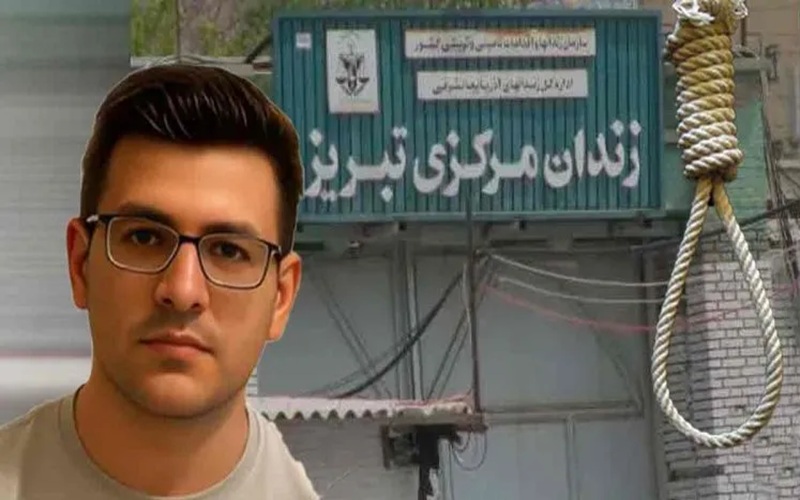
Continuing the issuance of unjust sentences, a few days ago the death sentence of Ehsan Faridi, a student and political prisoner held in Tabriz Prison, was upheld—a decision made without due process, intended to instill fear among youth and students. This act violates human rights and human dignity and must be strongly condemned.
In a further attempt to intimidate society, we have witnessed the issuance of death sentences for three ideological prisoners—Nasimeh Eslamzehi, her husband Arsalan Sheikhi, and Amanj Karvanji. For us, these sentences symbolize the injustice of a despotic judicial system and compel us to continue raising our voices against these widespread and ruthless executions.
Under these circumstances, coinciding with the World Day Against the Death Penalty, prisoners participating in the “No to Execution Tuesdays” campaign in Ghezel Hesar Prison chanted slogans against the death penalty, expressing their disgust and anger toward these cruel and inhumane sentences.
Amid the recent wave of executions, particularly in Ghezel Hesar Prison, on Monday, October 13, following the transfer of several inmates from Ward 2 to solitary confinement for execution, prisoners in this ward—over 1,500 of whom are on death row—staged a sit-in, returned their prison meals, and demanded the return of their fellow inmates. We call on other prisoners to follow the example of Ghezel Hesar inmates by opposing the execution of their cellmates, and we urge anti-execution activists outside prison to take stronger steps to halt the regime’s execution machinery and to support the families of those sentenced to death.
Reports from various prisons indicate that between September 23 and October 12 alone, 162 prisoners were executed, and in the past six months and 20 days, more than 1,000 people have been hanged. These figures have deeply shaken the conscience of the Iranian public and the international community, demanding immediate and decisive global action to stop this criminal trend.


