Home Blog

Aftermath of the War: Iranian Workers’ Lives in Grip of a Livelihood Crisis

Following the US and Israeli war against Iran’s regime, the impact of the attacks has not been limited to infrastructure damage; the labor market has also entered a period of widespread instability. A wave of layoffs, the shutdown of internet-based businesses, runaway inflation, soaring rents, and a sharp decline in purchasing power are now putting immense pressure on working-class families and large segments of Iranian society.

Iran’s economy, already suffering from structurally high inflation, is now bending further under the crushing pressure of rising prices. Reports indicate that the US dollar exchange rate has surged to an unprecedented 1.9 million rials. At the same time, according to Iran’s regime Central Bank, point-to-point inflation has reached around 70% and living costs have crossed critical thresholds. Official data also show that food inflation has exceeded 60%, rents have once again increased in many cities, and working-class household incomes have fallen to around $200 per month. This is while, under a government decree, the minimum wage for a worker with one child stands at approximately $127, an amount that continues to decline daily due to the rising dollar exchange rate.

How Did Inflation in Iran Become the Most Chronic Structural Crisis?

How the War Destabilized Iran’s Labor Market

Military attacks and disruptions to industrial and communications infrastructure pushed Iran’s already fragile and unstable economy into another phase: production lines halted, supply chains were disrupted, factory capacity declined, internet businesses shut down, and a tsunami of layoffs followed.

The war’s biggest blow to workers, combined with the denial of labor rights, is estimated to have affected up to 2 million people. On one hand, war caused inflation to surge, especially in food, housing rents, and medicine, while on the other hand wages have either been suspended or reduced for many workers. Employees at damaged factories are being sent on forced unpaid leave, benefits such as annual bonuses, housing allowances, and insurance contributions are often not paid, and layoffs have become an everyday phenomenon.

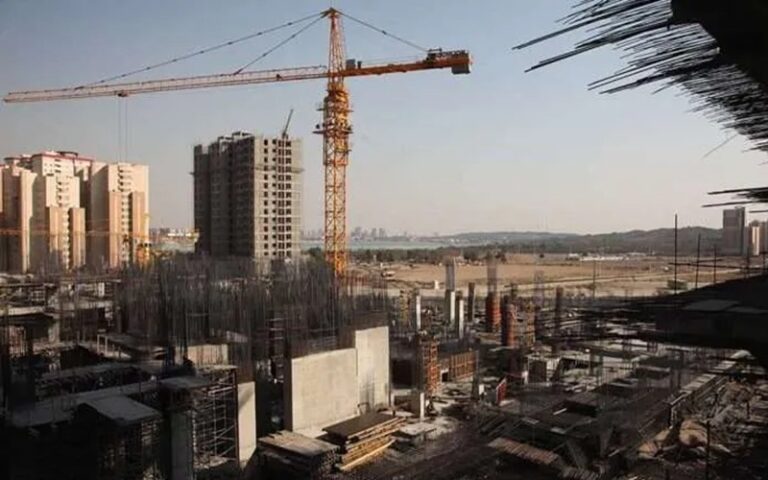
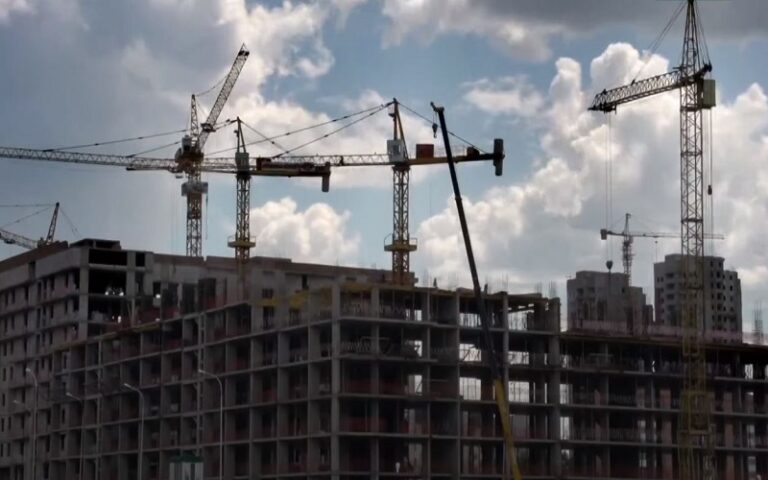
As inflation rises rapidly, people’s purchasing power is sharply declining, while a 50% to 60% increase in construction material prices signals a new wave of housing price surges.

Even before the war, women’s share of employment was no more than around 20%, and conditions are now far worse for them than for men. According to regime officials, only 147,000 people have been deemed eligible for unemployment benefits, of whom only one-third are women. Most of these individuals are also stuck in lengthy queues for processing unemployment claims. Due to the strained conditions of the fund and various restrictions, unemployment payments are often equivalent to only half of previous wages, which is not even enough to cover rent. Half of all workers, whether male or female, work in places not covered by labor law protections.

Internet-Dependent Livelihoods and Network Blackouts

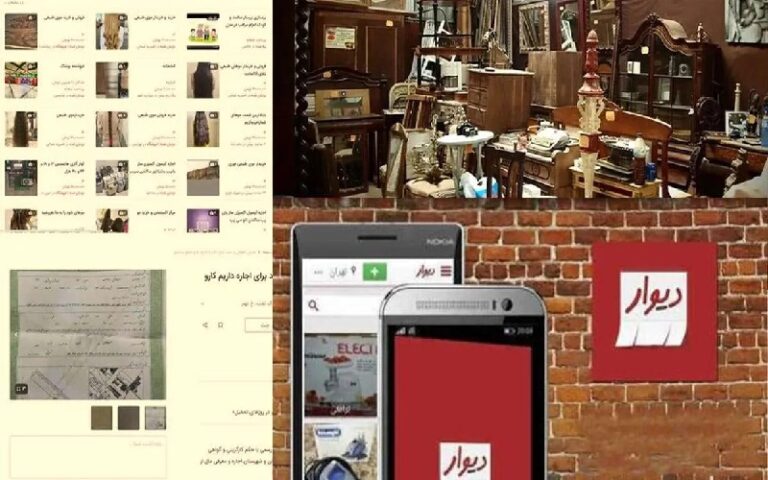
One of the differences between this war and previous crises was the direct blow to the digital economy. Widespread internet shutdowns caused a large portion of online businesses to cease operations. Internet outages in Iran are not merely communication restrictions; for many women and households engaged in home-based and online work, they effectively mean complete exclusion from the labor market.

More than one million large and small internet-based jobs have been severely damaged due to prolonged internet disruptions, along with many home-based businesses, most of which are run by women.

Rents Are Consuming Wages

The state-run Ham-Mihan newspaper reported that many households have been forced to leave the capital due to high living costs, reflecting the structural pressure of the housing market on the urban working class. In the official narrative of Iran’s regime institutions, measures such as food coupons and unemployment insurance are presented as supportive policies, but in an economy where purchasing power has declined by at least 50% in one year, these forms of support play only a minimal role in easing livelihood pressures.

Greater Suppression of Labor Protests in a Wartime Atmosphere

The prevention of union activities, the effective suspension of labor law, and the security atmosphere created by the war have reduced the possibility of addressing the pressures faced by workers, while any form of labor protest is met with repression.

The pressure currently affecting workers’ mental health is not merely the result of war or recent crises, but rather the outcome of years of accumulated economic crises, privatization, the spread of temporary contracts, job insecurity, and declining purchasing power of wages. In recent years, these pressures have intensified due to the war, its economic consequences, and the suppression of social protests, affecting not only workers themselves but also their families.

The consequence of this situation is a severe decline in purchasing power and the relocation of part of the middle class to cheaper urban areas, a trend showing that the shrinking middle class and expansion of lower-income groups have become structural issues in society.

The behavior of the private sector under current conditions cannot be separated from the policies adopted by the government and institutions responsible for labor affairs. In the current structure, the government and the Labor Ministry are effectively more inclined toward protecting the interests of major employers and economic enterprises than defending workers’ rights.

The Outlook for the Working-Class Economy in the Post-War Situation

Under such conditions, one can speak of a kind of outlook of economic and social misery, although historical experience shows that these same pressures can also create the conditions for new forms of solidarity and public uprising.

The Voice They Could Not Silence: Vahid Bani Amerian’s Final Testament

The executions carried out in Ghezel Hesar Prison between March 30 and April 4, 2026, marked another chapter in the Iranian regime’s long confrontation with organized political opposition. Among those executed were six imprisoned members of the People’s Mojahedin Organization of Iran (PMOI/MEK): Vahid Bani Amerian, Mohammad Taghavi, Babak Alipour, Pouya Ghabadi, Akbar Daneshvarkar, and Abolhassan Montazer.

The six men were members of the PMOI Resistance Units, networks that Iranian authorities have repeatedly targeted in recent years. Their executions followed legal proceedings that the prisoners themselves described as predetermined and rooted in coercion.

In the days following the executions, one voice emerged with particular force: the final recorded statement of Vahid Bani Amerian, a 32-year-old political prisoner sentenced to death. Delivered from inside prison and intended for public release, his testimony offers a rare look into the mindset of a condemned political prisoner confronting execution while insisting on making his defense visible to the public.

“I want to make my defense public,” Bani Amerian said at the opening of his message.

The statement was not framed as an appeal for clemency. Instead, it functioned as a political declaration and a personal account of why he believed resistance had become unavoidable. Speaking directly to “the people of Iran and the world,” he portrayed his imprisonment and sentence as part of a broader campaign aimed at suppressing dissent and preventing the growth of organized opposition.

Throughout the recording, Bani Amerian repeatedly returned to one theme: the refusal to separate personal life from the suffering he said he witnessed around him.

“May that kind of life be forbidden to me if the price of it is stepping on my conscience and closing my eyes to the pain of my people,” he declared in response to what he said was a question posed during his trial about why he had not returned to a “normal life” after a previous imprisonment.

Iran Intensifies Pressure on Families of PMOI Prisoners Amid Expanding Crackdown

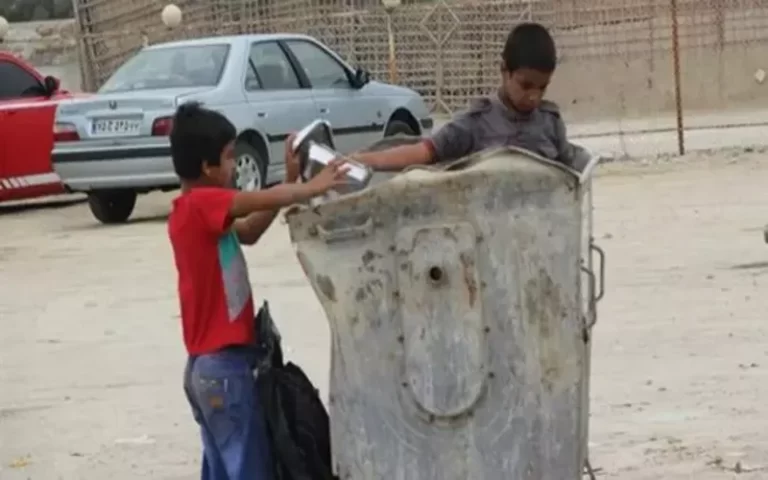
Rather than speaking in abstract political slogans, Bani Amerian filled his testimony with scenes drawn from daily life in Iran. He described seeing impoverished Baluchi children “wasting away and dying from scorpion stings” during a period of exile in Bashagard. He recalled child street vendors standing on pedestrian bridges near Khajeh Nasir University and wondered aloud what had become of them years later.

One of the most emotional passages centered on a memory from outside a hospital in Kermanshah. According to his account, a laborer and his wife stood unable to afford surgery for their sick child. The father asked how he could possibly pay for the operation on a worker’s wage, while the mother cried out repeatedly for justice.

“And now you speak to me of a normal life?” he asked.

The statement also offered his account of the judicial process that led to the death sentences. Bani Amerian described the proceedings as “a court that had nothing in common with a real court” and said that he and the other defendants had been subjected to psychological and physical torture from the moment of arrest.

“We were under torture the entire time,” he said, arguing that the outcome of the trial had been determined in advance.

He stated that he and the others refused to recognize the legitimacy of the court, saying their answers during proceedings were intentionally brief because they did not believe the process could deliver justice.

At several points, Bani Amerian directly addressed Supreme Leader Ali Khamenei, accusing the regime of using executions to spread fear and halt political opposition. Yet even while speaking under a death sentence, he insisted that repression would fail to extinguish the movement he identified with.

“Even if you execute me and people like me, we will multiply,” he said. “Even if you hide our bodies.”

Bani Amerian openly identified his support for the PMOI as the central reason behind his sentence and described that affiliation as a source of pride rather than regret. Referring to decades of confrontation between the organization and successive Iranian governments, he praised the group’s history of sacrifice and resistance.

He also referred extensively to Maryam Rajavi and her Ten-Point Plan, citing proposals including the abolition of the death penalty and the separation of religion and state. In his remarks, Rajavi was portrayed not simply as a political leader but as a symbol of endurance and commitment.

His final defense took on a confrontational tone when he reversed the logic of the courtroom itself.

“Am I the one who should defend myself—or are you?” he asked, addressing the judges and authorities responsible for the sentences.

In one of the most striking sections of the testimony, Bani Amerian argued that future accountability would eventually reach those currently in power. He spoke of a future “people’s court” in which officials would answer for years of repression, while emphasizing that even such a court, unlike the one he faced, would allow legal representation and public proceedings.

Despite the political nature of the message, its emotional center remained fixed on ordinary Iranians. Bani Amerian repeatedly returned to the themes of poverty, repression, imprisonment, and lives lost during protests and crackdowns. He invoked the names of young protesters killed during uprisings, describing them as “the finest children of this land.”

Toward the end of the statement, he addressed another question reportedly raised during the proceedings: whether he would repent.

His answer was unequivocal.

“For the freedom of Iran, not only will I not bargain with you over my life,” he said, adding that he had prepared himself for death long before the sentence was carried out.

The recording closed with a pledge that would become one of the defining lines associated with his final message.

“I swear by the blood of my comrades: I will stand firm to the end.”

The execution of Vahid Bani Amerian and the five other PMOI prisoners was intended to bring finality. Yet the circulation of his final statement ensured that his voice would continue beyond the prison walls where it was recorded. In its language, imagery, and defiance, the testimony offered not only the final words of a condemned prisoner, but also a portrait of the convictions that continue to shape organized opposition inside Iran.

How Did Inflation in Iran Become the Most Chronic Structural Crisis?

More than 80 years after World War II, signs of collapse in Iran’s economy are reappearing with the same intensity.

Inflation in Iran in 2026 has reached a level that many consider unprecedented in contemporary history. The 73% year-on-year inflation rate in March and April is not merely a statistic, but a sign of a deep crisis within the economic structure of the Iranian regime’s system of absolute clerical rule. This level of inflation, especially in post-war conditions and amid escalating political tensions, recalls periods when the country’s economy simultaneously collapsed under severe external pressure and domestic mismanagement.

The Collapse of Iran’s Economy; How Long Can People Endure?

Inflation in Iran; A Structural Crisis Beyond Governments

Inflation in Iran is not a temporary phenomenon, or one tied to a specific administration. This crisis is fundamentally rooted in the economic structure of the Iranian regime and has been reproduced over decades. Chronic dependence on oil revenues, permanent budget deficits, and an inefficient banking system are the three main pillars of this crisis.

In such a structure, every external shock—from war to sanctions—rapidly leads to increased liquidity and rising prices. The recent war and the uncertainty resulting from it have merely acted as catalysts, not the primary cause. In fact, inflation in Iran had already stabilized above 30% before this and has now simply entered a new phase of intensification.

One of the dangerous features of this period is the chronic nature of high inflation. Unlike the World War II era, when inflation was severe but short-lived, Iran’s economy today has experienced more than seven years of persistently high inflation. This continuity reflects the complete inability of the regime’s decision-making structure to control the crisis.

On the other hand, the policies announced by economic institutions under the regime’s control have not only failed to curb inflation, but in many cases have contributed to concealing reality. One example is the heavy weighting of the housing sector in the inflation index, which due to temporary price stagnation moderates the overall inflation picture. However, this statistical adjustment has no effect on the reality of people’s lives.

Smaller Dining Tables; The Social Consequences of Inflation in Iran

Inflation in Iran is most visible at people’s dining tables. The sharp increase in food prices has caused inflationary pressure on lower-income groups to be far greater than on other segments of society. This situation has not only intensified inequality but has also led to the gradual collapse of the middle class.

A 73% increase in the cost of a specific basket of goods and services has occurred under conditions where even a 60% rise in wages has failed to preserve purchasing power. This gap between income and expenses means a real decline in living standards.

In sectors such as healthcare and medical treatment, the situation is even more critical. Rising prices for medicine and medical services, especially after the war, have placed additional pressure on households. Unlike other consumer goods, these expenses cannot be postponed and are directly linked to health and survival.

The housing market is also on the verge of a new inflationary surge. Although relative price stagnation is currently visible, the doubling and tripling of construction costs indicates that this stagnation will not last. Passing these costs on to consumers will create a new wave of inflation in the near future.

Meanwhile, the role of the political structure in intensifying the crisis is undeniable. By prioritizing political and military objectives over the economic needs of society, the system of clerical rule has allocated the country’s limited resources in a way that has resulted in worsening inequality and poverty.

Ultimately, inflation in Iran is not merely an economic phenomenon, but also a social and political crisis. This crisis has eroded public trust and darkened the outlook for the future.

If inflation in the 1940s was the result of foreign occupation and world war, today this phenomenon is largely the product of the internal power structure. The main difference is that today’s crisis is not temporary, but persistent and self-reproducing.

This continuity shows that the problem lies not in policy tools, but in the structure itself—a structure that is not only incapable of solving the crisis but is itself the source of producing it.

Repression and Human Rights Violations in Iran – April 2026

What distinguishes the pages of Iran’s history at the beginning of 2026 more than ever is the emergence of the January uprising, which reflects public anger toward a tyrannical and anti-human rights ruling establishment.

Images of the piled-up bodies of those killed in the uprising in warehouses and morgues overflowing with human remains have recorded a bitter yet telling image in Iran’s history. Now the same perpetrators who gunned down youths during the uprising are trying to prevent another movement through the daily executions of uprising participants and rebellious youths.

Details of the Execution of six PMOI Members

The state of repression and human rights violations in Iran in April 2026

Executions:

During this month, at least 25 people were executed in various prisons. Among those executed were one Baluch prisoner and four Kurdish prisoners.

The breakdown of the statistics is as follows:

Women prisoners: one person

Male prisoners: 12 people

Political prisoners: 12 people

Execution of women:

Hanifeh Avandi: She was executed on April 19 on murder charges in Tabriz Central Prison.

Execution of political prisoners:

Amirhossein Hatami: He was 18 years old and was executed on April 2, 2026, on charges of moharebeh (“enmity against God”) in Ghezel Hesar Prison.

Vahid Bani Amerian: He was 33 years old and was executed on April 4, 2026, on charges of baghi (“armed rebellion”) and membership in the People’s Mojahedin Organization of Iran (PMOI/MEK) in Ghezel Hesar Prison.

Abolhassan Montazer: He was 67 years old and was executed on April 4, 2026, on charges of baghi and membership in the People’s Mojahedin Organization of Iran (PMOI/MEK) in Ghezel Hesar Prison.

Mohammadamin Biglari: He was 19 years old and was executed on April 5, 2026, on charges of moharebeh in Ghezel Hesar Prison.

Shahin Vahedparast Kalur: He was 30 years old and was executed on April 5, 2026, on charges of moharebeh in Ghezel Hesar Prison.

Ali (Arian) Fahim: He was 23 years old and was executed on April 5, 2026, on charges of moharebeh in Ghezel Hesar Prison.

Hamed Validi: He was 46 years old and was executed on April 20, 2026, on charges of moharebeh and ties to the People’s Mojahedin Organization of Iran (PMOI/MEK) in Karaj Central Prison.

Mohammad Masoum Shahi: He was 39 years old and was executed on April 20, 2026, on charges of moharebeh and ties to the People’s Mojahedin Organization of Iran (PMOI/MEK) in Karaj Central Prison.

Amirali Mirjafari: He was executed on April 21, 2026, on charges of moharebeh in Ghezel Hesar Prison.

Erfan Kiani: He was executed on April 25, 2026, on charges of moharebeh in Isfahan Central Prison.

Amer Ramesh: He was executed on April 26, 2026, on charges of moharebeh in Zahedan Central Prison.

Sasan Azadvar Jounqani: He was 22 years old and was executed on April 30, 2026, on charges of moharebeh in Isfahan Central Prison.

Arrests:

During this month, at least 1,595 people were arrested, categorized as follows:

Political arrests: During this month, at least 1,587 people who had participated in the January uprising were arrested in connection with the war, for the enforcement of prison sentences, or without any specified reason.

Religious arrests: During this month, at least eight Baha’is were arrested either to enforce prison sentences or without any specific reason.

Extrajudicial killings:

There are no available statistics on extrajudicial killings during the war involving Iran’s regime, the United States, and Israel. According to published figures, two people died under torture and seven others were killed by gunfire from regime agents in cities and on roads.

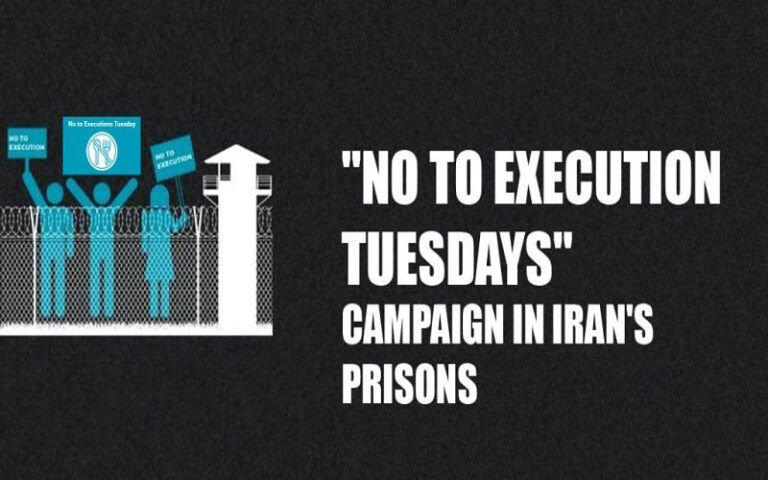
The 119th week of the ‘No to Execution Tuesdays’ campaign in 56 prisons

In the 119th week of the “No to Execution Tuesdays” campaign, political prisoners in 56 prisons across Iran once again launched a hunger strike on Tuesday, May 5, despite security pressure and extensive restrictions. This protest action took place while prison authorities in recent weeks have attempted to prevent prisoners from participating in the campaign through threats, pressure, and additional restrictions.

According to published reports, prison authorities have used measures such as threats of transfer to solitary confinement, cutting phone calls, denying visitation rights, and intensifying prison restrictions in an attempt to stop the hunger strike. Nevertheless, political prisoners, despite ongoing pressure, have emphasized continuing their protest the death penalty and repressive prison policies.

Iran: Three Young Protesters Executed by the Iranian Regime

Political prisoners participating in the campaign also issued a statement this week regarding the hunger strike.

The full statement of the “No to Execution Tuesdays” campaign is as follows:

The increase in executions is the result of the judiciary surrendering to the Ministry of Intelligence, the IRGC Intelligence Organization, and the country’s Intelligence Coordination Council.

Continuation of the “No to Execution Tuesdays” campaign in its 119th week in 56 different prisons

The dictatorship ruling Iran last week brutally executed 21-year-old political prisoner and karate champion Sasan Azadvar, along with three other prisoners from the January 2026 uprising in Mashhad named Mehdi Rasouli, Mohammadreza Miri, Ebrahim Dolatabadi, and Mehrab Abdollahzadeh, a prisoner from the 2022 uprising, in Urmia. The regime also hanged two Kurdish prisoners, Nasser Bakrzadeh and Yaghoub Karimpour, on espionage charges. The execution of prisoners is not limited to political prisoners, and during the past week executions of prisoners facing other charges also increased.

Many prisoners and detainees from recent protests remain at risk of execution, especially prisoners such as Erfan Amiri, Matin Mohammadi, Ehsan Hosseinipour Hessarloo, Maryam Hedavandmiri, Mohammad Abbasi, Saeid Zarei Kordshouli, Hamidreza Fathi, Abdolreza Fathi, Hamidreza Sabet-Ray, and Mohammadreza Tabari, who have recently been sentenced to death. In another move, the judiciary of Iran’s regime has rejected the retrial request of Peyman Farah Avar, a political prisoner held in Lakan Prison in Rasht, placing his life in danger.

Gholam-Hossein Mohseni-Eje’i, the head of the judiciary of Iran’s regime, last week attacked opponents of executions and threatened youths and government opponents with more executions, thereby intensifying the repression of protesting people and, in practice, the execution of prisoners.

As resistance against the medieval death sentences continues, several activists of the “No to Execution Tuesdays” campaign in the women’s ward of Evin Prison, who last Tuesday chanted “No to executions” and “Death to the dictator” in the prison yard, have been deprived of visitation and phone contact.

It is clear to everyone that the policy of repression, imprisonment, and execution cannot prevent the uprising and revolt of the people against the ruling establishment. A government that has lost its legitimacy among the people will not solve its crisis through repression and executions.

We, the members of the “No to Execution Tuesdays” campaign, call on all awakened consciences and opponents of executions, human rights organizations, and the international community to take immediate and effective action to save the lives of political and non-political prisoners in Iran.

In the 119th week of the “No to Execution Tuesdays” campaign, participants in 56 prisons across Iran are on hunger strike on Tuesday, May 5.

Iran: Three Young Protesters Executed by the Iranian Regime

In the early hours of Monday, May 3, the Iranian regime announced the execution of three young protesters. Mizan, the state-run news agency affiliated with the judiciary of the Iranian regime, announced the executions on Monday, while a lawyer had already reported the execution of two of them on Sunday.

Mehdi Rasouli, Mohammadreza Miri, and Ebrahim Dolat Abadi were the three protesters executed by the regime’s judiciary. Mizan news agency claimed that their charges were leading the January 2026 protests in Mashhad and killing several Basij militia members and security forces.

Details of the Execution of six PMOI Members

Mizan wrote that Mehdi Rasouli, son of Alireza, and Mohammadreza Miri, son of Nasser, were among those who had a direct role in “violent acts” and in killing Basij member Hamidreza Yousefi. The regime’s judiciary also claimed that Ebrahim Dolat Abadi was one of the main leaders of the unrest in the Tabarsi area, which allegedly led to the deaths of several security personnel.

Mohammadreza Miri, a 21-year-old worker, and Mehdi Rasouli, a 25-year-old worker and both protesters in the January uprising, were hanged in Mashhad. According to a lawyer, the families of these detainees had been told to remain silent and not publicize the news because their cases were supposedly under review by the regime’s pardon commission. However, at 10 a.m. on Sunday, May 2, the families were informed to go to the cemetery to see their sons.

In this way, the Iranian regime is attempting to avoid overthrow by launching a new wave of executions. On Sunday, May 2, another protester was hanged in Urmia Prison. As a result, the number of those executed since January 2026 and the start of the war has reached 22 people.

Children of Iran; The Silent Victims of War

Children do not analyze war; rather, they mainly experience it on an emotional level. In other words, what adults perceive as an external event becomes an internal feeling for a child—often a feeling of insecurity. In psychology, there is a concept called Basic Trust, which refers to the child’s fundamental assumption that the world is predictable and safe under normal circumstances. In wartime conditions, this trust is severely damaged.

The sounds of explosions, violent images, and even parental anxiety convey the implicit message to a child that danger exists, even if the child does not fully understand its source. Whether through repetition or intensity, this experience can cement fear in the child’s mind and turn it into part of daily life, a condition known in psychology as Hyperarousal.

Iran War: Escalating Drug Shortages and Disruption of Healthcare Services

The constant repetition of emotional images and narratives can also shape the child’s relationship with the outside world from the very beginning through a sense of vulnerability and danger, a phenomenon referred to in scientific literature as the Social Amplification of Risk. In this way, war does not merely create fear; it also transforms social relationships. In an environment dominated by insecurity, other people are no longer simply friends, neighbors, or classmates for the child, but may instead be perceived as ambiguous, unfamiliar, or even threatening figures. This stage demonstrates the profound impact of wartime conditions on the child’s social experience.

Returning to the main question, it must be said that children are often unable to accurately express or identify the roots of their emotions. As a result, accumulated emotional pressure may manifest in their behavior, including sleep disorders, nightmares, extreme dependency, substitute behaviors, aggression, withdrawal, reduced concentration, and even repeated questions about death or the safety of family members. These reactions can be understood as the child’s attempts to distance themselves from internal pressures, make sense of them, or create some form of control over circumstances that feel unclear and anxiety-inducing.

The Role of Families in Reducing Children’s Anxiety

Managing such circumstances is extremely difficult for families, and no fixed or predetermined solution can be offered. However, in child psychology, there is an approach called Good Enough, which refers to actions that are sufficient and less harmful within the limits of available resources.

In these conditions, the family acts as an emotional regulator, providing an environment in which the child’s emotions are understood, processed, and gradually balanced. In psychoanalysis, concepts such as Holding and Containment refer to this process, meaning that the parent can absorb the child’s anxiety, make it understandable, and then return it to the child in a moderated form.

Conversation with the child is highly important in this context, but not just any kind of conversation. Communication should be honest, simple, and appropriate to the child’s age. Concealment or denial of reality usually increases anxiety.

On the other hand, exposure to news must also be managed. Constant exposure to violent images keeps the child’s nervous system in a state of alertness and can lead to Chronic Anxiety.

Maintaining daily routines is also especially important because these stable structures help the child maintain a sense of predictability and continuity.

Another important point is that during crises, people’s reactions—especially those of adults—are not always the result of conscious choice but often emerge automatically in response to severe psychological pressure. If parents can understand this issue in themselves and others, the likelihood of harsh reactions decreases, and a calmer environment can emerge. In such a setting, Co-regulation takes shape, meaning that the child models the reactions of their parents. If parents can maintain relative calmness, that calmness will also be transferred to the child. In other words, accepting and managing one’s own anxiety creates the conditions for healthier behavioral modeling for the child.

Rulers Are Ultimately Responsible for the Condition of Children

Research in social psychology shows that war and its consequences are not merely temporary events with limited effects; rather, they often become cycles in which fear, insecurity, and other harms are reproduced for decades through psychological and social processes. This condition can be analyzed within the framework of Structural Violence.

This means that war is not limited to the destruction of physical infrastructure but also leads to the erosion of the foundations of human relationships. Social trust declines, the divide between “us” and “others” becomes more pronounced, and the possibility of peaceful coexistence is gradually weakened. These effects remain even after the war ends. From a psychoanalytic perspective, this process is explained through the concept of Internalization, meaning that external insecurity is transferred into the individual—especially the child—and becomes part of their lived experience.

Ultimately, it must be emphasized that although children play no role in creating wartime conditions, they often bear the greatest cost under such circumstances. They are not only affected in the present, but will also experience deeper long-term consequences in the future due to their heightened vulnerability and the fundamental role these experiences play in shaping personality.

Regarding the role and responsibility of governments, it should be noted that at the macro level, states are responsible for protecting the physical and psychological well-being of children under international agreements, including the Convention on the Rights of the Child. This is a fundamental principle of international law.

In situations where children are killed or injured, or their access to healthcare and education is restricted, this condition is referred to in legal literature as a Violation of Children’s Rights. Therefore, clearly and explicitly addressing the role, responsibility, and accountability of the repressive and war-mongering Iranian regime in creating, sustaining, or intensifying such conditions and their consequences for the country’s children is both necessary and unavoidable.

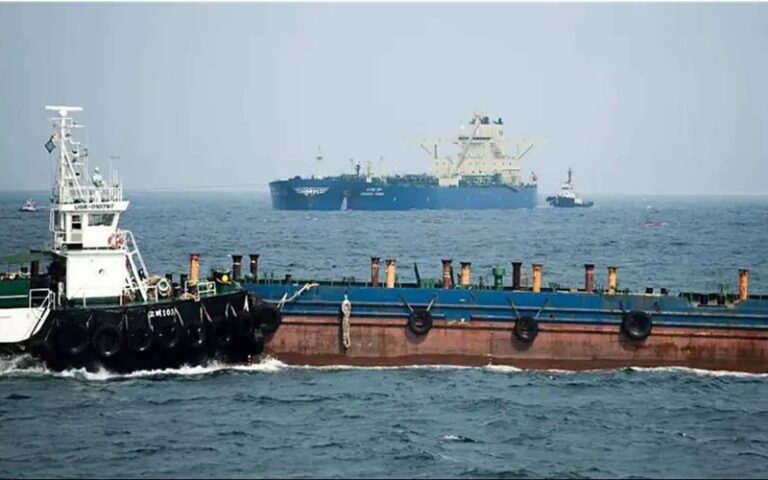
CENTCOM Announces Launch of Plan For Safe Passage of Ships Through the Strait of Hormuz

The United States Central Command (CENTCOM) announced that about 15,000 American military personnel will participate in an operation called Project Freedom, which is scheduled to begin on Monday in the Strait of Hormuz. The operation was ordered by US President Donald Trump with the aim of ensuring the safe passage of ships and crews from non-belligerent countries through this strategic maritime chokepoint.

Trump described the measure as humanitarian in nature and said that some ships stranded in the Persian Gulf are facing shortages of food and basic necessities. At the same time, he warned that any attempt to disrupt the operation would face a decisive response from the United States.

The Naval Blockade And the Structural Fracture of Iran’s Economy

According to CENTCOM, the military support for this mission will include the deployment of guided-missile destroyers, more than 100 naval and land-based aircraft, multi-purpose unmanned systems, and thousands of military personnel. The command also stressed that the operation is intended to support commercial vessels seeking free passage through one of the world’s most important trade routes.

In this regard, two American officials told the Axios news website that US Navy warships will be stationed near shipping lanes to prevent potential attacks if necessary. According to these sources, one of the main tasks of American forces will be to provide precise information about safe maritime routes, especially routes considered less likely to contain naval mines.

Reports have also emerged indicating that Project Freedom functions primarily as a coordination mechanism involving not only military forces but also governments, insurance companies, and shipping industry stakeholders. However, some officials emphasized that the plan currently does not include direct naval escorts for commercial ships by warships.

These developments come as the Iranian regime has also proposed a plan to reopen the Strait of Hormuz and end maritime restrictions affecting its ports, stating that it has received the US response and is reviewing it. Meanwhile, some Iranian officials have warned against any American military presence in the area, describing it as a potential violation of the ceasefire.

In the same context, Iranian military commanders emphasized that any approach by foreign forces toward the Strait of Hormuz would trigger a response. They also urged commercial vessels to coordinate with forces stationed in the region in order to maintain their security.

Iran’s Statistics Center reports 115% food inflation

A new report by the Statistical Center of Iran shows that food inflation in March and April this year reached 115% compared to the same period last year, a figure reflecting the continuation of the severe inflation crisis and the unprecedented decline in people’s purchasing power, especially among workers and low-income groups.

According to the report, point-to-point inflation for all goods and services was also announced at 73.5%, meaning Iranian households must pay on average more than 70% extra to purchase the same basket of goods and services as last year.

War Economy and Stagflation in Iran

The Statistical Center also estimated annual inflation for March and April at 53.7%, while the Central Bank of the Iranian regime had recently announced the figure as 50.6%. The discrepancy between official statistics has once again increased uncertainty regarding the true scale of the economic crisis.

The International Monetary Fund has also predicted that Iran’s inflation rate will reach 69% during the current year. If realized, this would place Iran after Venezuela and Sudan as the country with the world’s third-highest inflation rate.

Inflation and rising prices in Iran have become one of the country’s main livelihood crises in recent years. The collapse of the national currency’s value, structural corruption, the heavy costs of the regime’s military and regional projects, sanctions, and chronic economic mismanagement have continuously driven up the prices of essential goods. In recent years, items such as meat, rice, cooking oil, dairy products, and bread have repeatedly experienced sharp price increases, forcing many households to gradually remove these products from their tables. Economic experts warn that the continuation of this trend could lead to expanding poverty, malnutrition, and growing social unrest.

The Rising Cost of Food in Iran; Hidden Pressure on Large Families

The state-run magazine Niniban published a report on April 29 regarding rising food prices. The report stated: “This is where the story of single-child families diverges from that of large families; when demands multiply with the number of family members, inflation bends the family’s back even further.” Reports indicate that prices have surged sharply, and the share of food expenses in household budgets, especially among lower-income deciles, has reached dangerous levels.

Large families are struggling with the challenge of rising food prices, and the scale of the problem is growing daily. As the economic crisis in Iran deepens each day, reports published by state-run media outlets unintentionally reveal the depth of this crisis. The issue of rising food costs and food shortages has become one of the main challenges facing families.

Prices of Essential Goods to Rise by Up to 30% in Iran

Also on April 29, the state-run media outlet Chandsanieh wrote in its report that rising food prices have placed significant pressure on household living expenses.

The report emphasized that children do not directly understand inflation. They simply express their everyday needs and desires. However, under conditions of soaring food prices, these demands have become a factor increasing economic pressure on families.

Rising food prices and the divide among families

The report discusses the difference between single-child families and large families. In smaller households, there is still some ability to manage expenses. Parents can reduce certain costs, including cutting back on entertainment or reducing purchases of some food items. Under such circumstances, rising food prices appear as a more limited form of pressure.

In contrast, large families face a different reality. In these households, every price increase has a multiplied effect. For example, an increase in the price of essential goods such as cooking oil or dairy products does not affect just one purchase. It disrupts the family’s entire monthly food plan. As a result, rising food prices have become a permanent crisis in the lives of these families.

The impact of rising food prices on children’s nutrition

The published report shows that in single-child families, there is still some possibility of maintaining a minimum level of nutritional quality. Parents try to preserve the child’s food share. However, in families with several children, this possibility is gradually disappearing. Under these conditions, rising food prices directly affect children’s meals.

Reduced consumption of nutritious foods such as fruit, dairy products, and protein is one consequence of this situation. Families are turning toward cheaper products, which usually have lower nutritional value. As a result, inflation is not only an economic issue but also a threat to the health of the future generation.

Changes in family consumption patterns under soaring inflation and rising prices

The report further states that large families have been forced to change their lifestyles. Every day, they eliminate part of their needs. These cuts often begin with essential items.

Under such conditions, rising food prices have become the determining factor in everyday choices.

These families face a constant dilemma. They must decide which need to eliminate. Over time, this situation creates significant psychological pressure. It also causes a widespread decline in quality of life.

Inflation and hidden inequality

In official statistics, all families may appear to be on the same level. However, realities on the ground reveal deep differences. Rising food prices are a challenge for single-child families, but for large families, they have become a forced way of life.

This lifestyle not only shrinks today’s dining table but also affects the future of children. Declining nutritional quality can have long-term consequences. This issue is especially evident among lower-income segments of society.

What emerges from this report is a clear picture of the depth of the livelihood crisis in Iran. Rising food prices are no longer a temporary problem. This situation has become part of the structure of people’s daily lives. The main burden of this crisis falls on large families. These conditions demonstrate the deep inefficiency of the economic structure and its inability to provide minimum living standards for citizens.

This inability stems from wasting the people’s resources on futile expenditures and the regime’s warmongering policies, which require destructive strategies for survival, the cost of which is borne by the people. Therefore, this corrupt and anti-people regime should not rule Iran and will undoubtedly be overthrown by brave and freedom-loving rebels.