


 Reuters: International sanctions designed to stop Iran’s disputed nuclear programme would only really bite if its other big Asian buyers follow India’s lead and bow to U.S. pressure to cut the flow of oil money to Tehran.
By Daniel Fineren
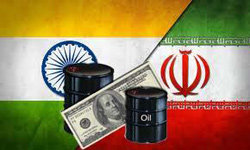 DUBAI (Reuters) – International sanctions designed to stop Iran’s disputed nuclear programme would only really bite if its other big Asian buyers follow India’s lead and bow to U.S. pressure to cut the flow of oil money to Tehran.
The Islamic Republic will forego around $45 million a day or a total of $1.4 billion in August — if it halts around 400,000 barrels per day (bpd) of crude exports to India — where refiners have run up a $5 billion debt since India’s central bank blocked payments to Iran after pressure from Washington.
With Iranian heavy crude selling for around $40 more a barrel than a year ago, Iran’s 2 million bpd plus sales to other customers should make up for the Indian export dip — especially as Iran is likely to store the oil and to sell it later.
But some in the Iranian government fear other buyers could also yield to pressure from Washington to stop helping Tehran’s nuclear plans indirectly through state-controlled oil sales.
“This move by India could also encourage Iran’s other oil customers. Such a trend will harm Iran as the country’s economy is reliant on petrodollars,” said a senior Iranian oil official in Tehran, who asked not to be named.
The U.S. government estimates oil exports generate around half of Iranian government funds and Iran says it can meet all its development needs by selling crude for around $81.50 per barrel.
Iranian heavy crude sells for less than light futures on international markets, where the benchmark Brent was trading above $117 a barrel on Wednesday.
But at over $112 a barrel , according to Reuters data, Iranian crude is still $30 a barrel above Iran’s budgeted price for this year and has remained comfortably above $80 since late 2010.
“Iran is still raking in plenty of oil revenue … but as it is not just how much money they are pulling in but how much they need to balance their current account,” Jamie Webster, senior country strategies manager at PFC Energy in Washington, said.
International sanctions targeting Iran’s lucrative energy industry do not forbid dealing in Iranian crude but many companies, especially those with U.S. operations, have shied away from buying it to avoid clashing with Washington and because of difficulties in organising bank transactions.
Until India’s central bank stopped clearing payments to Tehran in December, Iran was still able to sell all it could produce to energy-hungry buyers in Asia.
In the unlikely event that China also stops buying Iranian crude, it could slash Tehran’s crude earnings by another $60 million a day, wiping out the higher crude price cushion on Iranian finances.
There is little sign that Chinese buyers who took and paid for around 540,000 bpd of Iran’s crude in the first six months of 2011 will follow the example of U.S.-friendly India.
But U.S. allies South Korea and Japan, which are still seen buying Iranian crude purchases after cutting back last year, could cave in to sustained pressure not to dabble in Iranian crude.
Iran does not give official data on where it sells its crude to so it is difficult to build a precise picture.
COMPETING FOR MARKET SHARE
The threat of billions of dollars in lost oil revenues being pocketed by rival crude exporters like Saudi Arabia, which has already stepped in to fill the gap in Indian crude supplies left by Iran, should serve as a stark warning to the government in Tehran.
“This dispute will be solved but it is a reminder to the Iranian government that before saying sanctions have no impact on the country, they should think twice,” independent Iranian analyst Sadegh Sofi said.
“This is a clear result of President Ahmadinejad’s hard line and harsh policies.”
Iranian government officials have repeatedly said sanctions are not hurting and that Iran can develop its vast gas and oil wealth without external project funding or vital technology transfers.
But already the reality is that western sanctions have effectively prevented Iran from fully exploiting the world’s second largest gas reserves, costing the isolated Islamic Republic hundreds of billions of dollars in potential export earnings over years.
“Sanctions on gas and liquefied natural gas (LNG) exports are more serious,” Webster said. “While they may be able to put together some pipeline deals, sanctions will largely keep LNG technology out of their grasp.”
Iran has long dreamt of boosting gas exports to levels close to leading LNG exporter Qatar with which it shares one of the world’s largest fields.
But western sanctions have been highly effective in limiting access to funds and technology it needs to produce enough gas to meet even its own rapidly rising demand, let alone liquefy any gas for export by tanker.
Iran’s own gas consumption has risen more markedly than its output as a result, making it a net importer for most of the last two decades but it remains hopeful of some day being able to produce enough to sell some excess gas some day.
The Iranian government has admitted LNG plans may be set back by a tight sanctions stopping any complicated gas liquefaction technology from falling into Iranian hands.
U.S. ally Qatar has become one of the world’s wealthiest countries by pumping, freezing and selling tens billions of dollars worth of gas a year from the field it shares with Iran.
Tehran still hopes to export gas to Europe by pipeline and signed a deal with uneasy and unstable neighbours Iraq and Syria earlier this week, but analysts say that sanctions discouraging any foreign investment in Iran’s gas fields will likely delay even pipeline export projects for years to come.
(Additional reporting by Parisa Hafezi in Tehran; editing by Barbara Lewis and William Hardy)


