


Mohammad Sharifi-Moghaddam, the Secretary-General of Iran’s Home of Nurse, says that some nurses in Tehran are homeless and, to avoid paying rent, work multiple shifts and sleep in their personal cars during rest hours.
On Saturday, February 22, Sharifi-Moghaddam told the state-run ILNA news agency that these nurses even use hospital showers for bathing and “live in a homeless manner.”
Sharifi-Moghaddam stated that according to World Health Organization standards, there should be three nurses per 1,000 people to prevent increased patient mortality. However, he added that in recent years, Iran has set a record low, with only “one and a half nurses” per 1,000 people.
Nurse Shortage Leads to Closure of Hospital Departments in Iran
The Secretary-General of the Home of Nurse, pointing to the high rate of nurses leaving the profession or emigrating to work abroad, said that the nursing community has become “hopeless” about any improvements in their livelihoods, human resource management, and service tariff systems.
Mohammad Sharifi-Moghaddam stated that the nursing profession in Iran has been in a tense situation for years and added that Milad Hospital in Tehran has been experiencing turmoil in recent weeks.
According to human rights media outlets and some professional nurse news channels, nurses in several other cities in Iran have also staged protests in recent days.
The Telegram channel of the Coordinating Council of Nurse Protests published images of demonstrations by the medical staff of Beheshti Hospital in Kashan on February 20. The channel reported that these nurses gathered to protest against “delayed payment of wages,” “low salary levels,” and “overtime payments and service tariff issues.”
Meanwhile, on August 31, 2024, Masoud Pezeshkian, the President of the Iranian regime, announced that he had received permission from the regime’s Supreme Leader to withdraw funds from the National Development Fund to settle the healthcare workers’ debts.
This decision came in response to widespread protests by nurses in various hospitals across Iran, which lasted for nearly two months.
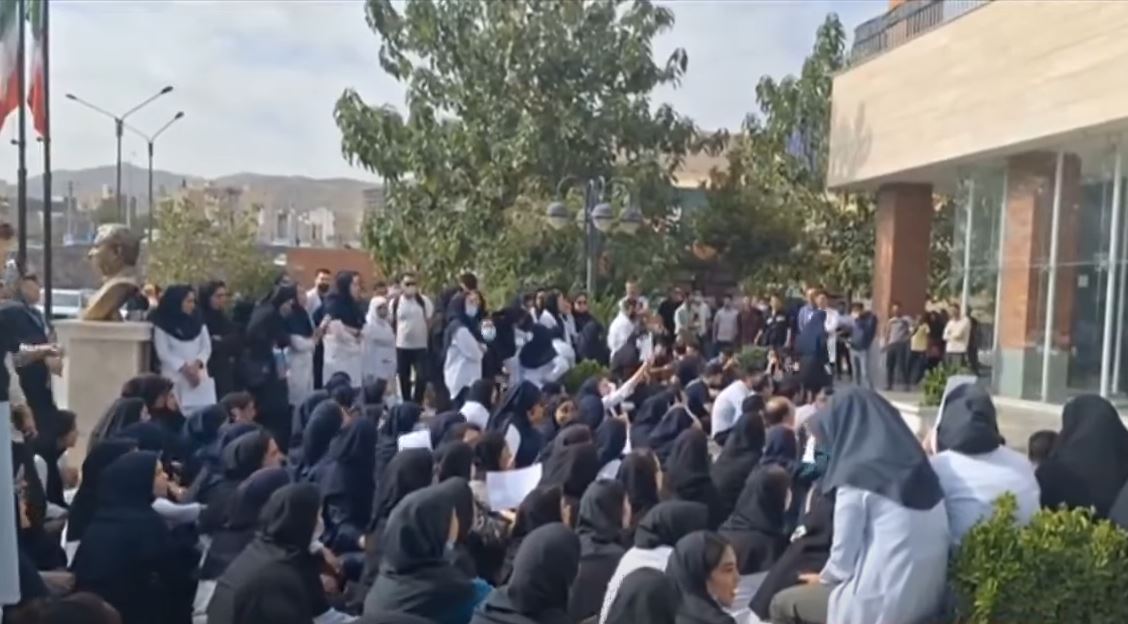
The nurses’ protests began on August 3 last summer with demonstrations and strikes by nurses in hospitals in Shiraz and later spread to other cities.
Nurses protested both the neglect of their demands and the harsh working conditions, including “mandatory overtime with extremely low wages, exhausting work under insults and threats” in their workplaces. According to them, this situation has seen “no change” so far.


