European Parliament Passes Resolution Condemning Gross Human Rights Violations in Iran

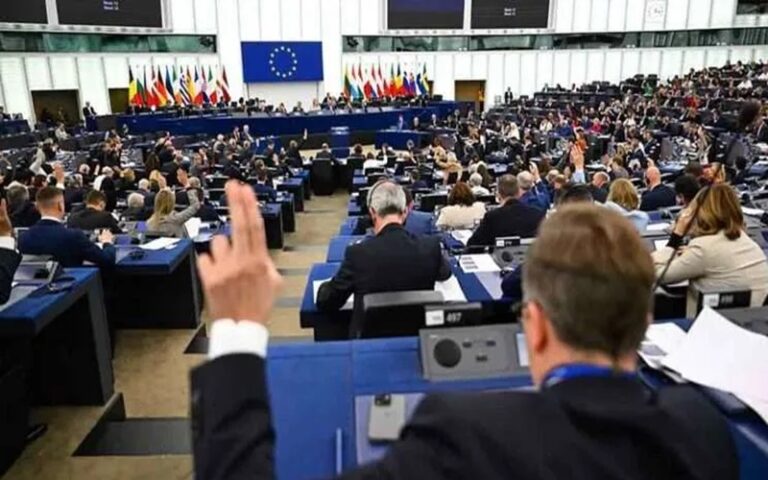
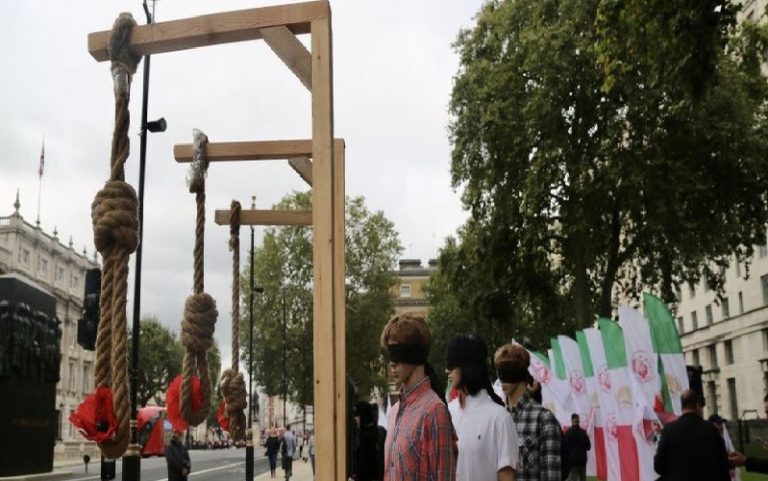
The European Parliament adopted a resolution strongly condemning the systematic repression and widespread human rights violations in Iran. The resolution, which passed with 524 votes in favor, three against, and 41 abstentions, strongly objected to arbitrary arrests, enforced disappearances, torture, extrajudicial killings, and inhumane conditions in Iran’s prisons. In the resolution, the European Parliament called on United Nations bodies to document the crimes of Iran’s regime and ensure that those responsible are held accountable. It also called for Iran’s case to be referred to the International Criminal Court.
Iranian Regime Officials Committed Mass Massacres, Human Rights Body Reports
In addition, the European Parliament urged the Council of the European Union and its member states to implement targeted sanctions against those responsible for human rights violations in Iran, including members of the Islamic Revolutionary Guard Corps (IRGC), security officials, prosecutors, and prison authorities, through asset freezes and travel bans.

Main Debates in the European Parliament Session

On Monday, February 11, 2026, the European Parliament held a session on the systematic repression, inhumane conditions, and arbitrary detentions carried out by Iran’s regime, during which members of parliament strongly condemned the human rights situation in Iran and emphasized the need to support the Iranian people and the Iranian Resistance. During the session, members referred to the regime’s widespread crimes against the people and stressed the need for immediate and decisive action by the international community to support protesters and pressure regime officials. Carlo Ciccioli said that thousands of massacres, arbitrary arrests, disappearances, torture, forced confessions, and show trials; Iran has one of the highest numbers of political prisoners in the world. No one is safe from the regime’s oppression, not even women and minorities. Listing the IRGC as a terrorist organization was a positive step, but it was done far too late. We must support the Iranian Resistance and take further measures to confront this regime. Anna Strolenberg also referred to the horrific conditions of prisoners in Iran and said that thousands have been killed in Iran and tens of thousands in prisons face the threat of execution or rape. We owe it to the people of Iran to see the human stories behind these statistics. We must seize the assets of the IRGC and support those who seek freedom and democracy. Nora Junco García referred to the large demonstration of Iranians in Berlin and said that the European Union must heed the demands of the Iranian people and assist them. The regime spends millions of euros to finance terrorism while the people of Iran live on the equivalent of 5 euros per day. This is a revolution of the thirsty; they do not even have drinking water.

Call for Prosecution of Iran’s Regime Officials

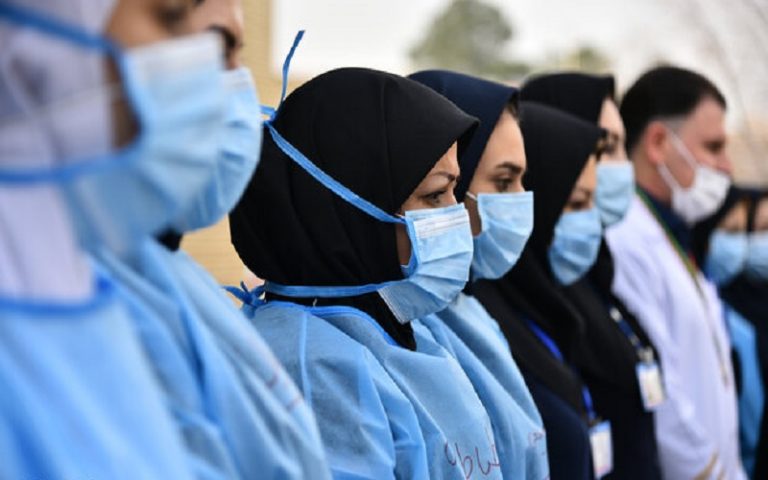
Petras Austrevicius also emphasized that Iran’s regime continues to repress its own people and has made living conditions unbearable. He called for the punishment of those responsible for repression and for increased pressure and sanctions by the European Union. Alice Bah Kuhnke also referred to victims of the regime’s violence and said that injured protesters do not even go to hospitals for fear of arrest, as they may be transferred from there to places from which they will never return. Doctors and medical staff are imprisoned for saving lives. Finally, other representatives such as Antonio López-Istúriz and Reinhold Lopatka also stressed the need for stronger European action against Iran’s regime and said that Iran’s future must be determined by the Iranian people. These statements and follow-ups in the European Parliament ultimately led to the adoption of a resolution condemning the systematic repression by Iran’s regime and calling for documentation of these crimes by United Nations bodies and the imposition of targeted sanctions against those responsible for human rights violations. The resolution was adopted with 524 votes in favor, three against, and 41 abstentions.

Bloomberg: Hilton Reviews Contract for Hotel Linked to Mojtaba Khamenei

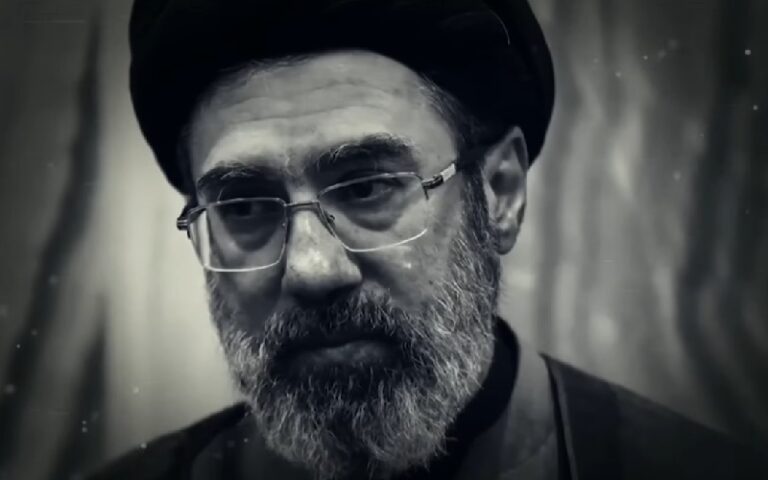
Following a Bloomberg investigation into the asset network linked to Mojtaba Khamenei, the American company Hilton has launched a review over whether to continue managing a hotel in Germany. Mojtaba Khamenei is the second son of Ali Khamenei, the supreme leader of Iran’s regime. Bloomberg reported on Thursday, February 12, 2026, citing informed sources, that Hilton Worldwide Holdings is evaluating whether continuing to operate the Hilton Frankfurt Gravenbruch hotel could expose the company to the risk of US sanctions. According to Bloomberg’s recent findings, the ultimate beneficiary of the property is Mojtaba Khamenei, the second son of Ali Khamenei, who has been under US sanctions since 2019.
The IRGC Affiliate with A 400 million Euro Empire in Europe

Possibility of Suspension or Termination of the Contract

According to Bloomberg, the Hilton Frankfurt hotel is operated under a long-term contract with Allsco Gravenbruch Hotelbetriebsgesellschaft mbH, a company that has owned the property since 2011. Informed sources said that after the publication of Bloomberg’s report, the ownership structure was raised at senior levels within Hilton, and the company, alongside its internal reviews, has also sought the opinion of independent experts. According to these sources, among the options under consideration are suspending or even terminating the management contract for the Hilton hotel in Frankfurt, and the final decision will depend on the outcome of the evaluations.

Ongoing Revelations About Mojtaba Khamenei’s Financial Network

The issue of the Hilton Frankfurt hotel’s connection to Mojtaba Khamenei follows Bloomberg’s earlier exposé of his property empire. A January 28, 2026, Bloomberg report revealed an extensive network of investments in Europe and the Middle East linked to Mojtaba Khamenei. The report stated that the network includes a collection of luxury properties in London, including homes on Bishops Avenue—known as “Billionaires’ Row”—as well as hotels in Europe and offshore companies. Bloomberg wrote that the structure of the transactions was arranged in such a way that no assets were directly registered under Khamenei’s name, and many of the purchases were made under the name of Ali Ansari, an Iranian businessman who has had a long-standing relationship with him. According to the investigation, the financial resources for these purchases were transferred through accounts in banks in the United Kingdom, Switzerland, Liechtenstein, and the United Arab Emirates, and according to informed individuals, the original source of the funds traces back to Iranian oil sales. In its previous report, Bloomberg described Ansari as the face of a major economic network in Iran that includes the Iran Mall project, wholesale markets, and Ayandeh Bank, a private Iranian bank. The outlet, citing informed sources, wrote that his connection to Mojtaba Khamenei dates back to the period when Ali Khamenei served as Iran’s president in the 1980s. The United Kingdom previously placed Ansari on its sanctions list on October 30, 2025, arguing that he had financially supported the activities of the Islamic Revolutionary Guard Corps (IRGC). However, according to Bloomberg, his name does not appear on the US sanctions list.

Damage to Hilton’s Brand Reputation

Geraldine Wong, an analyst at DBS Bank in Singapore, told Bloomberg that operating a hotel linked to sanctioned individuals could call Hilton’s reputation into question. “Investors may question Hilton’s ESG framework and the associated reputational risks in operating an asset owned by sanctioned individuals.” She added that given Hilton’s global operations, these risks are more likely to be reputational rather than operational or financial in nature. Bloomberg noted that as an American company, Hilton is required to comply with US sanctions laws regardless of where its hotels operate. According to information on Hilton’s website and official documents, under such agreements the local owner funds the costs and retains ownership of the property, while Hilton provides the brand, customer network, and sometimes day-to-day management, without making a direct capital investment in the project. However, the disclosure of the hotel’s ultimate beneficiary has now placed Hilton’s management decisions under scrutiny. Bloomberg wrote that the choice facing the company is not merely commercial and could serve as a measure of its adherence to sanctions and its global credibility. Bloomberg wrote that Hilton’s move comes at a time when Western governments have increased oversight of assets linked to Iran. These measures are part of broader efforts to respond to the bloody crackdown on Iran’s national uprising by Iran’s regime, which has resulted in the killing of thousands of people.

Mai Sato: Pattern of Due Process Violations in Iran ‘Repeating on a Broader Scale’

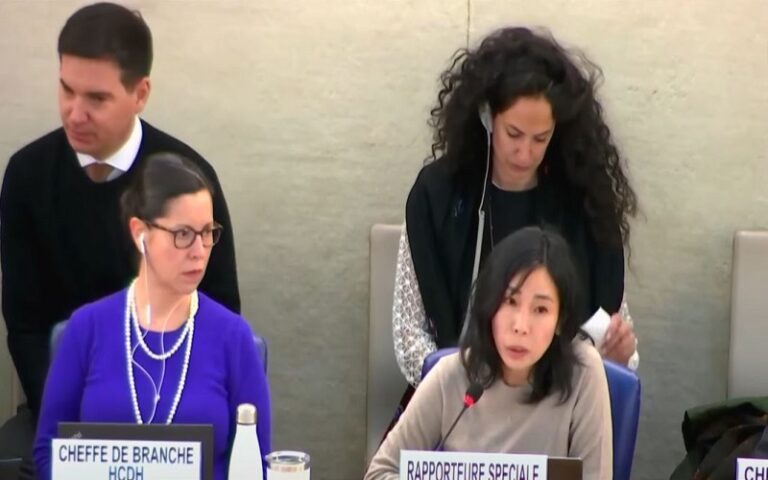
The United Nations Special Rapporteur on the situation of human rights in Iran announced that official communications between her and other UN experts and Iran’s regime show that the pattern of unfair trials, forced confessions, and inhumane detention conditions following the January uprising has not only continued but is being repeated on a broader scale. Mai Sato wrote in a message on the social media platform X that in the weeks leading up to the nationwide protests that began on December 28, 2025, she, along with other United Nations experts, formally corresponded with Iran’s regime regarding three specific issues. According to Sato, the first case concerns Ehsan Faridi, a mechanical engineering student sentenced to death on the charge of “corruption on earth.” She said the verdict was based on reports by security agencies, and the indictment was drafted by a prosecutor’s office whose head was later dismissed over corruption. The second case involves Zahra Shahbaz Tabari, a 67-year-old electrical engineer sentenced to death on the charge of “armed rebellion” (baghi). The ruling was issued in a trial lasting less than 10 minutes, and according to Sato, the main evidence against her was a piece of cloth bearing a protest slogan. The third focus of the correspondence concerned conditions in prisons such as Qarchak, Qezel Hesar, Sheiban, and Lakan, including reports of deaths in custody, torture, executions without prior notice, and denial of contact with family members.
 Worldwide Women’s Coalition Demands Halt to Execution of Iranian Political Prisoner Zahra Tabari
According to the Special Rapporteur, officials of Iran’s regime described the sources of the reports as “uninformed” or “biased with a hostile approach” in their responses and insisted that the judicial proceedings were entirely lawful. However, Sato emphasized that these communications, sent in November 2025, remain significant because the risk of execution for Faridi and Tabari persists, and the patterns of fair trial violations documented in those cases are now being repeated on a broader scale following the nationwide protests. She also reported receiving accounts of forced confessions from protesters and warned that prisons previously documented for abusive conditions may now be holding newly detained individuals. Sato stressed that there is still no precise data on the number of detainees, their places of detention, the number of death sentences issued, or the number of executions carried out. According to her, the official government figure for those killed exceeds 3,000, while reports from civil society organizations indicate higher numbers. In conclusion, the Special Rapporteur referred to the human dimension behind these statistics, mentioning the case of a teenager killed during the protests who had written in a diary about the start of the new school year and hope for “a bright future.” She said this account shows that behind every number lies a life and an unfinished dream.

International Figures Gather in Berlin to Discuss Iran Protests and NCRI’s Ten-Point Plan

Berlin – February 8, 2026

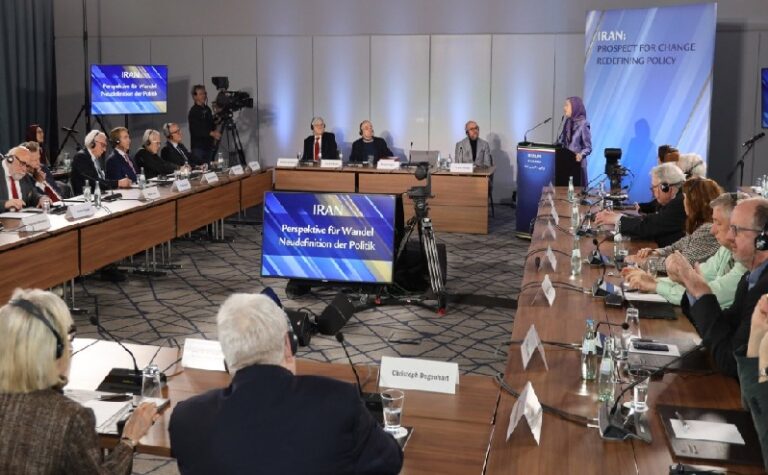
On the anniversary of Iran’s 1979 anti-monarchic revolution, a markedly different vision for the country’s future was presented in Berlin. Policymakers, former senior U.S. and European officials, diplomats, legal scholars, and human rights advocates convened on February 8 against the backdrop of Iran’s nationwide uprising in late December 2025 and January 2026—an uprising that spread across all 31 provinces and was met with a violent crackdown that reportedly claimed thousands of lives. The gathering centered on a single question: what comes next? At the heart of the conference was Mrs. Maryam Rajavi, President-elect of the National Council of Resistance of Iran (NCRI). Her address set the tone for a day in which speakers returned repeatedly to the themes of organized resistance, the failure of Western appeasement policies, and the existence of a structured alternative to Iran’s clerical establishment—outlined in the NCRI’s Ten-Point Plan. “The End of the Beginning” Mrs. Rajavi framed the January uprising as a decisive political development rather than a fleeting episode of unrest. She described it as the “end of the beginning” for the ruling clerical system, arguing that recent events had answered three essential questions: whether change in Iran is inevitable, how it can be achieved, and how stability can be maintained afterward.
Conference in Berlin Featuring Distinguished Figures and Members of the Federal Parliament of Germany
She emphasized that the uprising was neither spontaneous nor leaderless. From its earliest hours, she noted, protesters directed their chants at Supreme Leader Ali Khamenei and openly called for the overthrow of the system. According to Rajavi, the demonstrations differed from previous waves of protest in two significant respects: their level of organization and the active role played by rebellious youth who confronted the Islamic Revolutionary Guard Corps (IRGC), in some instances disarming them. Rajavi described the state’s response in stark terms—shooting unarmed civilians, executing the wounded, and storming hospitals. Such actions, she argued, reflected a system that has “lost the capacity to govern” and now relies on mass repression for survival. Rejecting both reformist narratives and monarchist alternatives, Rajavi warned against what she described as “false alternatives” that would return Iran to autocratic rule. She criticized efforts to promote the son of the deposed Shah as a political solution, stating that a return to dynastic governance would only reconstruct another form of dictatorship. Instead, she presented the NCRI’s Ten-Point Plan as a roadmap for a transitional period. The plan envisions a provisional government following the regime’s fall, tasked with organizing elections for a Constituent Assembly within six months. Rajavi concluded with specific calls to the international community: recognition of the struggle of rebellious youth, activation of the UN sanctions “trigger mechanism,” and legal accountability for regime leaders. A Regime “Factually at an End”? Ambassador Joachim Rücker, former President of the UN Human Rights Council, offered a blunt assessment of Tehran’s international standing. He stated that there is now a “broad, almost complete consensus in the international community that the regime is factually at an end.”
Tens of Thousands Rally in Berlin in Support of Iran’s Uprising and Democratic Change
Rücker cited both internal unrest and the weakening of Iran’s regional proxies as indicators of decline. Domestically, he described a leadership that maintains control only through “unfathomable violence.” Internationally, he called for conditioning relations with Tehran on concrete human rights benchmarks, including abolition of the death penalty and release of political prisoners. He endorsed the NCRI’s Ten-Point Plan as “an excellent platform” for transition, adding that he knew of “no better one on the market.” At the same time, Rücker emphasized that regime change must come from within Iran and not through external military intervention. Charles Michel, former President of the European Council, echoed the sentiment that European policy toward Iran has failed. He described the regime as “weaker than ever,” pointing to economic mismanagement and regional setbacks. Michel drew parallels between Tehran and Moscow, arguing that both rely on internal repression, regional destabilization, and global intimidation. Reflecting on the 2015 nuclear deal, Michel concluded that appeasement had not delivered improvements in human rights or regional stability. Silence, he argued, had proven ineffective, and neutrality was no longer tenable. He characterized the NCRI’s Ten-Point Plan as the “best recipe” for moving from tyranny to democracy, particularly highlighting its commitments to secular governance and gender equality. Historical Parallels and Strategic Warnings Ambassador Robert Joseph, former U.S. Under Secretary of State for Arms Control, described the current moment as “the end of the ending” for the religious dictatorship. He drew attention to the participation of Iran’s merchant class and bazaar community in the January protests, calling it a historically significant development. “If you lose the bazaar, you lose your power,” he observed. Joseph dismissed the prospect of reform within the existing system, stating that repression is embedded in its “DNA.” He also rejected the restoration of monarchy, asserting that Iran’s future should not be defined by a return to dynastic rule. Instead, he called for intensified economic sanctions, closure of regime embassies in Europe, and comprehensive financial isolation. Ambassador Lincoln Bloomfield, former U.S. Assistant Secretary of State, focused on what he described as Tehran’s “information war.” He argued that Western governments have at times downplayed the regime’s human rights record to preserve nuclear negotiations, including overlooking the 1988 massacre of political prisoners. Bloomfield defended the People’s Mojahedin Organization of Iran (PMOI/MEK) against longstanding allegations, attributing many accusations to regime propaganda. He asserted that the clerical establishment fears the NCRI and MEK because they present an ideological alternative to the doctrine of Velayat-e Faqih. He also referenced Section 312 of Iran’s Ministry of Intelligence, describing its mission as targeting exiled Iranians abroad. The Question of Transition Several speakers addressed the mechanics of political transition. Ambassador Andreas Reinicke, former German Ambassador to Syria and Tunisia, warned of the risks posed by fragmented opposition movements, drawing parallels to Syria. He described the Ten-Point Plan as an essential “signal and symbol” that a coherent alternative exists. Joachim Bitterlich, former advisor to Chancellor Helmut Kohl, acknowledged European missteps over four decades. He expressed concern that renewed negotiations could serve as a stalling tactic for Tehran’s nuclear ambitions. If Iran were to acquire a nuclear weapon, he warned, it could become “untouchable.” Dr. Rudolf Adam, former Vice President of Germany’s Federal Intelligence Service, cited historical precedents to argue that dictatorships collapse when internal loyalties erode. He rejected both dynastic restoration and externally imposed democracy, emphasizing unity among opposition forces as critical. He described the Ten-Point Plan as the only credible program to escape what he called the cycle of repression embodied by both the Shah’s SAVAK and the clerical regime’s IRGC. Günter Nooke, former German Human Rights Commissioner, offered one of the most pointed critiques of past German policy. He characterized the nuclear deal as something Germany “should apologize” for. Nooke proposed establishing an “International Human Rights Observatory,” modeled after West Germany’s Cold War-era documentation center, to systematically record regime crimes and signal future accountability. Professor Christoph Degenhart, a constitutional law expert, addressed the role of media and disinformation. He accused Tehran of influencing narratives in German outlets and highlighted legal victories overturning terrorist designations of the PMOI. He called for more proactive engagement in countering disinformation campaigns. A Rallying Moment Martin Patzelt, former member of the German Bundestag, spoke of a recent rally in Berlin that drew large crowds despite freezing temperatures. He described it as a “paradigm shift,” citing visible unity among Kurds, Baluchis, and other ethnic groups as evidence of a shared national aspiration. Patzelt framed support for Iranian democracy as a test of Western values. Practical measures, he suggested, should include cutting financial channels to the regime and denying visas to IRGC members. Letting the Facts Speak Across ideological lines and national backgrounds, the speakers in Berlin converged on several observable realities: a nationwide uprising that spanned all provinces; a crackdown that resulted in mass casualties; a clerical establishment facing economic crisis and regional setbacks; and an organized opposition presenting a detailed transition framework. Whether these developments mark the beginning of systemic change remains to be seen. But in Berlin, the message was unmistakable: the debate is no longer about whether alternatives exist. It is about which path—continued engagement with the current authorities or support for a structured democratic transition—will shape Iran’s future. For the participants gathered on February 8, the answer lay in recognizing both the scale of domestic unrest and the organized political platform presented by the NCRI. The events in Iran have altered the conversation. The conference in Berlin sought to define what comes next.


Iran Marks 100 Executions in One Week, 241 Executions in Three Weeks

Statistics released by the National Council of Resistance of Iran (NCRI), the main Iranian opposition coalition, show that between February 3 and February 10, at least 99 prisoners were executed in various prisons across the country. Including these cases, the total number of executions in the first three weeks of Bahman (January 20 to February 8) has reached at least 243 individuals.
Iran’s ‘No to Executions Tuesdays’ Campaign Marks 107th week in Prisons Across the Country
The total recorded executions in the three weeks ending February 10 have reached at least 243 individuals. Meanwhile, since March 21, 2025, the beginning of the Persian year 1404, the regime has executed 2,476 people in various prisons across the country, marking an unprecedented record during all the years of Ali Khamenei’s rule as supreme leader of Iran’s regime. Another telling figure in this regard is the number of executions carried out during the presidency of Masoud Pezeshkian, the current president of Iran’s regime, which has so far reached 3,443 individuals.

Iran’s Youth Are Selling Their Kidneys as the Economy Continues to Plunge

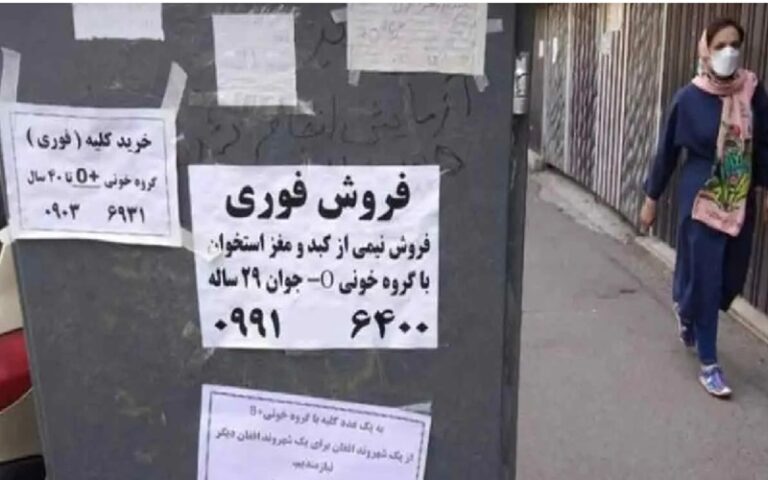
The worsening livelihood crisis in Iran has once again pushed the phenomenon of kidney sales to the top of the news. This time, however, the scope of the tragedy has expanded. Young people who should be building the future are now offering parts of their own bodies in order to survive. The state-run website Didban Iran published a report on February 10 about kidney sales. The report highlighted the spread of this phenomenon among those born in the 2000s. A review of advertisements shows that the sale of organs such as kidneys is no longer limited to traditionally vulnerable groups. The names of young people appear who have not yet entered stable employment. Many of them are under pressure from debt and unemployment. The soaring cost of living has pushed them to the brink of dangerous decisions.
A Report on Iran’s Chaotic Market and Regime Thefts
On social media, advertisements for the sale of organs such as kidneys are being posted with unprecedented figures. Some sellers have announced prices as high as 50 billion rials (approximately 31,250 dollars). Although these amounts are not always realized, they reveal the depth of the crisis. In these ads, young age and full health are listed as advantages. Under Ali Khamenei’s corrupt rule, the human body has been turned into a commodity for trade.

The Spread of Kidney Sales Among Young People

The decline in the average age of sellers is a serious warning sign. The entry of those born in the 2000s into the organ market signals the collapse of economic security. This generation should be engaged in education and skill-building. Instead, they see no option but to sell a kidney to pay rent and debts. The physical and psychological consequences of such a decision can be irreversible. The increase in organ sales is not merely a medical issue. This phenomenon is a direct reflection of structural poverty and widespread corruption. The economic policies of the clerical regime have shrunk people’s livelihoods. Young people have become victims of inefficiency and systematic plunder. While the country’s resources are spent on repression and foreign adventurism, citizens are selling their body parts just to stay alive. The conclusion is clear. The sale of body organs is the naked image of a regime that has destroyed human values. A generation that should represent hope for the future has been driven into the organ market. This tragedy is the product of four decades of corrupt and repressive rule. A society whose youth sell their own bodies will not endure under such a structure.

Revelations of A Physician on The Bloody Crackdown in Iran and Hospitals of Fear

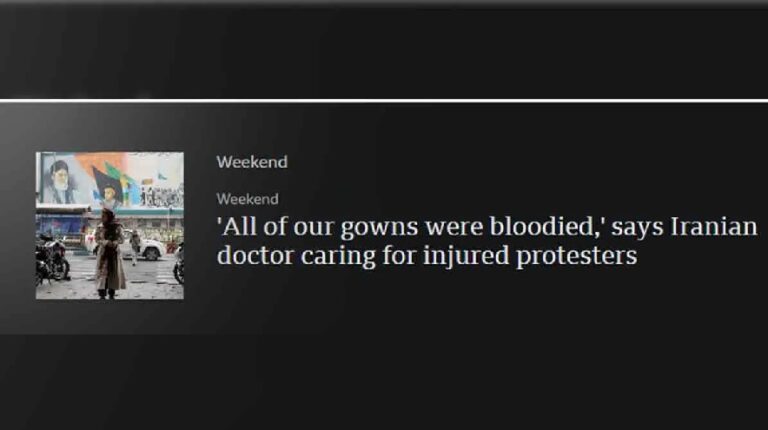
Every day, new dimensions are revealed about the bloody crackdown on the nationwide uprising of the Iranian people, detailing how the Iranian regime’s security forces carried out a large-scale massacre in January. An Iranian physician, who has temporarily left the country, described what took place in one of Iran’s major cities in an interview with the BBC World Service program “Weekend.” His account provides a clear picture of the bloody repression and its direct consequences for civilians and medical staff. The interview, released alongside a clip of his remarks, has received widespread attention.

Doctors’ report on the human dimensions of the bloody crackdown on the uprising

The physician said that as of Thursday, January 8, internet access was completely cut off. The shutdown disrupted the process of prescribing medication. Many patients were left without prescriptions. Contact with colleagues became impossible. Access to medical records was disabled. According to him, treatment was halted at a critical moment, and the pressure on medical staff multiplied several times over. He emphasized that he had never witnessed such scenes before. The wounded were brought in continuously. People would drop off the injured and return to bring others. Many of the wounded were young. The scenes were heartbreaking. The medical staff’s gowns became stained with blood. Paramedics wept as they worked. According to him, describing what happened is not easy. This part of his account reveals the human dimensions of the bloody repression.

Hospital: a scene of fear and the erasure of evidence

The physician said that with the arrival of security forces, even the dead were shown no mercy. Bodies were collected from various locations. Many of the injured refused to be transferred to hospitals. Fear of arrest in medical centers was widespread. This fear delayed treatment and endangered lives. Instead of being a place of refuge, the hospital turned into a scene of fear. He also reported that the intelligence unit of the Islamic Revolutionary Guard Corps (IRGC), the regime’s main military and security force, visited the hospital. According to him, medical staff were interrogated over the failure to register the names of the injured. The doctors’ response was clear: the volume of admissions did not allow time to record information. The priority was saving lives. These pressures are described as part of the mechanism of the bloody crackdown aimed at erasing evidence. In conclusion, the physician said he does not believe Iranians will ever return to their previous lives after these events. His remarks present a vivid picture of the deep divide between society and the ruling establishment. They show that the ruthless and bloody crackdown did not only target the streets, but also wounded healthcare, public trust, and the future itself.

A Report on Iran’s Chaotic Market and Regime Thefts

Hossein Samsami, a member of the Iranian regime’s Majlis (parliament), announced that foreign currency revenues from non-oil exports from 2018 to November 2025, amounting to about 76 billion dollars, have not been returned. This figure has now reached 85 billion dollars. He said: “The issue of foreign currency and currency restrictions is one of the country’s important issues. Foreign currency from non-oil exports from 2018 to November 2025, amounting to about 76 billion dollars, has not been returned, meaning matured obligations that have not been fulfilled. This amount has now become 85 billion dollars, meaning that in about one and a half months roughly 9 billion dollars has been added, despite the fact that we sharply increased the exchange rate, meaning we raised it from 700,000 rials to 1,300,000 rials and 1,400,000 rials, but still the currency is not returning. This must be paid attention to.”
Sharp Increase in the Iranian Regime’s Cryptocurrency Activities

The surge in foreign currency prices and the tightening of people’s livelihoods

Samsami added: “Do the country’s executive officials know where the economy and people’s livelihoods are heading now. Do you know that these policies have led to an increase of 30% to 50% in nearly all goods, from detergents to hygiene products, various beverages, motor oil, car tires, automobiles, and construction materials? The mechanism works this way: when foreign currency increases, through imports, through the commodities exchange, and through the dollarization laws that we enacted in the Majlis in previous years, the prices of goods rise.”

Shabakeye Khabar television (a state-run news channel), February 8

Samsami had previously stated that 20 billion dollars of foreign currency from non-oil exports had never returned to the country. This admission is not an administrative error, but a clear sign of organized plunder at the heart of an economic structure that has left the hands of regime thieves free to loot as much as they can from this windfall.

Organized plunder and the immunity of select exporters

Referring to a list of 24,000 exporters, Samsami emphasized that the main portion of the unreturned currency was in the hands of a few hundred major exporters. The names of large shipping and petrochemical companies were raised, but no action was taken. The ruling establishment, instead of asserting authority over these networks, chose silence.

Currency policy and the sacrifice of people’s tables

To force exporters to return foreign currency, the regime chose the path of increasing the official exchange rate. The 400,000-rial rate rose to about 700,000 rials, imposing heavy inflation on society. Samsami clearly stated that this decision meant direct theft from people’s tables to fill the pockets of exporters. In this process, the ruling establishment knowingly sacrificed the people to preserve the interests of a limited group. Organized plunder here became official policy.
Prices of Iranian-Made Vehicles Jump by 50% in Less Than One Year

The currency market and the collapse of the regime’s authority

This Majlis member also pointed to the role of foreign markets such as Sulaymaniyah (in Iraq) and Herat (in Afghanistan) in determining the exchange rate. He said: “The country’s exchange rate is practically determined by a few individuals across the borders, and the entire ruling establishment adapts itself to it.” These remarks present a clear picture of the collapse of the economic authority of Ali Khamenei’s regime. A regime that claims control is, in practice, subordinate to opaque and corrupt networks.

Secretary-General of Iran’s House of Nurses: Nurses Have Been Arrested in Several Cities

Mohammad Sharifi Moghaddam, secretary-general of the Iranian regime’s House of Nurses, said that a number of nurses were arrested during the January protests, but there is no precise figure available. He stressed that those who should act in support of the detained nurses have stepped aside and that no specific follow-up has been carried out in this regard. Sharifi Moghaddam said on Tuesday, February 10: “Nurses have been arrested in Isfahan, Tehran, and some other cities.” According to him, in addition to the arrests on January 8 and January 9, nurses were also detained in the following days: “For example, last week a nurse working at a home nursing care center was arrested.”
Iran’s Healthcare System Faces Shortage Of 165,000 Nurses
Sharifi Moghaddam emphasized: “Those who should take action in support of these individuals have stepped aside, and no specific follow-up regarding the situation of the detained nurses has taken place.” Previously, following the publication of contradictory figures regarding the arrest of healthcare workers during protests in Iran, the head of the country’s Medical Council Organization confirmed the arrest of more than 50 individuals, including doctors, nurses, and other healthcare staff. Mohammad Rezaizadeh, on Saturday, February 7, in an interview with the state-run newspaper Etemad, said that since some of these 50 individuals are not physicians and belong to other segments of the medical and paramedical community, such as nursing, the Medical Council bears no responsibility toward them. He added: “The number of individuals we initially identified was 33, about whom information had been released; individuals who may have been detained for one hour. After reviews, the number of those who were detained reached at least 23, and considering the releases in recent days, this figure has decreased to fewer than 17.” These regime figures were announced under conditions in which information published on social media indicates that at least 30 members of the medical staff are in detention, including Ali Fakher and Saber Dehghan, two physicians who were arrested in recent days by Iranian security agents. According to received information, Nastran, the wife of Ali Fakher, and their daughter have also been arrested.

U.S.-Based Institute: Iran Fortified Isfahan Nuclear Facility as It Did Before the 12-Day War

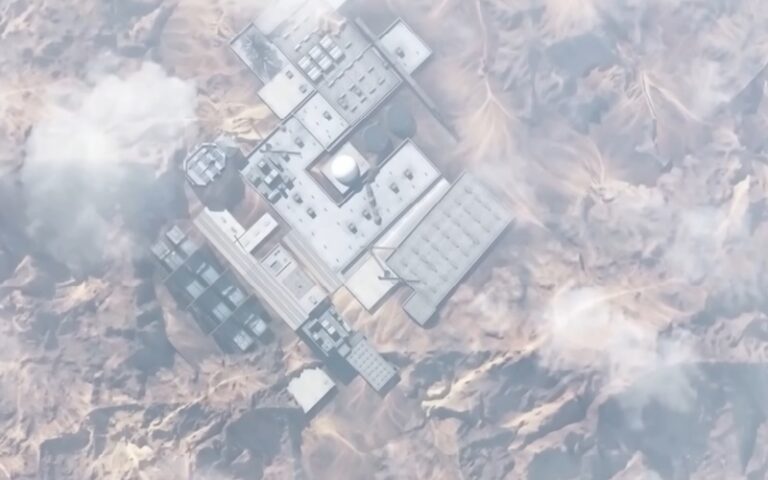
The Institute for Science and International Security, a U.S.-based organization, reported on Monday, based on the latest satellite images, that Iran has taken new measures to fortify the Isfahan nuclear facility against a potential attack by Israel and the United States. The institute said Iran had carried out similar actions prior to the U.S. attacks on Iran’s nuclear facilities in June. According to the Institute for Science and International Security (ISIS), based on high-resolution satellite images recorded on Sunday, Iran has covered the entrances of the Isfahan nuclear facility’s tunnels with soil.
Head Of Atomic Energy Organization of Iranian Regime: Grossi Is ‘Part of the Enemy’
According to the report, the central and southern entrances of the nuclear facility, which were targeted in the U.S. June attacks known as “Operation Midnight Hammer,” have been completely buried under soil to the point that they are no longer identifiable. The northern tunnel entrance, which has more extensive passive defense measures, has also been filled with soil and blocked. According to the Institute for Science and International Security, in light of these measures, it appears that the Iranian regime is deeply concerned about U.S. and Israeli airstrikes and ground assaults against these fortified nuclear facilities. According to the report, filling the tunnel entrances with soil can reduce the impact of any potential air attack. This protective measure would also make it difficult for commandos, in the event of a potential raid, to access the core of the facility, which may be where Iran’s highly enriched uranium stockpiles are stored. According to the institute, it is also possible that Iran has moved equipment and materials into the tunnels for protection. However, this cannot be confirmed. The Institute for Science and International Security, which works on countering nuclear proliferation and monitors Iran’s actions at nuclear facilities, added that the Iranian regime last took such measures in the days preceding the U.S. June attacks on Iran’s nuclear facilities known as “Operation Midnight Hammer.” In this operation, which was carried out in the middle of the twelve-day war between Iran and Israel, the United States targeted the Fordow, Natanz, and Isfahan nuclear facilities with bunker-buster bombs and cruise missiles. Since then, the fate of Iran’s uranium stockpiles enriched up to 60% has remained unclear. This report was published as representatives of the Iranian regime and the United States met in Muscat, the capital of Oman, for the first time since the twelve-day war, with the aim of resuming nuclear negotiations. According to officials from both sides, one of the key issues in these talks is the fate of these uranium stockpiles. Mohammad Eslami, head of the Atomic Energy Organization of the Iranian regime, announced on Monday, February 9, that if “all sanctions” against Iran are lifted, Tehran is prepared to “dilute” its uranium enriched up to 60%.