Iranian Political Prisoner Sentenced to Death

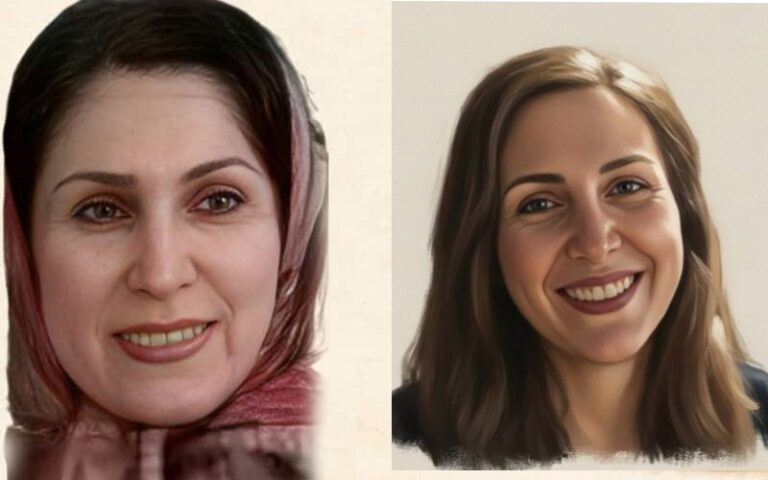
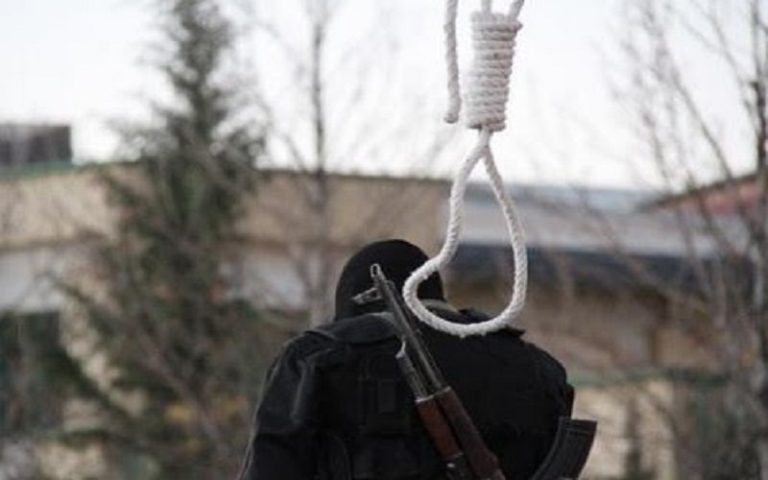
The Revolutionary Court of Rasht has sentenced Zahra Shahbaz Tabari, a 67-year-old political prisoner, to death. Branch One of the Revolutionary Court of Rasht sentenced political prisoner Zahra Shahbaz Tabari to death on charges of “collaboration with groups opposing the regime.” The ruling was issued despite “very limited and unreliable evidence.” Judge Ahmad Darvish-Goftar issued the death sentence last week during a video-conference hearing for Shahbaz Tabari. The political prisoner from Rasht has been accused of “collaboration with the People’s Mojahedin Organization of Iran (PMOI/MEK).” The PMOI/MEK is the largest organized opposition group to Iran’s regime. Iran’s regime has turned executions into a tool of control and repression. The regime’s policy of executions serves not justice, but the continuation of institutionalized violence and an admission of its inability to enact social reform.

Trial lasted less than 10 minutes

Shahbaz Tabari’s family described the entire court process as “symbolic and illegal.” In an interview with the Human Rights Activists News Agency (HRANA), Shahbaz Tabari’s child said: “The trial lasted less than 10 minutes. My mother did not have effective access to an independent lawyer. The lawyer appointed by the judiciary endorsed and relayed the verdict without offering any real defense. The entire trial was a show.” He added: “The judge announced the death sentence with a smile during a 10-minute session. The appointed lawyer also smiled when he heard the verdict.” He called the charges against the 67-year-old political prisoner “fabricated” and stressed that his mother “had no connection whatsoever with any political group or opposition movement.” Earlier, on July 27, Iran’s regime executed two political prisoners, Mehdi Hassani and Behrouz Ehsani Eslamloo, on charges of membership in the PMOI/MEK.
Global Condemnation of the Execution of Behrouz Ehsani and Mehdi Hassani
Another political prisoner, Manouchehr Fallah, imprisoned in Rasht, has also received a death sentence on the same charge. These actions by the Iranian regime reflect its fear of the growing activities of the resistance movement. Through such measures, the regime seeks to intimidate and influence public opinion.

Limited and unreliable evidence

According to Zahra’s relatives, the case evidence consists solely of “a piece of cloth bearing the slogan ‘Woman, Resistance, and Freedom'” and “an unpublished voice message,” with no indication of organizational or military activity. Her child added that Iranian regime security officials even attempted to add more serious charges, including “possession of weapons,” to the case—an allegation that, considering her age and professional background, is “baseless and absurd.” Shahbaz Tabari is a graduate of Isfahan University of Technology, an electrical engineer, and a member of the Iranian Engineering Organization. She holds a master’s degree in Sustainable Energy from the University of Borås in Sweden. She had previously been arrested for posting peaceful content on social media and was released after three months under electronic monitoring. On April 17, security forces raided Shahbaz Tabari’s home, arrested her, and transferred her to Lakan Prison in Rasht. During the operation, agents searched her residence and confiscated her mobile phone, laptop, and those of one of her family members. According to Shahbaz Tabari’s family, she has only seven days to appeal the death sentence issued against her.

With The Debt of a Single Bank in Iran, 120 Specialized Hospitals Could Be Built

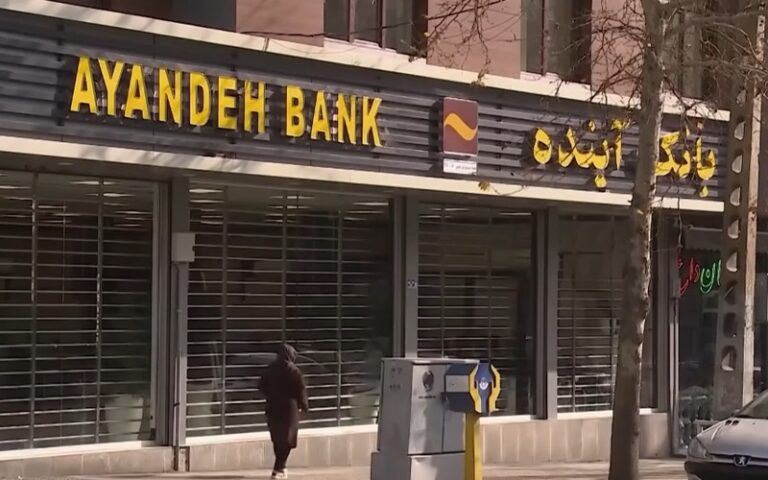
Hossein Raghfar, a pro-regime economist, reacted to the recent crisis involving Iran’s Ayandeh Bank, saying that with its tens of trillions of tomans of debt to the Central Bank, at least 120 specialized hospitals could be built in Iran. On Saturday, October 25, Raghfar said in an interview that Ayandeh Bank has losses of 4.5 quadrillion rials (approximately 4 billion dollars) and owes 3 quadrillion rials (approximately 2.7 billion dollars) to the Central Bank. According to him, the bank also loaned 1.3 quadrillion rials (approximately 1.13 billion dollars) to 61 individuals without collateral and has not recovered the money.
U.S. Treasury Identifies $9 Billion in ‘Iranian Shadow Banking’ Activity
The economist added that this amount of debt is 25 times the cost of constructing the Persian Gulf refinery and could be used to build 120 specialized hospitals or a railway network connecting Tehran, Mashhad, Shiraz, Isfahan, and Tabriz. On October 23, Mohammad Reza Farzin, the governor of the Central Bank of Iran’s regime, announced the dissolution of Ayandeh Bank and its merger into Bank Melli (the National Bank of Iran). In a statement, the Central Bank also said that due to accumulated losses of 5.5 quadrillion rials (approximately 4.78 billion dollars), overdrafts of 3.13 quadrillion rials (approximately 2.7 billion dollars), a negative capital adequacy ratio of 600%, severe liquidity imbalance, and the non-repayment of 80% of granted loans, it was necessary for Ayandeh Bank to enter the “resolution process.” Ali Ansari, the founder of Ayandeh Bank and owner of the Iran Mall (one of the largest shopping centers in the Middle East), reacted to the bank’s dissolution without mentioning its massive debts, calling Ayandeh’s activities a symbol of “effort and intelligence” and saying his “conscience is clear.” Raghfar continued, describing Ayandeh Bank as one of the symbols of structural corruption in Iran’s banking system. He said that while such enormous resources have been destroyed, the bank’s CEO mocks public opinion and speaks of rationality in economic management. Criticizing oversight institutions, Raghfar added: “The question is, where was the government during all this time, and why did it delay the dissolution of Ayandeh Bank? The excuse of lacking proper laws for this delay is irrelevant and unrealistic.” The economist referred to the backing of unbalanced banks as “power institutions” and emphasized that as long as major bank debtors are not identified and the judiciary and parliament fail to act against them, the banking crisis will persist. In recent days, many social media users, referring to Ali Ansari’s close relationship with Mojtaba Khamenei (the son of regime supreme leader Ali Khamenei), described the structure of Iran’s regime as the main driver of widespread financial corruption. Financial reports of Ayandeh Bank show that by mid-June, about 98% of its major loans—amounting to 1.2 quadrillion tomans (approximately 1.043 billion dollars)—were classified as non-performing, effectively meaning that the bank’s repayment cycle had collapsed. Raghfar also commented on Bank Sepah, saying that “before merging with the five military and security banks, it was not unbalanced,” but the merger introduced “corrupted assets and massive debts” into its balance sheet. The economist warned: “With Ayandeh Bank’s massive debt, the country’s economy has become extremely fragile, and in the future, Bank Melli may also join the list of unbalanced banks.” Mohammad Bagher Ghalibaf, the speaker of Iran’s regime parliament (Majlis), on October 25, called the decision to dissolve Ayandeh Bank “a serious starting point for reforming the banking system and thereby reducing the country’s inflation,” adding that similar actions should be taken against other loss-making banks and financial institutions. He urged the Central Bank to offset Ayandeh Bank’s accumulated losses through “the assets of its main shareholder.” Fatemeh Mohajerani, the government’s spokesperson, also cited “banks’ imbalance and excessive withdrawals” as one of the causes of inflation, assuring the public that depositors “should not worry” because their accounts will be transferred to Bank Melli. Ayandeh Bank was established in 2012 following the merger of Tat Bank, Salehin Credit Institution, and Ati Credit Institution. According to unofficial estimates, the bank currently employs around 4,000 staff members and provides services to nearly three million customers through 270 branches across Iran.

Critical Air Pollution in Iran’s Major Cities

0
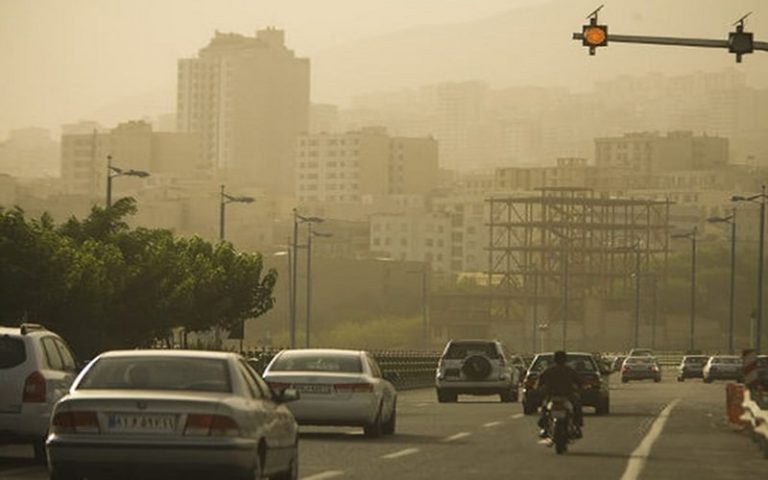
The air in several cities of Khuzestan Province has reached the red alert level, meaning it is unhealthy for all groups. In Isfahan and Mashhad, air quality is reported to be at an orange level, unhealthy for sensitive groups. According to air quality monitoring data on Friday, October 24, the city of Hoveyzeh, with an air quality index (AQI) of 158, is classified as “unhealthy for all groups” and is currently the most polluted location in Khuzestan Province. The Air Quality Index (AQI) is divided into five main categories: 0–50 represents clean air, 51–100 indicates moderate air quality, 101–150 is unhealthy for sensitive groups, 151–200 is unhealthy for everyone, 201–300 is very unhealthy, and 301–500 represents hazardous air conditions.
Air Pollution Emergency in Three Iranian Provinces
The cities of Behbahan and Khorramshahr recorded AQI levels of 152 and 151, respectively, placing them in the red alert zone. Experts have warned that fine particulate matter smaller than 2.5 microns—about one-thirtieth the diameter of a human hair—can penetrate deep into the lungs and cause cardiovascular, respiratory, and neurological problems.

Warning in Khuzestan, Rising Pollution in Tehran

While Khuzestan is under an air pollution alert, Tehran’s air quality index is also on the rise. Reports indicate that on the first Friday of November, Tehran’s air quality index reached 108, placing it in the orange zone—unhealthy for sensitive groups. Over the past 24 hours, the average AQI in Tehran was 99, which is considered acceptable. According to data from the Tehran Air Quality Control Company, the capital had only 10 days of acceptable air quality in October, while 19 days were unhealthy for sensitive groups and one day was unhealthy for all groups. The most polluted day of the month was October 2, when the AQI reached 181 due to particulate matter smaller than 10 microns. For most polluted days in October, Tehran’s main pollutant was fine particulate matter smaller than 2.5 microns, which was responsible for reduced air quality on 20 out of 30 days that month.

Situation in Other Cities

Based on data from 13 active monitoring stations, Isfahan’s 24-hour average AQI stood at 121, indicating orange alert conditions—unhealthy for sensitive groups. In Mashhad, the 24-hour average AQI was 124, also reflecting unhealthy conditions for sensitive groups. In recent weeks, multiple cities across various Iranian provinces have been struggling with air pollution and dust storms, disrupting residents’ daily lives. Over the past years, air pollution levels have repeatedly reached critical points, and the spread of dust particles has worsened Iran’s environmental crises and public health threats. Despite the worsening situation, Iran’s regime has failed to present a coherent or sustainable plan to control and manage this crisis.

Water Inflow into Dams in 21 Iranian Provinces Down 39% Compared to Last Year

0
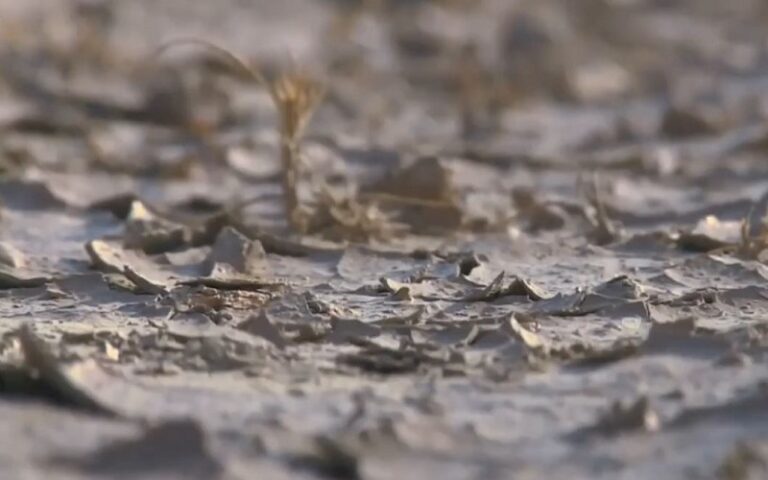
According to the latest data on Iran’s dam reservoirs, the volume of water inflow into dams from September 23 (the start of the current water year) to October 18 has decreased by 39%, and rainfall in 21 provinces has been recorded as zero. Currently, Iran’s dams are on average only 34% full. The state-run ILNA news agency reported on Friday, October 24, that the total volume of water entering Iran’s dams from September 23 to October 18 was 780 million cubic meters — a 39% drop compared to 1.29 billion cubic meters during the same period last year. Water discharge has also decreased by 29% due to management restrictions.
Three Dams in Iran Dried Up, Eight More Near Collapse
According to official statistics, the total water storage in the country’s dams has now reached 17.66 billion cubic meters, compared to 23.31 billion cubic meters during the same period last year — showing a 24% decline this year. The average filling rate of Iran’s dams is estimated to be only 34%. On September 22, Mohammad Reza Kavianpour, head of the Water Research Institute, warned that rainfall this fall would be “below normal” and that the water crisis in the country would persist. That same day, the state-run IRNA news agency reported that only 36% of Iran’s total dam capacity had been filled. Reports indicate that 22 dams across the country are in a critical condition, with less than 15% capacity. Among the dams supplying water to Tehran, Amir Kabir Dam is at 11%, Lar at 2%, Taleghan at 38%, and Latyan-Mamlu at 9% capacity. In other regions of the country, the severe decline in water reserves continues. Dams in the Lake Urmia basin have fallen by 40% compared to last year, while in Khuzestan Province, the Karkheh, Marun, and Jarreh dams have experienced declines of 49%, 70%, and 26%, respectively. In Hormozgan Province, the Esteghlal and Shamil-Niyan dams have experienced up to 100% depletion of their reserves, while in Golestan Province, the Voshmgir, Boostan, and Golestan dams have virtually dried up.

Zero Rainfall in 21 Provinces

According to official data, the total rainfall from September 23 to October 17 was only 1.9 millimeters, while the long-term average is 56 millimeters and last year’s figure was 3.9 millimeters. Based on these figures, 21 provinces in Iran recorded no rainfall in October, raising serious concerns about water supplies for agriculture and drinking in the coming months. The provinces without rainfall include Tehran, Markazi, Kermanshah, Khuzestan, Fars, Kerman, Khorasan Razavi, Isfahan, Sistan and Baluchestan, Kurdistan, Hamedan, Chaharmahal and Bakhtiari, Lorestan, Ilam, Kohgiluyeh and Boyer-Ahmad, Bushehr, Zanjan, Yazd, Hormozgan, Qom, and South Khorasan. Experts warn that continued rainfall decline and falling dam reserves could make this one of Iran’s driest autumns in the past decade. Meanwhile, despite repeated warnings about water resource management, no sustainable solutions have been implemented, and in some cases, officials of Iran’s regime have resorted to temporarily shutting down activities in certain provinces as a measure to prevent further deterioration.

Amnesty International Reports Over 1,300 Executions in Iran in 2025

Amnesty International announced that more than 1,300 people have been executed in Iran during 2025 and called on the international community to take immediate action to “stop this horror.” In a statement on Friday, October 24, the organization described the execution of over 1,300 people in the current year as “the highest figure recorded in decades.”
Amnesty International: More Than One Thousand People Executed in Iran in 2025
The human rights organization warned that thousands of others are at risk, as Iranian authorities continue to use the death penalty as a “weapon.” On Thursday, October 23, Amnesty International had also reported that more than 1,000 executions had taken place in Iran since the beginning of 2025 and called for an immediate halt to the killings. The organization stressed that executions in Iran are carried out “after unfair trials and with the aim of suppressing protests and minorities.” In response, political prisoners in various prisons have protested the wave of executions through sit-ins, issuing statements, and participating in “No to Execution” campaigns.

At Least 236 Prisoners Executed in October

On Thursday, October 23, the human rights website HRANA reported in its latest monthly update on human rights violations in Iran that the Iranian regime’s judiciary executed at least 236 people between September 23 and October 22 in prisons across the country. These figures show that in the past month, an average of eight people were executed every day—equivalent to one execution every three hours. According to HRANA, in addition to the executions carried out, at least 12 new death sentences and seven confirmations of execution verdicts were issued for prisoners in Iran. Among those executed were two individuals, Ali Aghajeri and Mohammadreza Shiheki, who were under 18 years old at the time of arrest and alleged offense. Currently, in addition to inmates convicted of general crimes who are executed daily in Iran’s prisons, about 70 prisoners nationwide with political charges are at risk of having their death sentences confirmed or carried out, while over 100 others face the possibility of receiving death sentences on similar charges. In this context, United Nations Secretary-General António Guterres, in his latest report to the General Assembly published on Tuesday, October 21, expressed concern over the surge in executions, torture of detainees, suppression of minorities, and increasing restrictions on civil liberties. According to the report, in the first half of 2025, at least 612 people were executed in Iran—a 119% increase compared to the same period last year. Guterres expressed regret over the Iranian regime’s disregard for international recommendations to halt executions and to limit death-eligible crimes, describing public executions as “contrary to the prohibition of torture and inhuman treatment.”

Iranian Worker at Risk of Execution

Milad Panahipour, an attorney, announced that his client, 42-year-old laborer and political prisoner Manouchehr Fallah from Gilan Province, currently held in Lakan Prison in Rasht, has been sentenced to death on the charge of “destruction with intent to confront the government.” According to the lawyer, the charge is based on the explosion of a small firecracker outside the Gilan courthouse. On Thursday, October 23, Panahipour told the state-run news website Emtedad that Fallah lost his father in childhood and that the incident leading to his death sentence caused only about 150 million rials (approximately $130) in damages. Despite this, the court issued a death sentence.
Iran: 88 Public Executions In 12 Years
The lawyer explained that since childhood, after his father’s death, Fallah had made a living as a laborer and constantly struggled with poverty and hardship. During more than two and a half years of imprisonment, he was allowed only a few visits and, due to his mental state, preferred not to see his young daughter in the prison environment. Referring to his client’s mental and economic condition, Panahipour said issuing such a sentence for a man who neither possessed a weapon nor harmed anyone represents “the height of injustice.” The only basis used by the Revolutionary Court judge to accuse him of “enmity against God” (moharebeh) was the minor financial damage to the door and façade of the Rasht courthouse. Lawyers argue that the ruling is riddled with flaws and that the case file lacks any evidence that could justify charging Fallah with moharebeh or issuing a death sentence.

The Basis for the Death Sentence

Panahipour explained that the cited legal article concerns the destruction of vital public facilities; however, in Fallah’s case, no such facilities were damaged, no one was injured, and no public service was disrupted—the only damage was a minor dent in a metal door. He stressed that the case involved merely the explosion of a very small sound firecracker at midnight with no bystanders present, yet the court wrongly interpreted Article 687 of Iran’s Penal Code as “destruction of vital facilities.” The lawyer added that the Gilan courthouse operated normally the very next day, with no disruption of services or harm to citizens, asking: “So what destruction or confrontation with the government are they talking about? Is this what justice demands?” According to him, despite legal and technical flaws, the Supreme Court rejected the appeal, and his client, after more than two and a half years in prison, is now on the verge of execution. During his last visit, Fallah said, “My life is for the people of Iran.” Panahipour called the ruling a clear violation of the principle of proportionality between crime and punishment.

Arrest and Sentencing

Fallah was arrested in July 2023 by agents of the Ministry of Intelligence at Rasht Airport and charged with “propaganda against the regime,” “insulting Ali Khamenei, the regime’s supreme leader,” “membership in the People’s Mojahedin Organization of Iran (PMOI/MEK),” “destruction of public property,” and “manufacturing and using a homemade sound bomb.” In November 2023, this political prisoner was sentenced by Branch 3 of the Rasht Revolutionary Court to one year, three months, and one day in prison for “insulting Khamenei,” and seven months and 16 days for “propaganda against the regime.” After he accepted the verdict, one-quarter of his sentence was reduced, and his prison term for that case ended in May 2024. In another case, on December 11, 2024, he was tried via video conference at the Rasht Revolutionary Court presided over by Judge Mohammad Ali Darvish-Goftar and, in February 2025, was sentenced to death by hanging on the charge of moharebeh (“enmity against God”). In February 2025, Fallah wrote a letter to his daughter Asal on her 16th birthday anniversary: “On the eve of your birthday, Judge Mohammad Ali Darvish-Goftar delivered my death sentence, perhaps thinking it would make me surrender. But he is unaware that the path I have chosen was not learned from books, but from life itself and from the suffering of the people.” Currently, in addition to prisoners convicted of common crimes who are executed daily in Iran’s prisons, about 70 political prisoners nationwide face the risk of their death sentences being confirmed or carried out, while more than 100 others face the possibility of new death sentences on similar charges.

U.S. Treasury Identifies $9 Billion in ‘Iranian Shadow Banking’ Activity

The U.S. Department of the Treasury announced that financial networks linked to Iran conducted approximately $9 billion in suspicious transactions through U.S. bank accounts in 2024. The report is part of President Donald Trump’s renewed “maximum pressure” campaign against Tehran. According to the U.S. Treasury, its Financial Crimes Enforcement Network (FinCEN) has uncovered an extensive network of Iranian shadow banking in its latest financial trend analysis. The network consists of domestic exchange houses, front companies, and foreign intermediaries that operate to evade sanctions, launder money, sell oil illegally, and finance Tehran’s regional proxy forces.
U.S. Treasury Sanctions Financial Network Supporting IRGC And Defense Ministry of Iranian Regime
“Identifying Iran’s complex financial lifelines and shadow networks is an essential part of cutting off the funding for their military, weapons programs, and terrorist proxies,” said FinCEN Director Andrea Gacki. “By issuing this public analysis, we hope to draw attention to Iran’s shadow banking activity and encourage financial institutions to be vigilant.” The report emphasizes that Iran has conducted billions of dollars in transactions through shell companies and intermediaries based in the United Arab Emirates, Hong Kong, and Singapore. According to FinCEN’s findings, foreign shell companies were responsible for about $5 billion in transactions in 2024, while Iran-linked oil companies handled another $4 billion. In addition, companies suspected of supplying sensitive technologies to Iran engaged in over $413 million worth of financial exchanges during the same year. The report comes as President Donald Trump, since February 2025, has launched a new phase of his maximum pressure campaign against Tehran. Its objectives include preventing Iran from acquiring nuclear weapons and intercontinental ballistic missiles, curbing its military activities, and cutting off the financial networks of the Islamic Revolutionary Guard Corps (IRGC) and the regime’s regional proxy groups.

Iran’s Regime Remains on FATF Blacklist

Despite the Iranian regime’s approval of the Countering the Financing of Terrorism (CFT) convention, the Financial Action Task Force (FATF) announced in its latest statement that Iran remains on the list of high-risk countries for money laundering, terrorist financing, and the proliferation of weapons of mass destruction. The organization urged all countries to continue their effective countermeasures against Tehran. In the FATF statement released on Friday, October 24, it said that since February 2020, the Iranian regime’s reports submitted in January, August, and December 2024, as well as August 2025, have shown no substantial progress in Iran’s situation.
Financial Action Task Force (FATF): A New Wave of Disputes Among Iranian Regime Factions
FATF reminded that Iran had committed in 2016 to address deficiencies in its anti-money laundering and counter-terrorism financing systems; however, this plan expired in January 2018, and most of it remains unimplemented. In October 2019, FATF called on its members to apply enhanced supervision, more precise reporting, and broader financial inspections for Iranian financial institutions. On October 1, the Iranian regime’s Expediency Council conditionally approved Iran’s accession to the Countering the Financing of Terrorism (CFT) convention. According to the council’s resolution, Iran’s accession to the convention would only be possible if it “does not contradict the country’s constitution or domestic laws.” The law for Iran’s regime to join the CFT treaty was finally communicated to relevant executive agencies on October 21 by Masoud Pezeshkian, the regime’s president. The CFT convention complements the United Nations Convention Against Transnational Organized Crime (known as the Palermo Convention), which was adopted to prevent the financing of terrorist activities and to facilitate international cooperation in identifying and cutting off sources of terrorist funding. In May, the Expediency Council had also conditionally approved Iran’s accession to the Palermo Convention.

Iran’s Broad Reservations Incompatible with FATF Standards

FATF continued in its statement that although Iran had announced the ratification of the Palermo Convention, this action was insufficient. According to FATF, Tehran’s extensive reservations regarding the provisions of the Palermo Convention have rendered its domestic implementation inconsistent with FATF standards. Referring to UN Security Council resolutions concerning Iran’s non-compliance with its nuclear non-proliferation obligations, FATF reminded all countries that, according to its standards, they are obligated to identify and mitigate the risks arising from Iran’s financing of weapons proliferation. FATF also, citing the ongoing threats related to terrorist financing from Iran and the incomplete implementation of Tehran’s action plan, once again called on its members to take effective measures against the Iranian regime. The Financial Action Task Force, emphasizing the need for Iran’s immediate cooperation, urged Tehran to swiftly advance in fully implementing its action plan and to address its remaining deficiencies. Full criminalization of terrorist financing, identification and freezing of terrorist assets, establishing an effective and binding system for customer identification and verification, and proving the capability of supervisory institutions to identify and punish unauthorized money transfer service providers are among FATF’s demands from the Iranian regime. Meanwhile, on October 24, FATF removed South Africa, Mozambique, Burkina Faso, and Nigeria from its special monitoring list.

Iranian Regime Hacking Group Targets Over 100 Entities in Espionage Operation

The Singapore-based cybersecurity company Group-IB announced that a hacking group affiliated with the Iranian regime, known as “MuddyWater,” has targeted more than 100 organizations across the Middle East and North Africa in a sophisticated phishing campaign. In a report published on Wednesday, October 22, Group-IB wrote that the attackers used a compromised email account to distribute malware among various organizations, including government institutions. The main objective of the operation was identified as gathering political and security intelligence from international organizations.
Iran-Linked Hackers Intensify Attacks on U.S. Financial and Military Infrastructure
In this campaign, the hackers used NorthVPN to access victims’ email inboxes and sent emails containing malicious attachments. These emails included Word documents that, once “macros” were enabled, executed harmful code and installed version four of the Phoenix backdoor malware on victims’ systems. According to the company’s findings, the malware was executed using an injection tool known as “FakeUpdate,” after which it connected to a command-and-control (C2) server to collect target data and receive new commands. Experts from the company stated that the code structure, control servers, and tools used in this operation match previous MuddyWater campaigns, identifying the group with “high confidence” as the main actor behind the recent attacks. The report added that the group’s control infrastructure includes remote management tools and a password-stealing software designed to extract stored credentials from browsers such as Chrome, Brave, and Opera. The malware was disguised as a calculator application to avoid suspicion. On October 22, Israel’s National Cyber Directorate also reported detecting a wave of cyberattacks against Israeli IT service companies, which are believed to be linked to the Iranian regime. The agency stated that a failed cyberattack on Shamir Medical Center during Yom Kippur, which led to the exposure of emails containing sensitive patient information, was an attempt by Iran to disrupt the hospital’s operations. However, the attack was contained before the hospital’s central medical record system was affected. Group-IB emphasized that MuddyWater, attributed to the Iranian regime, remains one of the most active cyber-espionage actors in the region, with its operations expanding beyond the Middle East to Europe, Africa, and North America. The report stated: “MuddyWater demonstrated an enhanced ability to integrate custom code with commercial tools for improved stealth and persistence.” Experts warned that given the group’s focus on government targets and the ongoing geopolitical tensions in the region; similar operations are expected to continue in the future.

Iran: 88 Public Executions In 12 Years

The state-run daily Shargh, citing “collected statistics,” reported that “between 2011 and 2023, at least around 88 public executions were carried out in the country.” Quoting two legal experts and a psychologist, the newspaper emphasized that public executions no longer have a deterrent effect. On Wednesday, October 22, Shargh published a report titled “Public Display of Harsh Punishments,” writing that “Fars, Khorasan, and Kermanshah provinces have the highest share of public executions.” According to the report, other cities such as Yasuj, Arak, Ahvaz, Marvdasht, and Isfahan also have smaller shares.
UN Fact-Finding Mission Expresses Concern over Unprecedented Rise in Executions in Iran
The newspaper added: “According to the news, public executions have mainly been carried out in provincial centers with large populations or areas with high-profile criminal cases.” Shargh did not provide further explanation. Referring to the fact that “the peak of executions occurred in the early 2010s, with over 30 cases in the first three years before declining,” the paper added: “In 2021, the number dropped to zero. However, since 2022, public executions have once again appeared in the news.” The report mentioned the public execution of two people “for murder” in August this year in “Larestan County and Golestan Province.” In another part of the report, Shargh emphasized that after reviewing the news from these years, it appears that the implementation of public executions “has had no impact in reducing violent crimes.” Quoting social science and psychology experts, the newspaper wrote that public executions contribute to the “normalization of violence” and that “the public nature of punishment not only fails to promote deterrence or social calm but has an entirely opposite effect.”

Public Executions No Longer Have a Deterrent Effect

According to Shargh, attorney Abdolsamad Khorramshahi stated that under Iran’s judicial principles and criminal laws, executions should generally not be carried out publicly. He explained that according to Article 4 of the regime’s so-called Islamic Penal Code, public execution is permissible only under special circumstances and with the proposal of the prosecuting attorney and the approval of the attorney general. Khorramshahi emphasized that public executions can have widespread negative effects on society — they are not deterrents but instead reinforce violent behavior and harm the mental health of children and adolescents. Shargh further wrote that in today’s conditions, with the expansion of social media, public executions have lost their deterrent power and have become a form of public spectacle for some segments of society.

Public Execution Does Not Lead to a Sustainable Reduction in Violence

Social psychiatrist Amir Hossein Jalali Nadooshan told Shargh that the presence of spectators at the scene of executions might evoke fear or a sense of social order in the short term, but in the long term it does not reduce violence because it is inconsistent with the cultural structure of society. He added that repeating such scenes desensitizes the public to human suffering and fosters a kind of emotional indifference in society — where violence becomes normalized. According to Jalali Nadooshan, when violence is used as a public display, it creates imitative behavior that seeps from public spaces into family and social relationships. No Country Has Managed to Curb Crime Through Executions or Corporal Punishment Quoting Ali Najafi Tavana, a legal expert and former head of the Central Bar Association, Shargh wrote that despite harsh punishments for drug traffickers, thugs, and other criminals, crime has not decreased but rather increased. He noted that prisons are overcrowded, forcing the government to release some inmates from time to time. Najafi Tavana stressed that no country has been able to curb crime through executions or corporal punishment, and the path to crime control lies in prevention, respect for the people, and observance of civil rights. He added that reducing crime requires meeting people’s basic needs, such as employment, housing, marriage, social security, and mental peace. He said that in a society dominated by poverty and discrimination, where the powerful enjoy lavish lives using the people’s wealth, “people, seeing such injustice, distance themselves from the law and no longer fear punishment.”

The Number of Executions in October Reached 280

Coinciding with Shargh’s report on public executions, the Iran Human Rights Society reported on Wednesday, October 22, that at least 28 prisoners were executed across prisons in Iran on October 21 and 22. According to the report, with these executions, the total number recorded for October has reached 280, indicating that, on average, more than eight people per day — or one prisoner every three hours — were executed in Iran that month. The executions of these 28 prisoners took place in the prisons of Birjand, Shiraz, Isfahan, Tehran, Kermanshah, Taybad, Yazd, Zanjan, Qazvin, Ghezel Hesar (Karaj), Gorgan, and Qom. The organization described this October as “the bloodiest month for prisoners since the mass executions of 1988.” Among those executed were Ebrahim Azizi in Birjand Prison; Nader Abdi and Alireza Keshavarz in Adelabad Prison, Shiraz; Saman Talebi and Habib Haqshenas in Dastgerd Prison, Isfahan; Sasan Lorestani and Shahram Mirzaei in Dizelabad Prison, Kermanshah; Khosro Vafadar in Qom Prison; and Mansour Iravani in Ghezel Hesar Prison, Karaj. The executions were mostly on charges related to drug offenses, and in some cases, murder. Among those executed were several Afghan nationals, including Serajuddin Abitalebi, Mohammad Shams, and Mohammad Ebrahimi, all convicted of drug or murder charges. The Iran Human Rights Society reported that some of the executions were carried out without informing the families or allowing a final visit. UN Secretary-General António Guterres, in his latest report to the UN General Assembly on Tuesday, October 21, warned about the rise in executions, torture of detainees, suppression of minorities, and increasing restrictions on civil freedoms in Iran. According to the report, in the first half of 2025, at least 612 people were executed in Iran — a 119% increase compared to the same period last year. Guterres expressed regret over the Iranian regime’s disregard for international recommendations to halt the death penalty and limit capital offenses, calling public executions “inconsistent with the prohibition of torture and inhuman treatment.” Amnesty International also announced on Thursday, October 16, that over 1,000 executions have been reported in Iran since the start of 2025 and called for an immediate halt to executions. The international human rights organization reported that executions in Iran “follow unfair trials and are used to suppress protests and minorities.” Earlier, on the occasion of the World Day Against the Death Penalty (October 10), the human rights website HRANA had reported that at least 1,537 people were executed in Iran over the past year.