


 UPI: Iraq is approaching a security meltdown as a land-and-oil dispute between the Shiite-dominated government and independence-minded Kurds escalates along with sectarian violence between Shiites and minority Sunnis. Iraq is closer to a security meltdown as disputes between the Shiite-dominated government and Kurds along with sectarian violence between Shiites and Sunnis.
United Press International
BAGHDAD, April 30 (UPI) — Iraq is approaching a security meltdown as a land-and-oil dispute between the Shiite-dominated government and independence-minded Kurds escalates along with sectarian violence between Shiites and minority Sunnis.
And in neighboring Syria to the west, the 2-year-old civil war between the Sunni majority and the minority Alawite regime is spilling into Iraq — to the point regional analysts see the bloodletting as one big sectarian showdown between the mainstream Sunni sect, led by Saudi Arabia, and the breakaway Shiites under Iran.
If what seems to be developing into a major shootout between Islamic sects, who’ve been fighting each other since the death of the Prophet Muhammad in the eighth century, reaches critical mass, the result is likely to convulse the entire Muslim world from Morocco to Indonesia.
Over the last few weeks, Sunni extremists of al-Qaida in Iraq and their allies have wrecked havoc across Iraq with a wave of suicide bombings in which more than 200 people have been killed.
The attacks have taken place in Baghdad, once a mixed city but increasingly dominated by Shiites, the disputed northern city of Kirkuk and all over the Shiite-dominated south.
The sectarian divide between majority Shiites and minority Sunnis, a pillar of Saddam Hussein’s regime, has been etched deeper by the resurgence of another militant Sunni organization, the Men of the Army of the Naqshbandi Order.
The group, known by its Arabic acronym JRTN, is composed largely of members of Saddam’s Baathist regime. JRTN is led by Izzat Ibrahim al-Douri, one of Saddam’s vice presidents with a record of ruthlessness and brutality. He’s the only member of the late dictator’s inner circle still at large.
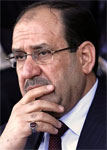
Douri is 70 and reportedly in poor health but he’s kept the organization intact and it’s reportedly gaining new recruits among the Sunnis who see themselves being systematically crushed by Iraq’s Shiite ruler, Prime Minister Nouri al-Maliki.
JRTN is determined that post-Saddam Iraq won’t fall under Tehran’s control following the U.S. military withdrawal in December 2011.
The sectarian confrontation shows every sign of getting worse as Maliki wages an increasingly harsh crackdown against what he perceives as a Saudi-inspired revolt centered in Iraq’s Sunni-dominated western provinces.
The gloves came off April 23 when Maliki’s Shiite security forces stormed a Sunni protest rally in the northern village of Hawija in Kirkuk province. More than 50 Sunnis were killed and 110 wounded.
“Retaliatory assaults against the security apparatus threaten to trigger an even tougher reaction from authorities,” observed the International Crisis Group, a conflict resolution organization in Brussels.
“Only by credibly addressing the protesters’ legitimate demands — genuine Sunni representation in the political system — can … Iraq stem a rising tide of violence that, at a time of growing sectarian polarization throughout the region, likely would spell disaster.”
Sunni protests have been building since late 2012 as Maliki displayed an increasing authoritarianism but the massacre at Hawija ended what was seen as a period of restraint. Sunnis are increasingly turning to violence and armed resistance.
Even so, the explosion many see as looming could come from another quarter: the increasingly fraught confrontation between Maliki’s Iranian-backed forces and the rebellious Kurds in the north over ethnically mixed Kirkuk and its adjacent oil fields.
For months heavily armed forces on both sides have been squaring off around Kirkuk and the southern boundary of the Kurds’ semiautonomous enclave.
The minority Kurds, who for decades battled Baghdad for self-rule, claim Kirkuk, which contains one-third of Iraq’s oil reserves of 150 billion barrels, is historically their territory. But Baghdad cannot afford to relinquish the oil fields or allow the Kurds to break away because that could encourage other restive regions to do the same, and bring about the collapse of the federal state.
The Kurds have incensed Baghdad by attracting major international oil companies to their three-province enclave and have started exporting crude to neighboring Turkey from fields that have reserves of 45 billion barrels.
In recent days there have been reports Iraqi troops are deserting in the north in the face of escalating hostility by non-Shiites.
“There are signs the army can no longer cope with as crisis which in which it is confronting both Sunni Arabs and Kurds,” observed veteran analyst Patrick Cockburn.


