


 AFP: Iran on Sunday opened its first centre to receive satellite images, a new stage in its space programme that coincides with celebrations marking the anniversary of the 1979 Islamic revolution.
TEHRAN (AFP) — Iran on Sunday opened its first centre to receive satellite images, a new stage in its space programme that coincides with celebrations marking the anniversary of the 1979 Islamic revolution.
Defence Minister Ahmad Vahidi said the equipment used in the centre located in the desert was “manufactured by Iranian engineers,” state television’s website reported.
Iran does not have an operational satellite of its own but announced in December that it would launch two satellites — Fajr (Dawn) and Rasad-1 (Observation-1) by the end of the Iranian year in March 2011.
On Sunday, the Fars news agency quoted Vahidi as saying that the Islamic republic would unveil on Monday four satellites built “entirely by Iranian engineers.”
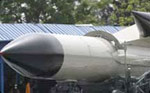
He said Tehran would also unveil a new rocket, Kavoshgar-4 (Explorer-4), and engines for a two-stage Safir Fajr rocket.
Vahidi said last week Iran would unveil two rockets during the anniversary celebrations: Kavoshgar-4 and Safir (Ambassador) 1-B. But the Fars report did not specify if Safir Fajr was a new name for Safir 1-B or a different rocket.
On Sunday, state news agency IRNA reported that Vahidi said a launch date for the two satellites, Fajr and Rasad-1, was “not fixed” but they would be unveiled on Monday along with two others.
Iranian media reports said last week that the Safir 1-B rocket can carry a satellite weighing 50 kilogrammes (110 pounds) into an elliptical orbit of 300 to 450 kilometres (185 to 280 miles).
The Kavoshgar-4 rocket can carry a payload up to 120 kilometres.
Iran in February 2009 sent into space the Safir-2 rocket carrying its first home-built test satellite, called Omid (Hope).
Twelve months later, it launched a capsule carrying live turtles, rats and worms aboard a Kavoshgar-3 rocket in what was Iran’s first experiment to send living creatures into space.
Iran uses the run-up to the revolution anniversary to tout its scientific and technological achievements, with President Mahmoud Ahmadinejad last week opening a new space research and training centre.
Iran’s missile and space programmes have sparked concern abroad that such advanced technologies, combined with the nuclear know-how which the nation is acquiring, may enable Tehran to produce an atomic weapon.
Tehran denies its nuclear programme has military aims.


