


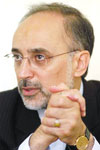
 Reuters: The European Union suspended a travel ban on Iran’s foreign minister at the same time as significantly extending its sanctions against the country this week, an EU spokeswoman said on Tuesday.
BRUSSELS, May 24 (Reuters) – The European Union suspended a travel ban on Iran’s foreign minister at the same time as significantly extending its sanctions against the country this week, an EU spokeswoman said on Tuesday.
Ali Akbar Salehi was included in an EU travel ban before he became foreign minister earlier this year because of his role in Iran’s nuclear programme, which the West suspects of being a front for the development of atomic bombs.
“Technically he stays on the list, but the application of the travel ban has been suspended,” said Maja Kocijancic, spokeswoman for EU foreign policy chief Catherine Ashton.
The spokeswoman said it was normal for foreign ministers not to be included on sanctions lists so they could carry out their role of interlocutor with other countries.
Salehi was placed on the sanctions list and banned from entering the EU in November 2009 due to his previous role as head of the Atomic Energy Organisation of Iran, which is on the EU sanctions blacklist.
EU states favoured suspending the ban for the sake of engaging with Iran in the long-running nuclear dispute, but the issue was sensitive for the Netherlands, which froze diplomatic contacts with Iran after the hanging of a Dutch-Iranian woman in January for drug smuggling.
The Netherlands pressed strongly for a strengthening of sanctions against human-rights violators in Iran.
EU foreign ministers agreed on Monday to add dozens of new entities to a list of Iranian companies and people affected by EU sanctions, which are designed to pressure Tehran to abandon its atomic programme and end rights abuses.
Iran said on Tuesday the new round of EU sanctions contradicted the EU’s stated desire to return to talks.
Two rounds of talks between Iran and the five permanent members of the U.N. Security Council — the United States, Russia, China, Britain and France — plus Germany — in December and in January, did not reach any substantive result.
Both sides have said they are in principle willing to resume talks under the right conditions.
However Ashton, who led the talks with Tehran, expressed concern at the lack of progress earlier this month, saying messages she was receiving from Tehran about future meetings had been disappointing.
Tehran insists its atomic programme is peaceful. (Reporting by David Brunnstrom)


