


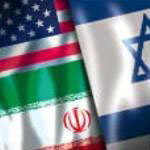
 Reuters: The United States has pointedly ramped up its public warnings over the last few weeks about the risks of military action against Iran, accompanied by private words of caution to Israel, which sees Tehran’s nuclear push as a direct threat.
By Phil Stewart and Mark Hosenball
WASHINGTON (Reuters) – The United States has pointedly ramped up its public warnings over the last few weeks about the risks of military action against Iran, accompanied by private words of caution to Israel, which sees Tehran’s nuclear push as a direct threat.
But so far, at least, comments by U.S. and Israeli officials suggest that Washington’s private lobbying has yet to convince Israeli hard-liners and even some moderates that alternatives, like sanctions and diplomatic pressure, will ultimately succeed in curbing Iran’s nuclear ambitions.
It is unclear whether the differing views are any indication about whether Israel might be moving closer to a go-it-alone military strike, an option Tel Aviv has ruled out for the moment. Indeed, that may ultimately not be the case.
Rhetoric has periodically escalated over the years, often bolstering pushes – like the present one – for tougher sanctions against Iran.
But Israeli Prime Minister Benjamin Netanyahu, in a speech on Sunday widely seen within Israel as hinting about policy on Iran, spoke about making “the right decision at the right moment,” even when allies object.
A nuclear-armed Iran, Netanyahu has said, is an existential threat to Israel.
Netanyahu’s comments came on the heels of U.S. Defense Secretary Leon Panetta’s strongest comments yet explaining America’s concerns about a military strike on Iran.
Panetta said it risked “an escalation” that could “consume the Middle East in confrontation and conflict that we would regret.” It could also hobble the fragile U.S. and European economies and might do little to actually stop Iran from getting an atomic weapon – a goal Tehran denies having.
Iran says its uranium enrichment is for peaceful purposes.
Panetta, citing conversations with his “Israeli friends,” said an attack would only set back Iran’s nuclear program by one to two years at best. He also warned about blowback to U.S. forces in the region.
“The United States would obviously be blamed and we could possibly be the target of retaliation from Iran, striking our ships, striking our military bases,” Panetta told a forum in Washington on Friday.
Panetta privately outlined U.S. concerns in talks with Israel’s Defense Minister Ehud Barak in Canada last month, including the impact a strike would have on the world economy.
Analysts say Tehran could retaliate by closing the Strait of Hormuz, the waterway where about 40 percent of all traded oil passes.
GLOBAL MELTDOWN
President Barack Obama, who is gearing up for a re-election battle next year, has had more trouble than his Republican predecessor, George W. Bush, in winning Israeli trust.
Bruce Riedel, a former adviser to the Obama administration and former senior CIA expert on the Middle East, said Washington was deeply wary of being dragged into a conflict that, from its perspective, might be unnecessary.
“Obama knows a strike on Iran by Israel will create a regional war and a global economic meltdown that America will have to clean up,” Riedel said.
“And he knows Israel – with its own considerable nuclear arsenal – does not face an existential threat from a nuclear Iran.”
But, even considering likely retaliation on U.S. forces, the top U.S. military officer told Reuters in an interview this week he did not know whether the Jewish state would even give the United States notice ahead of time if it decided to act.
General Martin Dempsey, chairman of the Joint Chiefs of Staff, also suggested there was a gap in perspective between Israel and the United States, which sees sanctions and diplomatic pressure as the right path to take on Iran.
“I’m not sure the Israelis share our assessment of that. And because they don’t and because to them this is an existential threat, I think probably that it’s fair to say that our expectations are different right now,” Dempsey said.
Iran is facing another wave of sanctions following a report last month by the U.N. nuclear watchdog which said Tehran appeared to have worked on designing an atom bomb and may still be pursuing secret research to that end.
Barak said on Thursday an Israeli attack on Iran was not imminent. But, asked about Dempsey’s comments to Reuters, Barak said Israel “greatly respects” the United States.
“But one must remember that ultimately, Israel is a sovereign nation and the Israeli government, defense forces and security services – not others – are responsible for Israel’s security, future and existence,” Barak said.
Barak, in a radio interview, said Israel would be very glad if sanctions and diplomacy brought the Iranian leadership to a clear decision to abandon its nuclear military program.
But, “unfortunately, I think that is not going to happen,” he said.
(Additional reporting by Jeffrey Heller in Jerusalem and David Alexander in Washington; Editing by Warren Strobel and Philip Barbara)


