


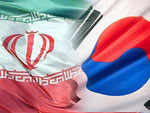
 Reuters: South Korea will make sharp cuts in imports of Iranian crude from June as tightening Western sanctions make it impossible to secure insurance cover for tankers to ship the crude, industry and company sources said.
By Meeyoung Cho and Florence Tan
SEOUL/SINGAPORE (Reuters) – South Korea will make sharp cuts in imports of Iranian crude from June as tightening Western sanctions make it impossible to secure insurance cover for tankers to ship the crude, industry and company sources said.
South Korea is the latest in a growing list of customers that have slashed Iranian crude imports. China, Japan and India, the other key consumers who buy most of Tehran’s 2.2 million bpd of exports, have all cut purchases this year as sanctions make it impossible to pay, ship and insure the oil.
South Korea stood out for committing to buy bigger volumes under annual contracts from Iran this year even though the West announced sanctions on Iran. Import-dependent Seoul was banking on talks between Tehran and the West to resolve the dispute.
With no resolution in sight, Hyundai Oilbank, one of two buyers of Iranian oil in South Korea, has decided to stop lifting cargoes from June, industry sources told Reuters. But bigger counterpart SK Energy is sticking with its plan to lift annual committed volumes at least until June.
For July onwards, SK Energy, the country’s largest refiner, is in talks with the government to secure insurance cover for tankers shipping the oil.
If the government disagrees, the company will have little option but to halt purchases, said the sources, who declined to be identified as they are not authorised to talk to the media.
“The situation is beyond our control,” one of the sources said. “We hope everything can be solved by mutual cooperation between governments.”
TRYING TO SQUEEZE IRAN REVENUES
The United States and Europe are trying to squeeze the revenues Iran makes from oil exports to force it to halt a nuclear programme they fear will be used to make weapons but which Tehran says is for power generation.
Deep cutbacks will force OPEC’s second largest producer to lose further market share as it moves more crude to storage after having already deployed more than half its fleet of supertankers to store unsold cargoes. All four Asian buyers of Iranian oil have boosted purchases from exporters to fill the gap.
Japan, Iran’s third-largest oil consumer, will cut April loadings by almost 80 percent. Customs-cleared crude imports from Tehran fell 6.3 percent in March.
China’s imports from the Islamic Republic plunged by 33 percent in the first quarter, while South Korea’s fell 22 percent in the first three months, following a 40 percent fall in March from a year earlier.
Illustrating the difficulties Iran faces in international trade, Lloyd’s Register, a leading maritime risk management firm, said it shut operations in the Islamic Republic and can no longer vouch for the safety of the country’s fleet.
SOUTH KOREA
SK Energy and Hyundai Oilbank increased the volume of Iranian crude purchases under annual contracts this year to 200,000 bpd – 130,000 bpd by SK Energy and 70,000 bpd by Hyundai Oilbank – from around 190,000 bpd in 2011.
Spokesmen at SK Energy and Hyundai Oilbank declined to comment on any topics regarding Iranian oil imports.
Yet it may not be easy for SK Energy to secure insurance from the government because of the billions of dollars of coverage required. Reinsurers typically provide $1 billion coverage for a supertanker carrying around 2 million barrels of crude against personal injury and pollution claims.
All the Asian buyers are struggling to secure insurance for tankers carrying Iranian oil, with India willing to take the risk with coverage of little as $50 million.
Industry watchers expect the marine insurance issue to prove to be the most effective sanction used by Western nations in 17 years of tightening the screws on Iran’s nuclear programme.
Given the uncertainty, Hyundai Oilbank has decided to stop lifting Iranian barrels.
“There is a lot of talk, but nothing is for sure,” another source said, adding that was why the company thought it was “better to stop taking cargoes from Iran”.
Hyundai Oilbank may also be reluctant to take the risk and may opt to switch to other grades because of its high dependence on Iranian oil. The Islamic Republic fills nearly a fifth of the refiner’s overall consumption.
SK Energy, with 1.115 million bpd of refining capacity, may find it easier to secure alternative grades as it now processes 60 to 70 different kinds of crude.
SEEKING WAIVER
Both SK Energy and Hyundai Oilbank plan to seek an exemption from penalty for being unable to lift Iranian crude cargoes due to sanctions, similar to a waiver Japan has secured.
Japanese refiners succeeded in convincing Iran to widen the force majeure clause in the annual contracts to include sanctions. The clause is usually limited to exempting buyers and sellers from liability due to fires, accidents and natural calamities.
“With our term deals done much earlier, Korean refiners, unlike the Japanese, did not include a force majeure clause over shipment defaults if hit by sanctions,” a third source said.
“We will try to get the same protection and with Iran, some degree of agreement has been reached.”
(Additional reporting by Randy Fabi and Risa Maeda in Tokyo; Editing by Manash Goswami and Clarence Fernandez)


