


 Reuters: Wary of Iran and regional protest movements, Gulf Arab states are pushing ahead with plans for a political union that would involve joint foreign and defense policies, the Saudi foreign minister said in a speech at the weekend.
By Andrew Hammond
DUBAI (Reuters) – Wary of Iran and regional protest movements, Gulf Arab states are pushing ahead with plans for a political union that would involve joint foreign and defense policies, the Saudi foreign minister said in a speech at the weekend.
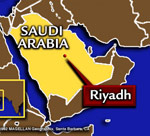
The comments by Prince Saud al-Faisal come two weeks ahead of a summit of U.S.-aligned Gulf leaders in Riyadh that will review an outline for such a union after Saudi King Abdullah first floated the idea last December.
A Gulf-based Western diplomat said the proposal was driven mainly by Saudi fears that the restive Shi’ite Muslim majority in Bahrain could topple the island kingdom’s Sunni Muslim rulers. He said an announcement of progress on a federation between the two to launch the union could be made at the summit.
Shi’ite-led unrest is resurging in Bahrain a year after the ruling Al Khalifa family brought in Saudi and United Arab Emirates troops to help suppress an uprising seen by Gulf rulers as sectarian in nature and driven by Shi’ite giant Iran.
A visit this month by Iranian President Mahmoud Ahmadinejad to the island of Abu Musa, also claimed by the United Arab Emirates as its own, has stoked the concern of conservative Gulf Arabs about Iranian influence in the oil-exporting region.
“Cooperation and coordination between the countries of the Gulf Cooperation Council (GCC) in its current format may not be enough to confront the existing and coming challenges, which require developing Gulf action into an acceptable federal format,” Prince Saud said in a speech delivered on his behalf by his deputy to a GCC youth conference in Riyadh on Saturday.
“The Gulf union, when it is realized, God willing, will yield great benefits for its peoples, such as in foreign policy with the presence of a supreme Gulf committee coordinating foreign policy decisions that reorders group priorities and realizes group interests,” he said.
Gulf leaders fear Bahrain will fall into the orbit of anti-Western, clergy-ruled Iran if the Shi’ite opposition wins a stake in government and the Al Khalifa family, distant relatives of Saudi Arabia’s Al Saud, loses some of its extensive powers.
Bahraini security forces clash with Shi’ite protesters on most days in various areas of the country while opposition parties stage mass protests every week.
The opposition, led by the Shi’ite Islamist Wefaq party, denies Iran links, points to Sunnis and secularists in its ranks and says it only wants a say in how Bahrain is run.
GCC A RESPONSE TO REVOLUTIONARY IRAN
The GCC was formed in 1980 in the wake of the Islamic Revolution in Iran, and the outbreak of the Iran-Iraq war, by Saudi Arabia, the UAE, Kuwait, Qatar, Oman and Bahrain, a grouping including major world oil and gas producers.
But the Gulf elite – a club of Sunni autocrats providing military facilities to the United States – have watched with alarm as Iranian-allied Shi’ites rose to power in Iraq after a U.S.-led invasion in 2003 and Iran advanced a nuclear energy program they fear will give Tehran atomic bomb capability.
The Saudi royal, son of King Faisal who died in 1975, cited that program as well as the advent of Arab uprisings last year as challenges that required the GCC to rethink its relations.
He said that defense integration would be “an alternative to defense policies based on transitory alliances based on passing interests, since they are linked to changing interests”.
Riyadh’s faith in Washington took a hit when the United States exerted pressure to help push Hosni Mubarak from power in Egypt during an uprising last year. The arrival of Saudi troops in Bahrain signaled Riyadh’s intention to prevent the Shi’ite-led protest movement threatening any of the Gulf monarchies.
The Gulf-based Western diplomat said a federal framework could allow Riyadh to permanently station troops in Bahrain.
Despite talk of union, however, rivalries among Gulf rulers run deep. The UAE has refused to join a planned monetary union and territorial disputes have held up many economic projects.
Saudi objections have delayed plans to build a causeway between Qatar and Bahrain, while Bahrain has been unable to buy natural gas from Qatar.
A government-allied parliamentarian in Bahrain told Reuters last week that he did not expect any such union declaration at the summit in Riyadh planned for May 14.
Bahraini opposition leaders have warned against any union, which is likely to provoke protests. Protesters described the Saudi intervention last year as an occupation.
But while anti-Saudi graffiti lines walls in Shi’ite districts, pro-government figures look to Saudi Arabia as a bulwark against Shi’ite empowerment and some have publicly called for union as salvation from Iran and Shi’ites.
(Editing by Sami Aboudi and Mark Heinrich)


