


 Reuters: Iran’s Foreign Ministry has welcomed the decision of a British court not to extradite a former Iranian diplomat wanted by the United States after he was caught in a sting operation trying to export night-vision weapons’ sights to Iran.
DUBAI (Reuters) – Iran’s Foreign Ministry has welcomed the decision of a British court not to extradite a former Iranian diplomat wanted by the United States after he was caught in a sting operation trying to export night-vision weapons’ sights to Iran.
Nosratollah Tajik, 59, a former Iranian ambassador to Jordan, was arrested in London in 2006 after agents from the U.S. Department of Homeland Security posed as arms dealers seeking to sell the military kit in violation of arms embargoes.
The High Court proceedings on Tuesday showed that the British government had tried and failed to persuade the Americans to withdraw the extradition request to avoid endangering British diplomats in Iran.
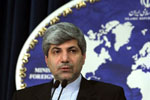
“For nearly six years Nosratollah Tajik was the victim of a made-up scenario and from that time was kept at home in unsuitable conditions,” spokesman Ramin Mehmanparast said on Wednesday in a statement on the Foreign Ministry website.
“Despite the six year delay, the Islamic Republic considers these steps to be in the right direction and reiterates the necessity that he is freed as soon as possible,” he added.
Iran’s relations with Britain have worsened in recent years because of the Britain’s staunch support for sanctions against Iran over its disputed nuclear program.
Britain’s embassy in Tehran was stormed in November 2011 over far-reaching sanctions imposed by London against Iran’s banking system. The embassy was evacuated and has since remained unstaffed. Iran says it nuclear program is purely peaceful.
Tajik spent years fighting extradition on grounds of ill health. The courts rejected these arguments in 2008 and he then appealed to the Home Office with new medical evidence.
The Home Office rejected his appeal in November 2011 and ordered his extradition. Tajik launched new court proceedings against the decision which culminated in Tuesday’s ruling.
For three years the British government had asked Washington to drop the extradition request. It received no response for more than two and a half years, a delay which led to the extradition being denied.
Tajik had been free on bail but tagged and subject to a night-time curfew pending the outcome of his legal battle.
(Reporting by Marcus George; Editing by Alison Williams)


