


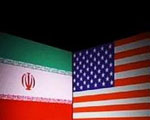
 AP: Iran sought Sunday to calm hard-line worries over groundbreaking exchanges with Washington, saying a single phone conversation between the American and Iran presidents is not a sign that relations with will be quickly restored.
The Associated Press
By Nasser Karimi
TEHRAN, Iran (AP) — Iran sought Sunday to calm hard-line worries over groundbreaking exchanges with Washington, saying a single phone conversation between the American and Iran presidents is not a sign that relations with will be quickly restored.
The comments by Deputy Foreign Minister Abbas Araghchi appeared tailored to address Iranian factions, including the powerful Revolutionary Guard, that have grown uneasy over fast-paced outreach last week between the White House and President Hassan Rouhani, which was capped by a 15-minute call with President Barack Obama.
“Definitely, a history of high tensions between Tehran and Washington will not go back to normal relations due to a phone call, meeting or negotiation,” Araghchi was quoted by the semi-official Far news agency as saying.
Rouhani seeks to restart stalled talks over its nuclear program in the hopes of easing U.S.-led sanctions. Iran, however, has not clarified what concessions it is willing to make with its nuclear program in exchange.
Araghchi also reiterated statements by Iran’s Supreme Leader Ayatollah Ali Khamenei, who said he no longer opposes direct talks with Washington but is not optimistic about the potential outcome. Khamenei appears to have given Rouhani authority to handle the nuclear talks with world powers, scheduled to resume in Geneva in two weeks, and seek possible broader contacts with the Obama administration.
“We never trust America 100 percent,” said Araghchi. “And, in the future, we will remain on the same path. We will never trust them 100 percent.”
The divisions over Rouhani’s overtures were on display Saturday when he returned from New York. Supporters welcomed him with cheers, but a smaller pocket of protesters shouted insults.
The U.S. and Iran broke ties after the 1979 Islamic Revolution when mobs stormed the U.S. Embassy in Tehran. A total of 52 hostages were held for 444 days.
A hard-line lawmaker Hamid Rasaei criticized the phone call as “breaking the resistance brand” of Iran – a reference to the self-promoted idea that Iran is the anchor for opposition to Israel and Western influence in the region.
He said acceptance of Obama’s phone call by Rouhani was “undignified” and allowed the U.S. to claim Iran seeks to modify its policies.
“You converted a win-lose game to a win-win one” for the U.S., he said during a parliament session Sunday.
Another conservative lawmaker, Alaeddin Boroujerdi, head of the influential parliamentary committee, interpreted the phone call in a positive way as Rouhani trying to help the “failing reputation” of Obama.
The core of the opposition to Rouhani appears built around supporters of former President Mahmoud Ahmadinejad, who once sent a letter to then President George W. Bush in an attempt to open dialogue. Ahmadinejad apparently was rebuffed by Bush, and the former president later fell from favor with Khamenei after trying to challenge his authority.
Khamenei’s presumed nod to Rouhani to test outreach with Washington may be seen by Ahmadinejad’s backers as another slap.
Ahmadinejad’s first public comments on the Obama phone call carried a noncommittal tone. “I don’t know, maybe it was the right thing to do,” the conservative Baztab news website reported Sunday.
On the flip side, the phone call brought jokes circulating in Iran by text message.
“I know Rouhani called Obama first,” read one. “Then Obama told him, `It’s better that I call you since you are under sanctions and your call may cost a lot.'”


