


 The Hill: In Iraq, the buck stops with the Prime Minister, Nouri Al-Maliki, more so than any other country. He is the Commander in Chief, the acting Minister of Defense, the acting Minister of Interior, the acting Minister of National Security and the Head of Intelligence.
The Hill
By Ramesh Sepehrrad
In Iraq, the buck stops with the Prime Minister, Nouri Al-Maliki, more so than any other country. He is the Commander in Chief, the acting Minister of Defense, the acting Minister of Interior, the acting Minister of National Security and the Head of Intelligence.
Maliki continues to dedicate more than 25 percent of Iraq’s annual budget, close to $100B, to security activities. Still, according to reports from Iraq, violence continues to be on the rise because of the Quds Force instigating sectarian conflicts, Tehran’s vision for the region and the West’s refusal to get tough on Maliki. According to the 2013 Costs of War Project by the Watson Institute for International Studies at Brown University, the United States has spent close to four trillion dollars to create a more progressive, democratic and free Iraq, but Maliki’s administration’s results are anything but.
The Prime Minister will be in Washington D.C. this week to seek additional assistance on Iraqi security, while he has increasingly become an autocratic leader at home. Given his record, Maliki’s visit should include some robust Q&A about his policies, his politics and plans for Iraq’s future.
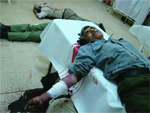
For women in power everywhere, this conversation takes on added meaning in light of the assassinations and kidnapping of the women leaders of Iran’s opposition movement, based in Iraq, the Mujahedin-e-Khalq. The MeK disarmed and decamped in exchange for political and physical protection – protection granted by the United States – but on September 1 there was a raid on their northeast Baghdad camp and the political and operational leadership – most of whom were women — were handcuffed and shot in a coup de grâce style. Another 7 – six women – were abducted and remain hostages.
According to Amnesty International, eyewitnesses saw the six women and one man handcuffed, beaten and thrown to the ground before taken away. They were transferred to Baghdad airport in an official vehicle, escorted by Maliki’s Golden Division forces. While the Iraqi Prime Minister publicly denies any involvement, his spokesperson for Ministry of Human Rights tells the Iraqi media “the security forces have arrested these people,” admitting their part but providing no transparency, motive or any other accountability for raiding and killing the “protected persons” at Camp Ashraf.
Maliki appointed his son, also his chief of staff, Ahmad Maliki, to oversee the custody of the seven hostages. According to a human rights organization, EveryOne Group, the hostages have been moved to a prison called Sharaf, located behind Maliki’s office in the Green Zone, making it easier for the Iranian Embassy officials and the notorious Quds Force to visit the seven.
Amnesty International has issued an urgent action warning about the imminent extradition of the seven to Iran..
The global reaction remain intense as members of Congress, former American military commanders, former CIA directors, both former Homeland Security chiefs and “America’s Mayor” Rudy Guiliani, have joined European parliamentary leaders in calling for an explanation and an immediate accounting for the “Ashraf 7.” Maliki’s visit is an opportunity for the Obama Administration to do the same.
On October 3, the fourth ranking official of the State Department, Wendy Sherman testified before the U.S. Senate saying “we need to do everything that we can to make good on the words we gave to MeK.”
For Maliki, the seven MeK members are bargaining chips and he is well positioned to maximize his gain with Iran or the United States. For Iran, this is a clear evidence of its regional power and ability to target its opposition successfully. For Washington, this is a legal and moral obligation given its promise to protect the exiles, including the seven currently in Maliki’s custody.
Utilizing soft power, the administration can threaten to reduce its assistance to the government of Iraq in exchange for the immediate release of the seven. The ripple effect of such a move will also put Tehran on notice that they cannot continue to leverage the Iraqi leader, on our dime, for their regional and political objectives.
The American public has a national interest in the outcome of this crisis because of its long and deep investment of lives and money in to the region since the end of the Second World War. American prestige and honor is at stake as the world watches Maliki’s police raid, kill and capture “protected persons” who disarmed in good faith with American negotiators and the urging of the new Iraqi regime. If we cannot keep our word to them, how can we successfully deal with the threats in Iran, Pakistan and North Korea?
Sepehrrad is a scholar practitioner from School of Conflict Analysis and Resolution at George Mason University. For more than two decades, she has focused her research and field work on Iranian affairs as it relates to human rights, gender equality and U.S. policy on Iran.


