


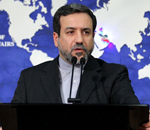
 The Hill: Nuclear talks with Iran got off to a rough start Tuesday when the country’s top negotiator ruled out scrapping any of the country’s nuclear facilities, a key requirement for the U.S. and other parties to the talks.
The Hill
By Julian Pecquet
Nuclear talks with Iran got off to a rough start Tuesday when the country’s top negotiator ruled out scrapping any of the country’s nuclear facilities, a key requirement for the U.S. and other parties to the talks.
The comments were made by Deputy Foreign Minister Abbas Araghchi on the first day of talks toward a comprehensive deal after an interim agreement went into effect last month.
In another ominous sign, Supreme Leader Ali Khamenei predicted on Monday that the talks “will not lead anywhere.”
The Obama administration is under intense pressure to deliver after getting Congress to hold off on new sanctions while negotiations continue. The White House said Tuesday it still believes a deal is achievable.
“Our view hasn’t changed in that we think it is absolutely the right thing to do, to test whether Tehran is serious about resolving this conflict diplomatically,” spokesman Jay Carney said.
“There’s no question that the prospects for success are … far from a sure thing, either way. But because there is at least some prospect that Tehran might be willing to — in a verifiable, transparent way — convince the international community that it has forsaken pursuit of a nuclear weapon, we ought to do that through diplomatic means.”
Tuesday’s talks began with a plenary session chaired by the European Union’s top diplomat, Catherine Ashton, and Iranian Foreign Minister Mohammad Javad Zarif, according to a State Department official. The Iranian delegation then held bilateral meetings with its counterparts from the U.S., Russia, China and the European parties to the talks — Britain, France and Germany. The talks with the U.S. delegation, led by Undersecretary of State Wendy Sherman, lasted about 80 minutes.
Sanctions proponents say any final deal must dismantle Iran’s nuclear infrastructure.
Legislation from Senate Foreign Relations Committee Chairman Robert Menendez (D-N.J.) and Sen. Mark Kirk (R-Ill.) that would require the elimination of Iran’s ability to pursue plutonium or uranium pathways to the bomb has garnered 59 co-sponsors in the Senate. Senate Majority Leader Harry Reid (D-Nev.) has so far prevented the bill from getting to the floor but would likely come under intense pressure from his caucus to allow a vote if talks stall.
“At the end of this process, will the Supreme Leader be able to wake up one day, kick out inspectors and race to the bomb?” Kirk said in an emailed statement. “ ‘No’ should be the only acceptable answer to that question.”
The Republican-controlled House has also taken note of the latest Iranian rhetoric to demand that the White House only sign a final deal that “verifiably dismantles Iran’s illicit nuclear weapons program.”
“As permanent status talks begin today, the Iranian regime immediately reminded us that the administration is pursuing a fool’s errand,” said Chief Deputy Whip Peter Roskam (R-Ill.), who has led the push to pressure the Senate to pass new sanctions. “The Obama administration must avoid making the same mistake it made in November, when it peddled away our leverage in the form of much-needed sanctions relief to Iran’s collapsing economy in exchange for only minor cosmetic concessions on Iran’s nuclear infrastructure.”
The State Department has sought to lower expectations as talks restart. Negotiators have six months to reach a final deal, with an extra six-month extension possible if both parties agree. A senior official told reporters ahead of the talks that Obama himself has only given the talks a 50-50 chance of success.
“I think, probably with all of you, we don’t have to worry about high expectations,” the official said. “And indeed, I think it is right to approach these negotiations with a sober frame of mind.”


