


With the new update on the X platform, which shows users’ locations, it became clear that a number of Iranian journalists and political figures are using unfiltered internet access known as “white SIM cards”—a privilege available to only about 16,000 people out of a population of 90 million. In Iran, accessing platforms like X is only possible through VPNs, and the display of “Iran” as a user’s location means they are connected to the internet without filtering.
The revelation triggered widespread debate, as many white SIM card holders are the same individuals who shape narratives in the media and influence newsroom agendas. Some of them were publicly critical of the government. Among these accounts were even those that, using white SIM access, promoted the return of monarchy in Iran and expressed support for Israel. The purpose of Iran’s regime in creating such accounts has been to discredit the opposition groups such as the National Council of Resistance of Iran (NCRI) abroad and create despair inside Iran about democratic change.
X users, by posting thousands of screenshots, claimed that a significant portion of the highly active accounts promoting Reza Pahlavi and the restoration of monarchy were operating not from Europe or the United States but from inside Iran, mainly from major cities.
According to screenshots posted up to November 25, 2025, the locations of many of these accounts showed the following cities: Tehran, Mashhad, Isfahan, Shiraz, Tabriz, Karaj, Qom, Ahvaz, and Kermanshah.
Some of these accounts changed their location setting to “region” after being exposed, but the original screenshots are still available. Some of these accounts have blue verification badges and as many as 20,000 followers, operating without any filtering restrictions.
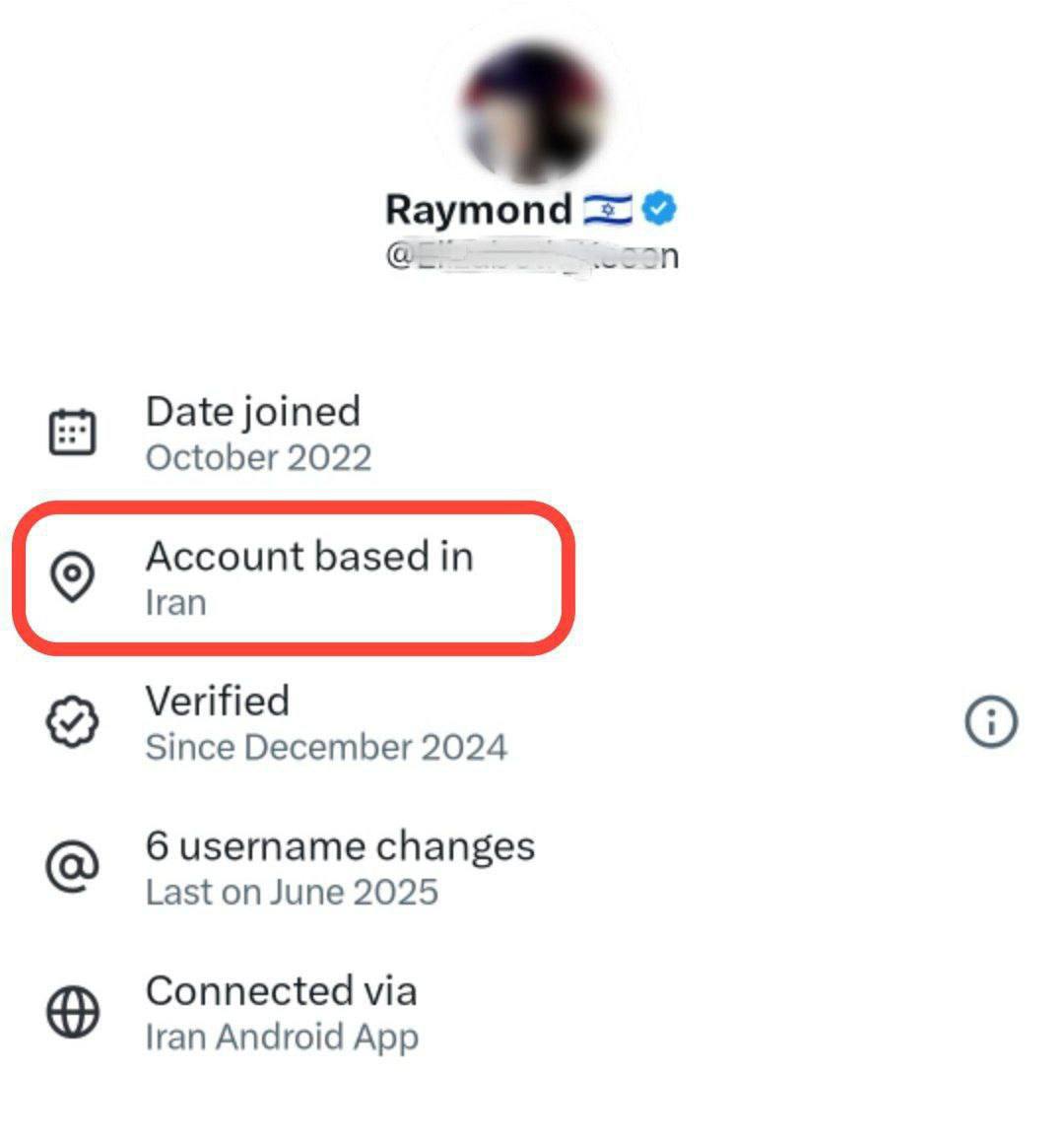
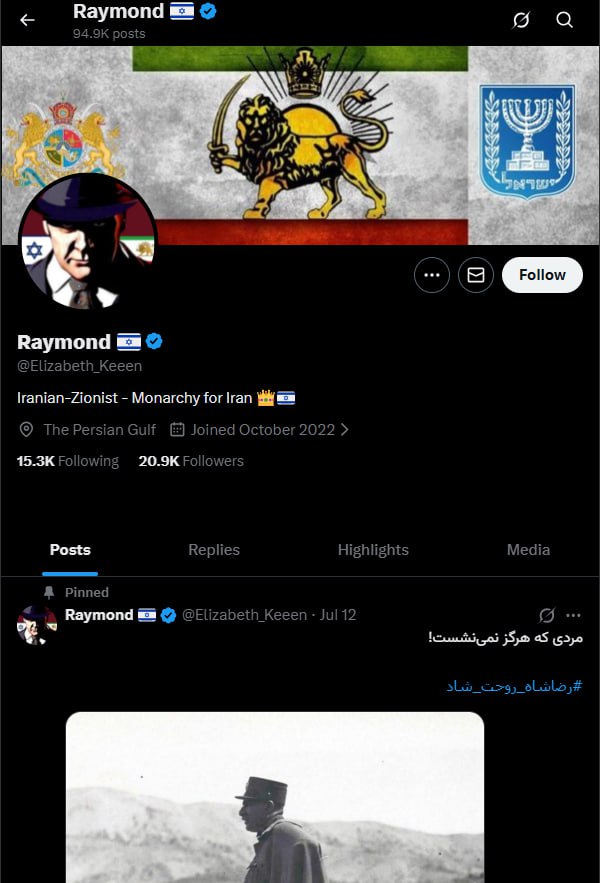
Critics argue that these accounts, by posting coordinated content and extreme slogans, exaggerate support for Reza Pahlavi while undermining the main opposition movements and the broader popular uprising.
Earlier, reports by the Israeli newspaper Haaretz and the Canadian research institute Citizen Lab in October 2025 had already exposed an organized network of thousands of fake accounts and AI-generated content aimed at legitimizing Reza Pahlavi, the son of the former shah.
Public opinion is now asking how people who claim to support free access to information simultaneously benefit from a privilege that turns the internet into a class-based and exclusive commodity.
In the “About This Account” section on X, details such as connection method and country of activity are displayed. If the user is connected through an Android phone, their real location is recorded, which is why many white-SIM users appeared with an “Iran” location. VPN users appear with a shield icon, whereas white-SIM users show no such VPN marker. A location reading “Bulgaria” often indicates Starlink usage—a service not officially available in Iran and accessible only if activated in another country and used via roaming.
Criticism intensified when it emerged that a significant number of reformist-leaning journalists—individuals whose accounts of government pressure had long been amplified in the media—were using unfiltered internet. This contradicted their public claims of opposing class-based internet access. One example involved the sister of Elaheh Mohammadi—an Iranian journalist who served a few months in jail—who switched her account to private after her location was revealed and claimed that during the twelve-day conflict, her SIM card “was unintentionally turned white,” a claim widely doubted by users.
In the following days, state-run media defended white SIM cards. The state-run Tabnak website called the exposure of user locations a “conspiracy” and claimed it aimed to damage Iran’s media credibility and create division between the public and media elites. Other state-run outlets echoed this narrative.
The origins of class-based internet access go back to 2019, when the communications minister at the time first acknowledged the existence of such privileged connectivity. This was seen again in November 2019, when public internet was shut down for one week, yet a limited number of journalists remained active on Twitter.
A revelation by political analyst Abbas Abdi—who himself also has a white SIM card—showed that about 16,000 people have access to this privilege. Many of these individuals, who are publicly perceived as government critics, have in practice been guiding mainstream narratives in state media and on social networks. According to sources close to these groups, in private gatherings and online channels, coordinated decisions were made regarding promoting figures such as Masoud Pezeshkian, defending his ministers, encouraging election participation, and attacking opposition users and groups.
For years, a large segment of reformist-leaning journalists has enjoyed this special access. During the 2024 elections, many of the major hashtags originated from these groups, who then encouraged other users through private messages to join in. The new revelation on X merely confirmed that Iran’s information ecosystem—even among those who appear to be critics of the government—is built on unequal access to the internet. This privileged access allows a small group to shape dominant narratives, while the majority of society must struggle through filters and disruptions to reach open internet.


