


 Reuters: Iran has enriched 17 kg of uranium to 20 percent purity, a top official said on Wednesday, underscoring Tehran’s determination to push ahead with its nuclear program despite new international sanctions.
TEHRAN (Reuters) – Iran has enriched 17 kg of uranium to 20 percent purity, a top official said on Wednesday, underscoring Tehran’s determination to push ahead with its nuclear program despite new international sanctions.
Iran’s enrichment activities are at the heart of its standoff with the West which fears it is seeking nuclear weapons capability. Two weeks ago, the United Nations Security Council agreed to impose a fourth round of sanctions on Iran
Iran started refining uranium to 20 percent purity — up from around 5 percent previously — in February, saying it aimed to make fuel for a medical research reactor.
The move alarmed the West as it was seen as a significant step toward making weapons-grade uranium, which is 90 percent enriched. Iran says its nuclear program is for peaceful purposes and primarily aimed at electricity generation.
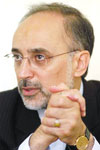
“We have already produced 17 kg of 20 percent enriched uranium, and we have the ability to produce 5 kg each month but we do not rush,” Ali Akbar Salehi, head of Iran’s Atomic Energy Organization, was quoted as saying by the ISNA news agency.
“We do not want to produce anything which we do not need and we don’t want to convert all our uranium reserves to 20 percent enriched uranium, so we produce 20 percent of enriched uranium according to our needs.”
Salehi told Reuters in February that the Tehran medical reactor required around 1.5 kg of fuel per month. By early April Iran had produced 5.7 kg, according to the International Atomic Energy Agency, the U.N. nuclear watchdog.
Mark Fitzpatrick, senior fellow for non-proliferation at the International Institute for Strategic Studies in London told Reuters that around 200 kg of 20 percent enriched uranium, if further enriched, would be required to make a nuclear bomb.
Iran had hoped to avoid the latest sanctions by offering to send some of its low enriched uranium (LEU) abroad in return for higher grade fuel — enriched elsewhere — for the Tehran reactor, which makes isotopes for treating cancer.
That offer, brokered in May by Turkey and Brazil, revived a deal struck with major powers in October, but Western diplomats said the fuel swap was no longer meaningful as Iran had increased its LEU stockpile considerably in the meantime.
Saheli said the test phase of third generation centrifuges — unveiled by President Mahmoud Ahmadinejad at a ceremony in April — was nearly completed and that work on a fourth generation was under way.
The centrifuges Iran uses now to enrich uranium are adapted from a 1970s design and have been prone to breakdowns.
Western analysts say Iran has exaggerated progress in the past to bolster domestic pride about its nuclear program and to improve its bargaining position with major powers.
(Writing by Robin Pomeroy; additional reporting by Fredrik Dahl in Dubai and Sylvia Westall in Vienna; editing by Noah Barkin )


