


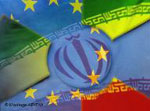
 Washington Post: Falling into step with the United States, European nations significantly broadened economic sanctions against Iran on Monday in what was described as an effort to force Tehran to resume serious negotiations on its disputed nuclear program.
The Washington Post
By Edward Cody
Washington Post staff writer
Tuesday, July 27, 2010; A06
PARIS — Falling into step with the United States, European nations significantly broadened economic sanctions against Iran on Monday in what was described as an effort to force Tehran to resume serious negotiations on its disputed nuclear program.
The new measures targeting petroleum, banking, shipping, insurance and transportation in addition to nuclear-related industries were approved in Brussels by foreign ministers of the 27-nation European Union after weeks of diplomatic consultations and strong pressure from the Obama administration.
Similar to a new package of U.S. sanctions imposed last month, the European controls go well beyond the strengthened sanctions imposed by the U.N. Security Council on June 9. In their sweep and severity, they demonstrate increasing frustration among European governments at Iran’s refusal to submit to international controls intrusive enough to guarantee against the ability to make nuclear weapons.
The Iranian government insists that its nuclear development is for peaceful purposes, such as medical research and electricity production. But it has repeatedly sought to conceal the nature and extent of its uranium enrichment and other research from International Atomic Energy Agency inspectors, leading to a widely shared suspicion that it is trying to gain the know-how to build a nuclear arsenal.
President Mahmoud Ahmadinejad warned Sunday that Iran would retaliate against European countries that imposed the new sanctions, describing them as steps forced on Europe by the United States. “Anybody who participates in the U.S. scenario will be considered a hostile country,” he said, according to news agency reports from Iran.
The new European sanctions, to go into effect immediately, are designed to prevent investment, assistance or technology transfers by European companies in the oil and gas industries that form the basis of the Iranian economy. As described by diplomats in Brussels, the ban also applies to assistance in refining petroleum products, a particular Iranian vulnerability. Although it is a leading oil producer, Iran imports about 40 percent of its gasoline because of inadequate refining capacity.
In addition, the measures seek to freeze foreign holdings of Iranian banks, putting a crimp on the country’s trade, and prohibit European insurance firms from dealing with Iranian companies. Moreover, they aim to block holdings of Iranian shipping companies accused of helping the country get around previous sanctions against goods helpful to the nuclear development program.
Because the new restrictions threaten lucrative European trade with Iran, several governments were hesitant about imposing them, including those of Germany, Malta and Greece, according to reports in Paris and Brussels. But other European governments, particularly France and Britain, were eager to see the E.U. sanctions stiffened as a way to convince Tehran that it must abandon its nuclear ambitions.
The E.U.’s foreign policy representative, Catherine Ashton, recently proposed resuming nuclear discussions between Iran and the six-nation group seeking to set up controls: the United States, Russia, China, France, Britain and Germany. Brazil and Turkey, which have sought to work out a compromise, said Sunday they also would be willing to participate if the talks resumed in September as suggested.
Canada also on Monday imposed new sanctions against Iran, including a ban on any new Canadian investment in its oil and gas sector and restrictions on exporting goods that could be used in nuclear programs, the Associated Press reported.


