


 AFP: Iran will no longer negotiate a nuclear fuel swap with some of the world powers, its atomic chief said on Monday, adding however that it is ready for closer cooperation with the UN nuclear watchdog.
By Siavosh Ghazi
TEHRAN (AFP) — Iran will no longer negotiate a nuclear fuel swap with some of the world powers, its atomic chief said on Monday, adding however that it is ready for closer cooperation with the UN nuclear watchdog.
“We will no longer negotiate a fuel swap and a halt to our production of (nuclear) fuel,” Iran Atomic Energy Organisation chief Fereydoun Abbasi Davani said in an interview with the official IRNA news agency.
“The United States is not a safe country with which we can negotiate a fuel swap or any other issue,” he said.
The fuel swap plan was floated by Western powers who offered Iran the chance to swap its low-enriched 3.5 percent uranium for the nuclear material purified up to 20 percent to fuel a Tehran medical research reactor.
But the Islamic republic did not agree to the deal, and one year later in May 2010, with the backing of Turkey and Brazil, it made a counter-proposal to send neighbouring Turkey 1,200 kilogrammes of its low-enriched uranium.
The major powers ignored Iran’s counter-offer.
The UN Security Council in New York has repeatedly ordered Tehran to halt all uranium enrichment until the International Atomic Energy Agency (IAEA) has verified the exclusively peaceful nature of its nuclear activities.
But despite being targeted by four sets of UN Security Council sanctions over its refusal to suspend enrichment, Iran remains adamant it will push ahead and denies Western claims that it seeks to build a nuclear bomb.
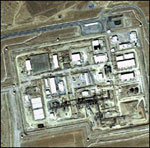
Tehran currently undertakes its uranium enrichment work — the most sensitive part of its controversial nuclear programme — at the Natanz facility in central Iran, with plans to divert the 20-percent purification process to the new Fordo site near the holy city of Qom.
The Islamic republic has also announced plans to build new enrichment facilities across the country but Abbasi Davani said Iran did not need to do so during the “the next two years,” IRNA reported.
The plan now is to “complete the new sites such as Natanz and Fordo, which have been established and equipped, in the next two years,” he said, adding Iran was making progress in its enrichment programme.
“We have reached such a level of progress that they have to negotiate with us so that we can supply fuel to other countries, or so that they can become our partners,” Abbasi Davani said.
Iran had produced “enough uranium at 20 percent” level of enrichment for the Tehran reactor and would continue such production, he said, adding “it will not stop.”
“From a scientific and technical point of view, Iran has no problems to make fuel at 20 percent,” he said, admitting however that there had been some delays linked to “the installation of some equipment.”
Iran has said it could start making fuel for the Tehran reactor in September 2011.
Abbasi Davani also suggested in the IRNA interview that Iran was ready for increased cooperation with the IAEA on the condition the UN watchdog limit the number of points it wants clarified.
“We have asked them to give us their key allegations, with documents and proof, so that we could examine them and told the IAEA that if we were to discuss these issues with them they would concern only a limited number” of claims, he said.
Iran has so far steadfastly refused to discuss any new questions raised by the IAEA about its nuclear programme.
Abbasi Davani also stressed any request must be made through official channels. “As long as we don’t receive these questions in an official manner, we cannot respond,” he said.
His comments come after a top IAEA official earlier this month toured Iranian nuclear sites, including ones where uranium is being enriched.


