


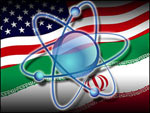
 Wall Street Journal: Renewed negotiations between Iran and international powers over Tehran’s nuclear program this weekend already are facing fire from Israel and American lawmakers,
The Wall Street Journal
By JAY SOLOMON and JOE PARKINSON
ISTANBUL—Renewed negotiations between Iran and international powers over Tehran’s nuclear program this weekend already are facing fire from Israel and American lawmakers, who fear the Islamic Republic is seeking to use the revived diplomatic track to forestall additional economic sanctions while continuing to advance its nuclear work.
This skepticism toward the talks, which will go into a second round on May 23 in Baghdad, illustrates the tight political space U.S. President Barack Obama and his diplomatic partners face as they seek to peacefully end the standoff over Iran’s nuclear program, which has fueled higher global energy prices and sparked fears of war.
Israeli Prime Minister Benjamin Netanyahu’s government has continued to threaten to take military action against Iran’s nuclear sites if diplomacy appears futile.
And leading U.S. lawmakers on Sunday again pledged to enact new economic sanctions on Tehran if it doesn’t immediately abide by United Nations resolutions calling for it to freeze its production of nuclear fuel.
“My initial impression is that Iran has been given a ‘freebie’ ” Mr. Netanyahu said on Sunday. “It has got five weeks to continue enrichment without any limitation, any inhibition.”
On Saturday, Iran met in Istanbul with the five permanent members of the U.N. Security Council, plus Germany, for the first direct talks on Tehran’s nuclear program in 15 months.
American and European diplomats kept expectations low heading into the meetings, arguing that the most positive outcome likely would be an agreement to hold a second round. These officials said they were interested in testing Tehran’s willingness to seriously engage on the nuclear issue amid mounting economic sanctions targeting Iran’s oil exports and financial sector.
The international bloc, known as the P5+1, held more than 10 hours of talks with the Iranian delegation, headed by chief negotiator Saeed Jalili, on Saturday. U.S. and European diplomats said afterward that Tehran appeared committed to the talks, which both sides agreed to reconvene in Iraq next month.
“We want now to move to a sustained process of serious dialogue,” said the European Union’s foreign policy chief, Catherine Ashton, who led the P5+1 bloc. “We expect that subsequent meetings will lead to concrete steps toward a comprehensive negotiated solution.”
Deputies to Ms. Ashton and Mr. Jalili will meet in coming weeks to lay out a clear negotiating framework for the Baghdad talks, said the two officials.
American and European officials acknowledged Saturday that they didn’t press Iran to take any specific actions to curb its nuclear program during the Istanbul meetings.
Washington and Brussels have been clear in recent months that they are first seeking to curb or eliminate the most-threatening element of Iran’s nuclear program—in particular, the production and stockpiling of the near weapons-grade uranium at underground bunkers.
They are also seeking to gain greater access for international inspectors into nuclear sites inside Iran that the U.N. believes may be involved in atomic weapons development.
U.S. officials also stressed that the Obama administration won’t ease its economic pressure on Tehran until the Iranian government takes “concrete steps” to address concerns that it is developing atomic weapons, a charge it denies. These officials said they believe Iran showed a greater willingness to engage, precisely as a result of its growing economic malaise.
“There is no reason to believe yet that we will make all the progress we want to make,” said a senior American diplomat who took part in the talks. “This is a very difficult process.…It takes time to do these very complex things.”
Indeed, Mr. Jalili offered few indications on Saturday that Iran was ready to comply with the international community’s demands. He said Tehran would continue to enrich uranium to levels close to 20% purity, near weapons grade. And he said Tehran expected U.S., U.N. and EU sanctions to be lifted as the dialogue continued.
“We deeply believe that the removal of sanctions, which is demanded by the Iranian nation, is one of the issues which should receive attentions in the trend of talks on cooperation,” Mr. Jalili told a news conference in Turkey on Saturday.
Leading American lawmakers on Sunday countered that Congress would intensify sanctions if Tehran didn’t immediately freeze its production of nuclear fuel.
“We should not mistake positive diplomatic dialogue for compliance with U.N. Security Council resolutions,” said a spokesman for Sen. Mark Kirk (R., Ill.), who has led congressional efforts to pressure Iran’s finances. “The Senate should move forward with new bipartisan sanctions unless the Iranian government halts all uranium enrichment activities.”


