


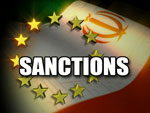
 AP: The U.S. and Europe want to deprive Iran of the oil income it needs to run its government and, most importantly, fund what they believe is an effort to build a nuclear weapon. Their efforts are entering a new phase this week. The Associated Press
By JONATHAN FAHEY, AP Energy Writer
 NEW YORK (AP) — The U.S. and Europe want to deprive Iran of the oil income it needs to run its government and, most importantly, fund what they believe is an effort to build a nuclear weapon. Their efforts are entering a new phase this week.
The U.S. as of Thursday will penalize banks that do oil deals with Iran, while European nations will embargo imports of Iranian oil starting Sunday.
These measures were announced in December and January, but lawmakers gave countries and the oil markets until this week to adjust.
Iran initially responded by threatening to block key oil routes. Oil soared over $100 per barrel as traders imagined an oil market straining to meet growing demand from China while only getting a trickle of oil from the world’s third largest exporter.
Those fears have evaporated.
Iran hasn’t capitulated on its nuclear ambitions but it has taken part in negotiations. World economic growth has slowed, reducing demand for oil to make fuels for transportation. Saudi Arabia and other nations boosted crude production in anticipation of lost Iranian supplies, contributing to a 25 percent plunge in oil prices since May 1. And oil buyers have had months to secure oil from other sources.
“Customers have gotten themselves in a good position to handle it,” said ExxonMobil CEO Rex Tillerson Wednesday.
Still, there is the possibility of at least temporary supply disruptions when the European embargo takes effect July 1. “What happens day of is hard to predict,” Tillerson said.
But Michael Lynch, President of Strategic Energy and Economic Research, thinks it will be a “non-event.” Countries that plan to honor the embargo “have already done so,” he says.
Indeed, U.S. officials say Iran’s oil exports and revenue are already down sharply. Iran generated $100 billion in revenue from oil last year, up from $20 billion a decade ago, according to IHS CERA, an energy consulting firm.
Iran has warned that the embargo could boost the price of oil. But the market is so flush with oil at the moment that even the loss of more Iranian crude may not lead to short supplies and higher prices. In fact, if Iran figures out a way to get around the sanctions and get more of its oil to market — a real possibility — oil prices could fall further.
Here are key questions and answers about the West’s new sanctions and what they could mean for energy markets:
Q: What are the sanctions and when do they go into effect?
A: The U.S., which does not purchase Iranian oil, announced sanctions in December that would prohibit the world’s banks from completing oil transactions with Iranian banks. That would make it more difficult for Iran to sell its crude on the open market. The oil in a single tanker can be worth $100 million. The U.S. sanctions took effect Thursday.
Europe announced in January it would prohibit imports of Iranian crude by July 1. It had been satisfying about 3 percent of its demand with oil from Iran. Europe also is prohibiting firms from insuring shipments of Iranian oil.
Q: What has been Iran’s role in the world oil market?
A: In recent years, Iran has exported 2.5 million barrels of oil per day, about 3 percent of world supplies. About 500,000 barrels have gone to Europe and most of the rest to China, India, Japan and South Korea.
Iranian fields produce a type of oil known as heavy, sour crude. This is a common type of crude that contains more sulfur than so-called light, sweet crude. Heavy crudes are harder and more expensive to refine into valuable fuels such as gasoline and therefore generally command a lower price.
Q: What have been the effects of the sanctions so far?
A: U.S. officials say Iran’s oil exports have declined to less than 1.8 million barrels per day, a drop of 700,000 barrels per day. At today’s oil prices, the reduction is costing Iran $63 million per day. Even importers who want to buy Iranian oil have found it difficult because they haven’t been able to buy insurance for oil shipments. Iran has kept up its oil production even as sales have dropped, leading to soaring levels of oil in storage.
Q: Can countries buy Iranian oil and still avoid the sanctions?
A: Yes. The State Department has announced that China, India, Japan, Malaysia, Republic of Korea, Singapore, South Africa, Sri Lanka, Turkey and Taiwan have received waivers from the U.S. in exchange for “significantly reducing” oil imports. They will be able to continue to import some Iranian oil. Ten European countries have also received waivers, but they will not be allowed to import Iranian oil beginning July 1 anyway.
Also, countries could trade with Iran outside of the traditional banking system. Iran could accept hard assets such as gold for its oil, though that would be inefficient and risky.
Q: Will the sanctions work?
A: They have already significantly reduced Iran’s oil sales. At the same time, the drop in global oil prices has reduced Iran’s income from the oil it is still selling. This combination of lower sales and lower prices is stretching Iran’s finances. Iran has re-engaged in nuclear talks with the West, but they have not been successful. In fact, Iran has insisted that the U.S. and Europe ease the sanctions before it will make any concessions with its nuclear program.


