


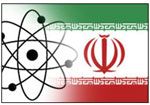
 AFP: Iran has begun installing next-generation equipment at one of its main nuclear plants, a new IAEA report said Thursday, drawing condemnation from the United States, Britain and Israel five days before Iranian talks with world powers. By Simon Sturdee
 VIENNA (AFP) — Iran has begun installing next-generation equipment at one of its main nuclear plants, a new IAEA report said Thursday, drawing condemnation from the United States, Britain and Israel five days before Iranian talks with world powers.
“On 6 February 2013, the Agency observed that Iran had started the installation of IR-2m centrifuges” at the Natanz plant, the International Atomic Energy Agency report said.
“This is the first time that centrifuges more advanced than the IR-1 have been installed” at the plant in central Iran, the UN atomic watchdog added.
One official said that Iran intended to install around 3,000 of the new centrifuges at Natanz — where around 12,500 of the older models are installed — enabling it to speed up the enrichment of uranium.
This process is at the heart of the international community’s concerns about Iran’s nuclear programme, since uranium enriched at high levels can be used in a nuclear weapon.
News of this advanced equipment drew an immediate reaction Thursday from Washington, which called it “yet another provocative step” by Iran.
The installation “would be a further escalation and a continuing violation of Iran’s obligations under the relevant UN Security Council resolutions and IAEA board resolutions,” US State Department spokeswoman Victoria Nuland said, noting however that the new centrifuges came as no surprise.
Britain expressed “serious concern” about the latest development, with Foreign Office minister Alistair Burt calling it “another signal that Iran has no intention of providing the necessary reassurance… that its nuclear programme is for purely peaceful purposes.”
Israel, the Middle East’s sole if undeclared nuclear-armed state that has refused to rule out bombing Iran, meanwhile warned that Tehran was “closer than ever” to achieving the amount of enriched uranium to make a nuclear bomb.
The report was “severe” and “proves Iran is continuing to rapidly advance to the red line” that Prime Minister Benjamin Netanyahu has set as the limit the international community must allow for Iran’s uranium enrichment, Netanyahu’s office said.
“Preventing nuclear arms from Iran will be the first topic Prime Minister Benjamin Netanyahu will discuss with US President Barack Obama,” expected in Israel in March, it added.
Despite the developments at Natanz, the IAEA’s quarterly report seen by AFP also noted that Iran has not started operating any new equipment at its Fordo plant.
Fordo is of more concern to the international community, since it is used to enrich uranium to fissile purities of 20 percent and Natanz mostly to five percent.
The ability to enrich to 20 percent is technically speaking considerably closer to 90 percent, the level needed for a nuclear weapon.
— New attempt at talks —
Iran has so far produced 280 kilos (617 pounds) of 20-percent uranium, of which around 110 kilos have been diverted to fuel production, the new report said.
Experts say that around 250 kilos are needed for one bomb, although creating a weapon requires several other steps and if Iran were to start further enriching to weapons-grade this would be detected by the IAEA.
Iran denies seeking atomic weapons but many in the international community suspect otherwise, and the UN Security Council has passed several resolutions calling on Iran to suspend all uranium enrichment.
The IAEA report came ahead of a new meeting between Iran and six world powers — the US, China, Russia, Britain, France and Germany — in Kazakhstan on February 26.
These will be the first talks between the parties since three rounds of meetings ended in stalemate in Moscow last June.
The so-called P5+1 called on Iran to suspend all 20-percent enrichment, shut down Fordo and export its 20-percent stockpile.
But they stopped short of offering Tehran substantial relief from UN Security Council and unilateral Western sanctions that last year began to cause major economic problems for the Persian Gulf country.
A Western diplomat said Wednesday that the P5+1 would come to Almaty with an offer containing “significant new elements”.
Reports have said that the powers could ease sanctions on Iran’s trade in gold and other precious metals.
On Thursday, Nuland urged Iran to consider “another path” than the nuclear bomb.
“They have an opportunity to come to those talks ready to be serious, ready to allay the international community’s concerns, and we hope they take that opportunity,” she said.
Parallel efforts by the IAEA dating back more than a year to press Iran to grant it access to sites, documents and scientists involved in what the agency suspects were past efforts to develop nuclear weapons remain stalled.
The new report said that “although the (IAEA) board has adopted two resolutions addressing the urgent need to resolve outstanding issues regarding the Iranian nuclear programme, including those which need to be clarified to exclude the existence of possible military dimensions, it has not been possible to finalise the structured approach document or begin substantive work in this regard.”
It added however that the Vienna-based IAEA’s “commitment to continued dialogue is unwavering”.
It said that Iran “has not fully implemented its binding obligations” and that this was “needed to establish international confidence in the exclusively peaceful nature of Iran’s nuclear programme.”


