


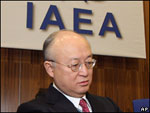
 Reuters: The U.N. nuclear watchdog said on Monday its chief inspector had held “informal” talks in Tehran, ahead of a mid-May deadline for Iran to answer questions about detonators that could be used to help set off an atomic explosive device.
VIENNA (Reuters) – The U.N. nuclear watchdog said on Monday its chief inspector had held “informal” talks in Tehran, ahead of a mid-May deadline for Iran to answer questions about detonators that could be used to help set off an atomic explosive device.
The International Atomic Energy Agency, which for years has been investigating suspected nuclear weapon research by Iran, gave no details about the previously unannounced visit of IAEA Deputy Director General Tero Varjoranta to the Iranian capital.
He went to Tehran “at the end of last week for informal talks as part of regular contacts between the agency and Iran,” IAEA spokesman Serge Gas said in an email.
Gas said IAEA Director General Yukiya Amano would “provide an update on developments” in Iran to the U.N. agency’s 35-nation board of governors in a few weeks’ time, an apparent reference to a quarterly report due in May.
Iran agreed late last year to grant IAEA inspectors greater access to nuclear-related sites and to provide more information about its atomic program, which Tehran says is for purely peaceful purposes.
Under the framework deal, Iran also agreed to start addressing suspicions that it may have worked on designing an atomic weapon – a potential breakthrough in the IAEA’s long-stalled inquiry.
By May 15, Iran is supposed to provide information to the IAEA about its need or application for the development of so-called Exploding Bridge Wire detonators. These fast-functioning detonators have some non-nuclear uses, but can also help set off an atomic device.
The IAEA’s talks with Iran are separate from negotiations between six world powers and Tehran but still closely linked, as both are focused on easing fears that Tehran may be seeking the capability to produce nuclear bombs. Iran denies any such aim.
The powers – the United States, France, Germany, Britain, China and Russia – want Iran to address the IAEA’s concerns as part of any wider diplomatic accord to end the decade-old dispute over the country’s nuclear program.
(Reporting by Fredrik Dahl; editing by Andrew Roche)


