Home Blog Page 121

Extensive Damage to Farmers Due to Power Outages in Iran

Ali Bagheri, head of the Agricultural Jihad Organization of Northern Kerman Province, announced that electricity imbalances and frequent blackouts have caused severe damage to 60% of orchard lands and 14% of farmland in the province.

According to the state-run ILNA news agency, Bagheri estimated the total damage to the agricultural sector in northern Kerman caused by electricity imbalances at approximately 12,300 billion rials (about 140.64 million dollars). He stated, “Around 127,000 farmers have suffered losses due to this situation, and if this trend continues, the future of the province’s agriculture could face a serious crisis.”

This government official also noted that the greenhouse sector in northern Kerman has suffered a 24% loss. He added, “The blackouts have not only damaged agricultural and orchard products but have also disrupted the power supply to 8% of livestock and poultry farms.”

Ahmad Ahmadpour, head of the Agricultural Jihad Organization of Southern Kerman, also told ILNA that power imbalances have inflicted over 20,000 billion rials (about 23.8 million dollars) in damages to the agricultural sector in the southern part of the province.

He emphasized, “A significant portion of agriculture in southern Kerman relies on electric water wells, but prolonged power outages have disrupted irrigation processes and destroyed many crops.”

“70 Percent” of Iranian Farmers Are Illiterate

According to this report, 152 motor pumps of agricultural wells have burned out in southern Kerman.

Additionally, 60,000 tons of citrus fruits have been damaged due to delayed irrigation, and date production has decreased by 21,000 tons.

The report further states that Kerman farmers, who rely on electricity for irrigation, have been severely affected by 10- to 12-hour power outages during the critical planting season.

A citrus farmer from southern Kerman said, “We wake up every day worrying whether we will have electricity or not. If there is no electricity, water won’t reach the trees, and our crops will be ruined. Last year, we harvested 40 tons per hectare, but this year, we won’t even reach 20 tons.”

A livestock farmer from northern Kerman also spoke about the problems caused by power outages in dairy farming: “Industrial milking machines depend on electricity, and when the power goes out, we cannot milk the cows on time. This leads to reduced milk production and, in some cases, illness in the animals. The losses we have suffered are irreparable.”

Experts have warned that if this trend continues, the decline of the agricultural industry will be inevitable, and thousands of farmers will lose their jobs.


Iran Escalates Nuclear Rhetoric as U.S. Reinstates ‘Maximum Pressure’ Campaign

Donald Trump, the President of the United States, stated in a message on the social media platform Truth Social that he desires “a great and successful Iran,” but nuclear weapons should not be part of that future. He also called for a new nuclear agreement with the Iranian regime.

He said: “I want Iran to be a great and successful Country, but one that cannot have a Nuclear Weapon. Reports that the United States, working in conjunction with Israel, is going to blow Iran into smithereens,” ARE GREATLY EXAGGERATED. I would much prefer a Verified Nuclear Peace Agreement, which will let Iran peacefully grow and prosper. We should start working on it immediately and have a big Middle East Celebration when it is signed and completed. God Bless the Middle East!”

On Tuesday, after meeting with Israeli Prime Minister Benjamin Netanyahu, U.S. President Donald Trump stated in a joint press conference that he does not want the situation with Iran to reach a catastrophic outcome.

In a provocative statement, the Telegram channel Akhbar Sepah Pasdaran, affiliated with the Iranian regime’s Islamic Revolutionary Guard Corps (IRGC), declared, “We don’t have a nuclear bomb, but if we want one, we will build it.” The post also outlined the Iranian regime’s nuclear capabilities, including 90% uranium enrichment, plutonium production, and explosive mechanism engineering. This declaration is the latest in a series of remarks from Iranian officials, further signaling Tehran’s nuclear ambitions.

The Telegram post specifically listed the regime’s nuclear capabilities, marking them with a check:

✔ Plutonium production capability
✔ Explosive mechanism construction capability
✔ Explosion control chamber construction capability
✔ Assembly and security capability
✔ 90% uranium enrichment capability
✔ Nuclear core design capability
✔ Detonator engineering capability
✔ Testing and simulation capability
✔ Decision to build a nuclear bomb

IRGC Telegram channel, Akhbar Sepah Pasdaran's post
IRGC Telegram channel, Akhbar Sepah Pasdaran’s post

The statement came just hours after U.S. President Donald Trump reinstated the “maximum pressure” campaign against Iran through an executive order, emphasizing that the regime must not be allowed to obtain nuclear weapons. Following this development, Iranian Foreign Minister Abbas Araqchi commented after a cabinet meeting, stating, “If the main issue is ensuring Iran does not pursue nuclear weapons, this is achievable and not particularly difficult.”

NCRI-US Reveals New Intelligence on Iran’s Nuclear Warhead Development

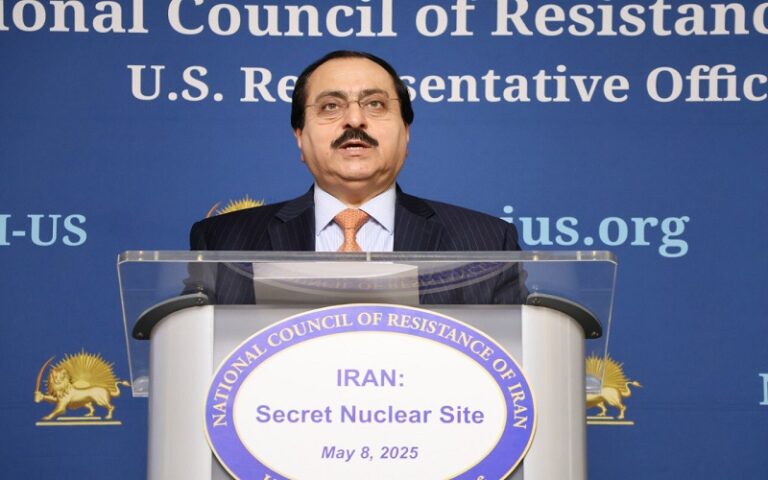
Meanwhile, at conferences held in December 2024 and January 2025, the National Council of Resistance of Iran (NCRI) warned that Tehran has accelerated its nuclear weapons program in response to strategic setbacks in Syria and the broader Middle East. Facing mounting losses in the region, the regime is now expediting warhead development while leveraging potential negotiations to buy time.

The NCRI also revealed that Iran’s secret military programs under the SPND and METFAZ divisions are intensifying efforts to develop nuclear warheads. Sites at Shahrud and Semnan cities have reportedly played a critical role in high-explosive testing and missile development, further fueling concerns over Tehran’s nuclear trajectory.


65% of Iran’s Mines Have Shut Down for Various Reasons

Bahram Shakouri, head of the Mining Commission of Iran’s regime Chamber of Commerce, announced that 65% of the country’s mines have been shut down due to “numerous problems.” He also stated that 12 economic organizations have sent a letter to Ali Khamenei, the regime’s Supreme Leader, requesting the removal of obstacles for the private sector.

On Sunday, February 2, during a press conference, Shakouri stated that they expect the government to work alongside the private sector to remove obstacles and play a “facilitating” role.

According to him, the challenges in the mining sector are “chains around the feet of economic actors,” and he went on to criticize the impact of “energy imbalances” on mining activities.

Qadeer Qiyafe, vice president of Iran’s Chamber of Commerce, also addressed the economic difficulties in the mining sector during the press conference. He noted that economic actors throughout the entire mining supply chain are currently struggling with financial constraints, and exports are facing multiple challenges.

He identified the root of these problems as the government’s high budget deficit and cited power outages as another issue preventing the achievement of the projected 13% growth.

Officials and media of the Iranian regime use the term “imbalance” to refer to the issue of energy shortages or deficits in Iran—a problem that has, among other things, prevented mines from operating properly and has even led to difficulties in paying wages.

Previously, Mehrdad Akbariyan, head of Iran’s Iron Ore Association, stated in an interview with the state-run IRNA news agency that mines require diesel for machinery, transportation equipment, and extraction operations. However, due to the energy imbalance, this need has intensified.

He described the lack of fuel as a limiting factor that leads to reduced production and higher final costs for mining products.

According to Akbariyan, under these conditions, miners cannot even purchase diesel outside of their allotted quota because the prices are “10 times” higher than the government rate. Additionally, if miners buy diesel outside their quota, they may face “smuggling charges.”

Meanwhile, miners in Iran have been grappling with various accidents in substandard mines for years, sometimes losing their lives in the process.


Sharp Rise in Food Prices in Iran, Statistics Center Reports

A new assessment by Iran’s Statistics Center shows that more than one-third of food items consumed by Iranian households experienced a price increase of 40% to 103% in January this year compared to the same month last year.

The highest price surges were observed in legumes and fruits. According to this report, published on the website of the Statistics Center, the price of potatoes has more than doubled compared to January of the previous year.

Recently, following weeks of turmoil in the potato market, the government approved the import of 50,000 tons of this food product. However, domestic media reports indicate that instead of providing the preferential exchange rate of 285,000 rials per dollar, the government allocated dollars at a rate of 660,000 rials per dollar to importers.

The Rise in Food Prices in Iran Exacerbates Household Economic Hardships

The Statistics Center has recorded the price of one kilogram of potatoes in January as 320,000 rials, while market data shows that the current price is 480,000 rials. The free market exchange rate for the U.S. dollar is around 850,000 rials, and the minimum wage for a worker with two children is approximately $130 per month.

The price of potatoes increased by 20% in January compared to December 2024, and in just the first two weeks of February, the price surged by 50%.

After potatoes, the highest inflation rates were recorded for products such as split peas, bell peppers, carrots, lemons, lentils, cucumbers, and eggplants.

More importantly, out of 53 selected food items, only six experienced price increases below 10%, while the rest faced rampant inflation.

It is worth noting that the prices used in calculating food inflation are typically optimistic and lower than actual market figures, meaning the real price increases are likely much higher than the estimates provided by the Statistics Center.

For example, inflation estimates from Iranian regime’s Central Bank are consistently higher than those from the Statistics Center.

Meanwhile, Ali Ehsan Zafari, chairman of the Dairy Products Union, announced on Saturday, February 1, that rising prices have led people to gradually eliminate these products from their diet, causing the dairy industry to lose its prosperity.

On Saturday, the state-run ISNA news agency reported that dairy prices have increased significantly for the umpteenth time in the past three months.

The Statistics Center has estimated inflation for various dairy products to be between 27% and 43%.

In January 2024, food expenses for a four-person household accounted for nearly 58% of the minimum wage.


Energy Crisis in Iran: Shutdown of 13 Million Tons of Cement Production Capacity

Hamid Farmani, the head of Iran’s regime Cement Producers Association, stated that due to the energy shortage crisis, the country’s cement production is 13 million tons below the nominal capacity of cement manufacturing units.

On Tuesday, January 4, Farmani clarified that the nominal capacity for cement production in Iran is estimated to be around 80 million tons per year. However, issues such as energy imbalances, power and gas outages, and decreased demand have reduced actual production to a lower amount.

Eight-month statistics from the Ministry of Industry indicate that clinker production (the primary material for cement) has declined by 3 million tons compared to the same period last year, reaching 50 million tons.

Iran’s Industries Face Complete Power Shutdown Amid Growing Crisis

Data from the Chamber of Commerce also show that the electricity and fuel supply crisis in cement production units has intensified to such an extent that, with the shutdown of cement plants, Iran exported raw cement material, clinker, for the first time in 2024. Between March 21 and September 22, 2024, Iran exported $77 million worth of clinker, mainly to Arab countries in the region.

Iraq, which is Iran’s largest cement export market, has become the biggest buyer of Iranian clinker during this period. Statistics from Iraq’s Ministry of Industry and Mines show that the country’s cement production grew by 7% last year, reaching 10.6 million tons.

Farmani also commented on this issue, stating: “The continuous and positive growth of Iraq’s cement industry poses a serious challenge for Iran.”

The situation in Iran’s steel and petrochemical industries is even worse than in cement, as petrochemical plants are operating at only 70% capacity. Meanwhile, according to the World Steel Association, Iran’s crude steel production capacity exceeds 40 million tons, but only 31 million tons were produced last year.

In addition to large industries, Iran’s small industries have also been severely affected by electricity and gas shortages.

According to estimates by the Research Center of the Iranian Parliament, the economic loss suffered by small industries due to power outages in the summer of this year amounted to 430 trillion rials (approximately $512 million).


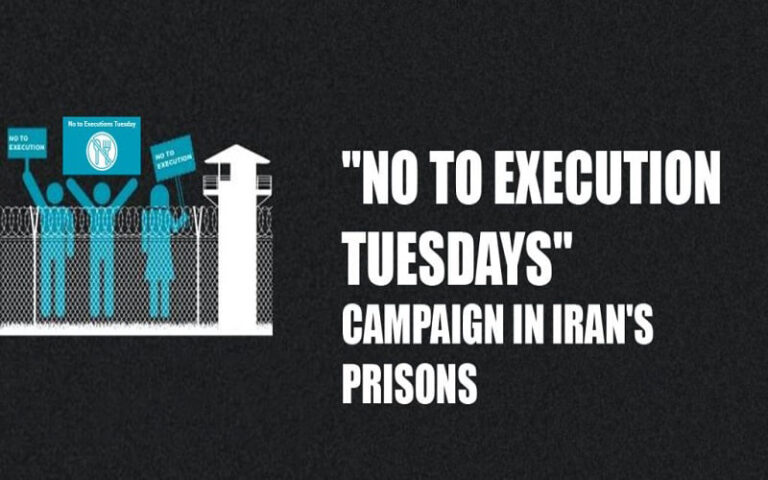
At least 30 prisoners executed in 15 days; Expansion of the “No to Executions Tuesdays” campaign in Iran

As part of the ongoing protests against the implementation of death sentences, prisoners in Gonbad-e Kavus prison have also joined the “No to Executions Tuesdays” campaign. According to a new statement from the campaign, on February 4, prisoners in 35 prisons across the country will go on a hunger strike for the 54th consecutive week.

Members of the campaign have also pointed to the new wave of death sentences and executions, emphasizing: “Since January 20, more than 30 prisoners have been executed across the country, one of whom was a female inmate in Khorramabad prison.”

Additionally, in another development, Manouchehr Fallah, a political prisoner held in Lakan Prison in Rasht and a member of the “No to Executions Tuesdays” campaign, has been sentenced to death by Branch 2 of the Rasht Revolutionary Court on charges of “enmity against God” (Moharebeh) in an unfair and opaque trial conducted without the presence of a lawyer.

The start of the second year of the “No to Execution Tuesdays” campaign: The gallows must be dismantled

Members of the “No to Executions Tuesdays” campaign have stated that the prisoners’ Tuesday hunger strike is an act of resistance against systematic repression, arbitrary sentences, and mass executions, which are carried out to instill fear in society and prevent public protests.

The statement adds: “Let us not forget that Khamenei (the Supreme Leader of Iran’s regime) previously admitted that judges should pay no attention to international human rights principles in their rulings.”

The statement further asserts that the solidarity and unity of the people in opposing inhumane execution sentences in recent weeks have been remarkable, adding: “The domestic and international campaign against the execution of political prisoners has expanded significantly, reflecting opposition to a tyrannical government that cannot survive without executions.”

Another part of the statement reads: “The Tuesday hunger strike of prisoners is turning into a widespread movement and is expanding every week.”

Members of the campaign have expressed their appreciation for “all supportive activities in social and media spaces as well as domestic and international gatherings of various groups” and hope that “this support, which is in defense of the right to life and fundamental human rights, will continue.”


Nineteen million Iranians live in unsafe housing

According to the state-run ILNA news agency, Abdolreza Golpayegani, the CEO of the “Urban Regeneration” company, emphasized that approximately 19 million people live in unsafe and unstable buildings. These structures cover an area of about 10,000 hectares.

Golpayegani stated that these buildings are primarily located in deteriorated urban areas and informal settlements.

According to him, these housing units lack stable structures, and even an earthquake of 4 to 5 magnitude could cause their collapse.

Golpayegani explained that one of the criteria for classifying a building as deteriorated is the absence of a visible structure. According to the Statistical Center of Iran, if a building’s skeleton is visible, it is considered safe. However, many of these unstable buildings entirely lack any resistant framework.

This urban planning expert pointed to the failure of renovation policies and stated: “According to the law, 100,000 units in deteriorated areas should be renovated annually, but so far, less than 2% of the allocated financial aid has been distributed.”

He also highlighted the widespread presence of deteriorated buildings, saying: “Currently, 5.7 million housing units are located in these areas, of which 2.7 million urgently require renovation and reinforcement.”

Golpayegani considered the reorganization of these areas a key priority for the government and emphasized that urban infrastructure in deteriorated areas must reach the standard levels of other city districts.

Despite the Iranian regime’s financial constraints and delays in implementing renovation policies, the risks of earthquakes and other disasters remain serious for millions in the country. Ebrahim Raisi, the former Iranian regime president who died in a helicopter crash, had promised to build one million new housing units annually—a promise that was never fulfilled.


Tehran merchants shut down their shops and protested rising prices

Major food distributors in Tehran’s Molavi Bazaar, Southern Khayyam, and Qiyam Square shut down their shops and staged protests against rising prices, the increase in the dollar exchange rate, inflation, and high taxes.

According to images and videos shared on social media, Tehran merchants closed their shops and gathered in protest on February 4 against the rising dollar exchange rate, soaring prices, and high taxes.

Videos circulating on social media show major food distributors holding banners with slogans such as “Value-added tax on food items must be abolished.”

Tehran merchants shut down their shops and protested rising prices

In recent days, as prices have continued to rise and food costs have remained high in Iran, many citizens have voiced their protests against the new wave of inflation.

As prices continue to soar and new records are set in Iran’s currency and gold markets, on Tuesday, February 4, the price of a new-design gold coin exceeded 630 million rials (approximately $750). On January 25, the selling price of the same coin had reached 612 million rials (around $728.5).

Protests in Iran: A New Wave of Popular Anger Threatens the Stability of the Regime

Since the beginning of Donald Trump’s administration in the United States, the price of gold coins in Iran has increased by approximately 70 million rials.

Amid growing protests by various social groups and concerns expressed by Iranian regime officials, Valiollah Bayati, spokesman for the Parliamentary Commission on Internal Affairs and Councils, announced the approval of a ban on demonstrations and rallies in “sensitive and security-related locations.”

At the same time, on February 3, regime officials held an emergency meeting at the presidential institution, attended by the heads of the three branches of government.

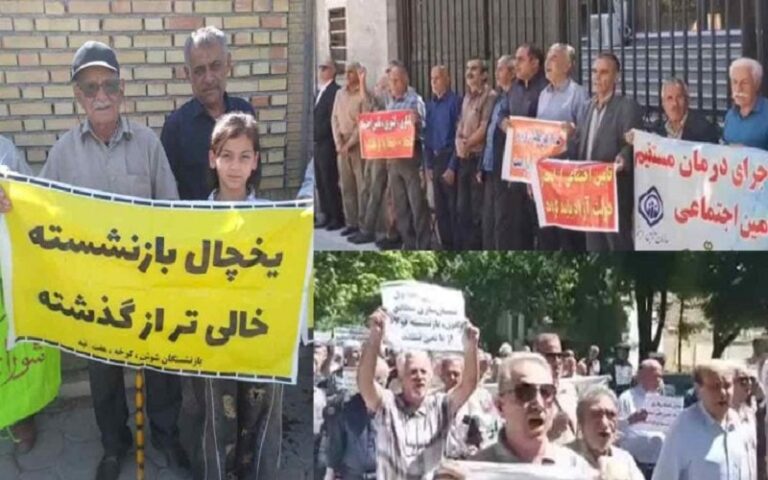
The growing number of protest gatherings by workers, retirees, and pensioners has heightened the regime’s fears of escalating protests and the potential overthrow of the Iranian regime.


Iran Will Need to Hire Doctors from Abroad

0

Yaser Salehi, a member of the Iranian regime’s Medical Organization, warned about the ongoing trend of migration, career changes, and suicides among healthcare workers in the country, stating that it is not unlikely that Iran will one day have to import doctors.

On Friday, January 31, in an interview with the state-affiliated news outlet Khabar Online, Salehi discussed the declining interest among doctors in entering medical residency and specialization programs. He stated that in 2024, out of 5,400 available residency positions in Iran’s medical universities, 2,069 remained vacant and had to go through a second round of admissions.

He added that in the past three years, more than 30 doctors in Iran have committed suicide due to the pressures of their work.

Increase in the Migration of Doctors from Iran

This member of the Medical Organization noted that talented young people today are choosing fields that allow them to quickly secure admission and migrate abroad. He warned, “In the coming years, we will have specialists who were not the most capable doctors but still became specialists, and this is an alarming sign for public health.”

The migration of doctors and other healthcare workers in recent years has heightened concerns about the future of Iran’s healthcare system.

On January 3, Mostafa Moein, the head of the Ethics in Science and Technology Association, stated that only 16% of Iranians do not consider migrating. He also revealed that 53% of university professors, 40% of students, and 45% of doctors and nurses are inclined to leave the country.

No One Wants to Specialize in Anesthesiology and Emergency Medicine

In part of his interview with Khabar Online, Salehi stated that many residency positions in anesthesiology and emergency medicine remain unfilled, as no one is willing to specialize in these fields.

This member of the Medical Organization pointed out that in Iran, some operating rooms conduct surgeries without an anesthesiology specialist present. He also revealed that many emergency departments across the country lack emergency medicine specialists.

He added that similar concerns exist regarding other core specialties such as internal medicine, pediatrics, general surgery, and obstetrics and gynecology, as there is little interest in these fields.

Salehi warned that “it is not unlikely that one day we will have to import doctors” and stated that the only reason this has not happened yet is that the existing specialists are working at full capacity.

On November 8, 2024, Mohammad Raeeszadeh, the head of the Iranian regime’s Medical Organization, highlighted the severe shortage of medical specialists in certain fields. He stated that 40% of general practitioners in Iran are engaged in jobs unrelated to medicine and that some residency seats, including those in anesthesiology, remain vacant.

On November 1, 2024, Abolhassan Mostafavi, a member of the regime’s parliamentary Education and Research Commission, warned about the crisis of doctor migration and stated that the country is suffering from a shortage of 12,000 physicians.

High Suicide Rate Among Doctors

In another part of his interview, Salehi stated that not only are new individuals not entering medical specialties, but existing specialists are also leaving the profession.

He explained that some medical specialists have left their profession to pursue other careers and emphasized that doctors are leaving the country to places where they feel valued.

He added, “We have doctors who, under extreme work pressure and hardship, have ‘migrated from life’ and committed suicide. Unfortunately, in the past three years, more than 30 of our colleagues have taken their own lives.”


Iran: Behrouz Ehsani Said; I Have Never Bargained Over My Life with Anyone

On Saturday, February 1, a demonstration was held in Paris in front of the Panthéon, the mausoleum of French luminaries, in support of six French hostages who are being detained by the Iranian regime.

Iranian Regime Sentences Two Political Prisoners to Death

Louis Arnaud, a former French hostage who was released on June 12, 2024, after two years in Iranian regime custody, spoke at the demonstration about his experiences in the Iranian regime’s prisons and his time sharing a cell with political prisoner Behrouz Ehsani, who has been sentenced to death. He said: “I saw people imprisoned and shackled. People who were taken to the gallows to create fear and silence consciences. Today, it is the turn of Mehdi Hassani and Behrouz Ehsani, who are at risk of execution. I met Behrouz in Ward 209. At that time, he was my only friend, but above all, he was a rare example of integrity, courage, and honor. He never lowered his head. (He told them): ‘Aren’t you ashamed? It’s easy to play the oppressor when you have someone in your grasp, but with this behavior, you disgrace all of humanity.’

“Before they took him away, Behrouz declared: ‘I have never bargained over my life with anyone, and I am ready to sacrifice my small existence for the freedom of the Iranian people.’ Let us hear this lesson in courage and together demand the annulment of this criminal sentence.

“How many more must die or have their lives destroyed for their beliefs? I call on Europe to unite against these inhumane acts and no longer allow itself to be taken hostage.”

Behrouz Ehsani and Mehdi Hassani were transferred to Ghezel Hesar Prison last week for the execution of their death sentences. However, under international pressure, the Iranian regime has temporarily refrained from carrying out the executions. They are supporters of the People’s Mojahedin Organization of Iran (PMOI/MEK) who have been sentenced to death.