Home Blog Page 124

Fluctuations in Iran’s Financial Markets Trigger Protests

Simultaneously with fluctuations in foreign exchange and gold prices in Iran and turbulence in financial markets, economic protests were also carried out by trade groups in various cities on Tuesday.

According to reports published on social media on Tuesday, February 11, workers in the oil and gas industries in Bushehr, steel industry workers in Gilan, and housing investors who suffered financial losses in Qazvin held protest gatherings.

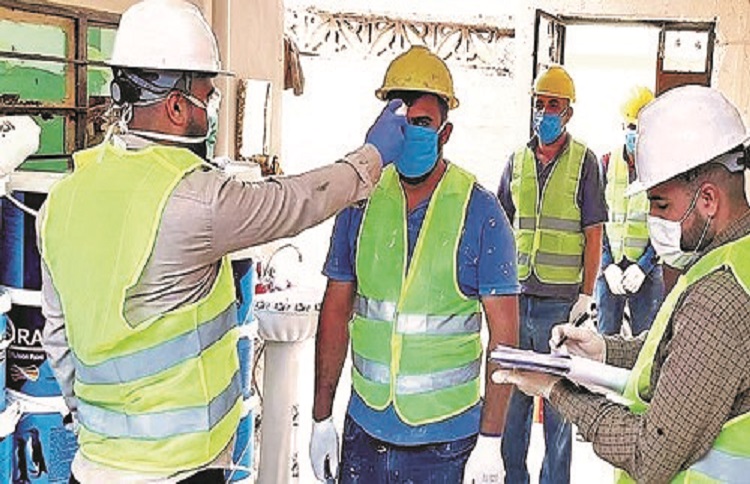
Workers of the Fajr Jam Gas Refinery in Kangan, Bushehr province, gathered in the refinery courtyard, protesting their economic conditions and unfulfilled demands, chanting: “Enough with the promises, our tables are empty.”

Additionally, a group of applicants for the National Housing Plan gathered in front of the Qazvin governorate, chanting: “Protest and assembly are our absolute rights” and “Worker, shout, demand your rights.”

Workers of the Khazar Steel Smelting Plant in Gilan province also protested against unmet wage demands and ongoing uncertainty.

Meanwhile, reports from Iran’s financial markets indicate that on Tuesday, February 11, “93% of the stock market turned red,” and “the overall stock index dropped by 37,000 points, closing at 2,784,000 points.”

The continuous and sharp decline in the value of the Iranian rial against the US dollar and other foreign currencies, along with the rise in gold and coin prices, has also caused turmoil in Iran’s investment markets.

Meanwhile, a member of the Iranian regime’s parliament admitted that “mismanagement in market regulation” is the cause of rising prices.

The current situation is the result of the Iranian regime’s four decades of policies. The Iranian government prefers to export essential goods such as potatoes to obtain US dollars, as the state treasury is empty and the regime urgently needs money to fund its expansionist ambitions in the region.


Power Outages and Widespread Blackouts in Tehran

Reports from Iranian domestic media and social networks indicate widespread blackouts in Tehran, with schools, banks, and government offices in several provinces, including Tehran, being closed on Wednesday.

The Ministry of Energy has cited “fuel shortages in power plants” as the reason for the widespread blackouts and has called on the public to conserve energy.

On Tuesday evening, February 11, the Tavanir electricity company issued a statement saying that due to cold weather, increased household gas consumption, and restrictions in gas supply and transmission to power plants, electricity has been cut off, and the country needs “cooperation from fellow citizens” to meet its power demand.

As of now, at least 14 provinces in the country have been shut down on Wednesday. The deputy governor of Tehran, in an interview with Iran’s regime state television, stated that various educational and administrative institutions in the capital would be closed to “manage energy consumption.”

Meanwhile, some reports indicate that, due to the power outages, not only have telecommunications towers been affected, but traffic lights have also stopped functioning, leading to severe congestion on some streets.

The implementation of widespread blackouts, even in the capital, due to fuel shortages, comes at a time when data from the commodities intelligence firm Kpler, obtained by Radio Farda, indicates that Iran is engaging in large-scale fuel exports.

The state-run ISNA news agency reports that blackouts have been implemented in eastern and western Tehran. However, the state-run Rouydad24 website indicates that large areas in the east, center, south, and west of Tehran experienced power outages on Tuesday evening until 8 PM.

Mansouri, the public relations manager of the Tehran Electricity Distribution Company, told Rouydad24 that the reason for the power cuts in various parts of the capital was a drop in gas pressure. However, at the same time, another official from the electricity distribution company, who requested anonymity, rejected the claim that the outages were due to low gas pressure.

Since the beginning of autumn, the Iranian regime has claimed that fuel reserves for power plants have declined and has implemented widespread blackouts across the country.

Surge in Mazut Consumption in Iran Amid Rising Exports of Clean Fuels

Data from Kpler indicates that Iran has significantly increased its liquefied petroleum gas (LPG) exports in the autumn and winter of this year. It only reduced fuel oil (mazut) exports for one month in November (mid-autumn) before restoring them to previous levels in December.

In the autumn and early winter of this year, Iran exported approximately 300,000 barrels (26,000 tons) of LPG and more than 200,000 barrels of fuel oil per day.

Gas Consumption in 24 Hours Close to 75% of the Country’s Total Production

Data from Turkey’s Energy Market Regulatory Authority also shows a significant increase in the country’s gas purchases from Iran, especially after this summer. In the first 11 months of 2024, Iran increased its gas exports to Turkey by 40%, reaching 6.5 billion cubic meters.

Iran also exports gas to Iraq, but neither country publishes official data on the volume of gas delivered.


Iranian Pharmacists Association Warns of Collapse of Pharmaceutical Supply Chain

The Iranian Pharmacists Association and the Medical Council of Iran, in separate letters addressed to senior officials of the Iranian regime, warned about the irreparable consequences of the “pharmacy liquidity crisis” and the “non-payment of insurance claims.” They called for urgent action to prevent “disruptions in the pharmaceutical supply chain.”

In a letter published by the Pharmacists Association, it was emphasized that the Social Security Organization and the Targeted Subsidy Organization have failed to pay pharmacies’ outstanding claims for months. This delay has placed significant financial strain on pharmacies and the entire pharmaceutical supply chain.

Iran’s Health Minister Claims Drug Price Hikes Due to Currency Fluctuations

In this letter, addressed to Ali Akbar Ahmadian, the Secretary of the Supreme National Security Council, the Iranian Pharmacists Association stated that, according to Article 38 of the Law on Regulating Certain Government Financial Regulations, insurance organizations are required to pay 80% of the claims of contracted centers within 15 days and the remaining 20% within a maximum of three months.

However, the failure to implement this law has caused severe financial difficulties for pharmacies.

The letter also highlighted that private pharmacies alone are owed 718 trillion rials (approximately $755.79 million) by the Social Security Organization and 85 trillion rials (approximately $89.47 million) by the Targeted Subsidy Organization, with no response yet provided regarding the payment timeline for these claims.

Additionally, according to this letter, 35 trillion rials (approximately $36.84 million) allocated by the heads of government to the Ministry of Health has yet to be paid to private pharmacies.

The Iranian Pharmacists Association stressed in the letter that these delays have caused a severe liquidity shortage in pharmacies, an increase in bounced checks, and disruptions in financial relations between pharmaceutical companies.

As a result, many pharmaceutical companies have refused to supply medicine to indebted pharmacies, pushing the country’s pharmaceutical supply chain into a severe crisis.

In another report by the state-run Mehr News Agency, the head of the Iranian Medical Council, in a letter to Massoud Pezeshkian, highlighted the liquidity shortage in pharmacies and the rise in bounced checks, urging government officials to address the crisis immediately.

Mohammad Raeiszadeh, in this letter, stated that over 15,000 private pharmacies across the country have been owed 180 trillion rials (approximately $189.47 million) by the Targeted Subsidy Organization, 7,180 trillion rials (approximately $7.557 billion) by the Social Security Organization, and 10 trillion rials (approximately $10.5 million) by other insurance organizations for the past six months.

The letter emphasized that these payment delays have led to a severe liquidity crisis for procuring new medicines, the closure of pharmacy accounts, and ultimately, disruptions in public access to essential medications.

The head of the Medical Council clarified that insurance organizations have made the payment of pharmacy claims conditional on securing their own funding and, in some cases, collecting debts from employers and employees. This situation has placed pharmacies in dire economic conditions.


Growing Wave of Professor Migration Poses Serious Challenge To Iran’s Scientific Future

0

The migration of university professors, students, and elites from Iran has repeatedly drawn public attention in recent years. What is particularly noteworthy about this issue is that neither the government in general nor the country’s academic institutions, in particular, have taken any action to address it.

The exact number of professors who have migrated from Iran in recent years remains unclear, with conflicting statistics reported on the matter. However, based on available reports, it appears that a significant number of university faculty members have left the country in recent years due to various reasons, including economic, political, and social challenges.

Some reports indicate that approximately 2,700 university faculty members have left Iran over the past four years. However, other sources estimate this number to be either higher or lower. For instance, some reports suggest that around 1,700 faculty members migrated between 2018 and 2021.

Notably, Iran’s Minister of Science in the thirteenth administration has claimed that 25% of university professors have migrated in recent years. However, due to the ambiguity surrounding the exact time frame and the method of calculation, the accuracy of this statistic cannot be definitively verified.

Regardless of the precise number of migrating professors, what is certain is that this trend is on the rise and could, in the near future, inflict irreparable damage on the country’s higher education and research system.

It is worth noting that multiple factors contribute to the migration of university professors from Iran, including:

– Economic issues: such as low salaries and benefits, lack of adequate welfare facilities, and insufficient support for scientific research.

– Political and social issues: including restrictions on freedom of speech, gender and ethnic discrimination, and lack of job security.

– Cultural issues: such as the absence of an environment conducive to academic and cultural growth, lack of respect for the status of professors and intellectuals, and neglect of their professional concerns.


Since February 10 of Last Year, 1,021 Executions by Hanging in Iran

0

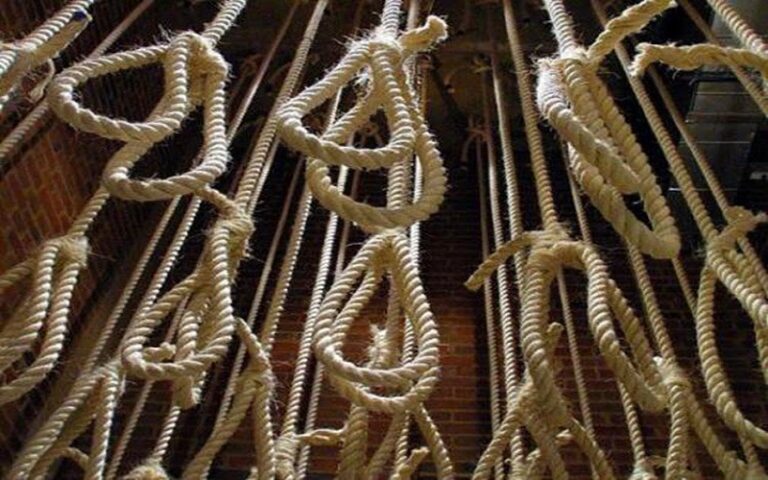
The “No to Execution Tuesdays” campaign, in its 55th statement on Tuesday, February 11, warned that since February 10, 2024, more than 1,021 people have been executed by hanging.

Imprisoned members of this campaign in 35 prisons across the country expressed concern in the statement over the death sentence of Pejman Soltani, a Kurdish political prisoner who was arrested during the 2024 protests.

This political prisoner was sentenced to death by Branch 1 of the Urmia Criminal Court in an “unfair trial” on charges of killing a “Basij officer.”

The statement also announced that the request for retrial of Pakhshan Azizi, a political prisoner whose death sentence has been upheld by the Supreme Court, has been denied, placing her at imminent risk of execution.

Amnesty International Urges Global Action to Stop Execution of Pakhshan Azizi

The “No to Execution Tuesdays” campaign warned in its statement that if Pakhshan Azizi is transferred from the general ward for execution, more serious actions will be taken to resist this inhumane act.

The campaign has also called on all people and human rights activists to stand against this execution by any means possible, stating that “this is a test for all of us, and we must not allow ourselves to witness mourning for another prisoner again.”

The statement further emphasized that several political prisoners in the women’s ward and Ward 8 of Evin Prison, who protested and chanted slogans against the death sentences and forced transfer of two political prisoners, Behrouz Ehsani and Mehdi Hasani, have been denied visitation rights.

Iran: Behrouz Ehsani Said; I Have Never Bargained Over My Life with Anyone

The “No to Execution Tuesdays” campaign statement reiterated that members of this movement in 35 prisons across the country unanimously condemn all death sentences in Iran and will continue to resist and raise their voices against executions.

The statement also warned that the government uses executions as a tool to maintain its survival and suppress society, rather than to implement justice. For this reason, the campaign has called on international organizations, human rights groups, and the global community to take urgent action to stop these crimes.

According to the statement, in the 55th week of the “No to Execution Tuesdays” campaign, prisoners in 35 prisons across the country will go on a hunger strike on Tuesday, February 12, 2025.


Gas Consumption in 24 Hours Close to 75% of the Country’s Total Production

As Iran experiences a severe cold wave and an unprecedented increase in gas consumption, Saeed Tavakoli, Deputy Minister of Oil and CEO of the National Iranian Gas Company, announced on Monday, February 10, that “the volume of gas consumption in the past 24 hours accounted for nearly 75% of the country’s total production.”

According to the state-run Mizan news agency, Tavakoli stated that “on Saturday, February 8, 870 million cubic meters of natural gas were supplied to the national grid, with more than 75% of it consumed in residential, commercial, and small industrial sectors.”

The Iranian Deputy Oil Minister, referring to the intense cold in the northern and northwestern regions of the country, predicted that gas consumption could rise to 700 million cubic meters in the coming days.

Gas Supply Cut to 12 Petrochemical Complexes in Iran

This government official warned that in order to maintain the stability of the national gas network, “cooperation and consumption management” by the public are essential. He also emphasized that if the excessive gas consumption continues, “fuel supply for power plants and productive industries will face challenges.”

He described this level of consumption as highly concerning and urged citizens to participate in the “Two Degrees Lower” campaign by maintaining indoor temperatures between 18 to 21 degrees Celsius, wearing warm clothing, and closing air vents to help the country get through this period of cold weather.

Government officials, by launching campaigns such as “Two Degrees Lower” and asking people to lower the temperature in their homes and workplaces, are trying to encourage society to conserve energy.

Previously, the governor of Tehran province also referred to the drop in temperature and the increase in energy consumption, urging people to manage their usage and save energy to help maintain the stability of the energy network.

Reports indicate that despite repeated calls from government officials for public participation in the “Two Degrees Lower” campaign, cooperation from the people in reducing energy consumption in Iran faces challenges.

Previously, Hashem Ourai, an energy expert, told the state-run Khabar Online website that due to a decline in social capital and a lack of public trust, people’s cooperation with the government in this area has been limited.

The Eghtesad Online website emphasized that on one hand, the high energy consumption in the country, and on the other hand, the imbalance in gas supply and distribution, have sounded the “alarm bell” for the country’s energy infrastructure.

The scale of energy shortages and crises in Iran is expanding daily, to the point that experts refer to it as a warning sign of “economic collapse.”

It is worth mentioning that Iran holds the second-largest natural gas reserves in the world but is unable to meet its domestic energy needs.


The Devaluation of Iran’s Rial Has Accelerated

Two days after the Iranian regime’s Supreme Leader, Ali Khamenei, publicly opposed Tehran’s negotiations with Washington, the U.S. dollar in Iran’s free market surged by more than 65,000 rials, crossing 96,000 rials.

Since Donald Trump’s victory in the U.S. presidential elections, the Iranian rial has depreciated by 30% against the dollar. However, the pace of the dollar’s rise has accelerated significantly in the past few days.

In 2021, Iran’s Planning and Budget Organization had predicted that if sanctions were not lifted, the exchange rate of the U.S. dollar would reach 1.1 million rials in 2025 and soar to 2.85 million rials by 2027.

US Dollar and Gold Coins Hit Record Price Against Iran’s Rial

When the Planning and Budget Organization made this forecast in September 2021, the exchange rate was 280,000 rials per dollar.

Four years later, the reality of the currency market shows that even this government institution’s projection was overly optimistic. The organization had estimated that the dollar would reach 700,000 rials by the end of this year, but it has already surpassed 910,000 rials.

Reasons and factors behind the rise in the dollar’s value.

Undoubtedly, political decisions by the leaders of Iran and the U.S. regarding negotiations and the prospects for reviving the Joint Comprehensive Plan of Action (JCPOA) have had a significant psychological impact on exchange rate fluctuations. This became particularly evident in recent days when Donald Trump signed a “presidential memorandum” reaffirming his administration’s maximum pressure policy on Iran, followed by Ali Khamenei’s rejection of negotiations with the U.S.

Sudden spikes in the exchange rate were also observed during Iran’s two missile attacks on Israel and speculations about Israel’s potential retaliatory actions.

However, after the immediate threat of an Israeli attack on Iran’s economic and energy infrastructure subsided, the exchange rate adjusted—but by far less than its initial surge. Shortly afterward, the upward trend resumed, highlighting the Iranian government’s severe inability to supply the foreign currency needed by the market. The state has effectively lost control over stabilizing the exchange rate.

It appears that the Iranian government is grappling with a growing crisis in obtaining foreign currency through exports of goods and oil.

For instance, to address issues related to transferring foreign exchange earnings from non-oil exports, the government has encouraged merchants since autumn of last year to import gold instead of currency. By December 2024, Iran’s gold imports had surged 3.5 times compared to the same period last year, reaching 81 tons—equivalent to $6.3 billion.

This means that a merchant who previously worked to transfer foreign currency from exports—whether through remittances, the foreign exchange market, direct currency exchange with importers, or direct currency importation—now imports gold instead of currency.

A more significant issue is the decline in Iran’s oil revenues since the fall of 2024, coinciding with Iran’s second large-scale missile attack on Israel and the subsequent U.S. sanctions imposed by the Biden administration on 45 tankers involved in smuggling Iranian oil to China.

During Joe Biden’s four-year presidency, Iran significantly increased its oil exports. However, following the sanctions on dozens of Iranian oil tankers in the fall of this year, its exports declined.

According to tanker-tracking companies, Iran’s daily oil exports dropped from 1.9 million barrels in September 2024 to about 1.3 million barrels in the last quarter of that year. By January of this year, the figure remained below 1.6 million barrels.

Such a sharp decline in oil exports, coupled with rising transportation costs due to recent U.S. sanctions on dozens of tankers linked to Iran, has impacted the country’s foreign exchange revenues.

Half of the approximately 500 tankers that have been involved in smuggling Iranian oil in recent years have yet to be sanctioned. If Donald Trump’s administration were to impose broad sanctions on these so-called “ghost fleet” or “dark fleet” tankers, the Islamic Republic would face severe logistical challenges—especially since China banned sanctioned tankers from entering the port of Shandong, its largest terminal for receiving Iranian oil, last month.

On February 6, in its first sanctions move under the new Donald Trump administration, the United States announced financial sanctions against an international network accused of transferring Iranian oil to China, which included three tankers.


Thousands Rally in Paris for Iranian Democracy, Rejecting Theocracy and Monarchy

0

Thousands of NCRI supporters rallied in Paris on February 8, 2025, to mark the 46th anniversary of Iran’s 1979 revolution and call for the downfall of the ruling theocracy. Demonstrators carried banners rejecting both monarchical and clerical rule, advocating for a democratic alternative. The event honored fallen freedom fighters and emphasized continued resistance against dictatorship.

Maryam Rajavi, NCRI’s President-elect, delivered the keynote speech, declaring that Iran’s regime is at its weakest. She reaffirmed NCRI’s commitment to a democratic republic, gender equality, and secular governance, urging world powers to support the Iranian people instead of engaging with Tehran.

Former Belgian Prime Minister Guy Verhofstadt called for an end to the appeasement policy, reimposing UN sanctions, designating the IRGC as a terrorist organization, and recognizing the NCRI as Iran’s legitimate representative. Jean-François Legaret, former mayor of Paris’s 1st district, highlighted the regime’s vulnerability and supported Rajavi’s Ten-Point Plan for democracy. Ingrid Betancourt, former Colombian senator, condemned Iran’s human rights abuses and hostage-taking.

French MP Christine Arrighi noted that dictatorships inevitably collapse and praised Iran’s democratic opposition. Jacques Boutault, Deputy Mayor of Paris Centre, denounced Iran’s execution rate and supported Rajavi’s anti-death penalty stance. Zinat Mirhashemi, an NCRI member, reaffirmed the people’s right to resist oppression. Kak Baba Sheikh Hosseini, representing Iranian Kurdistan, emphasized Kurdish solidarity with the resistance.

In a video message, Colonel Riad al-Asaad, founder of the Free Syrian Army, expressed support for the Iranian people, drawing parallels between Syria’s and Iran’s struggles. Mahnaz Salimian, NCRI’s Senior Secretary, declared that the regime is internally fractured and nearing collapse.

Several NCRI supporters, including Rebecca Malihi, Arash Marandi, Dr. Sina Dashti, Milica Javdan, and Mona Forouzandeh, echoed calls for revolution and honored the sacrifices of young resistance fighters. Arvin Habibi praised the dedication of NCRI activists and dismissed alternative movements that sought to derail the revolution.

The rally reinforced a unified demand for regime change in Iran, emphasizing democratic governance and international support for the NCRI’s cause.


At Least “Twofold” Price Difference of Fruits Between Markets and Shops in Iran

As the Iranian New Year (Nowruz) approaches on March 21, the price gap between fruits and vegetables sold in municipal fruit and vegetable markets and those in retail shops across cities has significantly widened.

While these products are offered at more affordable rates in municipal markets, they are sometimes priced up to twice as much in retail shops.

The state-affiliated Borna news agency, reporting on price conditions, states that greenhouse cucumbers are sold at 430,000 rials per kilogram in municipal markets, whereas in city shops, the same quality and weight are priced at 750,000 rials. The exchange rate of the U.S. dollar is currently around 890,000 rials.

Sharp Rise in Food Prices in Iran, Statistics Center Reports

Additionally, Persian limes are priced at 640,000 rials per kilogram in municipal markets but cost 1.44 million rials in the open market.

This price discrepancy is evident in other products as well. For instance, lettuce costs 240,000 rials per kilogram in municipal markets but reaches 900,000 rials in shops.

This price difference reflects a lack of adequate oversight of the supply and distribution chain. According to reports, the presence of multiple intermediaries in the distribution process adds extra costs, driving up the final price for consumers.

Moreover, the lack of price transparency and the failure to display official price tags in city shops have led to retailers in different areas charging varying prices for the same products.

The report further emphasizes that to address this issue, responsible authorities must implement continuous and stricter oversight. Proposed solutions include expanding chain stores, establishing online price-monitoring platforms, and supporting producers in selling their products directly to consumers.

Otherwise, consumers will be forced to buy fruits and vegetables at exorbitant prices, despite the possibility of fairer pricing.

Earlier reports from various Iranian media outlets indicated that the sharp rise in prices and declining purchasing power had led to the introduction of “installment-based purchases” for essential goods on Yalda Night (the Iranian winter solstice festival). Some reports noted that households from lower-income groups had either simplified their celebrations or entirely omitted them.

The Eghtesad 100 website reported that poor economic conditions have left many families unable to afford fruits and festive snacks for the holidays.


Life in Iran on a Daily Income of Two Dollars

The Iranian regime’s Statistics Center states that 27% of Iranians live on a daily income of two dollars, meaning that one-third of the country’s population cannot afford the basic necessities of life. Additionally, the Global Hunger Index (GHI) indicates that 6.5% of Iran’s population suffers from malnutrition.

Meanwhile, Iranian citizens report that as the exchange rate of the U.S. dollar has surged to nearly 900,000 rials, the prices of essential goods have multiplied, forcing them to eliminate many other items from their household budgets.

The Statistics Center’s report pertains to January, when the exchange rate was around 795,000 rials per dollar. Given the current exchange rate, the real income of the same 27% of Iranians has now fallen below two dollars per day.

The Intensified Economic Crisis for Female Breadwinners in Iran

Low-income families are forced to switch to cheaper food items with each price surge. They replace red meat with chicken, then substitute chicken with eggs, and eventually resort to legumes and potatoes instead of eggs.

The latest report from Iran’s Statistics Center indicates that more than one-third of food items consumed by Iranian households have seen price hikes ranging from 40% to 103% compared to January 2024. The steepest price increases have been in legumes and fruits.

It should be noted that the Statistics Center’s report is based on official prices. For instance, the official price of one kilogram of potatoes is recorded at 320,000 rials, whereas in fruit and vegetable markets, potatoes are actually being sold for 360,000 rials.

Some Tehran residents have even purchased potatoes at a rate of 600,000 rials per kilogram.

If a four-member family wants to eat only egg sandwiches, they would have to spend half of their daily income.

A citizen living in eastern Tehran is currently paying 200 million rials (approximately 236 dollars) in rent for an apartment, but a real estate agency has stated that the rent for this 60-square-meter apartment has now risen to 400 million rials.

It is worth mentioning that the minimum wage for a worker with two children is currently around 130 dollars.

Massoud Pezeshkian, the Iranian regime’s president, acknowledged the dire state of people’s livelihoods and high inflation on Monday, February 3, calling the situation unacceptable. He stated that some economic issues are beyond the government’s control. Despite this admission of powerlessness, he has promised that the government will take “good measures” before the Iranian New Year (March 21) to “ensure food security for the people.”

Prices are generally higher in Tehran, but economic hardship and financial pressure on low-income families are also severe in underprivileged cities.

For a long time, education has been a secondary priority for people, with food being the primary concern. Many families had already replaced various food items with legumes, but rising prices have now forced them to eliminate even that.

The elimination of meat and eggs as protein sources has led to malnutrition for at least 6.5% of the country’s population. The 2024 Global Hunger Index (GHI) places Iran between Lebanon and Saudi Arabia. While Lebanon was engaged in military conflict during the review period, Iran has been suffering from malnutrition despite being in a state of peace.

The state-affiliated newspaper Etemad recently reported that the actual figures might be even higher than indicated by the index: “Other studies show signs of malnutrition among Iranians, including 6% moderate underweight, 25% mild underweight, 3% severe stunting, 8% moderate stunting, 21% mild stunting, 1% severe thinness, 5% moderate thinness, and 20% mild thinness.”

Ali-Asghar Maleki, head of the Mutton Meat Union, confirmed that with rising prices coinciding with the increase in the U.S. dollar exchange rate, the market has experienced a decline and stagnation.

It appears that avoiding meat consumption is not limited to the 27% of the population earning less than two dollars per day but extends to a much larger segment of society. This situation has turned meat into a luxury item, affordable only for a small portion of Iranians.

A large portion of a worker’s salary goes toward rent, leaving them to survive on 10 to 20 million rials (approximately 12 to 24 dollars) per month, mainly relying on bread, legumes, and potatoes. However, due to rising prices, even potatoes have recently been removed from workers’ diets.

Some workers have long been substituting meat and chicken with chicken carcasses and feet.

An analysis of the 2024 Global Hunger Index reveals that due to poor nutrition, 5.3% of Iranian children suffer from chronic malnutrition, resulting in stunted growth.

The rising trend in prices, particularly the exchange rate of the U.S. dollar, continues, and Iranian regime officials are not unaware of the economic pressures affecting Iranian families.

Ali Khamenei, the Iranian regime’s Supreme Leader, stated in August 2023 during a meeting with IRGC commanders, “We have passed through much of the difficult path despite its steep slope and are now approaching the peaks.”

However, data from the Statistics Center shows that Iran’s “per capita national income” in 2023 declined by 20% compared to 2011. The report also indicated that in 2023, Iran had become even poorer than before, a reality that is increasingly evident across various economic indicators and statistics.