Home Blog Page 13

Iran’s Aging Fleet Reveals Road Infrastructure Disorder and a Regime Without Solutions

The condition of Iran’s road transportation sector, including its aging vehicle fleet and transportation infrastructure, has once again become a controversial issue. Recent remarks by Alireza Novin, a member of the Iranian regime’s Majlis (parliament), paint a picture of widespread problems in the transportation sector. According to him, these problems range from an aging fleet to deteriorating roads and continue to remain without effective solutions.

In remarks published on June 2 by the state-run Khaneh Eghtesad news outlet, Alireza Novin stated that approximately 60% of the country’s transportation fleet is worn out and obsolete. He described this situation as one of the transportation sector’s major challenges and referred to the fate of thousands of trucks stranded at the Turkish border.

An Aging Fleet and Thousands of Stranded Trucks

Novin said that approximately 10,000 trucks remain on the Turkish side of the border. According to him, these trucks have been left in limbo without any resolution, and the Turkish government has begun confiscating some of them.

The parliament member added that inquiries with government officials had been met with the explanation that the trucks had reached the border without the required import registration procedures. Nevertheless, he stressed that even if violations had occurred, the government should have taken action to resolve the status of these vehicles.

Novin stated that some of these trucks could have been used in efforts to modernize the aging transportation fleet. He further noted that, according to available reports, about 1,000 of the 10,000 trucks have already been confiscated by Turkish authorities.

The issue of the aging transportation fleet has repeatedly been raised by transportation experts and industry advocates in recent years. The deterioration of trucks and heavy vehicles not only increases maintenance costs but also has a direct impact on road safety. Under such circumstances, the unresolved status of thousands of trucks at border crossings has drawn significant criticism.

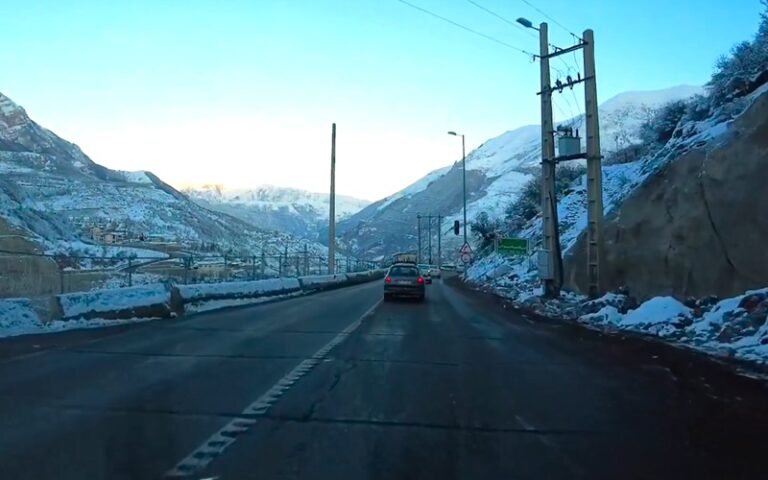
Another part of Novin’s remarks focused on the condition of the country’s roads and highways. Referring to the Zanjan–Tabriz freeway, he said that in its current state, the route resembles a rural road more than a standard highway.

The parliament member stated that numerous meetings had been held regarding the condition of this route. According to him, official warnings had been issued to the relevant regime officials, including the minister of roads and transportation, and the necessary correspondence had been carried out. However, these follow-ups have produced no tangible results.

Novin’s remarks come at a time when the condition of many of the country’s roads has long been a source of complaints from citizens and drivers. Aging infrastructure, inadequate safety facilities, and delays in implementing construction and development projects are among the issues repeatedly highlighted in official reports and media coverage.

This comes as Iran’s regime spends billions of dollars on the construction of missile cities to advance its destabilizing and war-driven policies in the region, as well as on nuclear projects that critics describe as being against the interests of the Iranian people.
Parviz Sabeti, Notorious SAVAK Torturer, Faces Court After Decades of Silence

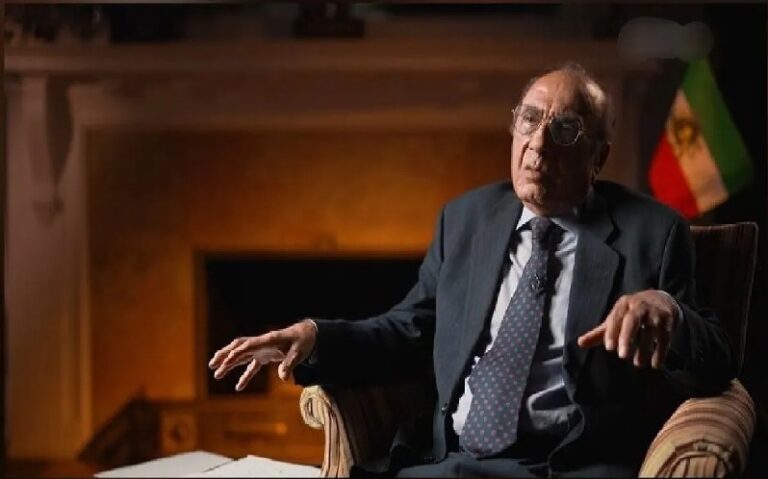
Although decades have passed since the fall of the Pahlavi monarchy, the name of one of the most controversial figures of its security apparatus has once again made headlines. Parviz Sabeti, a senior official of SAVAK—the Shah’s secret police and intelligence organization—and the official responsible for internal security under the Shah’s regime, is now facing a major lawsuit in the United States. The plaintiffs are seeking accountability for allegations including torture, unlawful detention, and widespread human rights violations.

According to a report published by The Guardian newspaper, the man known to his neighbors in the affluent community of Windermere, Florida, as “Peter” is in fact Parviz Sabeti. Many political prisoners from the Pahlavi era regard him as one of the principal architects of repression in the years leading up to the 1979 Iranian Revolution.

For years, Parviz Sabeti lived a quiet and low-profile life with his family in one of Florida’s most luxurious areas. He and his wife, Nasrin Sabeti, established extensive business activities in the construction sector under a new identity and acquired several valuable properties. However, a past that had remained hidden from public scrutiny for decades has now returned to the spotlight.

Serious Allegations Against Parviz Sabeti

Last month, a U.S. federal judge rejected a request by Parviz Sabeti’s attorneys to dismiss the case. The ruling cleared the way for judicial proceedings on a lawsuit brought by three former political prisoners. The plaintiffs, who now reside in California, claim that they were arrested, tortured, and forced into confessions during SAVAK’s operations.

The complaint details a range of alleged torture methods, including electric shocks, waterboarding, nail extraction, rape, and severe beatings. The plaintiffs maintain that these acts were carried out within the security apparatus overseen by Parviz Sabeti.

One of the most disturbing aspects of the case concerns a device known as “Apollo.” Used in SAVAK prisons, it reportedly consisted of a chair and a special metal helmet that amplified and echoed victims’ screams back to them, intensifying psychological pressure.

The Shadow of SAVAK Over Parviz Sabeti’s Present Life

For many opponents of the Pahlavi monarchy, Parviz Sabeti’s name is synonymous with the extensive security structure responsible for monitoring, tracking, and suppressing political dissidents. Documents released by the U.S. Central Intelligence Agency (CIA) have also described him as one of the Shah’s most powerful security officials, with broad authority over arrests, interrogations, and the pursuit of political opponents.

Various estimates indicate that between 1957 and 1979, thousands of people were arrested and tortured by SAVAK. Numerous reports also documented the deaths and disappearances of political opponents during that period. Although the exact number of victims remains uncertain, SAVAK’s role in suppressing political dissent remains one of the most controversial chapters in modern Iranian history.

Parviz Sabeti has not formally responded to the allegations in the new case. In previous years, he repeatedly claimed that he opposed torture and had no direct role in such practices. However, the plaintiffs and their attorneys argue that available documents and witness testimonies present a different picture.

Identity Revealed After Four Decades

According to court documents, Parviz Sabeti spent more than four decades attempting to avoid media and public attention. This situation continued until February 2023, when a photograph of him at a gathering of supporters of the deposed Shah in Los Angeles was published. The image once again drew media attention to his identity and place of residence.

Reports have also pointed to Parviz Sabeti’s political connections in recent years. Some sources have identified him as a security adviser to Reza Pahlavi, the son of the last Shah of Iran, a development that once again brought his name into discussions within Iranian politics and among the Iranian diaspora.

Now, following the decision of a U.S. federal court, a case that remained dormant for years has entered a new phase. The plaintiffs argue that the passage of time should not prevent the investigation of allegations involving torture and human rights abuses.

Although decades have passed since SAVAK’s period of operation, victims of the organization continue to demand accountability from its officials. Many human rights activists also stress that responsibility for torture and political crimes should not be erased by time or statutes of limitation, and that justice, even if delayed, must be allowed to take its course.

Political Prisoner Fathollah Avari Executed in Hamedan

In the early hours of Tuesday, June 2, the death sentence of Fathollah Avari, one of the protesters who participated in the January uprising and protests in Hamedan, was carried out at the city’s central prison.

According to state-run media, he was arrested in connection with the killing of a regime security force member during the January 8, 2026, protests and was sentenced to death by the regime’s judiciary on the charge of moharebeh (“waging war against God”). Reports indicate that his execution was carried out secretly and without granting him a final visit to his family.

Human rights organizations and civil activists have expressed concern in recent months about the handling of this case. Referring to numerous reports regarding pressure on political and security-related defendants, these groups warned about forced confessions, restrictions on access to independent legal counsel, and the absence of a fair trial.

In contrast, media outlets affiliated with the regime claim that after Fathollah Avari’s arrest, documents and evidence related to the case were discovered during a search of his residence and that he admitted to the allegations during interrogation.

Mizan News Agency, affiliated with the judiciary of Iran’s regime, claimed that he was involved in the killing of a Mohammad Javad Bakhshian, one of the regime’s repressive forces dispatched to quell protests. The outlet alleged that the officer lost his life during the January 8 protests in Hamedan.

According to accounts published by state-run media, law enforcement forces were deployed in the area during the protests and clashed with demonstrators. These outlets claim that Major Bakhshian became separated from other officers during the unrest and suffered severe injuries after being attacked by protesters. He reportedly died after being transferred to a hospital.

State-run media have also claimed that following Fathollah Avari’s arrest, a knife, a blood-stained hoodie, and a pair of shoes that they said matched surveillance camera footage were discovered at his residence.

The execution was carried out despite repeated warnings from human rights organizations regarding the issuance and implementation of death sentences against individuals arrested during protests and the use of charges such as “moharebeh” in political cases. These organizations have called for transparency in judicial proceedings and adherence to international human rights standards.

IRGC Attacks Kuwait and Bahrain, Hezbollah and Israel Clash

While in the early hours of Wednesday, June 3, local time, Kuwait reported intercepting missile and drone attacks, air raid sirens sounded in Bahrain and explosions were heard on Qeshm Island, Israel and Lebanon’s Hezbollah also carried out new attacks against each other despite U.S. President Donald Trump’s promise to reduce tensions.

The Islamic Revolutionary Guard Corps (IRGC) announced in a statement early Wednesday, June 3, that in retaliation for a U.S. attack on an Iranian oil tanker near the Strait of Hormuz, a vessel belonging to what it described as the American-Zionist enemy, named Panaya, was targeted by IRGC Navy missiles.

The statement said that U.S. forces targeted an IRGC communications tower in southern Qeshm Island with aerial munitions and that, in response, an American air and helicopter base located in a regional country, as well as the headquarters of the U.S. Fifth Fleet, were targeted by missile and drone attacks carried out by the IRGC Aerospace Force.

The U.S. Central Command (CENTCOM), in response, denied all IRGC claims regarding these attacks in a post on the social media platform X.

CENTCOM also stated that U.S. forces intercepted several Iranian ballistic missiles and drones and, in response to the Iranian regime’s attempts to attack targets across the Middle East, conducted “defensive strikes” against Qeshm Island on June 2, 2026.

The statement said that Iran’s regime launched several ballistic missiles toward neighboring countries in the region, but none reached their intended targets.

According to CENTCOM, two IRGC missiles fired toward Kuwait either veered off course or broke apart before reaching their targets. Three additional missiles launched toward Bahrain were immediately intercepted and destroyed by U.S. and Bahraini air defense systems.

CENTCOM said that shortly before the missile attacks, U.S. forces shot down three suicide drones launched by Iran’s regime toward civilian vessels lawfully transiting regional waters.

The CENTCOM statement added that U.S. forces also carried out defensive strikes against an Iranian regime military ground-control station on Qeshm Island.

The Kuwaiti military announced early Wednesday, June 3, local time, that the country’s air defenses were intercepting enemy missile and drone attacks and urged the public to follow safety and security instructions issued by authorities.

The Kuwaiti military said that any explosions heard were the result of missile interceptions.

Bahrain’s Ministry of Interior also announced early Wednesday that warning sirens had sounded across the country and urged citizens and residents to remain calm and proceed to the nearest safe location.

Meanwhile, the state-run Mehr News Agency, citing local sources and residents, reported that explosions had been heard in the Qeshm Island area.

The state-run news agency added that the exact nature of the sounds remained unclear and that no official military or law enforcement bodies had yet commented on their cause.

Meanwhile, the Israeli military announced on Tuesday that it had conducted a deadly operation in southern Lebanon in response to overnight Hezbollah attacks.

Continued Fighting in Lebanon

Despite claims that a new ceasefire had been established in Lebanon, fighting continued on Tuesday morning.

Israel continued its attacks on Lebanon, and Lebanon’s Civil Defense Organization announced that six people were killed in an Israeli airstrike Monday night on the village of Marwaniyeh in southern Lebanon.

The organization also stated that one of its facilities in the city of Nabatieh in southern Lebanon was directly targeted by an Israeli airstrike.

The Lebanese military later reported that two Lebanese soldiers were wounded in an Israeli drone strike in Nabatieh.

The Israeli military also stated that it intercepted at least two projectiles launched from Lebanon into Israeli territory overnight and that no casualties were reported.

War with Hezbollah and Negotiations with Iran’s Regime

The renewed conflict between Israel and Hezbollah is now tied to negotiations between Iran’s regime and the United States. After Tehran warned that it would withdraw from the talks if Israeli attacks on Hezbollah continued or intensified, U.S. President Donald Trump announced on Monday, June 1, following a phone conversation with Israeli Prime Minister Benjamin Netanyahu, that all shooting would cease and negotiations with Tehran would continue.

Israel’s threat to attack Beirut had caused widespread fear in the Lebanese capital, especially after Israeli forces carried out their deepest incursion into Lebanese territory in 26 years.

The U.S. Department of the Treasury also announced in a statement that the United States is imposing sanctions on Iran’s largest digital asset exchanges and their executives for supporting the Iranian regime’s terrorist activities and helping evade sanctions.

Iranian Authorities Dismiss Professors, Harass Dismissed Faculty Members at University

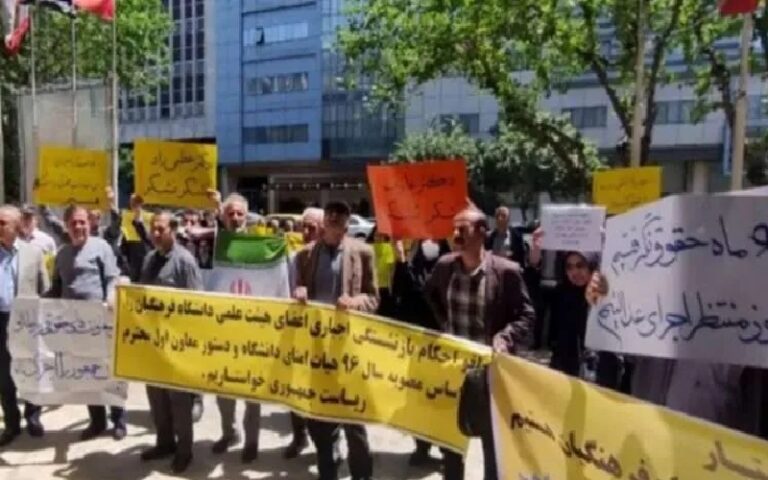
On March 31, the state-run ILNA news agency published a report on the dismissal of university professors across the country. The state-run outlet wrote that on Sunday, March 31, dismissed faculty members of Farhangian University from across Iran, who say they were unlawfully terminated, gathered in front of the Ministry of Education.

As professional protests continue in various sectors of Iran’s education and higher education systems, the gathering was held in protest against the continued dismissal of professors and the refusal of regime officials to implement legal rulings and directives issued by authorized bodies.

According to published reports, the professors participating in the gathering stated that they have been seeking reinstatement for months. They emphasized that the process of dismissing faculty members from Farhangian University was carried out in violation of laws and regulations. According to the protesters, the government’s legal affairs office and Mohammad Reza Aref, the first vice president under Iranian regime president Masoud Pezeshkian, have issued opinions and directives in recent months supporting the return of these professors, but the Ministry of Education and the management of Farhangian University have so far refused to implement those decisions.

The protesters also criticized the way regime agents have treated faculty members. They said that instead of receiving clear explanations about why the law has not been implemented, they have faced insulting behavior and inappropriate language. According to the professors at the gathering, their only demand is the implementation of the law and the restoration of the legal rights of faculty members.

Continued Protests Over the Dismissal of Professors

The dismissed professors stated that their gatherings over recent months have been entirely peaceful. They stressed that they have made no demands beyond their legal rights. Nevertheless, according to them, similar gatherings by faculty members in recent weeks have also been met with inappropriate treatment by the regime’s repressive agents.

The dismissal of professors from Farhangian University has become one of the most controversial issues in Iran’s higher education sector in recent months. Protesters say that more than 300 faculty members have been removed from their positions. They also report that their salaries, benefits, and other compensation have been completely suspended for approximately 10 months.

According to these professors, “Numerous follow-ups have been conducted through legal channels, and in various cases, documentation and legal rulings have been issued in their favor. Despite this, the dismissal of professors continues, and no practical steps have been taken to return them to the university.”

Dismissal of Professors and Growing Concerns in the Academic Environment

The protesters believe that the continuation of the current situation has not only caused economic hardship for faculty members but has also negatively affected the educational environment at Farhangian University. They argue that the large-scale removal of academic and professional personnel has created serious challenges for the university’s educational quality.

During Sunday’s gathering, participants once again called for the full implementation of the law, an end to the dismissal of professors, and the reinstatement of faculty members to their positions. They emphasized that they will continue their professional and legal efforts until their lawful demands are met.

The gathering took place while the issue of faculty dismissals at Farhangian University remains unresolved. Protesters say that despite various authorities confirming the legitimacy of their claims, officials at the Ministry of Education and the university’s administration continue to refuse to implement the relevant laws and rulings.

At a time when professional protests are increasing among various sectors of society, the gathering of dismissed Farhangian University professors has once again brought issues of employment rights, professional security, and the status of faculty members within Iran’s educational system to the forefront of public attention.

Political Prisoner Zahra Shahbaz Tabari Has Once Again Been Sentenced to Death

Zahra Shahbaz Tabari, a political prisoner held in Lakan Prison in Rasht, was once again sentenced to death by the Revolutionary Court of Rasht on charges of baghi (armed rebellion against the state) through membership and activity in the People’s Mojahedin Organization of Iran (PMOI/MEK), after her previous sentence was overturned by the Supreme Court.

The sentence was issued on April 14 and was recently served to Shahbaz Tabari in Lakan Prison in Rasht. The death sentence was issued by Mohammad Ali Darvish-Goftar, head of Branch Two of the Revolutionary Court of Rasht.

In January 2026, more than 400 prominent women from around the world and a group of United Nations experts called in separate statements for a halt to the execution of Shahbaz Tabari.

The 68-year-old political prisoner was sentenced to death by Branch One of the Revolutionary Court of Rasht in late October 2025, but the Supreme Court overturned the ruling and referred the case to Branch Two of the Revolutionary Court of Rasht for retrial.

In a letter dated November 4, 2025, Shahbaz Tabari detailed the death sentence issued against her and, citing legal provisions, described it as lacking legal basis and as evidence of the absence of a fair trial.

In part of her letter, the political prisoner wrote that her sentence had been issued on charges of baghi through membership in the People’s Mojahedin Organization of Iran (PMOI/MEK) and that she had also been sentenced to one year in prison on charges of propaganda against the regime.

She cited the installation of a banner bearing the slogan “Woman, Resistance, Freedom” and the existence of an audio file on her mobile phone that she had not sent to anyone as evidence used in her case.

Amnesty International also called for the immediate annulment of Shahbaz Tabari’s death sentence in a statement issued on October 31, 2025, emphasizing that she had been sentenced to death following a profoundly unfair trial.

Security forces raided Shahbaz Tabari’s home on April 17, 2025, and after searching the residence, arrested her and transferred her to Lakan Prison in Rasht.

Shahbaz Tabari is a graduate of Isfahan University of Technology, an electrical engineer, and a member of Iran’s Engineering Organization. She received her master’s degree in Sustainable Energy from the University of Borås in Sweden.

The issuance, confirmation, and implementation of death sentences against political prisoners in Iran have intensified in recent months, particularly following developments related to the 40-day war, and human rights organizations have repeatedly warned about the increase in this trend.

Reviews indicate that Iran’s regime executed at least 39 political prisoners between March 18 and May 26, 2026. Of those executed, 15 had been arrested during the January protests and eight were members of the People’s Mojahedin Organization of Iran (PMOI/MEK).

Iran’s ‘No to Execution Tuesdays’ campaign marks 122nd week

On May 26, the “No to Executions Tuesdays” campaign called on international human rights organizations and “awake consciences” to take effective measures to prevent the continuation of executions and to stand with the people of Iran and their demands for freedom, justice, and the abolition of the death penalty in the face of the tragedy of executions.

Experts Warn About Declining Dairy Consumption and the Risk of Expanding Malnutrition in Iran

With dairy prices rising again and consumption declining in Iran, experts have warned about the spread of anemia, osteoporosis, malnutrition, and short stature in future generations.

The state-run Khabar Online news website reported on May 31 that rising dairy prices, combined with the declining purchasing power of households, have reduced dairy consumption in Iran to levels below recommended standards.

Khabar Online wrote that estimates indicate per capita dairy consumption in Iran has fallen to about 50 kilograms, while the global average exceeds 250 kilograms.

According to the report, the chairman of the board of the National Union of Dairy Industry Cooperatives said that raw milk prices have increased by about 40% to 43%, a development that could further reduce dairy consumption.

Rising Dairy Prices Send New Shock to Lives of People in Iran

On May 25, Reza Bakri, secretary of the Iran Dairy Industries Association, said that dairy product prices have increased several times over the past year and have risen by approximately 90% overall.

Ahmad Esmaeilzadeh, director of the Community Nutrition Improvement Office at Iran’s Health Ministry, told Khabar Online that the standard recommendation for different age groups is to consume two to three servings of dairy products daily. However, average consumption in Iran is about one serving or even less, meaning that less than 50% of society’s dairy needs are being met.

He expressed concern about insufficient intake of protein, calories, and other essential nutrients among different age groups and added: “If the necessary nutrients do not adequately reach different groups, especially high-risk groups such as pregnant women, growing children, and the elderly, we will face serious health risks in the coming years.”

On May 25, 2025, Ali Ehsan Zafari, CEO of the Dairy Cooperatives Union, told the state-run ILNA news agency that the increase in raw milk prices from 460,000 rials per kilogram to 610,000 rials per kilogram was responsible for the rise in dairy prices.

He warned that the price increases implemented from the beginning of Khordad would affect per capita consumption.

Essential Food Items Removed from People’s Tables

Iraj Khosronia, president of the Iranian Society of Internal Medicine Specialists, told Khabar Online that many essential food items have been removed from people’s diets and no longer have a place in household consumption baskets.

He added that dairy products are among these foods, while meat, chicken, and various fruits have also become unaffordable for many people because of rising prices.

Khosronia warned that if most people’s diets become limited to bread or potatoes, more individuals will face anemia and physical and mental health problems in the future.

According to Khosronia, reduced dairy consumption can lead to vitamin and mineral deficiencies, osteoporosis and bone fractures, anemia, lethargy, and physical and psychological disorders.

He noted that insufficient dairy consumption could result in reduced average height and bone, neurological, and blood disorders in future generations.

In recent months, rising inflation and sharp increases in the prices of essential goods have placed significant economic pressure on households and created serious challenges for the livelihoods of large segments of society.

The continuation of this situation has heightened concerns about declining purchasing power and its consequences for the physical and mental health of society.

Declining Dairy Consumption: A Threat to Public Health

The director of the Community Nutrition Improvement Office at Iran’s Health Ministry added that nutrient deficiencies in children can manifest as malnutrition, thinness, underweight conditions, and short stature, while in older adults they can lead to anemia, osteoporosis, and severe weight loss.

Esmaeilzadeh added that milk and dairy products are included among the items eligible for purchase through the electronic voucher program. He said proposals have been made to allocate additional resources or provide a special credit card for dairy purchases, although no final government decision has yet been made.

The increase in dairy prices comes amid a broader wave of rising costs for essential goods, a trend that has increased economic pressure on citizens and has repeatedly been identified as one of the main challenges affecting livelihoods.

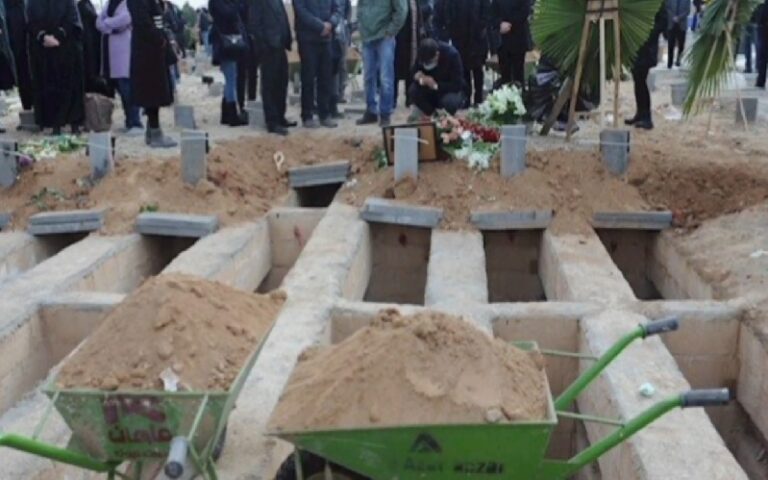
Burial Costs in Tehran Increase by Up to 50% as Inflation Soars in Iran

A new resolution by the Tehran City Council shows that the cost of cemetery services in the capital—from transporting and washing the deceased to shrouding, burial, and funeral ceremonies—has increased by an average of 40% to 50%, making the final farewell significantly more expensive for bereaved families.

The state-run Didban Iran news website reported on May 31, in an article titled “Million-Rial Farewell to the Dead; Even the Dead Are Not Safe from Inflation and Rising Prices,” on the details of the Tehran City Council’s new resolution regarding cemetery service fees for 2026.

Didban Iran wrote that the price increases cover a wide range of services, including transportation of the deceased, morgue storage, washing of the deceased, shrouding, burial, gravestone installation, and funeral ceremonies.

Director of Tehran’s Largest Cemetery Confirms ‘Coup De Grâce’ Shots to Wounded Protesters

Under the resolution, the cost of transporting a deceased person within Tehran and up to a 10-kilometer radius has increased from 6.5 million rials in 2025 to 9.75 million rials in 2026, representing a 50% increase.

The cost of transporting the deceased to the Kahrizak Forensic Medicine Center, as well as private ambulance services, has also risen significantly.

These fee increases are being implemented at a time when citizens have been facing numerous economic hardships in recent months, including high inflation, economic stagnation, widespread layoffs, and the consequences of internet shutdowns.

Sharp Rise in Burial Costs

According to Didban Iran, the cost of several public cemetery services has increased, and items related to washing and shrouding, morgue storage, preparation of the deceased for transport, burial services, and gravestone installation have become more expensive compared to last year.

The price hikes are not limited to burial services. Fees for holding funeral ceremonies—including the rental of chairs, tables, canopies, audio equipment, and ceremony management—have also increased, with some services experiencing price rises of up to 50%.

According to Didban Iran, rates for grave allocations have also increased. The cost of usufruct rights—the right to use certain graves in various sections of Behesht Zahra cemetery and the new cemeteries of Tehran—has risen significantly compared to last year. However, the City Council has provided certain facilities and discounts for specific groups and vulnerable populations.

The resolution also states that if energy prices increase, cemetery service fees will be reviewed and raised accordingly.

Earlier, in May 2025, Mehdi Pirhadi, a member of the Tehran City Council, warned that burial capacity at Behesht Zahra cemetery would soon be exhausted and that if the issue was not resolved, the deceased would “certainly remain above ground.”

Didban Iran wrote that the explanatory report accompanying the Tehran City Council resolution cited the growing gap between the actual cost of providing services and the amounts collected from citizens as one of the main reasons for the sharp fee increases. The municipality itself proposed the price hikes despite its slogan of running the city at low cost.

The new Tehran City Council resolution means that many families, while already facing mounting economic pressure and declining living standards, will now have to pay higher costs for the burial and funeral ceremonies of their loved ones.

Iran’s Regime Executes Two More Protesters from the January Uprising

This morning, two more protesters were executed by Iran’s regime.

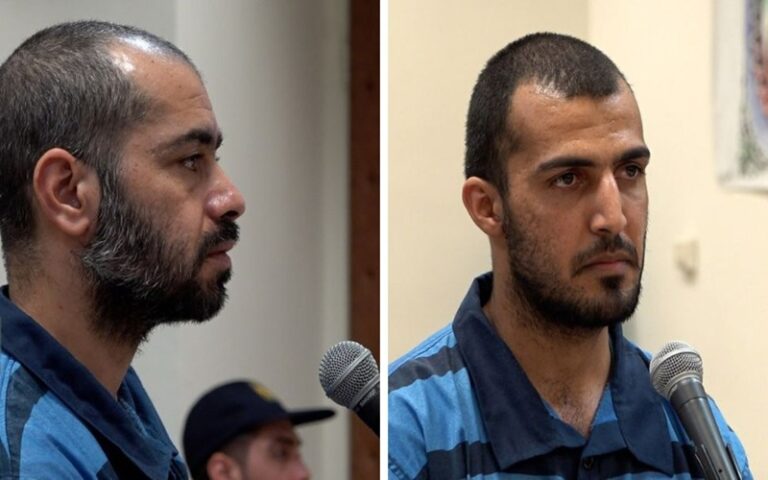
Mizan, the state-run news agency affiliated with the judiciary of Iran’s regime, reported the execution of Mehrdad Mohammadinia and Ashkan Maleki, two individuals who had taken part in the January protests.

According to Mizan, the two citizens had been tried and sentenced to death on charges including setting fire to a center of repression run by the regime, damaging public property, and clashing with security forces. The judiciary of Iran’s regime claimed that the sentences had been upheld by the Supreme Court before being carried out.

Iran’s ‘No to Execution Tuesdays’ campaign marks 122nd week

The execution of Mehrdad Mohammadinia and Ashkan Maleki once again demonstrates that the regime’s judicial system operates not to deliver justice but to take revenge on protesters and instill fear in society. For years, issuing and carrying out death sentences against those detained during protests has been one of the regime’s tools for suppressing street demonstrations, silencing public dissent, and intimidating families seeking justice.

Mai Sato, the United Nations Human Rights Council’s Special Rapporteur on the situation of human rights in Iran, had previously warned about the increase in executions and said that Iran’s regime uses the death penalty as a tool to suppress protests, create fear in society, and silence dissenting voices.

The Collapse of Iran’s Economic Resilience

The latest international reports show that the Iranian regime’s economy ranks near the bottom among 130 global economies. This ranking does not merely reflect vulnerability to war or natural disasters; rather, it presents a picture of the exhaustion of economic, institutional, and social structures—structures that, over decades of management by Iran’s regime, have reached a point of fragility.

Economic resilience does not only mean resisting crises. A resilient economy can attract capital, sustain production, create employment, and return to a development path after every shock. But when chronic inflation, institutional corruption, political uncertainty, and weak infrastructure become permanent features of an economy, its capacity for recovery also disappears.

The Vicious Cycle of Poverty in Iran

Why has the resilience of the Iranian regime’s economy declined?

In recent years, inflation has become the most important factor eroding the resilience of the Iranian regime’s economy. Inflation does not only reduce purchasing power; it also deprives households, businesses, and investors of the ability to plan. In such conditions, no economic actor can make long-term decisions about the future.

At the same time, the water crisis, aging infrastructure, declining investment, and rising uncertainty have increased production costs. The result of this process has been capital outflow, the emigration of skilled human capital, and a decline in national production capacity.

But perhaps the most important factor is the institutional structure of the economy. Economies that benefit from transparency, competition, and the rule of law can recover even in difficult conditions. In contrast, economies based on rent-seeking, monopolies, and political connections become crisis-prone even under minor shocks.

In recent years, the idea of assigning key economic roles to a limited group close to centers of power has resurfaced. This view is presented under labels such as “national capitalism” or “productive capitalists,” but in practice it leads to the expansion of crony capitalism.

Global experience shows that whenever regulation, resource allocation, and economic decision-making are concentrated in the hands of a small group, competition weakens and innovation disappears. A healthy economy relies on thousands of entrepreneurs, small and medium-sized enterprises, and independent actors—not closed circles of economic power.

In such a structure, the most profitable activity is no longer production but access to rents and influence within decision-making centers. This trend not only reduces productivity but also destroys public trust in economic fairness.

The middle class: the main victim of economic collapse

Perhaps the most important sign of declining resilience in the Iranian regime’s economy can be seen in the condition of the middle class. This social stratum, which in all developed countries is considered the main pillar of economic and social stability, is now shrinking at an alarming pace.

Field reports from Tehran show that many salaried and educated families can no longer afford their monthly expenses. The return of buying on credit, reduced food consumption, purchasing fruit by piece, and even requesting bread on credit are signs of a deeper crisis.

When the middle class struggles to meet its basic needs, it can no longer invest in education, culture, innovation, and development. In such conditions, the engine of economic growth is effectively shut down.

The resilience crisis: the result of a structural deadlock

The low resilience ranking of the Iranian regime’s economy is not the result of a single incident or temporary crisis. It is the product of decades of inefficient economic governance, the expansion of rent-seeking structures, the destruction of competition, and chronic instability.

An economy whose middle class has resorted to buying on credit, whose investors are leaving, and whose entrepreneurs see no clear future cannot withstand future crises. The decline in economic resilience is in fact a reflection of the declining resilience of society as a whole.