Home Blog Page 133

Tehran Bazaar Merchants Strike Over Inflation and Soaring Currency Rates

Merchants in Tehran’s bazaar went on strike on Sunday to protest inflation and the rise in currency exchange rates.

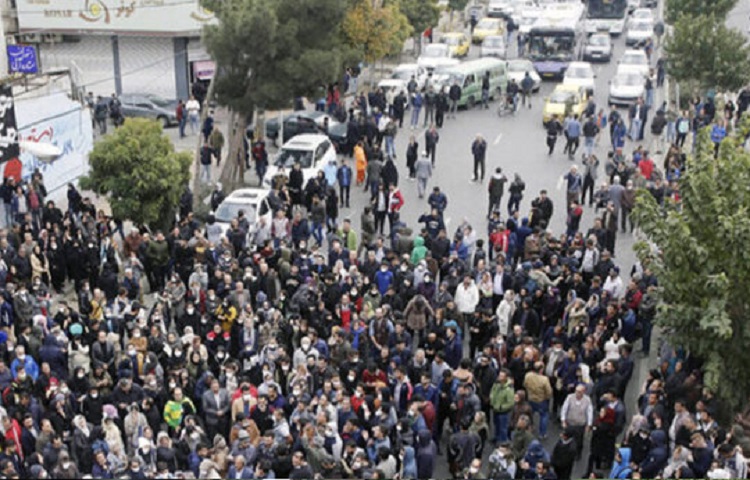
A group of Tehran’s bazaar merchants protested inflation and rising currency exchange rates by striking and closing their shops in the 15 Khordad area. They called on other merchants to join the strike.

Reports and videos indicate that on Sunday, December 29, shoemakers in the “Seyed Vali” lane of the 15 Khordad district began the strike, followed by fabric merchants and clothing retailers.

The striking merchants chanted slogans during their gathering to encourage others to join, including “Don’t be afraid, close down” and “Dignified merchants, support, support.”

According to reports, the strike occurred in Abbas Abad market, home to fabric merchants, and also in Bagh Sepahsalar, where shoemakers are based.

The strike by Tehran’s bazaar merchants coincided with successive record-breaking currency exchange rates, sparking a new wave of inflation.

The value of the US dollar has been continuously rising in recent weeks, reaching over 810,000 rials per dollar on Sunday.

The depreciation of the rial has made raw materials more expensive, forcing many merchants to shut down their workshops.

Hamidreza Rastgar, the head of Tehran’s Chamber of Guilds, explained the reason for the shoemakers’ protest: “Shoemakers are objecting to the continuous rise in exchange rates. Since the beginning of the year, the rates have seen a significant jump, directly affecting the costs of this sector’s products.”

According to Rastgar, shoemakers are “concerned that products made with raw materials priced at 810,000 rials per dollar will be unaffordable for consumers.”

Reports indicate that security forces were present at the gathering of striking merchants in Tehran.


The Shooting of Arezoo Badri: A Tragic Case of Violence and Repression in Iran

Arezoo Badri, a young woman who was shot by police five months ago in the city of Noor, Mazandaran Province, is now paralyzed from the waist down due to severe spinal injuries. The incident has sparked widespread reactions both within Iran and internationally. Informed sources report that security forces have put significant pressure on Arezoo Badri and her family to extract a formal waiver of complaints.

The Police Shooting of Arezoo Badri and Its Reasons

The incident occurred on July 22 when Arezoo’s car was stopped for allegedly not adhering to mandatory hijab rules. The police claim they fired at the vehicle due to “suspicion about the car” and “failure to comply with a stop order.” However, various reports suggest the shooting was linked to the hijab issue, and authorities are reportedly applying pressure to justify their actions.

Security Pressures to Extract Waivers from Badri’s Family

According to published information, security forces have used various methods to pressure Arezoo Badri and her family. Some sources have reported offers of money and threats of arresting family members to force them to consent to drop the case.

International Reactions

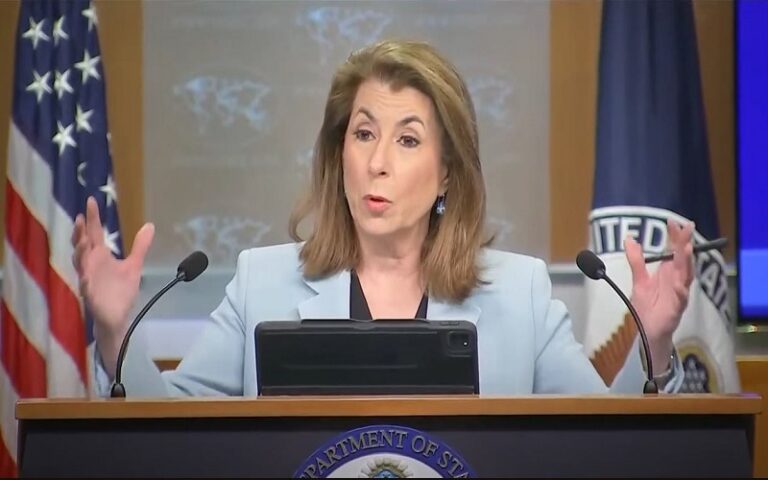
The shooting of Arezoo Badri has drawn extensive reactions from human rights organizations and international officials. The United States government described the incident as an example of “gender-based violence” against Iranian women. The U.S. State Department spokesperson emphasized that the Iranian regime has learned no lessons from the suppression of women and girls since the killing of Mahsa (Jina) Amini.

Arezoo Badri’s Medical Condition

According to doctors, Arezoo Badri’s condition is extremely critical, and recovery appears impossible. This incident highlights the severity of violence and repression against women in Iran and has raised widespread international concerns.

The crime of shooting Arezoo Badri and the subsequent pressures to extract waivers from her family is just one of many stark examples of violence and human rights abuses under Iran’s theocratic regime. This incident not only highlights issues related to mandatory hijab but also underscores the troubling aspect of state-imposed narratives and attempts to justify government-perpetrated crimes against victims.


Power Outages Halt 50% of Iran’s Industrial Parks, Sparking Economic Concerns

0

Ali-Asghar Ahaniha, a representative of employers in Iran’s Supreme Labor Council, stated that “50 percent capacity” of industrial parks in Iran has ceased operations due to recurring power outages.

These comments come following persistent power outages in some industrial units caused by energy shortages in Iran and increased electricity and gas consumption during the cold weather.

On Saturday, December 28, Ahaniha told the state-run Tasnim News Agency that the power cuts contradict the “Business Environment Improvement Act,” stating, “We faced electricity problems in the summer, and now in winter, we have issues with both electricity and gas.”

Ahaniha added that whenever the government cuts power to private and cooperative companies due to temporary shortages, it is obligated to determine and announce how to “compensate for the damages incurred” by these companies.

The industrial power outages are occurring despite Article 25 of the Continuous Business Environment Improvement Act, which states: “According to this law, during shortages of electricity, gas, or telecommunications services, industrial and agricultural production units should not be prioritized for cuts in electricity, gas, or telecommunications.”

Simultaneously with the winter restrictions on energy resources such as electricity and gas for industries, managers from various sectors report reduced production and the consequences of power outages at production units, including steel and cement.

Iran’s steel production, which usually saw growth, experienced a 5.1 percent decline between March and October.

Last week, the Majlis (parliament) Research Center reported that the economic growth of Iran’s industrial sector has sharply declined since 2023, and this trend intensified in the second and third quarters of 2024, heading toward “zero.”

On December 21, the head of the Syndicate of Pharmaceutical, Chemical, and Packaging Material Producers stated that power is cut in the country’s industrial parks every other day for “17 hours each time,” with pharmaceutical companies do not exempt from these outages.

Faramarz Ekhtiarai assessed the challenges of securing electricity and gas for pharmaceutical industries as leading to an “increase in the final cost of medicine” and stated, “If government officials do not address the industry’s issues, they will have to say goodbye to it, and this situation will push companies to close one after another.”

Mahmoud Najafi-Arab, head of the Tehran Chamber of Commerce, also reported on July 13 about power cuts in pharmaceutical factories due to electricity shortages.

Production indices in publicly traded companies have also declined in recent months, reportedly due to recurring power and gas outages. The industrial production index for publicly traded companies decreased by 3 percent in November 2024 compared to the same period last year, with three-month growth leading up to November also reaching negative 2.7 percent.

Meanwhile, warnings have been issued about the potential dismissal of workers from production units due to recurring power outages.


Italian Journalist Cecilia Sala Arrested in Tehran: Mystery Surrounds Detention

The Italian Ministry of Foreign Affairs announced the arrest of an Italian female journalist named Cecilia Sala in Tehran.

In a statement released on Friday, December 27, the Italian Foreign Ministry stated that the journalist was arrested by police on December 19.

The statement also mentioned that she has been held in solitary confinement for nine days. The reasons for Sala’s arrest remain unclear, and no specific charges have been brought against her.

The Italian Foreign Ministry added that all possible contact with the journalist has been established, and this morning, Paola Amadi, Italy’s ambassador to Tehran, was able to visit her in prison.

According to information released by “Cora Media,” a podcast production company in Italy with which Cecilia Sala collaborates, the journalist flew from Rome to Tehran on Thursday, December 12, with a standard journalistic visa valid for one week and extendable.

According to the report, she was scheduled to return to Rome from Tehran on December 20. However, on the morning of December 19, her phone was turned off after exchanging messages, and she no longer responded to any messages.

Later that day, the young journalist called her mother and simply informed her of her arrest.

As reported by “Cora Media,” Sala has spoken with her parents twice during this time. In one of the two calls, she said, “I’m fine, but hurry up,” indicating an appeal for efforts to secure her release.

Iranian officials and authorities have not yet responded to this report, and the reasons for the journalist’s arrest remain unknown.

The Italian Ministry of Foreign Affairs has announced that it is working to determine the reason for the journalist’s arrest and to secure her release.

The arrest of foreign or dual-national journalists in Iran has always been a contentious issue, sparking widespread international reactions.

Many of these individuals have faced charges such as “espionage,” “illegal activities,” or “collaboration with opposition groups,” and in some cases, Iran’s regime has used them as hostages in its diplomacy.

Amid the crises surrounding it, the Iranian regime exploits every opportunity for extortion from the international community, and unfortunately, appeasement policies have emboldened the regime to engage in such actions.


Structural Crises in Iran: Unmanageable Challenges and a Rift Between the People and the Regime

0

The fundamental challenge between the Iranian people and the ruling regime revolves around a core clash between the needs and demands of the populace versus the regime’s structure, policies, and nature. This deep division is not merely the result of administrative decisions or policy implementations, but stems from the nature and philosophy of governance—a nature that defines itself through an authoritarian ideology. This ideology, with its political, social, economic, and regional outcomes, has reached an impasse and failure.

The government-run “Etemad” newspaper, in its December 25, 2024 edition, clearly described the regime’s encounter with a substantial deadlock. The newspaper stated, “Iran today faces a set of complex, intertwined, and structural crises. These crises necessitate radical policy changes, structural reforms in the economic, social, and cultural systems, and a redefinition of authoritarian relationships and governance.”

One way to examine the nature of the regime and its “power relations” is by aligning news events with the identity and performance of this structure. For example, a spike in the number of executions over a short period is not merely a judicial event but reflects the government’s recent strategy to control an explosive society. For instance, during the first 150 days of Masoud Pezeshkian’s presidency, 683 executions were carried out, averaging four and a half people per day. These numbers indicate a profound challenge between the government and the majority of the people. Despite Pezeshkian’s pleading rhetoric, the people no longer distinguish between different factions of the regime, as both ultimately support the structural frameworks that overlook the majority’s desires.

The manifestations of discontent among the people have transformed into a deep wound against governance. This wound results from accumulated oppression, disregard for human rights, widespread corruption, and economic inefficiency. The extensive repression and executions delay demands for justice but have never been able to stop or end them. This process indicates that the healing of social and political wounds in Iran has merged with the denial of governance.

The challenge between the people and the governance is not a conflict that can be managed within the current framework. Therefore, the people’s demands for justice can only be achieved through the complete overthrow of this structure. When the cracks in control and domination by the clerical regime reach millions, it signifies that there is no hope for a radical reconstruction of the power structure or the establishment of a system that represents the desires and rights of the majority. The government newspaper “Hamdeli,” in its December 25, 2024 edition, reflected the stagnation in any change in the regime’s structure.

The newspaper wrote, “Academic elites, university graduates, winners of local and international scientific competitions, doctors, and nurses are among the groups most likely to emigrate abroad. Emigrations are taking on new dimensions every day… The Financial Times reported new information about Iranian emigrations abroad, indicating that Iranians had the fastest growing rate of emigration in the world between 2020 and 2021, with an increase of 141%.”

The wounds between the people and governance have shifted from a discontinuous black line to a continuous red line. The government newspaper “Jahan Sanat,” in its December 25, 2024 edition, painted a painful picture of living conditions and a ticking time bomb under the clerical regime’s building.

According to the newspaper: “In 2024, according to official reports, the poverty line was set at 200 million rials while the basic monthly wage for workers that year was 71.66 million rials… More than 60 to 70% of the society found themselves below the poverty line, a serious alarm in the country.”

This reality is an unceasing slap. A wound that does not heal. A bone that does not mend. A call that goes unheard. A demand for justice that does not end, except with the complete overthrow and reversal of the regime.

Air Pollution Intensifies in Iran’s Large Cities

0

The persistent air pollution in Iranian metropolises for the ninth consecutive day has led to the shift of schools to online learning and the closure of universities and public and private organizations in several cities and provinces, including Tehran.

In addition to Tehran, schools, universities, and public and private organizations in the provinces of Tabriz, Alborz, Qazvin, Mashhad, and Arak were also declared remote today.

On the morning of Wednesday, December 25, Tehran Air Quality Control Company reported the air quality index (AQI) in Tehran at 157, categorizing it as “unhealthy for all age groups.”

According to data from Tehran’s air pollution monitoring stations, 20 stations are in the “red” (hazardous) status, while the remaining are in the “orange” (unhealthy) zone.

Iran’s Meteorological Organization has warned of “atmospheric stability and increased air pollution” in five major cities—Tehran, Karaj, Isfahan, Qom, and Mashhad—until Friday, December 27.

The organization has issued an orange alert, stating that no significant changes in air quality are expected until the end of the week.

According to the resolution passed during Tuesday’s air pollution task force meeting in Tehran, educational and administrative centers were closed on Wednesday, with an “odd-even” traffic plan enforced starting from residential areas.

Tehran Municipality also refrained from issuing traffic plan permits on Wednesday.

Meanwhile, Abbas Shahsavani, the head of the Air Health and Climate Change Department at the Ministry of Health warned that the “unhealthy air” in Tehran poses a threat to public health.

Shahsavani emphasized that children, the elderly, patients, and pregnant women should avoid unnecessary outdoor activities.

The government-run Etemad newspaper, based in Tehran, in an interview with neurosurgeon Arman Sourani Yancheshmeh, quoted him warning of a “looming wave of brain tumor cases in the country, with air pollution as the primary cause.”

In the interview Yancheshmeh claimed that official data on pollutant particles is “sometimes manipulated and inaccurately reported.”

He added, “The cancer wave in Iran has begun, and it is no exaggeration to say that every family will eventually experience a cancer patient.”

Apart from Tehran, air quality in other major cities has also been reported as unhealthy.

Air pollution in Ahvaz has led to an increase in visits to medical centers.

Masoud Neshati, Director of Disease Affairs at Ahvaz University of Medical Sciences, announced on Monday that 1,668 people had sought medical attention for non-infectious cardiac and respiratory issues at affiliated hospitals.

Davood Mirshakar, Director General of Khuzestan’s Environmental Protection, attributed Ahvaz’s air pollution to industrial activities and the use of unsuitable fuels, stating, “Given the oil exploitation and industrial nature of the city, its pollution increases.”

The city of Mashhad is experiencing similar conditions.

According to Saeed Mahmoudi, Acting Director General of Khorasan Razavi province’s Environmental Protection Department, Mashhad’s average air quality index over the past 24 hours was 142, indicating “unhealthy” air.

Air quality in Iranian metropolises has been continuously polluted in recent weeks, leading to multiple closures of offices and educational centers.

The open session of the Majlis (parliament) was also canceled on Wednesday due to air pollution.

While it is said that a significant part of the air pollution is due to burning mazut (a low-grade heavy fuel oil) in power plants, Fatemeh Mohajerani, the government spokesperson, claimed on Tuesday, December 24, that “part of the source of air pollution in Iran is international sanctions.”

She did not elaborate on how the sanctions affect air pollution.

Omid Hajati, Deputy Head of the Environmental Protection Organization, stated, “Air pollution is tied to the energy imbalance issue, making decision-making in this area very challenging.”


Housing Market Stagnation in Iran: Despite Rising Dollar Rates, “No Buyers for Housing”

0

According to reports from Iranian economic sources, the stagnation in Iran’s housing market has intensified, with real estate agents reporting a decline in visits and a lack of pre-holiday market activity.

Studies indicate that buyers with limited budgets are turning to small-sized, older units and even basement apartments.

The state-run newspaper Donya-e-Eqtesad reports that apartments priced below 40 billion rials (approximately $51,280) are mostly located in eastern and southern Tehran, with areas ranging from 30 to 80 square meters.

For instance, a 75-square-meter, 30-year-old unit in the Jashnvareh neighborhood is priced at 30 billion rials (approximately $38,400).

Similarly, Davood Beigi-Nejad, the deputy head of the Tehran Real Estate Consultants Union stated that due to the “deep stagnation” in the housing market, there are no buyers despite the rising dollar rate.

On Monday, December 23, Beigi-Nejad told the state-run ILNA news agency that while the number of properties listed for sale has increased significantly, activity in the housing market is not demand-driven and does not lead to finalized contracts.

According to this industry representative, housing seekers only inquire about prices at real estate agencies without making purchases.

Beigi-Nejad believes that “reduced purchasing power” and “declining liquidity in the market” have decreased housing transactions.

He explained, “Most contracts and transactions are based on bartering; meaning assets must be sold first to enable a housing market transaction.”

The deputy head of the Tehran Real Estate Consultants Union noted that while construction costs and housing prices have risen due to the higher dollar rate, prices remain unchanged because of the “lack of buyers.”

The free-market dollar rate has been on the rise in recent months and has now surpassed 790,000 rials.

Traditionally, Iranian markets react to rising dollar rates, but housing transactions have remained stagnant despite the increase in the dollar’s value.

Meanwhile, other investment markets in Iran, such as stocks and gold, have grown alongside the rising dollar rate.

The purchasing power of housing loans has declined with ongoing inflation in recent years, and other government initiatives, such as the “National Housing Scheme” (Maskan-e Melli), have yielded no results.

On November 22, Gholamreza Mirzaei, a member of Iranian regime’s Majlis (parliament), remarked during a warning to the Minister of Roads and Urban Development that “owning a home has become a dream for people,” adding that “the National Housing Scheme has not achieved its goals.”

The increased risk of military conflict between Iran and Israel and ongoing security and political developments in the Middle East have also driven liquidity holders toward safer markets, such as currency and gold, exacerbating the housing market stagnation.


Syria Denies Diplomatic Talks with Tehran and Prepares to File $300 Billion Lawsuit

In a firm response to recent statements by Iranian officials, sources close to Syria’s new political leadership have denied any diplomatic communication with the Iranian regime regarding the reopening of embassies in Damascus and Tehran. This denial came in response to statements by Fatemeh Mohjarani, the spokesperson for the Iranian regime, who announced on December 13, 2024, that negotiations were underway to renew diplomatic relations and reopen diplomatic services between the two countries.

In an interview with Al Arabiya on December 24, 2023, a Syrian source stated, “There has been no contact between the Syrian political administration and Iran, including diplomatic discussions about reopening the embassies or consulates.” The source confirmed that the current Syrian leadership does not intend to establish any relations with Iran in the foreseeable future, including the presence of an embassy in Damascus or an Iranian consulate in Aleppo.

In addition to the diplomatic estrangement, it appears that the Syrian government is preparing to file an international lawsuit against Iran. The source revealed that the lawsuit seeks compensation estimated at $300 billion for alleged damages caused by the Iranian regime’s military support for the ousted Bashar al-Assad regime. The source told Al Arabiya that this compensation is based on “the destruction of infrastructure, crimes against the Syrian people, and active participation in suppressing peaceful protests.”

The lawsuit aims to hold the Iranian religious regime accountable for what the source described as “criminal and repressive policies” that caused severe destruction to Syrian infrastructure and resulted in immense human suffering. These actions include the deployment of military forces and proxy militias that supported the Assad government during the ongoing Syrian civil war.

Despite Mohjerani’s claims, Ismail Baqaee, the spokesman for the Iranian foreign ministry, previously referred to limited communication with Syria’s new leaders. While acknowledging Tehran’s interactions with various Syrian opposition groups, he confirmed the absence of direct contacts with the current ruling administration in Damascus.

Despite Mohjerani’s confirmation during a weekly press conference that “we are committed to diplomacy and ready for discussions. Dialogues are ongoing regarding the reopening of embassies,” these statements reveal a noticeable contradiction in the official stance of the Iranian regime, indicating possible confusion within the regime about its policy towards Syria. This contradiction highlights the broader confusion in Tehran’s narrative about its relations with Damascus, suggesting a decline in its influence in the region.

Syria’s outright rejection of re-establishing relations with Iran and its plan to file the lawsuit represent a clear departure from the diplomatic policy during Bashar al-Assad’s era. This shift towards seeking compensation and distancing from Iran indicates a radical change in Syria’s foreign policy priorities, with a focus on accountability and national reconstruction efforts.

These developments highlight the waning influence of the Iranian regime in the Middle East, as neighboring countries seek to hold Tehran accountable for its interventions and the extensive damage they have caused. However, it remains to be seen how the international community will respond to the legal actions taken by Syria, but the clear message from Damascus is that Tehran’s role in the country’s crisis will not be forgotten or forgiven.

The New Syrian Leadership’s Open Warning to the Iranian Regime

0

As’ad Hassan al-Sheibani, Syria’s new foreign minister, on Monday, December 23, warned the Iranian regime to refrain from creating and spreading chaos in Syria. This is the most explicit public warning from Syria’s new rulers to the Iranian regime since the fall of Bashar al-Assad, concerning Tehran’s approach to developments in Syria.

Ahmed al-Sharaa, leader of Tahrir al-Sham, which now holds power in Syria, had previously criticized the Iranian regime’s actions in the country, accusing its military presence and proxy groups supporting Bashar al-Assad’s government of causing the deaths and displacement of millions of Syrian citizens.

However, this is the first time the new Syrian officials have openly responded to statements by Ali Khamenei, the leader of the Iranian regime, and other Iranian officials opposing Tahrir al-Sham and the ongoing developments in Syria.

As’ad Hassan al-Sheibani wrote in a post on the social media platform X: “Iran must respect the will of the Syrian people, the sovereignty, and the security of this country. We warn them to refrain from creating chaos in Syria, and we also hold them responsible for the consequences of their recent statements.”

On Sunday, December 22, the Iranian regime’s supreme leader Ali Khamenei, in a speech to a group of eulogists, said: “We predict that a strong and honorable collective will also emerge in Syria, as today Syrian youth have nothing to lose; their schools, universities, homes, and streets are unsafe. Therefore, they must stand with strong resolve against those who plan and execute insecurity and overcome them.”

Earlier, on December 11, he had stated: “Everyone should know that things will not remain as they are, with groups attacking homes in Damascus and the Zionist regime advancing with bombardments, artillery, and tanks. Brave Syrian youth will surely rise and, by resisting, even at the cost of casualties, will overcome this situation, just as the courageous Iraqi youth, with the help, organization, and leadership of our dear martyr (Qasem Soleimani), managed to expel the enemy from their homes and streets. This task in Syria may take a long time, but the outcome is certain and definite.”

In contrast, Ahmed al-Sharaa, without addressing the future of Damascus-Tehran relations, repeatedly criticized the Iranian regime’s performance and military presence in Syria. In an interview with Al-Sharq Al-Awsat newspaper, published on December 20, he said that by overthrowing Bashar al-Assad’s government, the opposition had set the Iranian regime’s regional project back by 40 years.

He stated that under Assad, “Syria had become a platform for Iran to control key Arab capitals, expand wars, and destabilize the Gulf with narcotics like Captagon.”

Following Ali Khamenei’s speeches, other military officials and government-affiliated media in Iran intensified their attacks on the ongoing developments in Syria, especially targeting Tahrir al-Sham and Ahmed al-Sharaa, even labeling him as “Jewish and affiliated with Israel.”

On December 23, Esmail Baqai, the regime’s Foreign Ministry spokesman, stated in a press conference that the Iranian regime has still been unable to establish a direct communication channel with the new Syrian rulers.

The Iranian regime’s embassy in Damascus, the only diplomatic facility remaining in Syria, was attacked by rebel forces on December 8, following Bashar al-Assad’s escape to Russia.


The Crisis in Iran’s Pharmaceutical Industry

Studies indicate that the profitability of many Iranian pharmaceutical companies has dropped by over 30%, reducing their net profit margins to less than 25%.

Additionally, pharmaceutical industry experts, due to delayed payments and financial issues, have either left some domestic companies or relocated their factories to neighboring countries.

According to the state-run Ham-Mihan newspaper, the decline in pharmaceutical companies’ profitability stems from price-fixing policies, which, amid inflation and severe currency fluctuations, have placed these companies in financial distress.

The report adds that the financial challenges of these companies are not limited to profitability; rising debts and liquidity issues are other aspects of this crisis. The debt-to-asset ratio for some pharmaceutical companies has increased from 58% to 64%, forcing many entities, both public and private, to borrow from banks to continue operations.

According to the report, companies like Roozdaru and Pakhsh Razi have faced reduced production, and some may shut down, leading to drug shortages.

The Director General of Pharmaceuticals at the Food and Drug Organization announced that one holding company with 140 trillion rials (approximately $180 million) in sales now cannot pay its employees’ salaries.

The Sobhan Oncology company has also reported increasing debts and an inability to pay them.

Vahid Mahallati, a pharmacist and the secretary of the state-run Distribution Companies Association, suggests that “quasi-governmental companies should transfer their managerial shares to the private sector to better utilize existing capacities.”

Mahallati added that income limitations in the public sector have created significant problems in attracting talent and affecting its performance.

He further stated, “Publicly traded governmental companies account for about 30% of the pharmaceutical market value. However, the limited production of some public companies places pressure on private companies.”

Mahallati warned, “Quasi-governmental and governmental pharmaceutical companies, with their market share halved in the past decade, are heading toward complete inefficiency.”

Drug Supply Issues in Sistan and Baluchestan Province

In another report by the state-run ILNA news agency, in Sistan and Baluchestan Province, drug import restrictions due to “national macro-policies” have caused difficulties in providing specific medications, particularly for diabetic patients and those undergoing dialysis.

According to Dariush Mohabi, the Pharmaceuticals Manager at Zahedan University of Medical Sciences, “Domestically produced drugs are abundantly available, but there are challenges in supplying imported drugs.”

He noted that some patients visit multiple pharmacies to obtain medications and are even forced to purchase them on the open market at high costs.

Farnaz Firouzkouhi, a diabetic patient, reported issues in accessing imported insulin, stating that domestic insulin was unsuitable for her and she had to obtain the imported version at a high cost.

Similarly, Karbasi, another diabetic patient, mentioned that due to the incompatibility of domestic insulin with his blood sugar levels, he had to purchase the imported drug.

Nasrati, who has a sick family member, reported severe issues in obtaining medications in the province, saying they must travel from various cities to Zahedan to acquire them.

Another citizen shared the difficulties in securing medicine for their MS patient, emphasizing that many pharmacies either lack the required drugs or do not provide them in sufficient quantities.

Experts attribute the crisis in pharmaceutical companies to heavy debts, high costs, delays in payment claims, and the inefficient management of the Iranian regime.