Home Blog Page 144

Iran’s Regime Allegedly Plotted to Assassinate Former Canadian Attorney General

Following reports about an “Iranian agents’ plot” to assassinate Irwin Cotler, former Canadian Attorney General and a vocal critic of the Iranian regime, Iran’s Ministry of Foreign Affairs denied these claims.  

On the evening of Monday, November 18, the Director-General for the Americas at Iran’s Ministry of Foreign Affairs dismissed the reports as “fabrications,” without directly mentioning Cotler’s name.  

Earlier, the Canadian newspaper The Globe and Mail reported that on October 26, Canadian officials warned Irwin Cotler that he faced a threat of assassination by Iranian agents within the next 48 hours.  

According to the newspaper, Canadian authorities have been tracking two individuals linked to the assassination plot.  

Agence France-Presse (AFP) reported that the Raoul Wallenberg Centre for Human Rights, where Cotler serves as a director, confirmed the Canadian newspaper’s account. It stated that Cotler has no information regarding the arrest of individuals connected to this case.  

Cotler, now 84 years old, served as Canada’s Minister of Justice and Attorney General from 2003 to 2006.  

He stepped away from politics in 2015 and has since been actively involved in human rights advocacy.  

According to Iran’s Ministry of Foreign Affairs website, the Director-General for the Americas described the accusation as part of a disinformation campaign against Iran.  

He also claimed that the aim of such accusations is to divert public attention from events in Gaza.  

Irwin Cotler has called for the global designation of the Islamic Revolutionary Guard Corps (IRGC) as a terrorist organization.  

The Globe and Mail reported that Cotler has been under police security protection in Canada since last year, following the outbreak of the current Gaza conflict.  

Establishment of Hijab Rehabilitation Clinic in Iran with a Large State Budget

The Iranian regime, which has positioned “hijab” as one of the central aspects of its identity since its inception and imposed significant costs on the people, particularly women, over the years, has now launched a new initiative called the “Hijab Rehabilitation Clinic” with a budget of 2.55 trillion rials (approximately $3.73 million).  

The Iranian regime uses the pretext of the hijab to suppress Iranian women, who have consistently been at the forefront of protests against injustice, employing it as a tool to control the shifting dynamics of Iranian society. The regime allocates large budgets for this purpose and utilizes governmental forces and agencies to maintain control.  

In 2022, following the death of Mahsa Amini in the custody of the morality police, widespread protests erupted in Iran, which the regime brutally suppressed. This crackdown resulted in the deaths of at least 750 people and the imprisonment and torture of over 30,000 individuals.  

On Saturday, November 16, Iranian newspapers linked the launch of the “Hijab Rehabilitation Clinic” in Tehran to an individual named Mehri Darestani. They reported that this person, who is behind the project, received 1.55 trillion rials (approximately $2.27 million) from the public budget and an additional 1 trillion rials (approximately $1.46 million) in special government funds to establish the clinic.  

According to the state-run Etemad newspaper, the creators of this “clinic” claim that it was established with the collaboration of “experts and concerned individuals” at the “Promotion of Virtue and Prevention of Vice Headquarters” and “based on frequent referrals to the headquarters in Tehran Province by families, women, and girls.” Following specialized assessments and expert sessions, they launched the first “specialized counseling and support clinic for returning to hijab” under the name “Hijab Rehabilitation Clinic” in Tehran.  

The Jomhouri Eslami newspaper also commented, “The well did not yield water, but for some, it provided endless bread. The Hijab Rehabilitation Clinic generates no visible benefits but imposes significant costs. The simplest and least costly consequence is that it turns the matter into a joke. The second, in a more serious view, is the perception of insult to individuals, which not only fails to bring support but also deeply divides unity.”  

According to state media, this center aims to emulate social harm prevention and intervention programs. Reports claim that the clinic will offer “individual counseling, group sessions, and skills workshops on self-awareness and managing social pressures.”  

Two days after the announcement of the establishment of the “Hijab Rehabilitation Clinic,” which was claimed to be “voluntary,” an official from the Promotion of Virtue and Prevention of Vice Headquarters stated that “badly veiled” women would be referred to these centers by court order.

Mohammad Reza Mirshamsi, the deputy for social affairs of the Promotion of Virtue and Prevention of Vice Headquarters, mentioned that the “determination of alternative penalties” for individuals engaging in the “illegal act of unveiling” was one of the reasons for launching these clinics.

He added that judges from the judiciary had “requested that alternative punishments be established for individuals arrested for unveiling.”

Half a Billion Liters of Diesel Reserves Sold in Tehran Stock Exchange 

Abbas Kazemi, former CEO of the National Iranian Oil Refining and Distribution Company, stated that Abadan Refinery “instead of supplying fuel to power plants, has offered 400 to 500 million liters of diesel, needed for winter reserves, on the stock exchange,” resulting in a depletion of diesel reserves.  

In an interview with the state-run ILNA news agency, Kazemi described the sale of diesel on the stock exchange as “legal,” but he criticized it as lacking in “foresight and planning.”  

It is noteworthy that according to domestic laws, refinery products are considered part of national assets. Therefore, the sale of diesel on the Tehran Stock Exchange, if it leads to a reduction in strategic reserves and harms national interests, can be legally pursued.  

Kazemi explained that in past years, fuel reserves were built up between May and September to use diesel during winter when gas pressure drops and household consumption rises.  

According to him, this process was not implemented this summer, and 1.3 billion liters of diesel were offered on the stock exchange over four to five months, of which 450 million liters were sold.  

This is despite the fact that, according to this former oil official, refinery production has been at normal levels, and there have been no issues in terms of production.  

Kazemi claimed that diesel production and consumption are currently balanced and added, “If this consumption trend continues, we will become a diesel importer.”  

The claim by this former government official about the sale of national diesel reserves on the stock exchange comes amid reports of alarming increases in fuel prices.  

It was previously announced that under the Seventh Development Plan bill, which has been submitted to the Guardian Council for final approval, as of the second year of the plan (2025), subsidized diesel will be distributed only based on mileage and online freight documents, with any excess subject to incremental consumption taxes.  

Several experts have stated that any manipulation of gasoline and diesel prices will exacerbate economic pressures and disrupt political and social relations in Iran.  

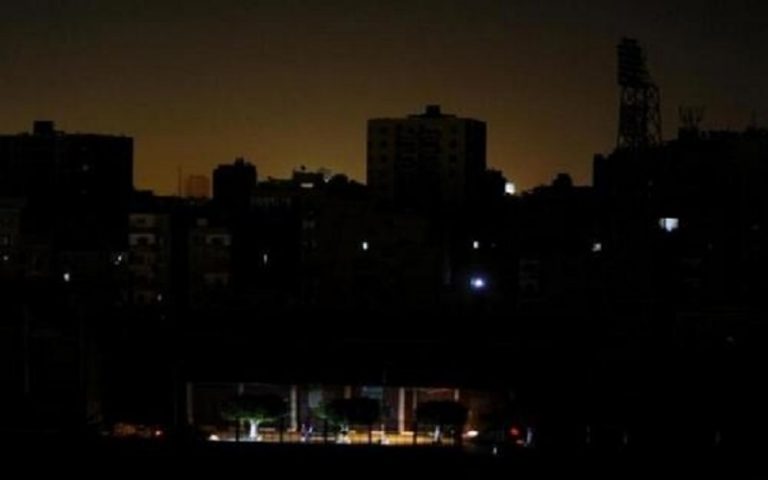
In recent days, blackouts at power plants and electricity rationing across cities have disrupted people’s lives. These outages are reportedly due to fuel shortages in a country that possesses the world’s second-largest gas reserves and fourth-largest oil reserves.  

UK sanctions Iran Air and the Iranian regime’s shipping company  

0

On Monday, November 18, the United Kingdom imposed sanctions on Iran Air and the Iranian regime’s shipping company, the Islamic Republic of Iran Shipping Line Group.  

According to the British government’s statement, Iran Air and IRISL have been sanctioned, and their assets are subject to being frozen.  

David Lammy, the UK Foreign Secretary, stated that the Iranian regime’s efforts to undermine global security are dangerous and unacceptable. He reiterated the UK’s call for the regime to cease its support for Russia’s illegal war in Ukraine.  

Hours earlier, the European Union had also sanctioned the IRISL and its CEO, Mohammadreza Modarres Khiabani, in response to the regime’s support for Russia’s military aggression against Ukraine.  

The European Union cited the Iranian regime’s military support for Russia’s aggression against Ukraine and armed groups and organizations in the Middle East and the Red Sea region as the reason for escalating sanctions against Tehran.  

The European Union announced that the Iranian regime’s shipping company has been involved in transporting Iranian-made weapons and ammunition, including drone components, via the Caspian Sea to supply the Russian army in its war against Ukraine.  

As a result, four entities, including the Iranian regime’s shipping company, three Russian shipping companies, and Mohammadreza Modarres Khiabani, the CEO of the Iranian regime’s shipping company, were added to the European Union’s latest sanctions list.  

The European Union also banned any transactions with ports owned, managed, or controlled by these individuals or entities. This prohibition extends to all ports used for transporting drones, missiles, or Iranian components and technology to Russia.  

The new sanctions also prohibit access to port facilities and waterways such as Amirabad and Anzali.  

Under these sanctions, the export, transfer, supply, or sale of components used to upgrade and manufacture missiles and drones from the European Union to Iran has been prohibited.  

On Monday, October 14, the European Union had also imposed sanctions on Iran’s Deputy Defense Minister, senior members of the IRGC, and three airline companies for allegedly sending drones, missiles, and other equipment to Russia for use in the war against Ukraine.  

According to reports, the three sanctioned airlines included Iran Air, Mahan Air, and Saha, along with Seyyed Hamzeh Ghalandari, Iran’s Deputy Defense Minister.  

The European Union stated that these airlines’ planes had repeatedly been used to transport Iranian-made drones and related technologies to Russia, which Russia utilized in its war against Ukraine.  

Iran’s Carpet Exports Plummet by Over Tenfold  

Iran’s carpet exports have faced a dramatic decline, dropping from $426 million in 2017 to less than $40 million in 2023.  

Morteza Haji-Aghamiri, head of the Carpet, Art, and Handicrafts Commission of Iran’s Chamber of Commerce, announced these figures on Sunday, November 17, in an interview with ILNA, Iran’s Labor News Agency. He stated that India has now replaced Iran in the global carpet market, dominating the U.S. market, which accounts for 44% of global carpet imports.  

He attributed this decline primarily to sanctions and misguided currency policies, especially the “foreign exchange repatriation policy.”  

This policy has hindered exporters from promptly repatriating revenue from carpet sales, causing them to lag in the global market.  

According to Haji-Aghamiri’s assessment, the damage caused by the currency repatriation policy reduced Iran’s carpet exports to under $100 million. This contrasts starkly with 1994, when carpets accounted for 44% of Iran’s total non-oil exports.  

Despite the removal of the foreign exchange repatriation policy for hand-woven carpets, exports continue to face challenges. Competition from India, Turkey, and Afghanistan has further compounded the problem.  

The decline in carpet exports has severely impacted jobs related to this industry, exacerbating unemployment in rural areas.  

Previously, Faisal Mardasi, former head of the National Carpet Organization, mentioned that the carpet production chain is rooted in rural and nomadic regions, where unemployment has surpassed the “crisis stage.”  

Smuggled Afghan Carpets in the Iranian Market  

In his Sunday interview, Haji-Aghamiri identified Turkey and Afghanistan as other competitors in the global carpet market. He stated, “During its presence in Afghanistan, the United States invested in the country’s carpet industry, and now smuggled Afghan carpets of lower quality and price are being sold in the Iranian market.”  

According to the Economic Studies Department of Tehran’s Chamber of Commerce, Iran’s share of global hand-woven carpet exports decreased from 25.5% to 7.4% between 2011 and 2022, while the shares of competitors such as India, China, Nepal, and Pakistan increased during the same period.  

The report identifies the United States, Germany, the United Kingdom, and Japan as the world’s top importers of hand-woven carpets.  

Customs data also reveal that Germany (17.6%), the United Arab Emirates (17.2%), China (16.2%), and Pakistan (6%) are the main destinations for hand-woven carpet exports.  

Currently, 80% of Iranian hand-woven carpets are exported, with only 20% sold domestically.  

Iranian Officials Make Contradictory Statements on Internet Censorship  

On November 12, the second meeting of the Supreme Council of Cyberspace was held to discuss the state of the internet and social networks.  

This meeting, ostensibly aimed at examining the possibility of lifting internet censorship measures, ended without any concrete outcome, as was the case previously.  

Officials who themselves issued the filtering orders talk about reviewing the matter in such sessions; however, no solution to resolve users’ issues is provided.  

Iranian state media wrote, “The agenda of the second meeting of the Supreme Council of Cyberspace was ensuring easy access to cyberspace.”  

“In this session, the follow-up of the previous meeting’s resolutions regarding access to cyberspace was discussed.”  

In this meeting, the formation of a “Filtering Committee” to address issues related to access to cyberspace was approved.  

This committee is tasked with presenting actionable proposals. However, in practice, nothing materializes.  

In other words, how can those imposing the filters now lift them?!  

Zarepour, Minister of Communications under former President Ebrahim Raisi, had previously stated, “In 2022, the filtering of Instagram was a decision made by the Supreme National Security Council. This decision was made in the council’s secretariat with the presence of the heads of the three branches and has nothing to do with the Ministry of Communications or the government.”  

Filtering has become a tool for restricting freedom of expression and communication in the Iranian regime in recent years.  

With the expansion of public protests, the regime’s leaders have continuously restricted access to the internet and social networks.  

The widespread filtering imposed on platforms like Instagram, WhatsApp, and even utility services has disrupted people’s daily lives and affected numerous businesses.  

Interestingly, many regime officials who issued the filtering orders themselves talk about the necessity of reviewing this issue in public speeches.  

These contradictions persist as people continue to struggle with the problems caused by filtering.  

Instead of offering practical solutions to reduce restrictions, the council tends to repeat its previous positions.  

The council members, who are decision-makers on filtering, not only fail to find solutions to this problem but also complicate the situation with their actions.  

Many online businesses operating on social network platforms have been stagnated or shut down due to these restrictions.  

Platforms like Instagram, which had become a source of income for millions, have jeopardized their livelihoods by being filtered.  

Moreover, filtering has restricted users’ access to free information and made international communication more difficult.  

The decision-makers of this council are the same people who initially implemented the filtering. Consequently, it is unrealistic to expect them to change their decisions.  

On the one hand, government officials talk about the necessity of reviewing the lifting of filters, but on the other hand, they take no actual steps to remove these restrictions.  

Filtering remains a part of the Iranian regime’s overarching policies as a tool to suppress individual freedoms and control cyberspace.  

The Winners and Losers of Iran’s New Gasoline Pricing Policies

The Iranian regime has decided to liberalize the price of premium gasoline. Who are the winners and losers in this price liberalization?  

Various labels such as imbalance and shortage are used, but the country is grappling with a major crisis.  

The treasury is empty, and the government needs funds to cover daily operations and current expenses.  

The primary issue concerning the import of premium gasoline is the source of its foreign exchange funding.  

Under these circumstances, instability in the price of premium gasoline might start here and spread to other markets.  

Currently, the FOB Gulf price of premium gasoline is approximately $1.2 (roughly 840,000 rials).  

If imports are conducted at the free-market exchange rate, the price of premium gasoline will reach about 800,000 rials (approximately $1.4) per liter.  

This means a cost of 40 million rials to fill a 50-liter tank.  

This change might increase the prices of imported cars and public transportation costs.  

It is worth noting that the minimum wage for a worker with two children is around 110 million rials (approximately $158).  

If premium gasoline imports are conducted at the exchange rate for essential goods, the price per liter would decrease to about 610,000 rials.  

This price would still be significantly higher than the subsidized price of regular gasoline.  

The current price of premium gasoline is 35,000 rials (approximately $0.05). Now, the question arises: how will the price of imported premium gasoline be calculated under this policy?  

Currently, 5% of the country’s gasoline is distributed as premium gasoline at a price of 35,000 rials.  

The regime claims that it supplies 2 billion liters of premium gasoline annually. However, with the liberalization of imports, consumption is expected to grow due to increased availability.  

Amidst this, a critical question arises currently, premium gasoline is offered at 35,000 rials, while the FOB Gulf price is $1.2.  

This means that at the free-market dollar rate and FOB Gulf price, the government would need to allocate 1,530 trillion rials (approximately $2.185 billion) annually in subsidies for the 2 billion liters of premium gasoline it claims to supply.  

Yet, the government claims it only pays about 200 trillion rials (approximately $285.714 million) in subsidies for premium gasoline. How can this discrepancy be explained?  

This indicates that over 1,300 trillion rials (approximately $1.857 billion) in subsidies are benefiting the wealthy segment of society that uses premium gasoline.  

The government of Masoud Pezeshkian claims that with the liberalization of imports, these subsidies might be removed from the budget.  

In reality, the government claims it would save 200 trillion rials annually by liberalizing premium gasoline prices. However, as calculated, this figure would be 1,530 trillion rials, not 200. 

Another point to consider is the inflationary effect of premium gasoline price liberalization, which is typically used by the wealthy, on the lives of lower-income groups.  

Currently, the price of aviation-grade premium gasoline is 300,000 rials (approximately $0.42), and subsidies ensure airlines pay only 6,000 rials (approximately $0.008) per liter.  

On average, 4 to 4.5 million liters of jet fuel are consumed daily, equivalent to 1.6 billion liters annually.  

This massive subsidy placed a significant financial burden on the government, amounting to 470 trillion rials (approximately $671.428 million) annually.

Now, the government has increased the price of aviation fuel from 6,000 rials to just 66,000 rials (approximately $0.094) per liter, meaning it still provides a subsidy of 234,000 rials (approximately $0.33) per liter.  

This means the government is still providing over 370 trillion rials (approximately $528.571 million) annually in subsidies for airplane fuel to the wealthier segments of society.  

According to Pezeshkian the production cost of regular gasoline is 80,000 rials (approximately $0.114).  

Lower-income groups benefit significantly less from gasoline subsidies compared to wealthier segments, while a substantial amount of money is extracted from their pockets through the cost of regular gasoline and transferred to the government’s coffers.  

If energy subsidies, including those for gasoline, are to be reduced to bolster government revenue, this burden should be placed more on higher-income groups rather than lower-income ones.  

Iranian Official Warns of Alarming Gas Consumption

Gholamreza Koushki, head of the Gas Network Operation Control Center in Iran, announced that gas consumption in the residential and commercial sectors reached 57% of production in November. Highlighting the high levels of consumption, he issued a warning regarding gas usage. Meanwhile, the “Payam-e Ma” newspaper reported that bakeries are reverting to using diesel fuel and noted that the government aims to convert bakeries into dual-fuel systems.  

Koushki emphasized that with colder weather, daily gas consumption in the residential and commercial sectors in November increased by 80 to 85 million cubic meters compared to the same period last year, which could lead to further problems.  

According to Koushki, on November 15, gas consumption in the residential and commercial sectors reached 475 million cubic meters. He noted that this level of consumption was recorded in December last year.  

Analysts believe that the remarks of this government official have heightened concerns about potential gas rationing for industries and households in the coming months, as imbalances in this sector are inevitable and the government has no other option but to cut gas supplies to manage consumption.  

These warnings come as the Iranian regime implemented widespread blackouts across the country last week following a crisis in the supply of electricity.  

In this context, Hashem Oraee, a professor at Sharif University of Technology, told the state-run ILNA news agency: “This year, the liquid fuel reserves of power plants have decreased by 45% compared to the same period last year, and they are now half of what they were last year.”  

Oraee emphasized that for every one-degree drop in temperature, household gas consumption increases by 10 million cubic meters, with 70% of gas consumption directed toward the residential sector.  

According to this university professor, at best, gas production was 850 million cubic meters, but it has now decreased to 800 million cubic meters per day.  

This situation has also raised concerns about ensuring the bread supply, prompting the government to require bakeries to use dual-fuel equipment before the onset of winter so they can continue operating on diesel in case of gas outages.  

The “Payam-e Ma” newspaper also stressed that there is no guarantee of providing the necessary fuel for bakeries. The report stated: “If the government implements the use of electric generators instead of supplying electricity from the urban grid, it must also provide the necessary diesel or gasoline for these generators as subsidized fuel for the bakeries.”  

The decision to convert bakeries to diesel use due to the likelihood of widespread gas outages in the coming months is being made at a time when part of the reason for power outages in the country is a shortage of diesel. It is unclear whether the government will be able to supply the fuel needed for bakeries.  

EU Preparing Shipping Sanctions Against Iran’s Regime

0

A Wall Street Journal reporter claimed that the European Union is set to sanction Iran’s shipping industry this Monday.  

Laurence Norman wrote on his X (formerly Twitter) account:  

“More EU Iran sanctions coming Monday over missile deliveries to Russia as previewed previously. Will include a few sectoral sanctions, including shipping.”  

According to the journalist, the new EU sanctions will target various sectors, including the Islamic Republic of Iran Shipping Lines (IRISL).  

Among the targets of these sanctions, to be voted on Monday, November 18, is Iran’s shipping group. The EU believes this group has been involved for years in transporting military cargo.  

On October 14, the EU had imposed sanctions against the Iranian regime’s Deputy Defense Minister, senior members of the Islamic Revolutionary Guard Corps (IRGC), and three airlines for sending drones, missiles, and other equipment to Russia for use in the war against Ukraine.  

According to reports, Iran Air, Mahan Air, and Saha Airlines, as well as Seyed Hamzeh Ghalandari, Iran’s Deputy Defense Minister, were among those sanctioned.  

The EU stated that aircraft from these companies had “repeatedly been used to transport Iranian-made drones and related technologies to Russia,” which Russia has deployed in its “aggressive war” against Ukraine.  

Land Monopoly and Housing Crisis in Iran: A Nation on the Brink

On November 8, Mohammad Bagher Ghalibaf, the Speaker of the Iranian regime’s Parliament, presented new information about land distribution at the “National Housing Foundation’s General Assembly.” He revealed: “The National Land and Housing Organization under the Ministry of Roads and Urban Development possesses empty lands twice the size of the total residential areas of the country.”

This information highlights that monopolization of land by government entities and land speculators is one of the largest obstacles to resolving Iran’s housing crisis. According to the latest official statistics, land accounted for 47% of the total housing costs in urban areas in 2021, rising to 70% in Tehran. Reducing land prices is the first step to solving the housing crisis, which requires dismantling land monopolies.

New statistics presented by Ghalibaf demonstrate that land availability for housing construction directly depends on the Ministry of Roads and Urban Development’s policies. He disclosed that the Ministry and the National Land and Housing Organization control 18 billion square meters of land (1,814,000 hectares).

Land hoarding by speculators has caused land prices to soar by a staggering 3,447 times over three decades. This underscores the role of these organizations in hoarding and monopolizing land rather than supplying it for housing development. According to the Statistical Center of Iran, housing now consumes 42.4% of urban household expenses nationwide, rising to 55.8% in Tehran—far above the global standard of 30%. Consequently, the time needed to own a house averages 48 years in smaller cities and 150 years in Tehran, highlighting a critical housing challenge.

Abbas Soufi, a member of the Parliament’s Construction Commission, stated that Iran currently faces a housing deficit of 7 million units. This imbalance stems partly from a 1999 High Council of Architecture and Urban Planning resolution limiting urban sprawl, which allowed land speculators and government entities to monopolize land. Over the past three decades, the price of free-market dollars has increased 366-fold, while housing prices rose 1,600-fold and land prices in Tehran surged 3,447-fold.

Land prices have risen faster than general inflation, driving unchecked increases in housing costs. Claiming a “land shortage,” the Iranian government has promoted dense urban development in major cities. This policy has forced many residents to migrate to city outskirts.

With the land controlled by the Ministry of Roads and Urban Development, Iran could create 30 cities the size of Tehran. According to territorial planning documents, 16% of the country’s area is suitable for habitation, but due to land monopolization, only 2% is designated for housing. This shows that the housing crisis stems not from a land shortage but from monopolies.

Allocating just 6% of this land for housing could accommodate 10 million families in 100-square-meter homes, permanently resolving the housing deficit. Government entities’ land hoarding has rendered many Iranians homeless, forcing some to live in graves, water pipes, rooftops, or buses.

Meanwhile, state-run media report that Tehran alone has 2 million vacant housing units, mostly owned by banks and economic holdings of government organizations.