Home Blog Page 172

Mike Pompeo: Iranian Resistance Poised to Topple Regime and Realize a Free Iran

0

In his speech at the Free Iran 2024 World Summit held in Paris on June 29, former US Secretary of State Mike Pompeo passionately advocated for international support for the Iranian resistance movement. He began by praising the courage and determination of the resistance members, particularly highlighting the pivotal role of women in the struggle against the oppressive regime. “Women have been at the forefront of the resistance, demonstrating incredible bravery and resilience in the face of tyranny,” Pompeo remarked, acknowledging their essential contribution to the fight for a free Iran.

Pompeo painted a stark picture of Iran’s current state under the clerical regime, marked by widespread poverty, corruption, and human rights abuses. Despite this grim reality, he expressed optimism about the future, asserting that the regime’s collapse is inevitable. “The Iranian regime has never been weaker than it is today. Four out of five Iranians now live below the poverty line. Corruption is at an all-time high. The Iranian people are fed up. They’re ready for change. They’re more united than ever before,” he declared, emphasizing the growing unity and resolve among the Iranian populace.

A significant portion of Pompeo’s speech was dedicated to endorsing Maryam Rajavi’s 10-point plan, which he described as a comprehensive and viable roadmap for Iran’s future. “Mrs. Rajavi’s Ten-Point Plan for the future of Iran will extend political, social, and economic equality to women. It will allow all citizens to prosper and thrive in a free market economy. The Ten-Point Plan will ensure the freedom of expression, the freedom of assembly, and guarantee the right of every Iranian to live, to work, to worship, according to the dictates of their conscience in freedom,” Pompeo detailed, highlighting the plan’s alignment with universal democratic values.

He strongly criticized the current U.S. administration’s approach to Iran, particularly its attempts to revive the Iran nuclear deal. He argued that such actions are dangerous and counterproductive, emboldening the regime rather than curbing its malign activities. “The current American administration has been unraveling much of the progress that we made in marginalizing that tyrannical regime in Tehran,” Pompeo lamented, underscoring the necessity of a firm stance against the regime’s nuclear ambitions and support for terrorism.

Pompeo expressed his belief that the collapse of the Iranian regime is imminent. “The MEK provides a solution to so many problems, not only for Iran but for the broader Middle East as well,” he stated, praising the National Council of Resistance of Iran (NCRI) for its leadership and resilience.

“You should also note that I am confident that the Iranian people understand in the same way that each of us in this room does today, that the resistance matters, that the resistance will succeed, and that there is a deep, important, and bright future, where Iran will rejoin the peaceful nations of the world, and rejoin the set of nations that respect basic human dignity and rights. I am counting on it,” He added.

Pompeo concluded by expressing confidence in the Iranian resistance’s ability to instill fear in the regime, suggesting that the regime is aware their hold on power is weakening. “I think you have them scared. I think they are paranoid. I think they wake up most days recognizing that their leash on power is shorter than they wish it were,” he asserted, urging continuous support for the Iranian people and their struggle for a free and democratic Iran.


Maryam Rajavi: Iran’s People Will Deliver the Final Blow to Khamenei’s Regime

0

Mrs. Maryam Rajavi, The President-Elect of National Council of Resistance of Iran (NCRI), delivered a powerful and impassioned speech at the Free Iran World Summit 2024 in Paris, in which she underscored the determination of the Iranian people to overthrow the current regime and establish a democratic republic. “The overthrow of the Velayat-e faqih regime is inevitable, and freedom, democracy, and equality will be established in Iran, and peace will be secured in the Middle East,” Mrs. Rajavi said., emphasizing the certainty of the regime’s downfall and the dawn of a new era of liberty and democracy in Iran. She further highlighted the resilience of the Iranian people, who have shown their rejection of the regime through widespread boycotts and uprisings.

Regarding the regime’s recent presidential election, Mrs. Rajavi said, “The boycott struck a sledgehammer blow to the regime, with 88 percent of Iranians abstaining from the fraudulent elections. This overwhelming abstention represents the Iranian people’s decisive rejection of dictatorship and their clear vote for the regime’s overthrow.”

The election boycott is a powerful indicator of the regime’s declining legitimacy. The massive abstention rate reflects the people’s unequivocal desire for a revolution rather than participation in what they see as a sham electoral process.

“This election reflects the clerical regime’s utter political and strategic desperation. The next incoming President represents the continuation of the mullahs’ supreme leader Ali Khamenei’s strategy,” Mrs. Rajavi added.

Rajavi described the regime’s desperation as a government in its final throes, unable to sustain itself without resorting to extreme measures. She criticized the election process as merely an extension of Khamenei’s oppressive tactics.

On the flip side, Mrs. Rajavi highlighted the resilience of the Iranian Resistance. “This organized movement, soon entering its 60th year, has emerged from battles against both dictatorships of the Shah and the mullahs. It has endured in a struggle marked by torture, imprisonment, executions, and continuous exile, but has not wavered in its pursuit of freedom,” she said.

She acknowledged the sacrifices made by countless individuals who have endured immense suffering in their relentless fight for freedom.

She also stressed the Resistance’s rejection of all forms of tyranny, saying, “Whoever yearns for a republic and the people’s sovereignty, whoever longs for freedom and democracy, must first overthrow the dictatorships of both the Shah and the mullahs.”

Rajavi called for a rejection of all forms of dictatorship, be it from the past monarchy or the current clerical rule, emphasizing that true freedom and democracy in Iran can only be achieved by dismantling these regimes entirely.

In her speech, Mrs. Rajavi also reflected on the death of regime president Ebrahim Raisi, who died in a helicopter crash on May 19. Raisi was known for his loyalty to Khamenei and his role in the execution of thousands of dissidents. “Raisi’s death was a ‘poisoned chalice’ for Khamenei. Clearly, the regime’s impasse did not occur suddenly at the moment of Raisi’s death. In 2021, Khamenei accepted the scandal of appointing a henchman as president, viewing him as the final recourse in confronting the ripe conditions for overthrow,” Mrs. Rajavi said.

Rajavi criticized Western governments for their policies of appeasement, which she argues only embolden the regime’s oppressive and terrorist activities. She called for a definitive end to such policies, advocating for stronger support for the Iranian Resistance.

“The moribund regime finds itself encircled by Iranian society, yet the policies of Western governments persistently hinge on appeasement. This is why it is crucial to decisively end this policy once and for all,” she said.

Rajavi concluded with a powerful assertion that the Iranian people will ultimately overthrow the regime through their persistent uprisings and unyielding spirit of resistance.

“Certainly, the people of Iran will deliver the final and necessary response to Khamenei the tyrant with the sledgehammer of uprising and overthrow,” she said.


Mike Pence Champions Freedom and Women’s Rights at Free Iran World Summit 2024

0

Former U.S. Vice President Mike Pence delivered a speech at the Free Iran World Summit 2024 in Paris, highlighting the critical role of women in the resistance against the Iranian dictatorship, the hopeful future of Iran, and the Ten-Point Plan of Maryam Rajavi, the president-elect of the National Council of Resistance of Iran (NCRI).

Talking about the Ten-Point Plan, he said, “Mrs. Rajavi’s Ten-Point Plan for the future of Iran will extend political, social, and economic equality to women. It will allow all citizens to prosper and thrive in a free market economy. The Ten-Point Plan will ensure the freedom of expression, the freedom of assembly, and guarantee the right of every Iranian to live, to work, to worship, according to the dictates of their conscience in freedom.”

Pence honored the memory of the late Senator Joe Lieberman, a staunch supporter of Iranian freedom, before addressing the assembly. He expressed his unwavering support for the Iranian resistance, urging those fighting for freedom within Iran to persist: “Keep working, keep fighting, never stop believing in a free Iran, and never doubt that the freedom-loving American people are with you and support your dream of a secular democratic Iranian Republic.”

Reflecting on recent events, Pence noted the death of regime President Ebrahim Raisi, describing it as a moment that signified the regime’s weakening grip. “Raisi died of failure because the resistance is stronger than ever before,” he declared, highlighting the significance of the lowest voter turnout in Iran’s history during the recent elections as a testament to the people’s disillusionment with the regime.

Pence emphasized that the current regime in Iran is “weaker, less stable, and more prone to collapse than at any point in history.” He asserted that only a “tested, organized, and proven resistance” could bring about lasting change. This movement, he stated, is the National Council of Resistance of Iran (NCRI), which he praised for its resilience and ability to inspire action.

The former Vice President underscored the regime’s fear of the NCRI, noting the persecution of its leaders and members. “The persecution and murder of members of the Resistance Units across Iran have strongly strengthened this movement in its numbers, its capabilities, its resolve, and its inspiration in the free world,” he said. Despite the regime’s efforts, Pence believes that the Iranian people are more united and ready for change than ever before.

Pence praised Maryam Rajavi’s leadership and her Ten-Point Plan, which promises a future of political, social, and economic equality for women, freedom of expression, assembly, and the right for every Iranian to live, work, and worship according to their conscience.

Reflecting on his visit to Ashraf 3 in Albania, Pence spoke of the sacrifices made by members of the People’s Mojahedin Organization of Iran (PMOI/MEK), expressing his confidence in their readiness to lead. “I know the MEK is ready to lead. I want the wider world to understand that MEK and the NCRI share the same values that Western nations hold dear.”

Pence criticized the current American administration for its approach to Iran, particularly the attempts to restore the Iran nuclear deal. He called these actions “naive and dangerous,” emphasizing the need for strong American leadership and support for the Iranian people. “We stand unequivocally on the side of freedom and the Iranian people and their Resistance Units,” he affirmed.

Addressing the broader geopolitical implications, Pence highlighted the Iranian regime’s support for global terrorism, including supplying drones to Russia and supporting terrorist groups. He argued that the regime in Tehran has never been weaker, with rampant poverty and corruption fueling public discontent. “Four out of five Iranians now live below the poverty line. Corruption is at an all-time high. The Iranian people are fed up. They’re ready for change,” he said.

Pence concluded his speech with a hopeful vision for Iran’s future. He expressed his belief that the day will come when the Iranian regime collapses and a new era of peace, prosperity, and freedom begins. “I believe just as the Soviet Union collapsed under the weight of its own sins, so too will be the fate of the oppressors in Iran. The day will come when the unelected Ayatollahs release their iron-fisted grip on Iran and their people, and a new glorious day will dawn.”

He assured the audience that he and millions of Americans will continue to pray for a free Iran and expressed his anticipation for the day when they will gather in a “free, open, democratic Iran.”


Free Iran 2024 World Summit Discusses Crimes Against Humanity and Accountability for Perpetrators

0

On July 1, 2024, the third day of the Free Iran World Summit convened under the theme “Crimes Against Humanity and Accountability for Perpetrators.” Leaders, lawmakers, judges, legal experts, and human rights activists from around the world gathered to discuss Iran’s dire human rights situation, focusing on extrajudicial executions and systematic disappearances.

Mrs. Maryam Rajavi, President-elect of the National Council of Resistance of Iran (NCRI), attended alongside international personalities and human rights advocates. She paid tribute to those who sacrificed their lives for human rights in Iran, highlighting the torture, solitary confinement, and execution threats faced by dissidents.

Iran’s Troubling Human Rights Record

The summit highlighted Iran’s record of repression, with 500,000 people imprisoned and tortured for political reasons and over 100,000 political prisoners executed. Iran also has one of the highest execution rates globally. The absence of international accountability has emboldened the regime. Atrocities include the massacre of Kurds, mass executions in the 1980s, the 1988 massacre of political prisoners, and crackdowns on protests in recent years.

Systematic Repression and Control

Speakers emphasized that human rights violations in Iran are systematic, affecting every facet of society, including education, workplaces, and the internet. The regime uses a network of organizations like the Basij paramilitary forces and the IRGC to maintain control. Ethnic minorities, religious groups, and women face severe oppression, with numerous institutions dedicated to enforcing the compulsory hijab and suppressing women.

The summit underscored Iran’s dubious distinction of holding contemporary world records in various forms of repression. According to reports, at least 500,000 people have been imprisoned and tortured for political reasons, with over 100,000 political prisoners executed. Iran also maintains one of the highest execution rates globally, with three-quarters of the world’s recorded executions in the previous year taking place in the country.

International Support for Iranian Resistance

International figures voiced support for the Iranian resistance. Former Norwegian MP Lars Rise and former French Minister Alain Vivien emphasized recognizing and supporting the Iranian Resistance Units. Marit Nybakk, former Deputy Speaker of the Norwegian Parliament, highlighted the regime’s public executions and endorsed the NCRI and Mrs. Rajavi’s Ten-Point Plan for a democratic Iran.

Legal Perspectives and International Action

French jurist Gilles Paruelle and Joachim Rueker, former President of the UN Human Rights Council, called for restoring justice and ending the regime’s practice of using foreign hostages. Dr. Mark Ellis, Executive Director of the International Bar Association, stressed the importance of universal jurisdiction to bring perpetrators to justice.


Iran Central Bank Publishes Fabricated Statistics About Inflation Reduction

The newspaper Asre-eghtesad criticized the “fabrication of statistics” by government institutions, quoting Hamidreza Ghasemi, an economic researcher, who described the reported statistics on the alleged reduction of over 24 percentage points in inflation since March 2023 as “playing with the indexes.”

Hamidreza Ghasemi, an economic researcher, told the newspaper Asre-eghtesad that “these indexes are about torturing the statistics to reach a number that is more of a joke and ridicule.”

He commented on the fabricated statistics of reduced inflation, saying, “Both in people’s lives and in investments in various markets, and in the aspect of the middle class becoming poorer, the reported statistics are not what we feel.”

Additionally, Gholamreza Alizadeh, a researcher, university lecturer, and economist, emphasized that “the reported statistics are artificial,” stating, “Usually, we [Iranian regime experts] manipulate the statistics as we wish by increasing or decreasing them to alter them.”

Alizadeh highlighted the contradiction between the Statistics Center and the Central Bank, saying, “The two major organizations and institutions providing statistics are so contradictory, the Statistics Center announces one inflation rate, and the Central Bank announces another. The dispute over the authority to provide statistics continues between these two institutions.”

Criticizing the Iranian regime officials’ claims about fabricated statistics, this economist said, “One of the officials, despite the flood sweeping away people’s cars, says it’s nothing, just waterlogging. This is very bad because we are in a situation where information circulates very quickly through satellites and social media and news networks.”

Alizadeh explained the claim of reduced inflation, stating, “Usually, inflation is calculated from around 400 items. They might replace items that have a significant impact with other items, which affects the inflation rate.”

He cited the housing issue as an example, saying, “The average price per square meter of housing in Tehran has reached about 810 million rials (approximately 1,314 dollars), while now, housing rents in major cities do not match incomes at all.”

He emphasized that “when it is said that inflation has decreased from 15 percent to 10 percent, it means the rate of price increase has decreased from 15 percent to 10 percent,” therefore, “a decrease in inflation does not mean that goods have become cheaper or their prices have decreased, but rather the speed of price increase has slowed down.”

This university lecturer spoke about the selective reporting of fabricated statistics by Iranian regime officials, saying, “Statistics are the most scientific method with which one can lie,” adding, “Sometimes statistics are presented point to point, sometimes monthly, and sometimes semi-annually compared to the previous semi-annual period. We take statistics in whatever way benefits us.”

He mentioned that in Iranian regime institutions, “the statistician considers factors that show the organization’s performance in a good light,” saying, “In this way, instead of conducting statistical analysis, we engage in statistical fabrication, which has led to our policymaking and planning being based on unrealistic algorithms.”

Iran’s economy has faced multiple challenges, including high inflation in recent years. Regime officials and state media try to present the 40.7 percent inflation rate as an “achievement for themselves.” They point to the point-to-point decrease in inflation throughout 2023, claiming it shows the effectiveness of government policies. However, experts believe that the annual inflation rate is a more accurate indicator of the inflation situation in Iran, as it shows the average price increase over a year.

Experts have repeatedly emphasized that governments in the Iranian regime manipulate indexes or shift time bases, effectively engaging in statistical fabrication to create “achievements.”

Free Iran Summit 2024 Endorses Democratic Republic in Iran

0

The Free Iran 2024 World Summit, held on June 29, 2024, in Paris, France, gathered over 500 lawmakers, former presidents, prime ministers, and senior officials from the US, Europe, and the Middle East. Key speakers included NCRI’s president-elect Maryam Rajavi, former US Vice President Mike Pence, former UK Foreign Minister Liz Truss, former Canadian Prime Minister Stephen Harper, and former US National Security Advisor John Bolton. Concurrently, tens of thousands of Iranians gathered in Berlin to support a democratic Republic of Iran and Maryam Rajavi’s Ten-Point Plan.

NCRI president-elect Maryam Rajavi, delivered a speech in Free Iran World Summit 2024

Maryam Rajavi emphasized the Iranian Resistance’s resilience, the regime’s vulnerability, and the Iranian people’s unwavering spirit. She warned that appeasing the regime would lead to more bloodshed and ultimately be futile in protecting Khamenei from his downfall. She highlighted that the sham elections indicated the regime’s failures and the Iranian people’s desire for revolution, stating that the regime’s reformists were only used to increase voter turnout, with policies still controlled by Khamenei.

Rajavi noted Khamenei’s desperate attempt to maintain control, which led to the conflict in Gaza and his proclamation of the “Resistance Front.” She stressed targeting the regime’s core to achieve regional peace and praised the new generation driving rebellion and revolution, as seen in uprisings from 2017 to 2022, supported by Resistance Units’ sacrifices.

The summit detailed the regime’s threats to its people and global stability, with speakers arguing against its repressive tactics and nuclear ambitions. Former Canadian Prime Minister Stephen Harper noted the regime’s weakness compared to the Shah’s regime, highlighting its brutality, corruption, and dysfunction. Former Belgian Prime Minister Guy Verhofstadt emphasized the regime’s oppression of women, execution of dissidents, and support of terrorism. Mike Pence and Mike Pompeo both affirmed NCRI and MEK as viable alternatives to the regime, with Pence debunking the myth of no alternative to the status quo.


David Jones, Former Minister and Member of the UK House of Commons, asserted that Iran’s future must be determined by its people, advocating for democratic change through organized resistance led by Maryam Rajavi and NCRI. The summit concluded with a strong message of support for the Iranian people’s struggle for a democratic Republic and the necessity of global backing for their resistance.

The second day of the Free Iran 2024 World Summit, held on June 30, 2024, highlighted the Iranian Resistance’s plans for a democratic republic, organized by the National Council of Resistance of Iran (NCRI). World leaders, lawmakers, and human rights activists from across four continents attended, supporting a free Iran. The summit focused on the recent election boycott in Iran, seen as a rejection of the regime. German MEP Niels Geuking called for stronger EU policies and recognition of NCRI. Lord Dholakia criticized the sham elections, highlighting the regime’s lack of legitimacy.

Maryam Rajavi, NCRI President-Elect, celebrated the boycott as proof of the Iranian people’s resolve to overthrow the regime and highlighted internal regime divisions. She warned against international appeasement of Iran, comparing it to the appeasement of Nazi Germany. Mitchell Reiss, former US Special Envoy for Northern Ireland, analyzed MEK and NCRI’s resistance efforts inside and outside Iran and stressed combating misinformation about them.

PMOI supporters Nasser Sharif and Firouz Daneshgari emphasized PMOI’s role as the democratic alternative and rejected appeasement policies. International support was evident, with speeches calling for increased sanctions and cessation of relations with Iran. Ryszard Kalisz of Poland and Marius Matijošaitis of Lithuania expressed solidarity with Iran’s quest for freedom. Izabela Konopacka praised Rajavi’s Ten-Point Plan, and Emanuelle Pozzolo highlighted the regime’s use of terrorism to maintain power.

Speakers consistently called for a united front against the Iranian regime, designating the IRGC as a terrorist organization, and supporting the Iranian people’s right to resist dictatorship. The summit ended with a sense of determination and hope, presenting a vision for Iran’s democratic future, and uniting global voices for the cause. With one day left, the summit continued to advance freedom and democracy in Iran.

Shortage of 176,000 Teachers in Iran by September

0

Babak Negahdari, head of the Parliamentary Research Center, announced a shortage of 176,000 teachers in the country for the new academic year and said that in addition, it is predicted that about 72,000 teachers will retire by September 2024. He emphasized that this would make staffing more difficult for the Ministry of Education.

Negahdari, in the open session of the parliament on Sunday and during the review of the Minister of Education’s report on the 2023-2024 academic year, cited the neglect of developing the capacities of Teachers University and the near weakening and dissolution of teacher training centers and the set of employment laws for teachers from 2009 to 2021 as the reasons for the human resources crisis in the Ministry of Education.

He also mentioned the employment of retirees for classroom teaching, stating that although the law allows the Ministry of Education to do so, the several-month delay in payment and the low level of their wages are serious obstacles to the cooperation of retired teachers with schools.

Negahdari’s remarks come at a time when dozens of teachers have been suspended or permanently dismissed by the ruling of the Administrative Violations Committee of the Ministry of Education since autumn 2022 due to their union activities and support for the revolutionary uprising.

Mohammad Habibi, spokesperson for the Teachers’ Union Association, announced on June 21 on his X account that many newly employed teachers have been dismissed due to posting protest messages on social media following the killing of Mahsa Amini.

This teacher, who was dismissed by the ruling of the Administrative Violations Committee of the Ministry of Education and its approval by the Administrative Court of Justice, wrote about the dismissal of teachers: “I have reliable information that in just one section of the Gilan Province’s education department, dozens of new teachers have been dismissed for just one Instagram post, and this issue has not been publicized because they are worried about its security implications.”

Habibi added: “There are many such cases in the country, and one of the reasons for the shortage of personnel in the Ministry of Education in these two years has been these dismissals.”

Now, the head of the Parliamentary Research Center stated that teaching jobs for men have faced a significant decline in demand due to various economic reasons, such as the high cost of housing in metropolises like Tehran. He said that in the 2023 employment test in Tehran metropolis, the capacity for accepting men was 1,578, but due to the lack of interest, 1,354 positions, equivalent to 86% of this capacity, remained unfilled even in the completion stage.

According to Negahdari, in the entire country in 2023, out of more than 57,000 permits for hiring teachers, over 10,000 permits remained unfilled.

He identified another problem in education as the lack of solid educational spaces and said: “About 104,000 classrooms in the country, equivalent to 19.2% of all classrooms in the education system, need to be demolished, rebuilt, or reinforced.”

Negahdari said, 79,000 classrooms need standardization of heating and cooling systems.

Mohammad Habibi, in a statistical report in May 2024, reminded that between May and August 2022, thousands of teachers in Iran were briefly detained during union gatherings, and during this period, the government detained and sent over 150 union activists to security wards.

The International Trade Union Confederation also criticized the detention and issuance of long prison sentences for teachers and union activists in its 2024 report, stating that 44 leaders and members of the Coordination Council of Iranian Teachers’ Trade Associations (CCITTA) are currently in “arbitrary detention” due to their union activities.

Iranian Regime to Remain on FATF “Blacklist”

The Financial Action Task Force (FATF) announced on Friday, June 28, that Iran, North Korea, and Myanmar remain on its blacklist.

This Paris-based organization highlighted the Iranian government’s refusal to ratify the United Nations Convention against Transnational Organized Crime (Palermo Convention) and the Convention against the Financing of Terrorism according to its standards. It fully revoked the suspension of countermeasures and urged countries worldwide to take effective countermeasures against the Iranian regime.

According to the FATF statement, the Iranian regime will remain on the blacklist of this organization, which oversees actions by countries and jurisdictions to combat money laundering and terrorist financing, until it completes its action plan.

The FATF added in its statement that if the Iranian regime ratifies the two mentioned conventions, the organization will decide on the next steps, including the suspension of countermeasures.

The FATF’s list of high-risk countries, or blacklist, currently consists of three regimes: Iran, North Korea, and Myanmar, which have significant strategic deficiencies in combating money laundering, terrorist financing, and the financing of the proliferation of weapons of mass destruction.

Iran’s Regime Installs New Centrifuge Cascades at Fordow

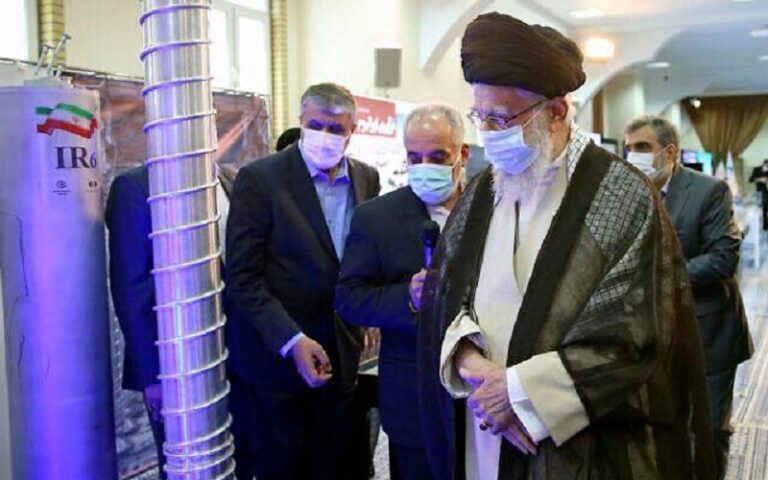
The International Atomic Energy Agency (IAEA) announced in a report that Iran has installed half of the advanced uranium enrichment devices at the underground Fordow site, which had been previously reported, but they have not yet been activated.

In this report, which Reuters news agency claims to have seen a copy of, the IAEA stated that Iran has installed four of the eight new IR-6 centrifuge cascades at Fordow, but it is unclear when uranium will be injected into them.

Two weeks ago, Iran informed the IAEA that it intended to rapidly increase its enrichment capacity at the underground Fordow site by adding eight new IR-6 centrifuge cascades.

The IAEA confirmed within two days that by June 11, Iran had completed two new IR-6 centrifuge cascades in Unit 1.

In the report, the IAEA confirmed that Iran had informed them on June 9 and 10 that it would install eight cascades containing 174 IR-6 centrifuges in Unit 1 of the Fordow enrichment facility over the next three to four weeks.

The IR-6 is one of the most advanced models of centrifuges in Iran’s nuclear facilities.

The IAEA now says Tehran has not yet announced when it will begin injecting uranium hexafluoride gas into any of the cascades in Unit 1, nor has it specified its desired enrichment level.

Diplomats say the installation of the new IR-6 centrifuges is in response to a resolution issued by the IAEA Board of Governors on June 5 against Iran. This resolution called for increased cooperation from Tehran with the IAEA and the lifting of recent restrictions on inspectors.

In its resolution, the IAEA Board of Governors called on the Iranian regime to “immediately” answer inspectors’ questions about the origin of uranium particles discovered at undeclared sites.

Iran has previously responded to IAEA Board resolutions, and following the adoption of a previous resolution in 2022, it increased uranium enrichment levels to 60%, which is close to the level required for producing nuclear weapons.

The resolution against Iran by the IAEA Board of Governors on June 5 was adopted with 20 votes in favor. China and Russia opposed the resolution, and 12 countries abstained.

The resolution deemed the presence of experienced IAEA inspectors in inspections of Iran’s nuclear activities as “vital” and called on Tehran to lift the ban on their activities.

Officials from the Iranian regime’s Foreign Ministry called the adoption of this resolution “unconstructive,” and a spokesperson for the Atomic Energy Organization of Iran stated that Iran would not yield to “pressure.”

Very Low Voter Turnout in Iran’s Presidential Election

0

Iran’s presidential election concluded with a significant boycott by the population. In his final appeal to the people, Iranian regime Supreme Leader Ali Khamenei emphasized the importance of participating in the presidential election for the regime’s survival, continuity, and reputation. Despite extensive efforts to prevent a repeat of the low turnout seen in the parliamentary elections in March, a large portion of the Iranian populace chose not to participate in the election to select the successor to the late president Ebrahim Raisi.

The widespread boycott led to a notably low voter turnout. On Friday morning, Khamenei described voting as an “easy task” with substantial implications for the integrity and reputation of the Islamic Republic, urging participation despite widespread hesitation.

Reports from various sources indicated that Tehran and other cities did not exhibit the typical activity associated with an election. Many polling stations were reportedly empty or sparsely attended, with numerous eyewitness accounts corroborating this observation. In Isfahan, efforts were made to transport families of Basijis and IRGC members to polling stations. In Shahr-e Kord, mobile TV units were used to create the appearance of voting queues, and in Kerman, most stations saw minimal activity until noon.

The regime reportedly resorted to coercive measures, such as threatening prisoners with transfer to overcrowded and unsanitary conditions if they did not vote and offering soldiers leave as an incentive to participate. In some areas, security forces were deployed to prevent filming of the empty polling stations, though activists managed to capture and share footage.

Journalists invited to observe specific polling stations also noted the lackluster voter turnout. The situation attracted international attention, with the Washington Post reporting on June 28 that Iran faces multiple crises, including economic challenges, and quoting a Tehran resident who expressed distrust in the political system and skepticism about the value of voting.