Home Blog Page 181

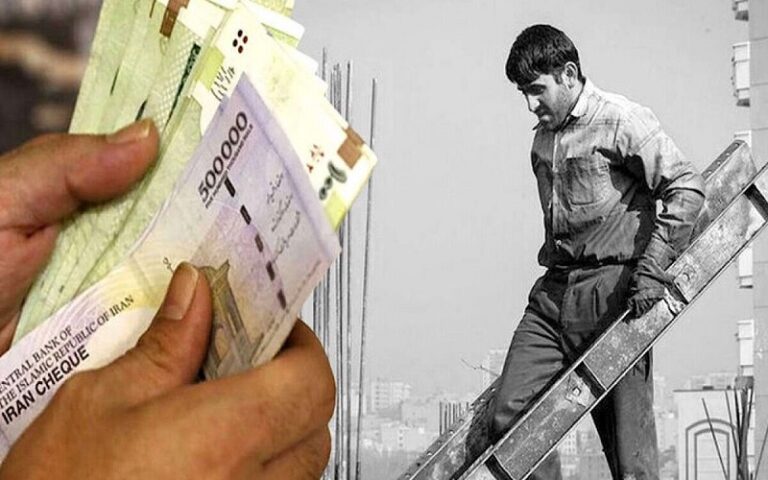
Iran: Social Security Organization Cuts Insurance for Hundreds of Thousands of Construction Workers

Abbas Shiri, an inspector from the Construction Workers Union, dismissed the claim of insuring 70,000 construction workers as false and criticized the Social Security Organization, saying that if the insurance of workers is true, they should “provide us with documents and evidence!”

According to the state-run ILNA news agency, in response to the recent denial by the Social Security Organization regarding the termination of government-paid insurance for “300,000 to 400,000 construction workers,” Shiri said that since this organization inspects construction workers twice a year, how come “despite these inspections, there were 300,000 to 400,000 fictitious workers whose insurance should be terminated?!”

The inspector from the Construction Workers Union, rejecting the claim of the legal legitimacy of filtering workers by the Social Security Organization, said that the agents of this organization, who are hired by the private sector and brokerage firms, “lack the necessary expertise. They charge around 700,000 rials (approximately $1.16) for their contact, and for every termination of insurance they can make, they receive more commission.”

He also emphasized that the insurance inspectors of this organization “easily consider construction workers as fictitious in order to receive more commission,” adding that they only go to a construction site once “and if the worker is absent for any reason that day, they abandon them and terminate their insurance.”

The inspector from the Construction Workers Union called for the participation of civil labor institutions in distinguishing real workers from fictitious ones during inspections and said that “triangular inspections” should be observed: “Meaning that in inspections in a city, the inspector of the Social Security headquarters, the inspector of the Social Security branch, and the inspector of the Construction Workers Association should be present.”

Previously, the Social Security Organization, while confirming the termination of insurance for construction workers, considered this action as a type of “filtering out real construction workers” who have “unfairly benefited from government support in this regard.”

The organization, while considering the filtering of construction workers legal, stated that this “was not a new action and is within the legal duties and missions of this organization.”

According to this report, labor activists have repeatedly protested against the unconventional inspection methods of the Social Security Organization and considered it as “part of a cunning plan to reduce the burden of insurance costs for construction workers.”

Recently, some labor activists and organizations, in statements commemorating International Workers’ Day on May 1, criticized the “anti-worker policies of the government” and emphasized the necessity of “unity of action, organization, and mobilization” of workers and wage earners to change the current situation in Iran.

According to these statements, dire economic conditions such as wages three times below the poverty line, untimely payment of wages, lack of job security, increased inflation, and reduced purchasing power of households have put tens of millions of workers and their families under pressure.

Parliamentary Election Rejected by 92% of Eligible Voters in Tehran

0

The second round of the twelfth parliamentary elections of the Iranian regime in Tehran was held with an “8 percent turnout” of the people and the qualification of representatives to the parliament with a significant vote.

In this regard, the regime’s Alef website, belonging to Ahmad Tavakoli, a member of the regime’s Expediency Discernment Council, has warned about the country’s political future.

The state-run Farhikhtegan newspaper reported on Saturday, May 11, that unofficial statistics indicate an “8 percent turnout in Tehran,” and thus, “the qualified representatives to the parliament will go to the parliament with a Considerable vote.”

The Election Headquarters of the Ministry of Interior announced a total of more than 522,000 votes in the ballot boxes of the electoral districts of “Tehran, Shemiranat, Islamshahr, and Pardis.”

The second round of Majlis (parliamentary) elections was held under conditions where Ali Khamenei, the Supreme Leader of the regime, had said, referring to the “lack of difference between the first and second stages of elections”: “The importance of the second stage is no less than the first stage, and the people should complete the parliament by participating in this stage of the elections.”

The recent elections for the Majlis and the Majlis of Experts in early March faced extensive boycott from the people and recorded the lowest participation rate in the history of the Iranian regime.

The very low turnout of voters in the second round of parliamentary elections in Iran has elicited numerous reactions from political figures, activists, journalists, and social media users.

In this regard, the Alef website wrote on Saturday, May 11, that “the twelfth parliamentary elections have shown that the issue of participation is becoming a serious problem for the country.”

The website added, referring to the low participation of voters as “undesirable statistics in the second round of parliamentary elections, especially in Tehran”: “Deep-rooted problems in the country and the inefficiency of individuals and political currents in removing obstacles have led to indifference and a high level of neglect and passing through currents that are the anchor of the country’s political atmosphere.”

Alef noted: “This political atmosphere’s chill, even a year away from the fourteenth presidential election, has sounded alarm bells,” and added: “Today, the decline in living standards, rampant inflation, class divide, and injustice have not overlooked the borders of dissatisfaction, and these fundamental problems have targeted the foundations of the country’s political and social structure.”

The website warned: “Let’s hear the real pains of the nation before it’s too late!”

Alarming Threat of Land Subsidence in Iran’s Urban Areas and Infrastructure Facilities

0

Ali Javidaneh, the head of the Iranian regime’s Mapping Organization, has raised concerns about the situation of land subsidence in Iran, stating that this phenomenon is nearing urban areas and the country’s infrastructure.

According to the state-run ILNA news agency, Ali Javidaneh stated on May 11 that the issue is not the rate of subsidence but rather that subsidence is like a ticking time bomb, and even a rate of two centimeters of subsidence per year could pose a challenge.

He mentioned that the images related to cracks or collapses of roads and streets represent the external appearance of subsidence, but subsidence occurs deep within the ground, and there are events happening that may not have signs at the surface.

According to Javidaneh, the Mapping Organization has sent maps of subsidence zones to responsible authorities, and these authorities should be accountable for why they are not using this information for planning and action.

In recent years, numerous reports of sudden land subsidence in streets and residential areas in several cities in Iran have been published.

Experts consider the uncontrolled extraction of groundwater to be one of the main reasons for land subsidence.

The situation of land subsidence in some provinces, including Tehran, Alborz, Isfahan, Fars, Kerman, Hamadan, Semnan, Qazvin, Khorasan Razavi, North Khorasan, and Yazd, has been described as critical.

Among them, Isfahan province has been one of the most vulnerable, to the extent that even the historic center of Isfahan and its ancient schools and buildings have experienced subsidence in recent years.

The phenomenon of land subsidence, which encompasses many of Iran’s plains, has not only caused damage and destruction to historical buildings but has also affected the lives of millions of people. According to experts, it will lead to financial losses and even loss of life in the not-so-distant future.

Land subsidence in some areas of Iran is up to 100 times more than global standards.

Strikes Continue in Gold Markets Across Iran

Despite the efforts of Iranian regime security entities, the Ministry of Industry, Mine and Trade, and the Gold and Jewelry Union in Iran, the gold market in most cities of Iran continues to be on strike.

Until Sunday, May 12, gold sellers in various cities, including Tehran, are absent from their places of business, and active trade units are not conducting any buying or selling activities.

The continuation of the strike in the gold market comes as in recent days, security apparatuses have attempted to pressure the Gold and Jewelry Union to end this strike.

In this regard, Nader Bazrafshan, the head of the Tehran Gold and Jewelry Union, had stated on Friday, May 10, that the strike of gold-selling units is in protest against the implementation of gold transaction registration in the comprehensive trade system.

Bazrafshan had emphasized that over the past 10 days, numerous meetings have been held between the boards of directors of the unions in Tehran, Mashhad, Shiraz, Yazd, Isfahan, and Tabriz in Tehran with relevant authorities regarding the strike, and the Ministry of Industry, Mine and Trade has also issued a ministerial order in this regard.

Bazrafshan had also announced that gold sellers have been asked to be present at their workplaces starting from Saturday, May 11, and end the strike. However, this did not happen until the head of the union confirmed in an interview on Saturday with the state-run ISNA news agency that the gold market is still on strike.

The Tabnak website also wrote in this regard: “News from the market indicates that many units are still closed and have rejected the union’s request.”

According to analysts, the order of the Ministry of Industry, Mine and Trade did not have any new points to persuade the activists of this profession, and gold sellers are still concerned about the government’s next steps regarding property tax.

The order of the Ministry of Industry, Mine and Trade states that “capital gains tax will not be levied on gold trade units.”

This order also emphasizes that initial inventory registration in the Comprehensive Trade Platform related to personal or capital assets not involved in production and sales will not be required.

However, considering the government’s behavior in the field of property tax over the past two years and the emphasis of officials on the necessity of increasing tax revenues, gold sellers are refraining from registering their information in the Comprehensive Trade Platform.

This issue has also faced a reaction from the Tax Administration Organization, and this organization, far from any expediency, has threatened gold sellers with heavy fines for non-cooperation.

In this regard, the spokesperson of the Tax Administration Organization told the regime’s Khabaronline website that, conditional on gold and currency sales through electronic invoices to authorized exchanges or gold sellers with terminal stores and the registration of electronic invoices, capital gains tax will not be imposed.

According to this report, the regime is seeking to impose new taxes on property, cars, as well as gold and currency, with the enactment of the capital gains tax law. According to the regime’s plan, profits from the purchase and sale of these assets will be subject to tax.

Iran: Three Nurses Dead from Burnout in One Month

Three nurses in Iran have lost their lives due to “excessive work” in the span of one month, the Secretary-General of the Nursing Home announced their deaths due to “overwork syndrome,” known as “death due to excessive work.”

Mohammad Sharifi Moghaddam told the regime’s Etemad newspaper on Sunday, May 12, that unfavorable conditions in Iranian hospitals have left nurses “tired, unmotivated, and exhausted.”

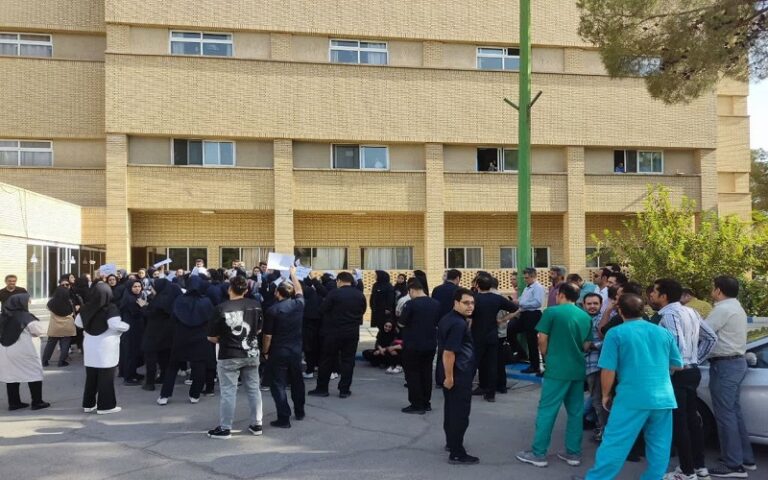
Iranian nurses protest against the shortage of staff and the subsequent heavy workload, lack of job security, and low wages that disrupt their work-life balance.

According to the Secretary-General of the Nursing Home, most nurses in Iran, especially male nurses, are forced to work evening shifts in addition to their daily shifts because one shift doesn’t cover their living expenses, leading to excessive fatigue.

Recent reports have also highlighted an increase in suicide among nurses in Iran, attributed to the increasing pressure in the workplace.

The exact number of nurse suicides in Iran is officially unknown, but the rising trend is concerning.

According to the World Health Organization’s standard, there should be a minimum of three nurses and on average, five to six nurses, per thousand population. However, according to the WHO’s report in 2018, there were only 1.6 nurses per thousand active population in Iran. In fact, the number of nurses in Iran is equivalent to half of the minimum set by the WHO.

Sharifi Moghaddam had announced in November 2023 that the annual migration of nurses had reached 3,000, and patients were dying in hospitals due to the lack of nurses.

The Iranian Nursing Home official also stated on Sunday that he had been summoned to provide evidence for this claim, but he said, “Do we need to show evidence for daylight?”

According to Sharifi Moghaddam, nurses leaving Iran have various motivations, but the most significant one is financial issues, and those leaving Iran for financial reasons usually do not return.

One of the significant factors contributing to the migration of physicians and nurses from Iran is the considerable disparity in income and living standards between Iran and destination countries.

According to the World Health Organization report, the average annual income of a physician in Iran in 2019 was around $10,000, which is much lower compared to the average annual income of a physician in the United States, approximately $294,000, in the United Kingdom, around $136,000, in Canada, about $258,000, in Australia, around $207,000, and in Germany, approximately $111,000.

Iranian Chamber of Commerce Reports Worsening Economic Conditions

In its latest report on the state of the Purchasing Managers Index (PMI), the Research Center of the Iranian Chamber of Commerce has reported the worsening of the country’s economic outlook components.

The report states that in the coming months, a shortage of raw materials could seriously affect the trend of economic improvement, especially in the industrial sector.

The Research Center of the Chamber of Commerce, affiliated with the Iranian regime, says that significant trade deficit in 2023 and the increasing gap between the prices of free market currency and government currency in recent months are factors that could restrict the allocation of foreign currency resources for importing raw materials in the coming months.

Earlier, the International Monetary Fund had also predicted that Iran’s economic growth would decrease from 4.7 percent last year to 3.3 percent this year and 3.1 percent next year.

Iran’s non-oil trade deficit also reached a historic record of nearly $17 billion last year.

The Research Center of the Chamber of Commerce has warned that the possible increase in the exchange rate and the reduction in the allocation of foreign currency for importing raw materials in the coming months could intensify restrictions on access to production raw materials and, consequently, halt the industrial improvement trend.

In recent weeks, there have been numerous reports of the government’s inability to allocate foreign currency for importing goods, even medicine.

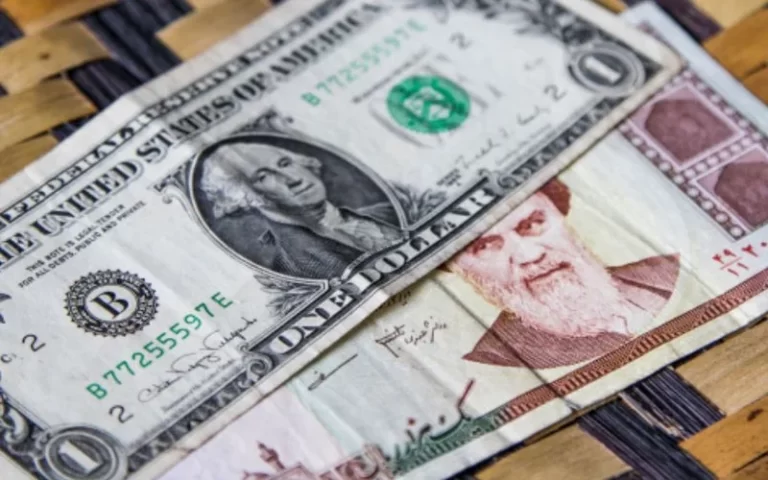
The exchange rate of the dollar against the Iranian rial is still 20 percent higher than May of last year, despite a relative decrease compared to last month.

Purchasing Managers Index

When calculating the purchasing managers index, if the obtained number is more than 50 units, it indicates that the economy is developing, and if this figure falls below 50 units, it indicates that the economy is on the verge of contraction and recession.

The report of the Iranian Chamber of Commerce evaluates the PMI for March 2024 as 39.6, which has been adjusted to 51.5 (eliminating the effect of Iranian New Year holidays starting from March 21), indicating a relative improvement compared to February, but lower than the March of last year.

Last March, the overall PMI of the economy, with adjustments, was around 53.7 units.

The details of the overall PMI indicate that some components are facing a decline, especially the “production or service provision level” index, which is estimated at 49 after adjustment in March, indicating a decrease in the production of goods and services in this month compared to February 2023, even after removing the effect of new year’s holidays.

The “inventory of raw materials or purchased items” index in March was also estimated at 49.7, indicating a decrease in the inventory of raw materials to produce goods, and the index of the price of raw materials or purchased items has reached 72.3, indicating a significant increase in the price of raw materials compared to February 2023.

While Iran’s non-oil exports faced a 7 percent decline last year, the Chamber of Commerce report indicates that the “volume of goods exports” index in March of this year, even after seasonal adjustment, was around 48.1, indicating a relative decrease in goods exports compared to February 2023.

Meanwhile, the “employment and labor utilization rate” index in March, after seasonal adjustment, was estimated at 52, but the Chamber of Commerce says that although the trend of this index from October 2023 to March 2024 indicates continuous employment improvement in the country, conditions are not the same for all skill levels.

According to this report, available evidence and statements from economic actors indicate that high inflation and continuous pressures on living costs have made unskilled labor reluctant to engage in employment at current wage levels, creating “serious problems” for some economic sectors.

Canadian Intel: Tehran’s Operations in Canada Have Become More Aggressive and Widespread

0

The Canadian Security Intelligence Service announced in its annual report on foreign interventions in Canada in 2023 that during this year, Russia, China, India, and the Iranian regime increased their activities. According to the organization, the Iranian regime has become more hostile in its foreign operations.

The report, released on Thursday, May 9, states that foreign countries engage in various hostile activities in Canada, such as incitement, assassination, coercion, illegal financing, cyber sabotage, and manipulation of information.

This report comes a day after the Canadian House of Commons, on Wednesday with unanimous consent and without any opposing votes, passed a motion calling on the government to list the Islamic Revolutionary Guard Corps as a terrorist group.

This is the second time in the past six years that the Canadian Parliament has urged the government to designate the Revolutionary Guards as a terrorist group.

The Canadian Security Intelligence Service’s (CSIS) report devotes a section specifically to the activities of the Iranian regime, stating:

“The Islamic Republic of Iran seeks to be a major power in the Middle East, spreading its influence on Iraq, Syria, Lebanon, and beyond.”

According to CSIS, “Its regional ambitions have been advanced primarily through an alliance with Syria and the use of Iran-aligned militias in Iraq, Lebanon, and Yemen. Efforts to obstruct Iran’s ambitions by the United States (US), Israel, and other regional states have led Iran to seek informal alliances with like-minded, anti-Western states like the Russian Federation.”

“Since the October 7, 2023, Hamas attack against Israel, Iran has publicly praised the militancy targeting Israel and authorized its proxies and allies, including the Houthis in Yemen, to conduct attacks against Israel and US interests in Iraq and Syria.” The report continued.

“Iran’s external operations in Western countries have been increasingly aggressive and expansive in recent years, resulting in numerous disruptions of lethal plots by security and law enforcement services in the US, the United Kingdom and in several European countries.” The report added.

CSIS emphasizes that, “Iran and its intelligence services are interested in influencing and clandestinely collecting information on the Iranian community, including anti-regime activists and political dissidents; human, women’s and minority rights activists; and fugitives wanted by the regime.”

The CSIS emphasized in its report that, “Ultimately, these hostile activities undermine the security of Canada and Canadians, as well as Canada’s democratic values and sovereignty.”

The CSIS predicted that, “Iranian threat-related activities directed at Canada and its allies are likely to continue in 2024 and may increase depending on regional developments and the Iranian regime’s own threat perceptions.”

Hostile state actors have become increasingly belligerent

Vanessa Lloyd, Deputy Director of Operations of CSIS, also said,Hostile state actors have become increasingly belligerent and emboldened to advance their objectives in both the physical and cyber realms, while seeking to silence those who challenge their narrative. They have more options and opportunities to conceal their threat activities, including by using criminal organizations as proxies.”

“Never before have Canada’s diverse communities been so highly targeted by such blatant actions of foreign interference. However, this serious threat is not specific to Canada; our closest allies and fellow like-minded countries face the same malicious activities,” she continued.

“Canada’s adversaries continue to target our talent and intellectual property to advance their espionage and proliferation objectives while national security concerns are increasingly relevant to the assessment of foreign investments in Canada, which could impact our country’s prosperity. While the Government of Canada seeks to provide opportunities for new beginnings, security assessments are the first line of defence against the exploitation of immigration pathways by threat actors.” Lloyd further added.

Price of Housing in Tehran At $1,340 Per Square Meter

Despite the housing market recession, the price of housing in Tehran increased in March 2024, with the average price of a square meter of residential units traded in the capital reaching 820 million rials (approximately $1,340).

According to media reports in Iran, the Central Bank’s Office of Economic Studies and Policies announced that in March, the number of residential apartments traded in the city of Tehran reached 1,500 units, indicating a 75.6% and 14.2% decrease compared to the previous month and the same month last year, respectively.

However, the average price per square meter of residential units traded through real estate agencies in Tehran in March showed a 22.9% increase compared to the previous month and the same month last year, respectively.

An examination of the “distribution of the number of residential units traded in Tehran” shows that among the 22 districts of Tehran Municipality, the highest average price per square meter of residential area traded belongs to district 1 and the lowest belongs to district 18.

Previously, the state-run Donya-e-Eqtesad newspaper reported on the withdrawal of half of the applicants of the “National Housing” plan due to lack of financial ability to pay installments.

The newspaper wrote that since the early 2010s, many new households have not been able to afford to buy housing from the market. Also, those who withdrew from the “National Housing” plan did not even have the ability to pay the 400 million rials (approximately $645) down payment for this plan.

Canadian Parliament Approves Proposal to Proscribe Iran’s IRGC

0

On Wednesday, May 8, members of the Canadian House of Commons unanimously voted to add the IRGC to the official list of foreign terrorist organizations of Canada.

According to Canadian media reports, the proposal, presented to the House by the Judiciary Committee, was approved with 327 in favor and no opposing votes.

The decision of the Canadian House of Commons urges the government of Canada to identify the Islamic Revolutionary Guard Corps as a foreign terrorist organization in its entirety.

Canadian lawmakers had also approved recognizing the IRGC as a terrorist organization in 2020, but Canadian Prime Minister Justin Trudeau did not implement it.

The decision was made Flight 752 by IRGC missiles near Tehran, which resulted in the deaths of 176 people.

Designating the IRGC as a terrorist organization is one of the main demands of the Iranian opposition from Western countries, which has been emphasized more recently.

Following nationwide protests in Iran in 2022, Iranian opposition groups abroad have consistently raised this demand in their protest gatherings.

In a message in this regard, Mrs. Maryam Rajavi, the president elects of the National Council of Resistance of Iran (NCRI) said:

“Congratulations to Canadian MPs for the adoption of the terrorist designation of the Revolutionary Guard Corps (IRGC). I hope that the government of Canada would implement the long-overdue legislation by the parliament, and officially blacklist this criminal corps.

“I urge the European Union and its member states to stop further postponing the implementation of the terrorist designation of the IRGC as adopted by the European Parliament.

“I urge the UK, Australia, and other Commonwealth countries to stop delaying the designation of the IRGC and the mullahs’ Intelligence Ministry (MOIS). Every day of delay further emboldens the clerical regime in pursuit of terrorism, warmongering, and hostage taking.

The agents and mercenaries of the IRGC, MOIS, and the terrorist Quds Force must be expelled from Europe, the US, and Canada, and their passports annulled. This is the desire and the right of the people of Iran and their freedom fighters.”


Iran’s Medical Society is in Crisis

0

Iraj Fazel, the head of the Surgeons Society and former Minister of Health of the Iranian regime, has warned about the shortage of specialist doctors in the country, stating that if this situation continues, we will inevitably have to import mushroom doctors.

Fazel, referring to the economic problems of students and the educational policies of the Iranian regime, said that the effects of these problems and policies are manifested in the form of “shortage of doctors and vacancies in medical specialties,” indicating that medicine in Iran has “declined.”

He stated, “Today, there is a serious problem with the acceptance of medical courses in the entrance exam or continuing education in medical specialties to the extent that in recent exams, we did not even have one volunteer for vascular surgery, and likewise, some other specialties remain vacant.”

Fazael ultimately said that if the situation continues in this manner, “we will have to import specialists in these fields in 10 years, and again send patients abroad for specialized surgeries.”

Previously, other officials and figures in the medical community had also warned about the trend of decreasing doctors in the country, including Mohammad Raiszadeh, the head of the Iranian Medical Council, who said, “Some people joke about the medical community, but seriously, the country is becoming empty of doctors.”

Raiszadeh considered one of the main factors in these conditions to be the extensive migration of doctors abroad from Iran and said that the statistics of “professional migration” of doctors are even higher than “migration out of the country.”

Hossein-Ali Shahriari, the head of the Health and Treatment Commission of the regime’s parliament, also announced in late May 2023 the receipt of necessary certificates for work migration by about 10,000 specialists and other Iranian super-specialists over the past two years and said that Arab countries have become the main destination for the migration of Iranian doctors.

On the other hand, very difficult working conditions and low wages have caused significant problems for the medical community, to the extent that many physicians are resorting to suicide.

On May 6, the regime’s Entekhab website wrote about the tragedy of physician suicides: the time gap between these suicides since the beginning of this year (March 21) has reached 10 days (every 10 days a physician commits suicide), and if this trend continues, by the end of the year, a shocking statistic will remain.

The Secretary-General of the Nursing Home also said, “No official statistics are published about physician suicides. This has happened in the past years as well, but now with the help of social media, news spreads very quickly.