Home Blog Page 212

Houses in Iran Shrink as Poverty Grows

The increase in housing prices in Iran has led to an increase in housing poverty, and reports indicate that people’s tastes and inclination have forcibly changed towards houses that are 40 square meters or less.

On November 7, the state-run Donyaye Eghtesad newspaper reported that statistics indicate a record number of residence registrations in houses up to 40 square meters in the capital city during the current year.

According to the report, the share of small houses with an area of up to 40 square meters in Tehran’s real estate transactions has increased from 3.3 percent in 2018 to over 5.2 percent in 2023.

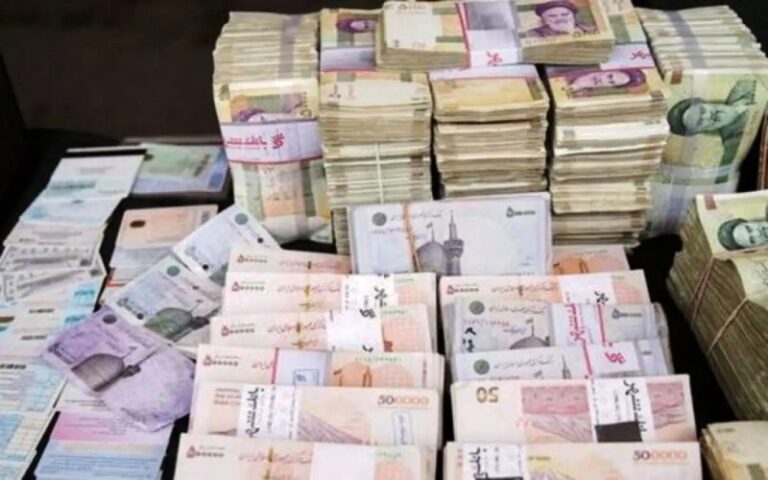
This trend can be attributed to the inflation in the housing market, as reported by the Statistical Center of Iran. The average price per square meter of an apartment has increased from 62 million rials (approximately $1,088) in the spring of 2018 to over 808 million rials (approximately $1,569) in September 2023. While the difference in dollar value is around 50%, the rial difference is more than tenfold as the national currency has depreciated severely due to the regime’s policies in the same period.

Housing inflation has caused statistical centers to refrain from publishing new data for over eight months. However, this approach failed to hide the economic realities of the country. In this regard, the Majlis (parliament) Research Center referred to the increase in eviction rates from the housing market in a report published on August 9, stating that households in the first to third deciles are absolutely unable to procure housing, and households in the third to fifth deciles and even a portion of the sixth decile are relatively unable to meet their housing needs.

The 18-fold increase in housing prices in Tehran over a period of seven years has resulted in the share of apartments with a building age of over 20 years in total residential transactions triple compared to 2016 when the market conditions were normal.

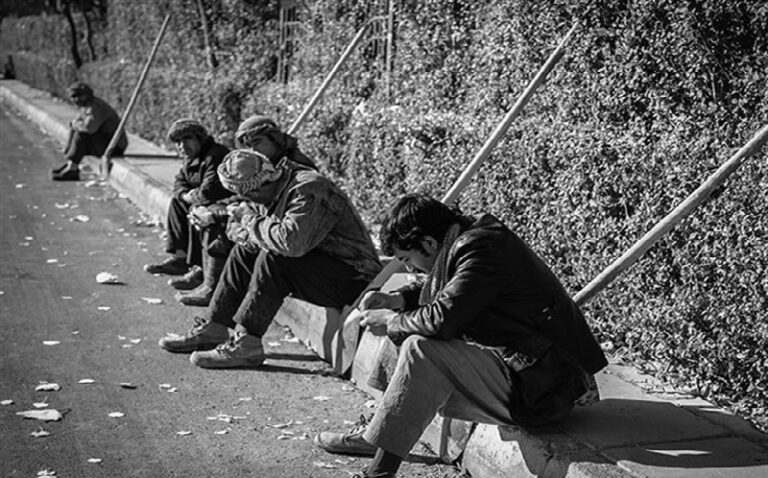
The increasing phenomenon of informal settlements and living in slums is another manifestation of housing poverty. Another destructive effect of the recent housing inflation wave is that housing costs account for 70 percent of the expenditure basket of Tehran households, which means that two-thirds of the income of tenant households is spent solely on housing rent.

The United Nations Human Settlements Programme (UN-HABITAT) has announced a minimum per capita residential space of 17 square meters. Considering that the average household size in Tehran is currently about three people, the minimum suitable residential area for households in Tehran is currently equivalent to 51 square meters. Therefore, housing units up to 40 square meters do not meet the minimum residential standard for Tehran residents.

According to official statistics, currently, 18 percent of housing transactions are carried out in the group of units up to 50 square meters, indicating that out of every five households purchasing a house, one buys a house that is smaller than the expected minimum standard.

The Majlis (parliament) Research Center also reported on June 8 about the critical housing situation in Tehran and the “950 percent increase” in its prices over the past five years.

The Tehran City Council also announced in a report on September 4 the housing situation in the capital, stating that 70 percent of Tehran households suffer from “housing poverty” and “poor housing conditions.”

The Tehran City Council report also emphasized that the share of housing costs in the household expenditure basket has increased from 33 percent in the 2000s to over 50 percent, indicating that more than 70 percent of Tehran households are affected by “housing poverty.”

The regime’s president, Ebrahim Raisi, during his presidential election campaign and after the formation of his cabinet, repeatedly promised to “build one million houses annually.” However, after more than two years, the realization of this promise is still questionable.

Iran’s Regime Closes Court Case of Teenager Killed By Security Forces

Abolfazl Adinehzadeh, a 16-year-old teenager and senior high school student majoring in electronics, was killed by security forces during Iran’s nationwide protests on October 8, 2022.

On the morning of October 8, 2022, his father dropped him off at school, and he was supposed to be at school until 2 p.m. However, around 11 a.m., he was shot with approximately 70 rubber bullets from a distance of less than one meter to his right side at the entrance of Ferdowsi University in Mashhad, northeast Iran. Despite doctors removing 27 bullets from his abdomen during surgery, he did not survive.

Marzieh Adinehzadeh, his sister, stated that if Farabi Hospital, which is near Ferdowsi University, had accepted Abolfazl, he would be alive now, but they did not admit the injured.

According to Abolfazl’s sister, a medical student girl, along with her family, helped Abolfazl and took him to Imam Reza Hospital around 12:30. He was conscious during the journey and kept saying, “Mom, I love you…forgive me.”

After a night of being uninformed and worried, the family was contacted by the security department of the education ministry on October 9 and were asked to bring the bail and take him. However, after Abolfazl’s parents went to the school, they were taken to the Intelligence Office, where they were shown Abolfazl’s body and falsely informed that he had been killed by three rubber bullets.

Khosrow Alikordi, the lawyer representing the Adinehzadeh family announced that the case of the parents’ complaint regarding the death of Abolfazl Adinehzadeh during the suppression of protests in 2022 in Mashhad has been “closed.”

Khosrow Alikordi shared the final verdict on social media on November 6, 2023. According to the issued verdict, the Branch 1 of the Military Prosecutor’s Office of Khorasan Razavi Province declared the case of the parents’ complaint about the death of Abolfazl Adinehzadeh as “closed.” The military prosecutor’s office argued that there was “no solid and convincing evidence of the use of rubber bullet shooting by military and law enforcement forces.”

Despite the fact that around 70 rubber bullets hit the right side of the teenager from a distance of less than one meter at the entrance of Ferdowsi University in Mashhad on October 8, 2022, the court found the evidence insufficient. The court’s verdict, bearing the signature of “Gholamhossein Alvandi, the investigator of Branch 1 of the Military Court,” stated that the accusation was not supported by sufficient and convincing evidence, leading to the decision of “non-prosecution.”

Additionally, the verdict mentioned that the plaintiffs would be directed to seek compensation from the state treasury through the judiciary.

According to the statements of the National Council of Resistance of Iran (NCRI), during the nationwide uprising of the Iranian people, at least 750 individuals were killed by regime security forces.


Iran’s Education System Suffering From Dilapidated Schools and Teacher Shortages

0

Twenty percent of schools in Iran are dilapidated, and there is a distinction between “hazardous” and “dilapidated” schools, according to Majid Abdollahi, the Technical and Supervisory Deputy of the Organization for the Renovation of Schools.

Abdollahi emphasized that students are not allowed to study in “hazardous” schools, stating, “In Isfahan, we had 14 schools affected by subsidence, and this year we did not allow students to study in these schools.”

Abdollahi stated that approximately 20,000 schools out of around 105,000 schools and 104,000 classrooms out of 540,000 classrooms are dilapidated.

Thousands of Iranian Children Will Miss the New School Year

According to Abdollahi, 6 percent of these classrooms, equivalent to 33,000 classrooms, need to be demolished and rebuilt.

This number of dilapidated schools in the country comes at a time when on August 13, the head of the Organization for the Renovation, Development, and Equipping of Schools announced the existence of 1,073 temporary schools (consisting of prefabricated structures) in the country based on initial identification.

The situation of schools referred to as “dilapidated” is particularly severe in small and remote cities. In this regard, the semiofficial ILNA news agency reported on September  23   that students in the “Loudab” region in the Kohgiluyeh and Boyer-Ahmad province started the new academic year in schools lacking “desks and chairs, water pipelines, heating systems, and safety.”

According to ILNA’s report, quoting Kourosh Biniaz, the governor of Loudab, 35 schools in this region lack sanitary facilities and water pipelines, and in 45 schools, there are “no heating and safety equipment” at all. He stated that there are also 10 “temporary” schools in this province, and out of a total of 145 schools, only two schools are equipped with computer equipment and printers.

In response to the shortage of teachers in the country and the situation of more than 400,000 students being left without teachers, the Minister of Education announced the finalization of the decision on “discovering teaching talents” in the Supreme Council of the Cultural Revolution and stated, “Students who have the temperament and qualities of a teacher will be recruited into the education system and become teachers.”

Teacher shortage in the education system has become one of the challenges due to the elimination of “student teachers” and the retirement of a significant number of teachers. Reports indicate that in some schools, parents of students have been asked to come to school and act as teachers to prevent empty classrooms.

However, on November 1, despite widespread criticism from teachers, teacher unions, and some members of the regime’s Majlis (parliament), Reza Moradi Sahrayee, the spokesperson for the Ministry of Education, claimed that there are no “teacherless classes” in Iran.

Sahrayee’s statement contradicted the report by a member of the Parliament’s Education Commission on October 31, who revealed that 68,000 teachers had left the education system in Iran at the beginning of the academic year, leaving 100,000 classrooms without teachers. Mohammad Vahidi, in an interview with the state-run website “rouydad24,” acknowledged the serious challenge of teacher shortages and mentioned that 23,000 teachers had been hired for educational services but were prohibited from entering classrooms this year.

Mohammad Taghi Falahi, the Secretary of the Tehran Teachers Guild, also mentioned the severe budget deficit in education as one of the main factors contributing to the shortage of teachers for 23,000 classrooms, equivalent to approximately 460,000 students.

Iran’s Students Face High Costs of Stationery at the Beginning of Academic Year

The teacher shortage in schools has reached a point where the Shargh Daily website addressed the problem in a report, stating that some school principals have asked parents to attend classes and help students in reviewing the previous year’s lessons.

On September 23, some reports emerged indicating that amid the teacher shortage crisis, the Ministry of Education had prevented the continuation of the “student teacher” program.

Another recent controversy in the Ministry of Education was the compulsory call to prayer and the “requirement for students to send audio recordings of their prayers at home.” In response to the criticism surrounding this issue, Reza Moradi Sahrayee stated, “When we were criticized, we realized that what we were doing was right.”

In recent years, teachers in Iran have staged widespread protests, with hundreds of cases documented. The teachers’ demands in these protests include salary increases and equalization of salaries, as well as official employment. Many of their colleagues have been imprisoned as a result of these protests.

The Iranian regime allocates a negligible budget to education and retires experienced teachers, while significantly increasing the military budget. A look at Iran’s expensive interventions in the region reveals where the education budget for Iranian children is being spent.

Iran: Retirees Protest Low Pensions, Poor Living Conditions

Retirees of the Social Security Organization and the steel industry held protest rallies on November 5 in several cities across Iran. At the same time, nurses and employees of the “Imam” hospital in Urmia continued their protests for the second consecutive day.

According to labor and retirees’ organizations, the retirees of the Social Security Organization held rallies in Kermanshah, Ahvaz, and Shush.

Some of their slogans included “We don’t tolerate oppression in our lives,”

“Death to this slavery,”

and “We haven’t seen justice, we won’t vote anymore.”

Based on the published images, retirees from the steel industry gathered in front of the retirement fund offices in Isfahan, Ghaemshahr, Shahrud, and Ahvaz.

In their Isfahan gathering, they spread an empty tablecloth and chanted slogans such as

“We haven’t seen justice, we’ve heard enough lies,”

“Promises are not enough, our table is empty,”

and “Incompetent manager, shame on you.”

Simultaneously, according to the Free Union of Iranian Workers, nurses, medical staff, and medical students at the “Imam” hospital in Urmia also gathered on Sunday for the second consecutive day, protesting the delayed paychecks, other financial demands, the method of salary calculation, and the neglect of their livelihood issues.

The worsening living conditions of retirees, workers, and other wage earners have led to the expansion of protests in Iranian cities in recent years.

On November 2, the state-run ILNA news agency reported that there is a possibility of a 20 percent increase in retirees’ pensions next year. However, retirees are protesting against this proposal as they consider it unfair, stating that a 20 percent increase does not even reach half of the poverty line.

According to ILNA, wage earners are concerned about the government’s proposal for a 20 percent increase in salaries next year, and this concern is not limited to employees and retirees under government agencies.

The news agency stated that a 20 percent increase in salaries can significantly reduce workers’ bargaining power for the 2024 wages.

Sowlat Mortazavi, the Minister of Labor, stated that wages are determined only once a year and thus rejected the possibility of wage adjustments and increases.

In the meantime, retirees from various sectors have gathered multiple times in front of the retirement fund offices in different Iranian cities, demanding that their pensions reach the poverty line and questioning why their pensions should be half the poverty line after 30 years.

Based on statistics announced by some members of the parliament in recent months, the cost of living in Tehran has been estimated to be over 300 million rials (approximately $582), and in other major cities in Iran, it ranges from 200 million to 250 million rials (approximately $388 to 485).

With a 20% increase, the monthly pension of a retiree will not even reach 110 million rials (approximately $213) next year, while the overall inflation rate has been much higher than 100 percent in the past two years.

ILNA quoted one retiree who said, “Statistics don’t matter. What I see in my life is that everything has become two or three times more expensive. Even the rent this year, landlords have increased it by more than 50 or 60 percent. What’s the fate of people like me? I have been living in the eastern part of Tehran for several years, however now I have to live in Islamshahr, southern Tehran. Even here, I can’t afford to rent a house. Where should I go in my old age? Should I pitch a tent in the park?”

Retired government employees gather every week in front of the Governorate building and other related government buildings to protest the non-implementation of the “adjustment” law, severe economic difficulties, and infringement of their rights.

Protests and strikes related to economic livelihoods by various trades and professions in Iran have been ongoing for several years, including retirees from the Social Security Organization, steel industry, telecommunications, educators, and government pensioners, who organize regular weekly protests in various cities.

US Congress Passes Bill to Increase Oil Sanctions Against Iran’s Regime

The United States House of Representatives has approved a bill to intensify oil sanctions against the Iranian regime. On November 3, the House of Representatives passed a bill with the support of members from both the Democratic and Republican parties to strengthen oil sanctions against Iran. The “Stop Harboring Iranian Petroleum (SHIP) Act,” received 342 votes in favor and 69 votes against.

Representative Mike Lawler, a Republican, and Representative Jared Moskowitz, a Democrat, stated in a statement that this bill is a crucial step in preventing Iran from continuing its financial support for terrorism throughout the Middle East.

They also welcomed the widespread support of members from both the Democratic and Republican parties in the House of Representatives for this bill. Mike Lawler and Jared Moskowitz emphasized the importance of holding the regime accountable for its support of terrorist organizations.

These two members of the US Congress stated that this bill sends a clear and strong message to parties and actors such as China, Russia, and others to not assist Iran in financing terrorism, or else they will face the consequences of such actions.

For this bill to become law, it must first be approved by the US Senate and then signed by President Joe Biden.

The approval of this bill comes at a time when, according to regime authorities, despite extensive US sanctions, Iran’s oil sales have increased in recent years. Javad Oji, the Minister of Oil of the Iranian regime, stated on March 24 that Iran has exported “at least 190 million barrels more oil than in 2020 and 83 million barrels more than in 2021,” and he said, “A new record in Iran’s oil exports will be set this year.”

He also announced on September 30 an “increase in oil exports” and said, “With the efforts of my colleagues at the Ministry of Oil, the production and export figuresof crude oil, condensates, and oil products are increasing every day.”

Kpler, a commodity intelligence company that also tracks oil tankers, reported on August 15 that Iran is exporting approximately 1.5 million barrels of crude oil daily to China this month, which will be the highest level of exports to this country in a decade.


According to the official IRNA news agency, on September 4, Iran exported “1.7 million barrels of crude oil and 152,000 barrels of condensates” daily in August. The total exports of oil and gas condensates from Iran in that month averaged 1.85 million barrels per day. This represents the highest level of Iranian oil exports in the past five years since the United States withdrew from the Joint Comprehensive Plan of Action (JCPOA).

Kpler stated that Iran is currently exporting approximately 1.5 million barrels of oil per day to China, marking the highest level of oil exports from Iran to China since 2013.

Bloomberg news agency also reported on these statistics, stating that with the increase in oil prices in global markets, the demand for discounted oil purchases from Iran, especially by independent refineries in Shandong Province, China, has risen.

Previously, Davoud Manzour, the head of regime’s Planning and Budget Organization had stated in the Majlis (Parliament) that “according to the 2023 budget bill, the government is obligated to export 1.4 million barrels of oil per day,” and that they have been able to exceed this target with the efforts of the Ministry of Oil.

However, Manzour did not disclose the exact volume of Iran’s oil exports or the names of importing countries.

In a related development, the latest statistics from the Organization of the Petroleum Exporting Countries (OPEC), released on August 10, showed an increase in Iran’s oil production by 68,000 barrels per day, reaching 2.828 million barrels per day.

Reuters had previously reported that Iran offers a discount of around $12 per barrel for its exported oil. Other reports have suggested even higher figures for Iranian oil discounts.

It is worth noting that on July 14, eight Republican senators wrote a letter to the US Secretaries of State and Treasury, calling for the full implementation of oil sanctions against the Iranian regime and the imposition of sanctions on Chinese companies buying Iranian oil.

Iran: 70% of Workers Have Two Jobs as Purchasing Power Decreases

0

Hadi Abavee, the Secretary of the Supreme Council of Iranian Worker Associations, announced that “the problem of the reduction in workers’ purchasing power has led to about 70 percent of them having dual jobs.”

Workers believe that with long working hours and low income, they cannot make ends meet and are forced to take on a second job after their regular working hours in a production or administrative unit to support their families.

Many reports have previously been published about the reduction in workers’ purchasing power in Iran, taking into account the inflation rate and the increased cost of living.

The semiofficial ILNA news agency reported on October 4, “The latest independent calculations show that the minimum cost of living in various provinces has reached 220 million rials (approximately $422),” adding, “Based on this calculation, a salary of 90 million rials (approximately $173) is 20 million rials (approximately $38) less than half the cost of living basket, which means that a worker earning 90 million rials, if living in the cities and not paying rent over 70 or 80 million rials (approximately $134-154) in Tehran, can cover two weeks of expenses at best. In fact, with the minimum wage in the provinces, it is not even possible to sustain oneself for two weeks.”

According to state-run Tasnim news agency, Hadi Abavee, referring to the livelihood problems of workers, said, “Our main problem is that the Ministry of Labor is not willing to hold a meeting to reexamine livelihoods. We are not seeking an increase in wages. At least let a meeting be held and listen to the problems of workers, but they still evade holding a meeting.”

In March, the Supreme Labor Council increased the minimum wage of married workers with children, who are covered by the labor law, by 27 percent. As a result, the minimum monthly wage for this group of workers reached 80 million rials (approximately $153). This action by the Supreme Labor Council, as well as the approval of the resolution by the “worker representatives” of the council, received significant criticism.

Moreover, according to the regime’s Khabar Online website, the inflation rate is “above 46 percent”, and from March until now, the inflation rate has not been lower than this figure in any month.

Activists and independent labor organizations have demanded the determination of a minimum wage of at least 150 million rials (approximately $289) for workers.

On the other hand, the regime’s President Ebrahim Raisi has not taken any action to increase workers’ wages.

Officials from the Ministry of Cooperatives, Labor, and Social Welfare have repeatedly opposed increasing workers’ wages. Even Sowlat Mortazavi, the Minister of Cooperatives, Labor, and Social Welfare, said that “the minimum wage earner can use the power of negotiation and receive a higher salary commensurate with their expertise.”

The regime has shirked its responsibility to address the demands of workers and has thrown the ball into the workers’ court. Meanwhile, following Sowlat Mortazavi’s remarks, reports were published in labor unions’ media outlets and some other news sources indicating employers’ resistance to the demand for increasing workers’ wages.

In this regard, several workers were fired by their employers, and the Ministry of Cooperatives, Labor, and Social Welfare showed no reaction.

At the same time, Faramarz Tofighi, a labor activist who, according to the state-run ILNA news agency, has conducted independent calculations of the cost of living for worker households, told the news agency: “In Tehran, the minimum expenses for a three or four-member household, including rent, reach 300 million rials (approximately $576).”

He added, “A working family in Tehran who is a tenant should have a salary of 300 million rials to make ends meet until the end of the month.”


According to a report by the “Didbaniran” published on September 28, “The allocation of a significant portion of household expenses to housing and food causes households to have a lower budget and income for other expenses, including education.”

According to this report, “An analysis of household expenses shows that the share of education from total household expenses has been decreasing over time.”


Meanwhile, the Administrative and Recruitment Organization has demanded that surplus funds not be allocated to executive agencies and instead be used to address the issue of salary restoration for employees.

The Administrative and Recruitment Organization and the Organization of Planning and Budget are against increasing employees’ wages.

This comes at a time when previously, Ali Babaei Karnamy, the head of the labor faction in the parliament, announced in August that the government is working on a 20 percent increase in salaries for state employees in the second half of this year.

“The government is in the process of sending a bill to implement a 20 percent increase in salaries for employees and retirees as part of equalization measures in the second half of the year,” said Babaei Karnamy.

According to the “Khabaronline”, in October of last year, the government of Ebrahim Raisi sent a bill to the parliament titled “Equalization of Salaries for Government Employees, as well as National and Military Retirees.”

According to this bill, a gradual percentage increase was considered for government employees, so that those who receive lower wages would experience a 20 percent increase, while the percentage increase would be lower for higher-wage earners.

This proposal was approved by the parliament in November 2022. However, both the Planning and Budget Organization and the Administrative and Recruitment Organization have explicitly expressed their opposition to the restoration of employees’ and retirees’ salaries.

Iran’s Regime to Pay Workers Under 20 Only 70% of Actual Wages

Iranian workers are under unprecedented pressure. Under the tyrannical rule of the mullahs, Iran’s workers are not only suffering from low wages, lack of job security and social and health insurance, but they’re also deprived of the most basic rights that every worker in the world should enjoy. The increasing downturn in Iran’s economy has led to an ever-growing economic and social crisis manifested in unprecedented rates of unemployment, poverty, and inequality.

The Secretary of the “National Workers’ Associations (ICEA)” criticized proposals such as “paying 70 percent of the wages to workers under 20 years old to solve unemployment,” saying that such proposals are not “effective.”

The regime’s Majlis Research Center presented recommendations in a report for the “solution to the unemployment problem” in the Seventh Development Program, one of which suggests that, in order to reduce the youth unemployment rate, the minimum wage specifically for individuals under 20 years old and without insurance history should be reduced to 70 percent of the approved minimum wage.

Currently, the minimum wage for workers covered by the labor law, who are married and have a child, is about 80 million rials (approximately $155) per month. However, according to reports published in the official news agencies, hundreds of thousands of workers employed in small workshops, known as “Under the stairs,” who are not covered by labor laws, are deprived of receiving this wage.

Hadi Abavee, the Secretary of ICEA, responded to this proposal by saying to the state-run Tasnim News Agency: “This proposal, in a different way (employment of students through internship programs and similar initiatives), has been pursued years ago and has not yielded results. However, in conditions where workers do not engage in work due to low wages, the implementation of such proposals is not effective.”

He pointed out: “Due to reasons such as low wages, workers are not willing to work. Employers have repeatedly requested workers, but workers do not accept.”

Hadi Abavee emphasized that “the livelihood of workers must be seen as real” and added: “The reality of society is that the cost of workers’ livelihood is much higher than their income. Since such income is not seen for a worker in a job, the worker is forced to constantly seek a job that has better income. Therefore, the implementation of such proposals is not effective.”

The approved minimum wage for workers is 43 million rials (approximately $83), and with the calculation of other benefits, it reaches about 80 million rials for a married worker with one child, which logically, for the target of this plan, which is workers under 20 years old, considering the wages, 70 percent of the amount will be close to that 43 million rials.

Such plans will not even accomplish the goals that the government institutions seek to achieve. Because an unemployed person would prefer to engage in other jobs, such as transportation services, ridesharing, and even working in underground jobs, as they can possibly earn higher income.

For over three decades, after the enactment of the labor law, the regime has always tried to continuously violate the rights of workers by enacting new provisions or amending some of the provisions of the law or approving regulations.

These acts are justified by the regime as efforts to solve the problems of workers or other sectors of society, however in fact, it is nothing but the expansion and deepening of investment, looting, and further exploitation of workers and the community’s resources.

On the surface, actions are announced to reduce unemployment, control inflation, equalize laws, and similar matters, but in reality, the regime only aimed at seeking more profit, ruthless exploitation of workers, and deepening the slave-like relationships against the entire working class in Iran.

These conditions have effectively reduced the status of Iranian workers to that of ancient slaves, being deprived of all the rights that have been gained during the last hundred years through the suffering and struggle of Iranian workers. They have no right to organize movements; no job security or even minimum safety standards in factories and workshops; no right to protest; and the regime’s response to every protest and strike is imprisonment and torture, or at least dismissal from work.

Powdered Milk Shortage Critical in Iran

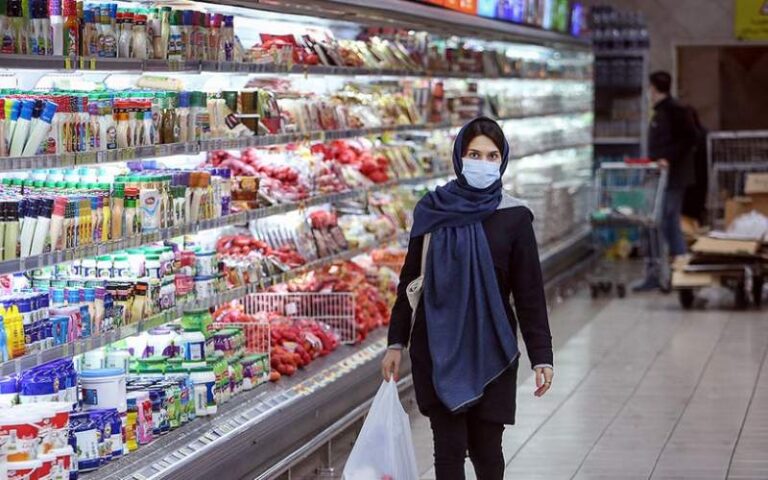
Several years after the diaper shortage crisis, Hani Tahvilzadeh, the head of the Iranian Association of Powdered Milk and Baby Food Producers announced to the state-run media that the production of powdered milk in the country is also facing problems due to “lack of currency allocation” to the producers.

In an interview with the semi-official ILNA news agency and Radio Tehran, Tahvilzadeh accused Ebrahim Raisi’s administration of “transferring the production of powdered milk to a factory in Turkey” to meet the demand for powdered milk in Iran.

Regime’s officials have not yet responded to Tahvilzadeh’s claim.

He stated that the current crisis is occurring despite Iran never having faced a problem with powdered milk production, and that Iran has even been an exporter of this product in the past.

However, Tahvilzadeh explained that the problem of not allocating currency to powdered milk producers in Iran has intensified since last year, causing the production capacity of powdered milk in Iran to decrease from “10 million units per month to 5million units”.

He announced the closure of powdered milk production units due to “adopting this approach” and stated that currently, companies such as “Niksan Salamat Behbood” and “Pegah Shahrekord” are not producing, and “Behdashtkar” company only has enough raw materials for one month of production.

The head of the Association of Powdered Milk Producers continued by saying that if Iranian producers were allocated currency and were able to receive raw materials for production, a gradual increase in supply would be possible.

Tahvilzadeh told Radio Tehran that domestic production companies had repeatedly warned the government about this issue in the past, but Ebrahim Raisi’s administration did not pay attention to these warnings.

The budget for “Population Youthfulness” is 11 times greater than the subsidies for powdered milk and medicine, more than five times the emergency essential credits, and about twice the budget of the Red Crescent.

The regime’s officials have made contradictory statements regarding the reasons for the powdered milk crisis and how to solve it.

According to ILNA, Tahvilzadeh also did not confirm recent statements by Parvin Salehi, a member of the Health and Treatment Committee of the Majlis (Parliament), who had announced the end of shortages in powdered milk “in the next forty days”.

On October 24, Heydar Mohammadi, the head of the Food and Drug Organizationaffiliated with the Ministry of Health, claimed in an interview with the ILNA news agency that “there is currently no particular problem with powdered milk.”

Mohammadi claimed, “The current discussion regarding powdered milk is related to certain specific brands whose demand has exceeded their production. If the production of these specific brands reaches the number we have in mind, which is five million units per month, the problem will be solved.”

However, Rouhollah Hossein-Zadeh, the head of the Special Court for Combating Narcotics, announced that powdered milk in pharmacies is subject to rationing, but such restrictions do not apply for addictive substances such as methadone.

Mousa Abbaszadeh Mahmoudi, the Director-General of Governmental Discretionary Punishments Organization in Sistan and Baluchestan, also stated on October 30 that “smuggling of powdered milk has become prevalent in this province over the past three years.”

The shortage of powdered milk in Iran occurs while the officials encourage Iranian families to have more children.

During Hassan Rouhani’s government, the shortage of newborn diapers in Iran also became a crisis, and Ali Khamenei, the regime’s Supreme Leader, reacted to this crisis as well.

Khamenei claimed that the diaper shortage crisis in Iran was a “sabotage” by the opponents, and “the enemy wants to make the people angry with the government apparatus and the ruling system.”

Annual Inflation In 9 Iranian Provinces Above 50%

The latest report from the Statistical Center of Iran indicates that in October, 21 provinces of Iran had an inflation rate exceeding 45 percent, and among these provinces, the inflation rate in nineprovinces exceeded 50 percent.

According to the report, the “annual inflation rate of the country in October 2023” is reported to be 45.5 percent, and it is stated that the “inflationary gap of the decades,” which was 1.2 percent in the month of September, increased to 1.9 percent in October with a 0.7 percent increase.

Simultaneously, the report also mentions a table of the annual inflation rates in October by province, which shows that out of the 31 provinces of Iran, the annual inflation rate in 21 provinces is higher than the announced inflation rate for the whole country, which stands at 45.5 percent.

Among these 21 provinces, in 9 provinces including Yazd, Chaharmahal and Bakhtiari, Kurdistan, Lorestan, Isfahan, East Azerbaijan, Kermanshah, North Khorasan, and Hamadan, the annual inflation rate in October was over 50 percent.

Yazd province had the highest inflation rate among the provinces with an annual inflation rate of 56.5 percent in October, followed by Chaharmahal and Bakhtiari province with a 53.1 percent inflation rate, and Kurdistan province with a 51.9 percent inflation rate, ranking next in terms of the “highest annual inflation rate.”

The report from the Statistical Center also states that the “annual inflation rate” during October in 11 provinces, including Alborz, Markazi, South Khorasan, West Azerbaijan, Sistan and Baluchestan, Ilam, Qom, Razavi Khorasan, Kohgiluyeh and Boyer-Ahmad, Qazvin, Hormozgan, and Golestan, ranged from 45.7 to 49.6 percent.

Thus, the “annual inflation rate” during October, according to the report from the Statistical Center of Iran, is only less than 45.5 percent in 10 provinces of Iran, including Zanjan, Ardabil, Gilan, Kerman, Fars, Mazandaran, Semnan, Khuzestan, Bushehr, and Tehran.

Despite the claims of the officials, including the regime’s president Ebrahim Raisi, regarding the reduction of the inflation rate, the report from the Statistical Center of Iran shows that the “annual inflation rate” during October was not less than 40 percent in any of the provinces of Iran.

Even Tehran province, which is recognized as having the lowest annual inflation rate among the 31 provinces, had an inflation rate of 40.7 percent in October.

Ali Khamenei, the regime’s Supreme Leader, named this year the “year of controlling inflation and promoting production” in his message on the occasion of the Iranian New Year (March 21, 2023).

Following this naming, the officials, as well as the regime’s Majlis (Parliament), promised to control the inflation rate and made access to real economic statistics and indicators in Iran more difficult. This is happening while according to economic experts, the official reports from the government on economic indicators have become more unreliable than ever before.

Meanwhile, the regime’s Statistical Center has announced that the year-on-year inflation rate for residential apartments in Tehran has exceeded 75 percent in September of this year.

The Statistical Center of Iran, which has refrained from providing statistics on the housing sector and other economic sectors of Iran for the past eight months, announced in a report on October 21 that the year-on-year inflation rate for residential apartments in Tehran in September of this year was over 75 percent.

According to the report, the weighted average price per square meter of residential apartments in Tehran was over 850 million rials (approximately $1,646) in June of this year, indicating a 122 percent year-on-year inflation compared to June of last year.

On September 20, the state-run Donya-ye-Eghtesad newspaper wrote in an analysis of the housing market that the real estate market in Tehran has been heavily influenced by the “upward outlook of general inflation” and “inflationary expectations” in society from late last year to mid-spring.

The newspaper had previously reported the result of creating an inflationary atmosphere in the housing market at the end of Persian calendar year 1401 (2022-2023) and the beginning of 1402 (March 2023), which led to further price increases in housing in Tehran and other major cities in the country.

The regime’s Tasnim News also covered the housing market developments on April 25, stating that housing prices in Tehran have increased by about 2,500 percent over the past 12 years.

Ebrahim Raisi had promised during the election campaign that he would build one million housing units per year.

An examination of the developments in the housing market and a review of the reports indicate that not only has no housing been delivered in the past two years, but prices have also more than doubled, with the price per square meter in Tehran now exceeding 800 million rials (approximately $1,549).

Parliament Research: Mismanagement Is Main Cause of Iran’s Water Crisis

0

The United Nations’ index on water conditions indicates that Iran is facing a severe water crisis, and the central plateau of Iran is experiencing absolute water scarcity. Government officials attribute the current conditions to factors such as low precipitation in recent years or high consumption, but the regime’s Majlis (parliament) Research Center has emphasized that mismanagement has played a significant role in this situation.

The Majlis Research Center has also stated that if the goal is self-sufficiency in producing the necessary food products for Iran’s population, the current pattern does not have sufficient water resources to support it.

According to a report by the state-run Tejarat News website, normal precipitation this autumn does not signify the end of drought and water crisis in Iran. The dams’ capacity remains below 50 percent, and many regions in Iran are facing severe water scarcity.

“Tajarat News” emphasized that with excessive water withdrawals, underground water resources have also been depleted, and land subsidence in some areas confirms this fact.

The Majlis Research Center stated in a report that the water crisis in Iran is not solely caused by climate change. In other words, mismanagement and lack of planning in the water sector are also contributing factors in this crisis.

Studies show that human factors, including increased water consumption, economic and livelihood dependence on water, import and export situations, cultivated area, population growth, and food security, have a greater impact on increased consumption and water scarcity than natural factors caused by decreased rainfall.

Referring to the “Falkenmark Water Stress Indicator,” it is evident that Iran is in a critical situation, which signifies inadequate water security and will affect food and social security.

Reports indicate that among the country’s primary basins, the central plateau and the Qareh-Qum basin have the worst absolute water scarcity.

Another index mentioned by the Majlis research center is the United Nations index, which does not portray a favorable picture of water security in Iran.

According to the Majlis Research Center’s report, achieving agricultural self-sufficiency based on limited water resources has been a misguided approach.

Agricultural self-sufficiency has been the dominant policy of the government in recent decades, and this approach has led to the depletion of water resources, especially underground water, and has threatened the country’s water security.

Continuing food production policies in the country without considering the risks of further depletion of underground water resources will lead to instability in various parts of Iran’s central plateau. Water scarcity and increased land subsidence will leave no option but widespread migration of people from desert areas.

Due to high water consumption in the agricultural sector and the lack of plans to control floods in plains, a considerable portion of predicted rainfall in the coming months will go to waste.

As mentioned in the report by the Parliament Research Center, the most critical factors contributing to the water crisis in Iran are the lack of rational governance and improper management.

The absence of a comprehensive plan for water management and a lack of appropriate focus on sustainable development can put Iran in an even more dangerous situation in the near future.

While various factors can be cited for the water crisis, one of the main causes attributed to the water crisis in Iran is reckless dam construction. Constructing a dam in any country requires extensive research, and countries are usually cautious and strict in dam construction. For example, from the end of the Iran-Iraq war in 1988 until 2019, Iran had over 172 operational dams, 672 dams under construction, 120 dams under study, while during the same period in France, only five large dams were built. Most of these dam constructions are carried out by the Islamic Revolutionary Guard Corps (IRGC).

The IRGC justifies its reckless dam constructions by citing the need for supplying the country’s electricity demand. However, our country is located in a dry and semi-arid region of the world and has abundant oil and gas resources, which make it less dependent on hydroelectric power generation. Currently, only 10 percent of the country’s electricity is provided by dams.

The Revolutionary Guards consider supplying drinking water and agricultural water as an excuse for their dam constructions, but the dams built by the IRGC only provide about 10 percent of the water consumed by agricultural lands. Meanwhile, 40 percent of the country’s drinking water is wasted annually, and in the agricultural sector, 30 percent of water is lost annually. The total annual loss from these two sectors amounts to more than 40 billion cubic meters of water, approximately one-third of the country’s water consumption.

One of the factors that has prompted the Revolutionary Guards to engage in reckless dam construction projects is the transfer of water from rivers to dry and central areas of the country for the purposes of nuclear and profitable economic projects such as steel. Additionally, since these projects receive financial support from the government, they bring significant profits to the IRGC.


These exploitative policies will render most areas of Iran uninhabitable in the next 40 years.