Iran’s Islamic Revolutionary Guards Corps (IRGC) seized control of a Panama-flagged oil tanker in the Strait of Hormuz that was transferring cargo from Dubai to Fujairah port in the UAE.
According to the US Navy’s 5th Fleet, which is based in the Middle East, identified the vessel as the “Niovi,” and released footage showing a dozen IRGC vessels surrounding the tanker.
Those ships “forced the oil tanker to reverse course and head toward Iranian territorial waters off the coast of Bandar Abbas, Iran,” the Navy said.
“Iran’s actions are contrary to international law and disruptive to regional security and stability,” the 5th Fleet said in a statement. “Iran’s continued harassment of vessels and interference with navigational rights in regional waters are unwarranted, irresponsible and a present threat to maritime security and the global economy.”
No statement has been issued by officials from the Iranian regime regarding this matter.
At least one-third of the world’s shipped oil pass through the Persian Gulf, making this route vital to global trade.
Ambrey, a maritime security firm, said the latest seizure came after Greek officials warned that Greek vessels were at increasing risk from Iran after the US detained the oil tanker carrying Iranian oil under Greek management last month. Six days ago, Iran’s navy seized a Marshall Islands-flagged oil tanker in the Gulf of Oman. This waterway is a border between the Arabian Peninsula and Iran.
The Tanker Tracker said that the seized tanker, named “Advantage Sweet”, was transported to Bandar Abbas, a major portal city in southern Iran.
Iran has responded to previous oil seizures with all tools at its disposal. Video footage released by the US Fifth Fleet shows at least 11 small boats approaching the “Niovi” tanker on Thursday.
The semi-official Tasnim News Agency, associated to Iran’s IRGC Quds Force, reported the seizure of a “violating” vessel but did not specify the reason for the seizure.
The US Navy has accused Iran of harassing or attacking 15 commercial ships with international flags in the past two years, calling their actions a “violation of international law and a threat to regional security and stability.”
Last week, Western countries intensified sanctions against IRGC. In response, the Iranian regime announced reciprocal measures, including financial sanctions and a ban on the entry of individuals and entities from the European Union and the United Kingdom.
In July 2019, the IRGC seized the British-flagged tanker “Stena Impero” in the same waterway on charges of hitting a fishing boat, only to release the tanker two months later. In 2021, Iran released a South Korean oil tanker that had been held for months over a dispute involving billions of dollars. Last May, Iran also seized two Greek oil tankers.
The Iranian regime’s aggressive behavior is happening as Tehran has been sending signals of aiming for détente with its neighbors. The regime is also at odds with the international community over its nuclear program, with negotiations stuck in a deadlock for two years.
With a quick look at the mere 27-percent increase in the salaries of Iran’s workers in the new Persian calendar year (starting on March 21) and the country’s 50-percent inflation rate, we realize that Iranian workers will become even poorer during the year ahead.
The cabinet of Iranian regime President Ebrahim Raisi has supposedly taken measures to prevent anticipated inflation. But the trend of rising prices of basic goods and services since March 21st shows that anticipated inflation is only one of the factors contributing to the increase in the actual inflation rate.
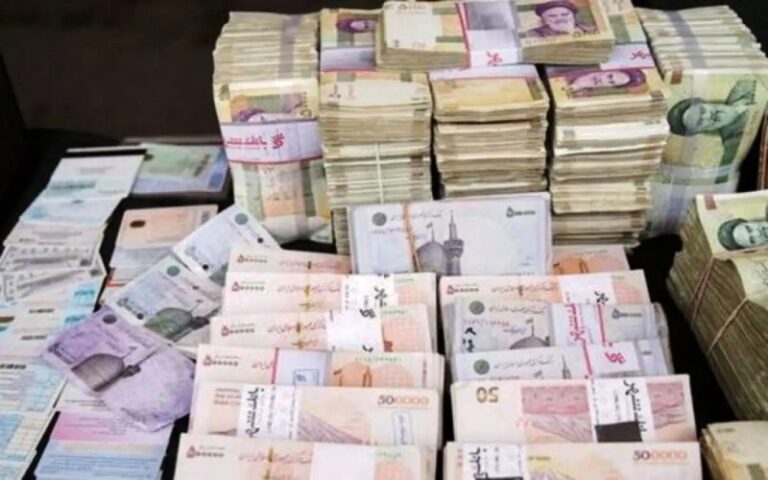
Since last week, the currency exchange rate in Iran’s free market has begun to increase once again, and the U.S. dollar is gradually crossing 550,000 rials mark. This increase is another signal to the economy that prices are rising regardless of government decisions, and as a result, the 27 percent increase in workers’ salaries in the early months of the new Persian year has lost its usefulness.
In Iran, the standard annual salary for a worker is decided in February. This is determined by the so-called “Salary Committee,” composed of representatives of workers, their employers, and the government. This committee determined a 57 percent wage increase for the year 2022-2023. However, the inflation rate has increased at an even faster pace, rendering the wage increase meaningless.
Labor representatives in Iran say that this year’s decision by the Salary Committee does not even cover even half of last year’s inflation rate and this year’s inflation rate. This means that household incomes across Iran will be impacted by inflation. As long as household incomes do not increase by the same rate as the increase in the prices of basic goods and services, the purchasing power of households or their real income, which is adjusted for inflation, decreases.
According to the definition of the International Labor Organization, real income is a measure to maintain the standard of living and well-being. In inflationary conditions, since price increases are not uniform, the price of some goods and services, such as daily exchangeable goods, may change, but salaries, which are fixed according to contracts, remain the same. Therefore, when the purchasing power of those with fixed incomes decreases, real income erosion occurs, which is actually the biggest cost of inflation.
In an inflationary environment, unevenly rising prices inevitably reduce the purchasing power of some consumers, and this erosion of real income is the single biggest cost of inflation. Inflation can also distort purchasing power over time for recipients and payers of fixed interest rates.
Inflation Rate in Iran increased to 53.40 percent in February from 51.30 percent in January of 2023. Source: Statistical Center of Iran
Iran’s workers become poorer
In the four currency crises that Iran’s economy witnessed in the years 2000, 2012, 2020, and 2022, the basket of goods and services consumed by working-class households was more affected than any other group. Official statistics, published sporadically by the regime’s Statistical Center and the Central Bank, show that housing expenses (rent), food and transportation expenses, which make up more than 70 percent of the urban household consumption basket in Iran, have imposed the greatest pressure on workers.
Furthermore, studying the Misery Index, which is a combination of unemployment and inflation rates, is another indication of workers’ depreciating living conditions. These circumstances have placed the most inflationary pressure particularly on seasonal workers.
The latest official report from the Statistical Center regarding Iran’s unemployment rate in the winter of 2022-2023 placed unemployment rate at 9.7 percent and the inflation rate in January and February 2023 at 47.7 percent. The combination of these two figures reaches more than 57 percent, indicating the worsening circumstances of Iran’s working-class community. However, these statistics are highly doubtful, and the Iranian regime certainly does not publish the real statistics to show the true situation.
It is not just inflation that has caused concern for the future of Iran’s workers. Temporary contracts and delayed paychecks have doubled the pressure on workers while employers attribute paycheck delays to government debts.
Iran’s economic structure has made the government the largest employer. In addition to the government, khosulati, or “semi-state” companies are the second largest employers in Iran.
(Khosulati is a combination of two words: khosusi (private) and dolati (government-owned). These are companies that, although apparently private, are somehow affiliated with government-backed organizations. That is, people who have accurate information about the body and depth of government programs and can predict the economic future are at the head of these companies. Most of these companies are managed by IRGC officials and their affiliates. Khosulati companies have effectively become sources of embezzlement and rent for the government.)
Khosulati companies have gradually become larger in the past two decades due to the government’s inability to pay its debts. The growth of this sector of the economy, which is largely the biggest beneficiaries in the Iranian economy, has posed significant challenges to workers’ lives and their future because they operate apart from the government in dealing with seasonal and contract workers.
As a result, labor protests over living conditions, wages, and contracts mostly go unresolved, and workers are constantly at risk of being fired. Since these companies are somewhat dependent on the government, they also benefit from government support and intervention in their decisions, and they are not held accountable by anyone.
Workers dismissed for protesting
Almost two decades following the transfer of companies that were sold to non-governmental entities, funds, and sales to compensate for the government’s budget deficit, workers remain under the most pressure from these changes. Workers who were at the forefront of management changes were sometimes laid off or simply not paid. Even their protests go unresolved because during these transfers, the buyer is mainly a non-governmental or military entity, or a retirement fund.
Recent labor protests have at times been accompanied by political demands. However, the employers’ first reaction to these types of protests has been to collaborate with security institutions, in addition to firing the workers. This happened during the protests of Haft Tappeh Sugarcane Company workers in the city of Shush, located in Khuzestan Province, southwest of Iran.
Following the protests that took shape after September 2022 and the killing of 22-year-old Mahsa Amini in police custody, workers across Iran joined the protesters. These protests immediately adopted a political tone.
Reports of dismissals, detentions, and the imprisonment of workers in recent months indicate the sensitivity of security institutions to labor protests. This is a matter that regime supreme leader Ali Khamenei directly addressed in his speech this year on Labor Day.
This year, the latest plot of the government and khosulati companies aimed at silencing labor protests is to expel protesting workers and replace them with others willing to work under such conditions. Given the promises of Solat Mortazavi, the Minister of Cooperatives, Labor, and Social Welfare, to create half-a-million jobs in the new Persian calendar year, it seems that protests can be equivalent to firing and replacing new workers so that the Labor Ministry’s statistics can be updated.
Coinciding with International Labor Day, Faramarz Tofighi, a former workers’ representative in Iran’s Supreme Labor Council, shed new light on the difficulties facing Iranian workers. “The minimum livelihood basket, which was 180 million rials (around $330) at the beginning of the year (meaning late March), has now reached 210 million rials (around $380).”
At the same time, a member of the regime’s Majlis (parliament) Budget and Calculations Commission announced a 20-percent increase in the salaries of Majlis members.
Tofighi said, “Meat has completely disappeared from the food basket of working-class families, and in the dairy section, both the quantity and quality have decreased. Therefore, talking about the cost of livelihood baskets in such circumstances is more like a joke and satire.”
In an interview with the state-run ILNA news agency, Tofighi said that the government is the largest employer in the country and seeks to compensate for its budget deficit and cash shortages by not increasing the wages of workers and employees.
“The government not only opposed the legal increase in wages but now explicitly states that it is not on the agenda to reform the wages. The government has not kept any of its promises to control inflation, and all prices have increased by more than 40 or 50 percent in the past month,” he added.
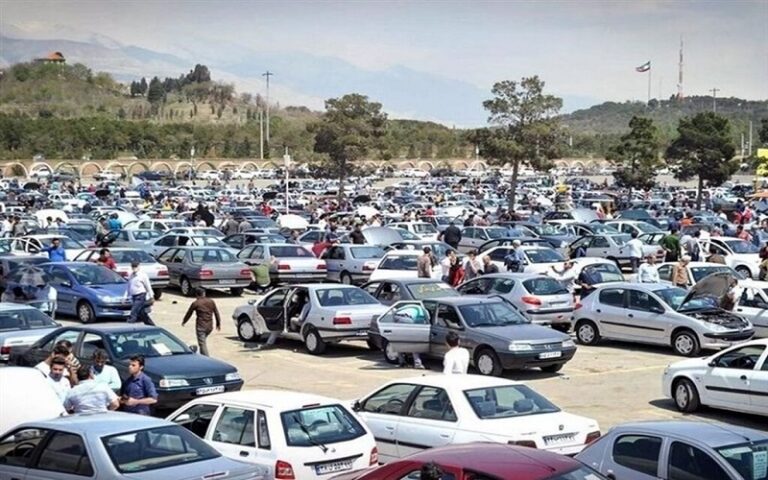
“Meanwhile, the silence among Majlis members …. is disappointing, and unfortunately, instead of solving the problem of wage earners, they are busy with SUV car transactions,” Tofighi continued.
According to reports, Reza Fatemi Amin, the regime’s now impeached Minister of Industry, Mine and Trade, allegedly gifted 75 SUVs to Majlis members in recent days to avoid being impeached.
While these controversies have been brewing, Jabbar Kuchakinejad, a member of the Majlis Budget and Planning Commission of the Majlis, has added insult to injury to the Iranian people. “Based on a decision of the members of the Majlis Budget and Planning Commission, the salaries Majlis members and employees will increase by 20 percent this year,” he revealed.
This is while the regime’s Labor Minister claimed in a recent interview with state TV on Labor Day that workers can have a decent life with the same level of wages and income, if that they and their families “live with contentment.”
The government of regime President Ebrahim Raisi had previously agreed and pledged an increase in workers’ wages by 27 percent for the new Persian year (starting from March 21). The workers’ income during the new Persian calendar year (March 2023 to March 2024) will be 80 million rials per month.
Despite objections from labor organizations regarding the very meager wage increases, and despite escalating inflation and skyrocketing prices of basic goods and services, the government is insisting on its decision and emphasizes that wage reform is not on the agenda.
According to reports, on Monday, May 1, coincided with International Workers’ Day, retirees across Iran took to the streets demanding the resignation of the regime’s Minister of Cooperatives, Labor, and Social Welfare. Many retirees from the cities of Haft Tapeh and Shush in Khuzestan Province, southwest Iran, marched and chanted different anti-regime slogans, including:
“Our rights will only be recognized through street protests”
“Enough with the injustice! We have nothing to eat!”
Retirees were also protesting in Sari, the provincial capital of Mazandaran in northern Iran. “Our wages are in rials, but our expenses are in dollars,” they chanted, referring to the rising prices of everyday necessities, services, rent, and mortgage.
Workers, retirees, teachers, and other sectors of Iran’s society were also marking International Labor Day by holding protest gatherings and chanting anti-regime slogans in other cities including Tehran, Kerman, Yazd, Kermanshah, Ilam, Bushehr, and Isfahan. These protests took place against the backdrop of ongoing strikes by Iranian workers in the energy sector.
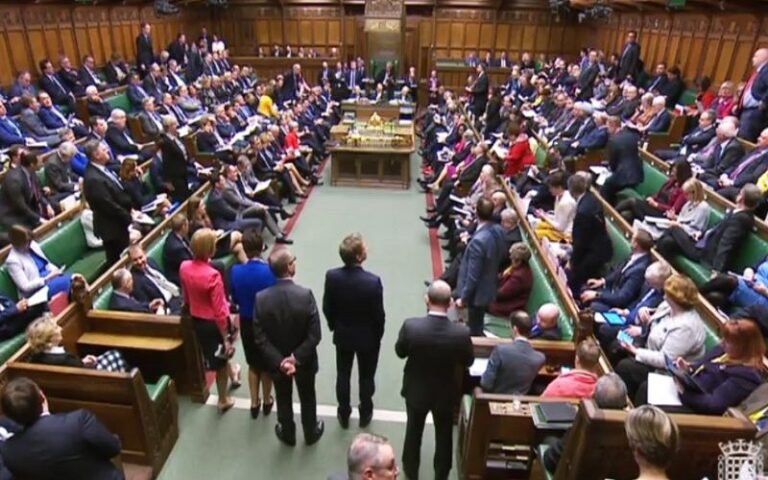
The impeachment of Seyed Reza Fatemi Amin, the Minister of Industry, Mines, and Trade of regime President Ebrahim Raisi’s cabinet, was approved by 162 votes in the Majlis (parliament) on Sunday. The crisis in Iran’s automobile industry involving the skyrocketing prices of vehicles was the main topic of discussion during the impeachment, which eventually led to Amin’s dismissal.
During Sunday’s Majlis session that continued until 2 pm, out of the total of 272 representatives present, while 162 voted in favor of the minister’s impeachment and dismissal, 102 Majis members opposed the measure. Two representatives abstained and six votes were invalid.
This wasn’t the first time Fatemi Amin was in trouble with the Majlis. Six months ago, he was impeached by the same members. On that day, however, the impeachment failed.
During Sunday’s session, supporters of the impeachment criticized the Fatemi Amin’s report card and considered him unqualified to continue his role as minister.
The situation of Iran’s automobile industry market was the focus of criticism and one of the main reasons for the impeachment.
In his defense, Fatemi Amin acknowledged the existence of a “car mafia” and announced that one of his deputies was “attacked and nearly killed.”
The controversial issue of “gifting SUVs” was repeatedly raised during the remarks of both supporters and opponents of Fatemi Amin’s impeachment. Fatemi Amin considered this accusation a “pure lie” and said, “This allegation was neither related to the [Raisi] government nor the revolutionary parliament. It was just a pure lie. In the past few days, wherever I went, I felt a heavy gaze on me, and you were the same.”
According to reports, Fatemi Amin has allegedly gifted 75 SUVs to Majlis members in recent days in an attempt to avoid being impeached.
Ahmad Alireza Beigi, a member of the Majlis, recently announced in an open-doors session that during Fatemi Amin’s previous impeachment, his Ministry distributed “purchase documents of 75 SUVs” among the representatives to change their votes.
According to those in support of the impeachment measure, this led to the changing in some representatives’ votes and rendered a no-vote to the previous impeachment attempt. Government officials have denied this accusation. The representative who raised this issue, however, was summoned to the Tehran prosecutor’s office and went to the judiciary on Saturday.
Ebrahim Raisi defended his minister in this session and asked the members to help maintain the “stability of management” in the ministry by not voting for impeachment.
In the afternoon session, Majlis member Lotfollah Siahkali, one of the supporters of the impeachment, challenged the statistics presented by the minister and called them a “lie.” He addressed Fatemi Amin and said, “Why do you give the wrong statistics to the president to present them before the Supreme Leader?” This parliament member accused the ministry and Fatemi Amin himself of “manipulating statistics.”
The automobile industry in Iran is the country’s second largest industry following the oil industry. Iranian automakers have no significant position in the world market and are not even considered secondary car manufacturers. The majority of the automobile industry in Iran has been involved in the assembly of products from larger global companies. Currently, most of the assembled cars are products of Chinese companies.
On the other hand, this industry has led to the formation of a very large mafia in Iran. This mafia threatens the lives of millions of Iranians by producing low-quality cars while making huge profits by obtaining import licenses for foreign-made cars. There is no doubt that the management of this corrupt network is in the hands of the government. Therefore, the problem cannot be solved by merely impeaching a minister.
Ahmad Zeidabadi, from the regime’s so-called “reformist” faction, considered the removal of Minister of Industry, Mines, and Trade a useless measure. “The main problem in this country is not in this or that individuals that can be solved by some transfers. Replacing people will not have the least impact on improving the status quo…”
The removal of Fatemi Amin shows a growing rift among the regime’s elite. In the past years, Khamenei has taken a series of measures to eliminate any kind of rivalry and consolidate power within his loyalists. All three branches of power are ruled by figures who are close allies of Khamenei. However, even these measures have not managed to tone down infighting among regime officials. Amin is the sixth member of Raisi’s cabinet to be sacked or dismissed.
As the economic crisis in Iran expands and the ruling regime fails to address this dilemma, some institutions close to the government, including eight organizations tied to the “Student Mobilization Organization (SMO)” (Basij-e Daneshju) linked to the IRGC, have called on the regime First Vice President to resign if he is not willing to be held “accountable”.
In a letter to Mohammad Mokhber, the signatories call on him for the “third and final time” to provide some answers and “transparency” regarding the “government’s economic plans” as well as his “two-year report card.”
Members of the SMO from across the country have stated in their letter that the government is a place for “action” while the university is a place for “questioning.” If the First Vice President and the “head of the government’s economic team” cannot provide answers to university students after two years of his controversial decisions and actions, “you must present your resignation to the Iranian people.”
Mokhber has constantly promised to quickly address the country’s important economic challenges, such as inflation, high prices, and shortages of certain goods. These dilemmas have only been worsening during the two years since regime President Ebrahim Raisi assumed office as president.
On the anniversary of Raisi’s inauguration on September 4, 2022, Mokhber claimed that “we have been suffering from inflation, budget imbalances, and banking imbalances for more than 50 to 60 years. However, we are working to reach a good situation to reform and regulate the budget structure.” Therefore, the Raisi cabinet has started major work for “economic growth, production, and employment,” Mokhber claimed.
“Unfortunately, current policies and inconsistencies portray the opposite of this desirable situation. Today it is time to shed light on everything that has been done and is being done, and share that information with the public,” the SMO letter continues.
Mohammad Mokhber is one of the figures close to regime Supreme Leader Ali Khamenei in addition to being Raisi’s First Vice President, he is also a member of the “Expediency Discernment Council”. Prior to Raisi’s presidency, Mokhber was the head of the so-called “Execution of Imam Khomeini’s Order” (EIKO), one of the largest and opaque cartels of the government.
In such circumstances and considering that Ebrahim Raisi has been under harsh criticism for his incompetence, it is not surprising that someone like Mohammad Mokhber oversees the government’s economic team.
Mokhber has had numerous financial corruption controversies during his tenure as EIKO chief and as the deputy chair of the regime’s Mostazafan Foundation. His son, Sajjad Mokhber, also has a multi-billion dollar debt case at Pasargad Bank.
The SMO letter is important because the Islamic Revolutionary Guard Corps (IRGC) and the Basij were among the first supporters of Ebrahim Raisi and his close associates during the regime’s presidential election sham two years ago.
This letter displays how the regime’s internal disputes and conflicts have reached the highest echelons, to the point where the closest circles to Khamenei himself are also protesting the status quo. Economic pressures on the people and hollow promises by the regime’s officials are rendering a growing trend of various daily protests throughout Iran.
The letter also shows a growing rift among the regime’s elite. In the past years, Khamenei has taken a series of measures to eliminate any kind of rivalry and consolidate power within his loyalists. All three branches of power are ruled by figures who are close allies of Khamenei. However, even these measures have not managed to toned down infighting among regime officials.
One of the influential people in Raisi’s government was Seyed Reza Fatemi Amin, the former Minister of Industry, Mining, and Trade. He was considered one of Mokhber’s close associates in the government’s economic team. On April 30, he was impeached due to inefficiency and financial corruption by the regime’s Majlis (parliament). In the past decade, Fatemi Amin has collaborated and accompanied Mokhber in EIKO and its subsidiary companies.
Amin was the sixth member of Raisi’s cabinet to be sacked or dismissed. Raisi made several changes to his administration since becoming president, including the replacement of the minister of agriculture and the head of planning and budget in March. In April, the education minister was dismissed by Raisi due to a delay in payments to teachers. Later in December, the minister of roads was replaced by Raisi after being diagnosed with a terminal illness. Additionally, the labor minister was replaced by Raisi in response to protests by workers and retirees regarding payments.
Iran’s oil and petrochemical workers have been on strike for the past week, protesting against poor working conditions and low wages. The strikes have spread to various cities across the country and have gained support from labor unions and civil society organizations. The workers’ demands include an increase in wages, job security, and better safety measures.
The strikes have caused a decline in Iran’s oil production and exports, which have already been affected by international sanctions and a decrease in global demand. The Iranian economy heavily depends on oil exports, and the strikes are putting more pressure on the regime.
The Iranian regime has responded to the protests with repression, including arrests, violence against protesters, and internet shutdowns. International human rights organizations and labor unions have condemned the regime’s tactics to suppress dissent.
The strikes have gained global attention, with labor unions and human rights organizations expressing solidarity with the Iranian workers. These strikes have highlighted the Iranian regime’s mismanagement of the country’s resources, corruption, and economic policies that have led to inflation and unemployment.
The situation for Iranian workers is dire, and the Iranian government’s repression and mismanagement of the economy have worsened their conditions. The strikes are a reflection of the broader discontent among Iranians who are demanding change and accountability from their government.
In addition to the oil and petrochemical workers’ strikes, other sectors in Iran have seen protests and strikes in recent years and months. Women, students, and ethnic and religious minorities have all been fighting for their rights and freedoms in the face of repression by the Iranian regime. The Iranian authorities have responded to the protests with force, including arrests and violence against protesters.
It is clear that the Iranian regime will not address their demands and respect their rights as citizens. The continued repression of the Iranian government is unacceptable, and the world should stand in solidarity with the Iranian workers in their fight for justice.
Moreover, the strikes have highlighted the importance of labor rights and human rights in Iran. The Iranian government has a poor record on labor rights, and the workers’ strikes have brought attention to the need for better protection of workers’ rights in Iran. For a long time, the regime has been suppressing independent labor unions and violating workers’ rights to form and join unions and to strike.
International labor unions have expressed their support for the Iranian workers’ strikes and have called on the Iranian government to respect their rights. The International Trade Union Confederation has urged the Iranian government to release all detained workers and to engage in constructive dialogue with workers and their representatives.
Absent a substantial response to their demands for a decent life, better economic situation, and freedoms, the people of Iran from all walks of life, including workers, teachers, students, retirees, and civil servants have taken matters into their own hands and are using their just right to protest as a last means to obtain their rights. The labor strikes are just the latest chapter in a long list of protest movements that symbolize the ongoing struggle for freedom and democracy in Iran.
The United States has sanctioned the Intelligence Organization of the Islamic Revolutionary Guard Corps and four of its top commanders for their role in detaining American citizens.
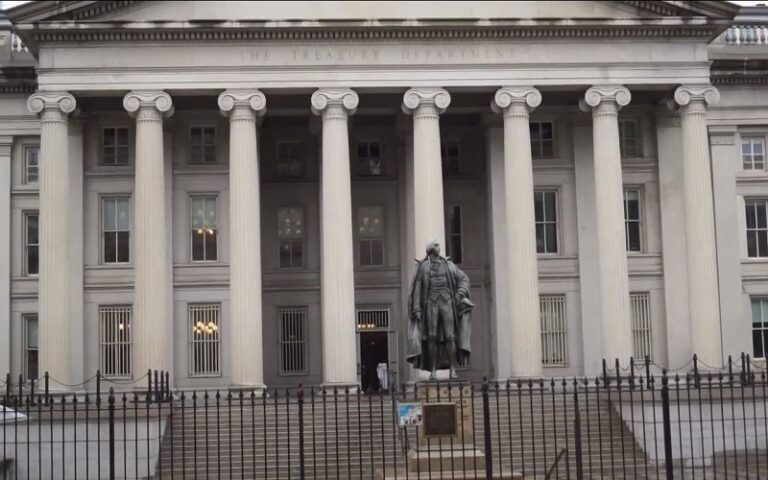
On Thursday, the Biden administration imposed sanctions on Iran’s Islamic Revolutionary Guard Corps (IRGC) intelligence organization because of its involvement in the wrongful detention of Americans.
“Today, I am proud to announce that my Administration will for the first time deploy a new tool to impose severe economic costs on governments and groups that hold hostage or wrongfully detain Americans around the world,” said U.S. President Joe Biden in an official statement.
The sanctions target four individuals and two security services from Russia and Iran. As a result, all designated parties’ property, and interests in property under the control of U.S. persons, are now blocked. Biden explained that these measures, which sever these actors from the American financial system, are based on an executive order he issued last summer, which expanded upon the 2020 Hostage Recovery and Hostage Taking Accountability Act.
The U.S. Treasury stated that Iranian authorities frequently detain and interrogate individuals, with Tehran playing a “direct role in the repression of protests and arrest of dissidents, including dual nationals.” The government has also announced further sanctions on four senior IRGC officials, accusing them of participating in hostage-taking efforts.
In the previous year, Biden issued a different executive order granting the president the authority to impose sanctions on individuals believed to be involved in the wrongful detention of Americans.
The IRGC Intelligence Organization has repeatedly interrogated American citizens detained in Tehran’s notorious Evin prison and has a long history of human rights violations and widespread use of torture.
American government officials have pointed out that IRGC Intelligence personnel were also responsible for providing equipment and various devices for espionage and assassinations, and played a key role in suppressing protests, arresting regime opponents and civil society activists.
According to an official statement issued by the U.S. Treasury Department , the sanctioned individuals are as follows:
Mohammad Kazemi: Commander of the IRGC Intelligence Organization since June 2022 and involved in crackdown measures against the Iranian people and arresting dual citizens. Kazemi also oversaw the brutal suppression of protests following the killing of Mahsa Amini.
Mohammad Mehdi Sayyari: Deputy Commander of the IRGC Intelligence Organization. He has been directly involved in imprisoning foreign citizens.
Rouhollah Bazghandi: One of the counter-espionage officers of the IRGC Intelligence Organization, he has played a significant role in detaining dual-nationals. Bazghandi has also overseen IRGC Intelligence Organization operations in Syria and plotted to assassinate Israeli citizens and journalists.
Mohammad Hassan Mohagheghi: IRGC Intelligence Organization Deputy Chief, reports to several senior commanders of the IRGC regarding this organization’s operations. He has also been the contact of senior IRGC commanders and IRGC Intelligence Organibazation in counter-espionage operations in Syria.
The Iranian regime has a long history of taking hostages and blackmailing the West. It has long used foreign hostages as bargaining chips in its negotiations with the West. During the negotiations that led to the 2015 nuclear deal with world powers, the regime used foreign hostages to extract more than $1 billion in ransom from the U.S. Tehran also holds several foreign nationals as hostages today and is trying to extract concessions from the U.S. and Europe.
For four consecutive years, inflation in Iran has been over 40 percent, and for five decades, it has been in the double digits. This is the picture that awaits the Iranian economy for the remainder of 2023, escalating gradually and evolving into hyperinflation.
Iranian regime supreme leader Ali Khamenei had dedicated Iran’s new calendar year (from March 2023 to March 2024) as the “year of controlling inflation”. However, during the first five weeks of Iranian calendar year the country’s point-to-point inflation rate has surged to its highest level of 63.9 percent.
Inflation, or the increase in the general level of prices, is an indicator that directly tied to the well-being of a country’s population and economic activities. It is an influential index that all members of a society are directly connected to, and an increase in it implies uncertainty about the future.
Iranian regime President Ebrahim Raisi began his tenure in August 2021 promising to fight inflation. Nearly two years into his presidency, inflation has remained an unsolvable problem. The unprecedented price hikes witnessed across in Iran during this period have forced Raisi to change his Central Bank chief in response to mounting public pressure.
Are we facing hyperinflation in Iran?
Economists believe that inflation in Iran has turned into “chronic inflation.” In such circumstances, the most likely predictable scenario is to maintain the status quo, keeping inflation at around 40 to 50 percent. In this case, it is predicted that the inflation rate will escalate at two to three times the trend witnessed in the past 50 years.
Turkey, Peru, Israel, Brazil, Belarus, and Angola are countries that have experienced similar circumstances. Such conditions cannot continue for a long period and will result in either economic reforms or result in the collapse of the economy and national currency.
However, if no change occurs in the coming months, all signs indicate that Iran is rapidly moving towards “hyperinflation.”
Starting from 2018, there has been a shift in Iran’s inflation pattern , transforming from a relatively high to a progressively increasing rate, averaging at 34 percent over this period. Notably, Iran’s inflation surpassed 47 percent in the first 11 months of 2022.
In countries like Sudan (2020), Lebanon (2021), Venezuela (2015), Zimbabwe (2019), Congo (1991), Belarus (1993), and other countries that have experienced hyperinflation, the cycle has been an increasing trend that suddenly skyrocketed to over 100 percent within a year or two, despite registering long-term inflation rates of below 20 percent.
The exchange rate of the dollar in Iran, which had peaked to 600,000 rials in February, sharply declined following the agreement between Saudi Arabia and the mullahs’ regime to resume diplomatic ties in the final days of the Persian year (mid-March). The U.S. dollar dropped to below 430,000 rials, as a result. However, with the beginning of the Iranian new year, the dollar rate rose again and was selling at 530,000 rials by April 27.
Can the regime control inflation?
With severe monetary base growth, significant budget deficits, severe rise in dollar exchange rates, and the government resorting to printing money to cover its expenses, Iran is facing a significant dilemma to due to high inflation, which could lead to hyperinflation without any positive measures in the economy.
All signs indicate that the government is busy printing money and making up for its budget deficit by borrowing heavily from banks and forcing them to borrow from the central bank.
According to official figures, Iran’s rial today is 55 percent weaker than a year ago and 94 percent weaker than a decade ago. Furthermore, nationwide protests since September 2022 after the killing of Mahsa Amini have intensified the decline in Iran’s exchange rate.
The regime believes it can create “resistance economy” that can withstand long-term sanctions and can rely on China and Russia to help it stay on its feet.
The official inflation rate announced by Iran’s statistics center in February was 46.5 percent in February. The real figure is expected to be much higher. The fact is that the Iranian people have for years seen the regime’s officials provide nothing but hollow promises. They will not be deceived by the regime, including Khamenei’s inner circle.
The result of these economic calamities directly impact people’s livelihoods through increasing poverty and skyrocketing prices. This has also resulted in grave concerns among the regime’s internal factions.
What concerns the ruling mullahs is not people’s poverty but growing dissatisfaction and an end to the Iranian people’s tolerance.
One of the key topics that Iranian regime officials are currently discussing is the country’s high gasoline prices.
The simplest question that comes to mind is whether gasoline will become more expensive or not? To address this topic, we must first examine the macroeconomic conditions of the regime’s government under the tenure of its President Ebrahim Raisi.
Gasoline prices: One of the regime’s tools to compensate the budget deficit
According to a March 4 report by the Khabar Online daily, Mohsen Pirhadi, a member of the regime Majlis (Parliament), said the deficit of the budget bill stands at 4,760 trillion rials (approximately $9.2 billion). However, in an interview some time back, an economic expert associated to the regime’s apparatus estimated that the structural deficit of the mullahs’ budget as far higher.
In Iran’s faltering economy, not only are the nation’s resources and wealth being auctioned off, but the burden of covering the budget deficit also falls on the Iranian people.
One of the underlying factors contributing to this issue is the price hikes of gasoline, gas, water, and electricity. Although the imposition of fines on individuals and trade unions for various reasons, such as women not abiding by the regime’s strict hijab regulations, also play a minor role in compensating the budget deficit.
The price of energy carriers has a direct impact on various trades, jobs, and people’s daily lives. Therefore, any increase or stability in energy prices can significantly affect production and service costs as well as daily expenses.
Gasoline, from problem to crisis
For a long time, there have been many reports on increasing gasoline consumption in Iran. Statistics provided by various study centers show that in 2022, the country’s daily gasoline consumption reached nearly 13 million liters more than Iran’s domestic production. Since the regime has no proper plan and investment to reform the production systems and optimize domestic refineries, the regime is compelled to import gasoline and allocate a budget for this issue.
Although importing gasoline is embarrassing for a country with such vast natural resources the world’s fourth largest crude oil reserves, the bigger problem is that the imported gasoline is smuggled by different regime entities.
The regime claims around 50 million liters of gasoline are being smuggled on a daily basis. An April 18 report by the official Etemad daily provided the following description of the statistics: “The country’s total daily gasoline production is slightly more than 100 million liters. The daily diesel production is 110 million liters. How can one believes that 25 percent of the diesel and gasoline produced inside the country is smuggled?”
This newspaper further explains that for such a large transfer, more than 1,500 high-capacity oil tankers or 100,000 trucks with a capacity of 500 liters must cross the country’s borders every day.
Therefore, if such a high volume of gasoline is being smuggled from Iran each and every day, it must be through secret pipelines, meaning regime-linked entities are involved.
Aside from various statistics and lies fed to the media by different regime officials, the solution to this crisis lies in the optimization of refineries and updating the country’s production line of low-quality and high consumption cars. However, the regime is only looking for more money and not long-term investments which they don’t benefit from.
Inevitable gasoline price hike and Khamenei’s red line
Over the years, experience shows that regime Supreme Leader Ali Khamenei is not concerned about rising prices, has no intention of addressing the issue of resources being smuggled, nor the diversion of funds. In fact, he and his government entities and foundations in the IRGC are responsible for skyrocketing prices and rampant smuggling.
The increase in the price of gasoline does not need to be speculated and will happen sooner or later.
In this regard, while covering the denials of various officials, state media in Iran are finally acknowledging that the regime has no solution other than another gasoline price hike. However, state media are warning that the officials involved should do this with control to prevent another social uprising as witnessed in November 2019 following a three-fold increase in gasoline prices.
In November 2019, Iran witnessed a widespread uprising that shook the regime’s foundations. As a result, authorities are extremely concerned about increasing the price of gasoline yet again and its likely consequences.
Protests across Iran erupted on November 15, 2019, when regime officials issued a three-fold gasoline price hike and sparked outrage across the country, spreading to more than 190 cities.
It’s worth noting that Khamenei’s sole “red line” is that any significant decision regarding the price of gasoline should refrain from sparking a larger and more widespread uprising, potentially resulting in his overthrow.
Khamenei is focused on downplaying and denying the fact that the price of gasoline is only one of several crises threatening his regime and could potentially lead to a social uprising and the overthrow of the mullahs’ rule.
After years of plundering and criminal measures, Khamenei is now facing the inevitable plunging of his regime into the deep waters of different crises.
Since the mullahs came to power in Iran, the topic of housing has remained a contentious issue. Home ownership is becoming increasingly difficult with each passing day. Unfortunately, for the younger generation, owning a home has become all but a dream due to the regime’s failed policies.
The Iranian people’s inability to afford residential units built in the country has left housing developers disheartened, according to Ali Farnam, a specialist at the Majlis (parliament) Research Center. “Consumer demand is currently almost non-existent in the market,” he told the semi-official Tasnim News Agency in an April 16 interview.
The average housing price per square meter in Tehran has skyrocketed over the past five years, Farnam explained. In 2018 the average price per square meter was 60 million rials. Today, it exceeds 600 million rials, marking a ten-fold increase.
According to Farnam there has been no increase in housing production between 2018 and 2023. Moreover, the risks of construction materials becoming more expensive and wages increasing have escalated. Additionally, prices increasing in other competing markets, such as Iran’s gold and coins market, are overshadowing the profitability of the house construction industry.
Housing development in Iran has been terminated despite the pledge of regime President Ebrahim Raisi to build one million residential units each year at the outset of his tenure. This commitment was deemed “unrealistic” from day one by both housing market specialists and Majlis members from the beginning.
Only 300,000 units are being constructed across the country each year, which is a third of the volume produced before 2013, Farshid Pourhajat, Secretary of the National Association of Mass Builders, said back in March. The price of construction materials doubled last year (the Persian year begins on March 21), while the construction and sale of housing have come to a halt since December due to the skyrocketing price of the U.S. dollar rate in Iran, Pourhajat explained.
The state-run Donya-e-Eqtesad newspaper published a report on April 8 discussing the significant surge in housing prices and the cost of rent in Tehran over the past three months. The report highlighted that housing prices have risen by a minimum of 40 percent when compared to prices just three months ago.
“The government no longer has adequate social capital and has lost the ability to monitor the chaotic housing market,” the state Jam-e Jam newspaper wrote during the same period.
Mojtaba Yousefi, a member of the Majlis Civil Commission said that on average 51 percent of the country’s population are tenants.
On April 9, referring to the rising housing prices and rents, Yousefi told the semi-official ILNA news agency that the economy, especially the branch related to the minimum expenditure basket, cannot be controlled through directives and orders.
He is referring to the guidelines set to determine the ceiling of rent price growth in the range of 20 to 25 percent, announced by Raisi’s government last year.
Yousefi went on to explain that they were witness to the fact that this ordered price limit was not implemented. When inflation increases, the price of construction materials increase, resulting in the rise in housing costs. It is impossible to control the market through such a method, he added.
According to the data of the Statistics Center, in 2011 housing consists of 34 percent of an average household budget, rising to 39 percent in 2017. This figure reached 47 percent in 2020.
The data related to the Organization for Economic Co-operation and Development (OECD) shows that in the period of six years and nine months from 2015 to the fall of 2022, the price of each square meter of residential units in Saudi Arabia decreased by 12 percent.
At the same time, the price of each square meter of a residential unit in Tehran has experienced a 963-percent growth.
One should take into account that the housing market is affected by the ownership of millions of vacant houses held by various entities associated with the regime, such as the Housing Foundation, the Mehr Housing Foundation, the Mostazafan Foundation, IRGC banks, and state-owned banks. These entities benefit from rising housing costs and rental rates, imposing a further financial burden on the Iranian people.
Despite the fact that a significant number of people are becoming homeless or living in extremely poor conditions, the ruling regime has failed to provide any viable solutions.