Home Blog Page 23

Repression and Human Rights Violations in Iran – February 2026

0

What distinguishes the page of Iran’s history at the beginning of 2026 more than ever before is the emergence of an uprising that reflects the public’s anger toward Iran’s regime.

Images of the piled-up bodies of those killed in the uprising in warehouses and morgues have recorded a bitter yet telling picture in Iran’s history.

Something that until a day earlier was unimaginable for the people and the majority of society suddenly occurred, not as an isolated incident in one corner of the country but in an organized manner across most cities in Iran.

Resistance Units Intensify Activities Across Iran Amid External Military Strikes

But immediately after that crime, the people of Iran became caught in a war that itself represents another scene of human rights violations by the ruling dictatorship as well as by the attacking countries.

The Human Rights Situation in Iran in February

The situation of repression and human rights violations in Iran in February 2026 can be summarized as follows:

Executions

According to published reports, at least 295 people were executed in various prisons across Iran during this month. Among those executed were three Baluch individuals, 12 Kurds, and three Afghan nationals.

The breakdown of executions is as follows:

  • Men in prison: 291
  • Women in prison: four

Women Executed

  • Shahla Dowlatabadi: Executed on February 9, 2026, on murder charges in Kerman Central Prison.
  • Esmat Najafi: Executed on February 15, 2026, on murder charges in Qom Central Prison.
  • Mina Nasirpour: She was 40 years old and was executed on February 16, 2026, on drug-related charges in Tabriz Central Prison. Her husband had also been executed in November 2025.
  • Soheila Asadi: Executed on February 23, 2026, on murder charges in Isfahan Central Prison.

Arrests

Following the January uprising, the wave of arrests continued during this month as well. However, the exact number of arrests has not yet been fully released. According to available reports, at least 244 people whose names have been announced were arrested during this month, though the real number of arrests is believed to be much higher.

Reports were also published this month of one case of arbitrary arrest and two cases of arrests involving followers of other religions.

Arbitrary Killings and Torture

Regarding arbitrary killings and cases of torture in prisons and detention centers following January 2025, no precise statistics have been released, but evidence and reports indicate that the number of such cases is likely significant.

Iranian Regime Missile Stockpiles Are Running Out

0

The Telegraph newspaper reported that due to the sharp decline in the number of missiles launched from Iran, it appears that the Iranian regime may be losing its capability to fire ballistic missiles.

The Telegraph wrote on Wednesday, March 4, that the reason for this appears to be both the depletion of missile stockpiles and the destruction of missile launchers during Israeli and U.S. attacks. It added that according to analyses published by countries targeted by the Iranian regime’s attacks, Tehran has significantly reduced the number of ballistic missiles it launches within a 24-hour period.

The newspaper added, quoting experts, that this could be the result of the loss of ground-based missile launchers in U.S. strikes.

Resistance Units Intensify Activities Across Iran Amid External Military Strikes

It is believed that in the first days of this conflict, the Iranian regime launched hundreds more missiles than it had fired during the 12-day war with Israel in June last year.

Countries such as the United Arab Emirates and Kuwait publish daily statistics on Iranian missiles and drones launched toward them.

During the first two days of the war, the Iranian regime fired an average of 58 ballistic missiles per day toward the United Arab Emirates, but by the fourth day this number dropped to only 10 missiles.

A defense analyst said this is an early indication that Iran’s ballistic missile stockpiles are running out.

Bahrain announced on Tuesday that it had successfully intercepted a total of 70 missiles since the start of the attacks. This number reached 74 by Wednesday. While seven ballistic missiles were launched at Bahrain on Monday, that number fell to four on Wednesday.

Kuwait said that it dealt with 97 ballistic missiles during the first 24 hours of the war, but it did not release new figures in the following days.

Qatar’s Ministry of Defense announced on Wednesday that the country was targeted by two ballistic missiles, one of which struck Al Udeid Air Base but caused no casualties.

Qatar says that at least 101 ballistic missiles have been launched toward the country in total, most of them during the first and second days of the war.

The U.S. strategy has focused on destroying Iran’s offensive capabilities, and in recent days many of Iran’s ground-based missile launchers have been destroyed.

Satellite imagery also shows that major damage has been inflicted on missile facilities across Iran.

Given that this conflict is far more critical from the regime’s perspective and that short-range ballistic missiles are still usable, a much higher level of ballistic missile use would have been expected—unless Iran’s missile capability and launchers had been severely weakened, which appears to be the case.

At the same time, The Wall Street Journal, citing informed sources, reported that the United States is also rapidly consuming its stockpiles of precision weapons and may be only a few days away from having to prioritize targets for interception.

Resistance Units Intensify Activities Across Iran Amid External Military Strikes

0

In late February 2026, as tensions escalated between the Iranian regime and foreign powers, developments inside Iran pointed to another dynamic unfolding across the country. Following the announcement of a provisional government by the National Council of Resistance of Iran (NCRI), networks associated with the People’s Mojahedin Organization of Iran (PMOI) reported a series of coordinated activities in multiple Iranian cities.

On February 28, the NCRI declared the formation of a provisional government intended, according to the organization, to provide a framework for transferring sovereignty to the Iranian people. Around the same time, activists affiliated with the PMOI’s internal network—commonly referred to as “Resistance Units”—carried out operations in Tehran and at least 18 other cities.

The activities were reported in cities including Karaj, Mashhad, Tabriz, Isfahan, Shiraz, and Ahvaz. According to information released by the network, a total of 31 separate operations were conducted, many of which targeted institutions associated with the Iranian state’s security and propaganda apparatus.

Targets linked to security and state institutions

Among the targets were facilities linked to the Islamic Revolutionary Guard Corps (IRGC) and its paramilitary arm, the Basij. Activists reportedly set fire to Basij bases in several locations, including Tehran, Fardis, Falavarjan, and Ahvaz.


In the northeastern city of Chenaran, Resistance Units targeted the headquarters of the Khomeini Foundation, a state-run organization. The foundation is a center involved in the management of public assets and state-linked financial activity.

Other operations focused on symbols and propaganda associated with the ruling establishment. Activists burned billboards displaying images of regime founder Ruhollah Khomeini, as well as signage linked to the IRGC’s intelligence structures and Iran’s Supreme Leader Ali Khamenei. These incidents were reported in locations including Nimruz and Shiraz.

The operations occurred during a period of heightened security across the country. Following recent external military strikes connected to the growing confrontation between the Iranian regime and foreign adversaries, security forces had reportedly increased their alert levels nationwide.

Activities carried out under severe risk

Participation in opposition networks inside Iran carries heavy penalties under Iranian law. According to the report, individuals suspected of involvement with organizations such as the PMOI face the possibility of arrest, torture, and capital punishment.

The risks were underscored by events in the preceding months. During the nationwide uprisings that erupted in December 2025 and continued into January 2026, Iranian authorities responded with force. The unrest spread across numerous cities before security forces suppressed the protests in what opposition sources described as a crackdown involving thousands of casualties.

Despite the security environment, Resistance Units reported that their activities were carried out publicly in multiple locations, often accompanied by slogans and symbolic displays intended to convey political messages.

Slogans rejecting both monarchy and theocracy

During several operations, activists chanted slogans that rejected both the current clerical establishment and Iran’s former monarchy. One frequently reported chant declared: “Down with the oppressor, be it the shah or the supreme leader.”

In addition, demonstrators voiced support for opposition figures including Massoud Rajavi and Maryam Rajavi, who lead the broader coalition associated with the NCRI.

Public displays were also reported in several cities. In Shiraz, Tabriz, Qazvin, and Khorramabad, activists held signs bearing the emblem of the National Liberation Army of Iran (NLA), accompanied by the message “The NLA will return.”

In Shiraz, images of Massoud Rajavi and Maryam Rajavi were installed in public areas, along with written messages such as “Let the world know Massoud is our leader” and “The democratic revolution cannot be hijacked.”

According to the report, these actions were intended to signal support for the NCRI’s proposed transitional framework and the political platform associated with Maryam Rajavi’s Ten-Point Plan. The program outlines measures including the dissolution of the IRGC, the abolition of the death penalty, the establishment of gender equality, and the rejection of the doctrine of absolute clerical rule known as velayat-e faqih.

Statements amid regional escalation

The activities inside Iran coincided with rising regional tensions linked to military strikes targeting Iranian facilities. As explosions were reported in several parts of the country, Maryam Rajavi issued a public message emphasizing the safety of civilians.

She called on residents and activists to “care for civilians and the general public, particularly children and the elderly,” according to the report.

Rajavi also linked the confrontation with foreign powers to Iran’s nuclear and missile programs, which she said had been exposed by the Iranian Resistance decades earlier.

In her statement, she stressed that Iran’s future should be determined domestically rather than through external intervention. “Iran is not its regime. Iran is its people,” she said, adding that the country’s future “can only be built by the Iranian people themselves.”

Activity across multiple provinces

Taken together, the reported incidents reflect a coordinated campaign of opposition activity across numerous provinces during a period of heightened tension both inside and outside the country.

While external military developments have intensified pressure on the Iranian state, the events described by the PMOI network highlight a parallel struggle unfolding within Iran’s cities. Across Tehran and other urban centers, small groups of activists have continued to stage symbolic acts of defiance—burning state imagery, displaying opposition symbols, and chanting slogans in public spaces.

As the regional confrontation continues and security measures remain in place, such actions illustrate the complex environment within Iran, where geopolitical conflict abroad intersects with ongoing political dissent at home.

Day Five of US and Israeli Strikes on Iran: Military Infrastructure Hit as Conflict Spreads Across the Region

The military confrontation between Iran’s ruling establishment, the United States, and Israel entered its fifth day on Wednesday, March 4, 2026, amid sustained bombardment and expanding regional repercussions. The escalation follows four days of unprecedented strikes that eliminated Supreme Leader Ali Khamenei, killed senior military commanders, and targeted core elements of Iran’s nuclear and missile infrastructure, including the Natanz Fuel Enrichment Plant.

By Wednesday morning, the focus had shifted to a broad campaign against military and security installations in Tehran and across several provinces, while Iranian forces widened retaliatory attacks against US and allied interests in the Gulf.

Day Four of the War; Uncertainty Over Iran’s Regime Next Leader

Strikes Across Tehran and Major Provinces

Israel announced the launch of “broad scale strikes” targeting security headquarters throughout Tehran. According to Israeli officials, the operation hit the headquarters of the Basij paramilitary, missile launch pads, air defense systems, and the logistics directorate of the regime’s ground forces.

State media and local reports described at least seven or eight heavy explosions in the capital around 1:00 p.m. local time. Plumes of smoke rose over eastern, northern, northeastern, and northwestern districts. Severe impacts were reported near Qasr-e Firouzeh town, Qods City, Vardavard, and a law enforcement center in Maralan.

The bombardment extended well beyond Tehran. In East Azerbaijan province, explosions struck the western industrial zone of Tabriz in the early hours of the morning, followed by another strike near Tabriz airport that hit a warehouse. Airstrikes were also reported in the Alborz industrial city in Qazvin. Regime media acknowledged heavy explosions in Shiraz, Isfahan, Khorramdarreh, and Qom. Military and IRGC bases in Baneh were reportedly subjected to repeated attacks.

As the strikes intensified, the cumulative death toll from the conflict, according to regime-affiliated Telegram channels, surpassed 1,000.

Retaliatory Fire on US Bases and Gulf States

Tehran’s response has increasingly targeted US military installations and diplomatic sites in the region. On Wednesday morning, Qatar’s defense ministry confirmed that two ballistic missiles were fired toward its territory. One was intercepted; the other struck the US Al Udeid Air Base, the largest American military facility in the Middle East. No casualties were reported.

In the United Arab Emirates, a drone struck the US consulate compound in Dubai on Tuesday evening. Video footage showed flames and black smoke rising from the site. US Secretary of State Marco Rubio stated that the drone hit a parking lot adjacent to the chancellery building and confirmed that all personnel were accounted for, describing US diplomatic facilities as “under direct attack from a terrorist regime.”

Kuwait has also been drawn into the confrontation. Its military reported intercepting multiple hostile aerial targets. A spokesperson for Kuwait’s Ministry of Health confirmed that an 11-year-old girl was killed when shrapnel from an intercepted projectile fell on her home, injuring four family members. The incident followed earlier reports from Washington identifying four of six US service members killed in a prior drone strike on a Kuwaiti port.

On Tuesday, the Islamic Revolutionary Guard Corps (IRGC) launched waves of drone attacks against bases belonging to the Democratic Party of Iranian Kurdistan (PDKI) in Koya, Iraqi Kurdistan. While the IRGC said it launched 30 drones at “hostile groups,” regime-linked media claimed as many as 230 drones were fired across Iraqi Kurdistan and Kuwait. No casualties were reported at the PDKI sites. The National Council of Iranian Sunnis condemned the attack on the group’s Camp Liberty.

Naval Engagements and the Strait of Hormuz

At sea, the confrontation has exacted a heavy toll on Iran’s naval assets. US Central Command announced that it has struck or sunk more than 20 Iranian ships since the conflict began.

Among them was the Iranian warship IRIS Dena, torpedoed by US forces in international waters in the Indian Ocean. Sri Lanka’s navy, responding to a distress call, rescued 32 individuals and recovered 87 bodies. Iranian media cited at least 80 fatalities in the attack.

In the Gulf region, the UK Maritime Trade Operations Centre reported that an “unknown projectile” struck a commercial vessel off Fujairah, causing damage. Iranian media separately claimed another ship was targeted and set ablaze while transiting the Strait of Hormuz.

Amid concerns over attempts to disrupt shipping lanes, US President Donald Trump stated that the US Navy may begin escorting oil tankers through the Strait of Hormuz, one of the world’s most critical energy corridors.

Leadership Vacuum and Internal Measures

The death of Ali Khamenei has created an immediate leadership crisis. State media announced that public mourning ceremonies, including a planned display of his body in Tehran, have been postponed.

Reports from Reuters and Iran’s Mehr news agency indicate that Khamenei’s son, Mojtaba Khamenei, survived the strikes and is overseeing affairs. When asked about the prospect of succession, White House Press Secretary Karoline Leavitt said US officials would “wait and see,” reiterating Washington’s stated aim of ending Iran’s nuclear ambitions. Israeli officials have publicly vowed to target any individual appointed to the position of Supreme Leader.

Inside Iran, senior officials have signaled heightened security measures. Ali Larijani, an advisor to Khamenei, appeared on state television urging forces to “fire at will” against what he described as internal “mercenaries.” Judiciary chief Gholamhossein Mohseni Ejei said coordination between judicial and military authorities had intensified. Vice President Mohammad Mokhber stated that there was no intention of negotiating with Washington. The Defense Ministry’s spokesperson asserted that each commander has multiple deputies in place to prevent operational gaps.

Regional and International Fallout

International reactions continue to mount. The European Union’s top diplomat, Kaja Kallas, stated that Tehran was “making a strong case for its own demise” and accused it of attempting to sow chaos across the region.

Turkey has prepared for possible spillover. Interior Minister Mustafa Ciftci announced contingency plans to accommodate up to 90,000 migrants fleeing Iran, including the establishment of buffer zones and tent camps. He added that Iranian authorities are currently restricting their citizens from leaving the country.

Elsewhere, Cyprus briefly placed flights into holding patterns at Larnaca airport following reports of a suspicious object, though officials later clarified that its airspace remained open.

In Lebanon, Hezbollah rocket fire into northern Israel was followed by Israeli airstrikes on targets in Beirut’s Hazmieh district and in Baalbek in the Bekaa Valley. At least four people were reported killed, and evacuation orders prompted thousands to leave their homes in southern Lebanon.

Five days into the conflict, airspace, shipping lanes, diplomatic compounds, and border regions across the Middle East have been drawn into the expanding confrontation, as military operations continue on multiple fronts.

Day Four of the War; Uncertainty Over Iran’s Regime Next Leader

0

Developments in the early hours of Tuesday, March 3, 2026, pushed the region into a new phase of regional war. A series of air, missile, and drone strikes were reported in Iran and several Middle Eastern countries. At the same time, US, Israeli, and Iranian regime officials announced their official positions. These events are unfolding as the debate over succession to the supreme leadership in Tehran has also intensified.

US President Donald Trump, in an interview with NewsNation, stated that a response to the attack on the US embassy in Riyadh and the killing of US military personnel would be delivered soon. He emphasized that the response would be decisive. At the same time, media outlets affiliated with the Iranian regime reported extensive airstrikes in Tehran.\

Resistance Announces Interim Government After Khamenei’s Death, Drawing Global Attention

Early Tuesday, the compound of the Islamic Republic of Iran Broadcasting (IRIB), the Iranian regime’s state broadcaster in Tehran, was targeted in an airstrike. Fighter jets also struck several locations in Tehran and Karaj. Precise details about the extent of damage and casualties have not yet been released. Reports indicate impacts at multiple sites.

The Human Rights Activists News Agency reported that part of the wall of Evin Prison in Tehran was destroyed in a missile strike. The area around Imam Hossein University, affiliated with the Islamic Revolutionary Guard Corps (IRGC), and the prison wall were targeted. The organization warned that the condition of the prisoners is unknown and their lives are in immediate danger. This incident has intensified human rights concerns amid the regional war.

In another development, a political activist from Abdanan reported that nearly all detainees from the January 2026 uprising in that city have been released. Only Ahmad Alizadeh remains in custody. This news was published amid the escalation of the regional war.

The US Central Command (CENTCOM) told Fox News that the Strait of Hormuz is completely open. It emphasized that the Iranian regime is not conducting any patrols and that there are no signs of minelaying. CENTCOM stated that navigation continues and the strait is under control. These remarks were made amid concerns about disruptions to global energy supplies.

Expansion of the regional war across several countries

CENTCOM also announced that US forces destroyed the command headquarters of the IRGC and its control facilities. Simultaneously, Tasnim, a state-run news agency affiliated with the IRGC, reported that the US embassy in Kuwait had been targeted. In statement No. 13, the IRGC claimed it had destroyed the main command building and headquarters of a US air base in Bahrain.

Reuters, citing the so-called Iraqi Resistance, reported that a drone attack was carried out against a hotel hosting US force in Erbil. Israeli Prime Minister Benjamin Netanyahu told Fox News that Israel would not enter an endless war. He stressed that the action taken would be swift and decisive.

US Secretary of State Marco Rubio stated that the objectives of the US operation are to destroy Iran’s ballistic missile capabilities, drones, and naval forces. He added that the most severe blows by the US military are still to come and that the next phase will be more crushing. Rubio expressed hope that the Iranian people will be able to overthrow this government and shape a new future. These positions indicate that the regional war has expanded in scope.

Reuters reported that satellite images show strikes on Iran’s nuclear sites. The Institute for Science and International Security also announced that two attacks on underground uranium enrichment facilities in Natanz have been recorded. In addition, Phase 11 of Pardis, a city northeast of Tehran, was targeted in the attacks.

Competition over succession in the shadow of regional war

Amid these developments, Ahmad Khatami’s colleague in the Assembly of Experts, cleric Mohsen Moallemi, stated that the time required to select a new supreme leader will not be long. He emphasized that the Assembly of Experts— the body constitutionally tasked with appointing the supreme leader—votes according to religious criteria and that political preferences are not involved. Hossein Marashi, a political figure close to the so-called reformist camp, said the Assembly of Experts must choose a leader capable of generating maximum national consensus. He added that the future leader must have social legitimacy.

Reuters reported that following Khamenei’s death, Mojtaba Khamenei, his son, and Hassan Khomeini, the grandson of regime founder Ruhollah Khomeini, are the main contenders for succession. The agency also mentioned a temporary leadership council reportedly consisting of President Masoud Pezeshkian, Alireza Arafi (a senior cleric and member of the Assembly of Experts), and Gholam-Hossein Mohseni Ejei, head of the judiciary. It was further reported that Tehran remains hopeful about enduring the war.

Taken together, these developments indicate that the regional war has entered a new phase. Reciprocal attacks, the targeting of sensitive facilities, and the emergence of the succession debate have placed the region in an unprecedented state of instability.

Recent developments show that the political structure ruling Iran has turned the country into a focal point of regional war. Continuing on this path will bring neither domestic stability nor regional security. The experience of the past four decades demonstrates that this cycle of tension and repression will not stop without fundamental change.

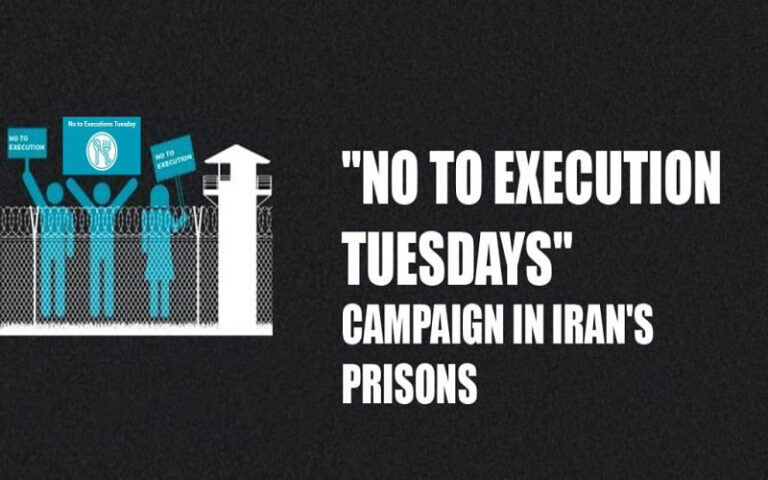
Iran’s ‘No to Executions Tuesdays’ Campaign Enters 110th Week

On Tuesday, March 3, 2026, the “No to Executions Tuesdays” campaign entered its 110th week. On this occasion, prisoners participating in the campaign issued a statement referring to the killing of Ali Khamenei, the Iranian regime’s supreme leader, and described the death of the dictator of Iran as the beginning of the end of the abhorrent system of Velayat-e Faqih (absolute clerical rule) and the gateway to democracy.

In their statement, the prisoners also emphasized: The “No to Executions Tuesdays” campaign has once again drawn the attention of the international community and human rights organizations to the situation of prisoners, especially political prisoners sentenced to death, and calls for their release. The disgraceful and crime-filled record of this regime must be referred to the United Nations Security Council.

UN Rights Chief Warns of Execution Risk for Iranian Protesters

The full text of the statement by the prisoners of the “No to Executions Tuesdays” campaign

The continuation of the “No to Executions Tuesdays” campaign in its 110th week across 56 different prisons

The “No to Executions Tuesdays” campaign considers the death of Iran’s dictator Ali Khamenei, responsible for the killing and execution of tens of thousands of Iranian people, as the beginning of the end of the abhorrent system of Velayat-e Faqih and the gateway to democracy.

Under the current harsh wartime conditions imposed on our country by the authoritarian regime, we prisoners consider ourselves alongside the general public and share in their pain and suffering.

We believe that despite all the ups and downs, Iran is ultimately moving toward a bright future and will never return to the past or to dictatorial systems. Iran’s freedom will be achieved by the people themselves, through their unity and solidarity, not by any foreign force.

The number of executions in the past 13 days has surpassed 65. In recent days, a death sentence has also been issued in Tehran for another detainee from the January 2026 uprising, Mohammadreza Majidi Asl, on the charge of “moharebeh” (“waging war against God,” a charge used by the Iranian regime). Two Kurdish prisoners from the 2022 uprising, Mohammad Faraji and Raouf Sheikh Maroufi, have also been sentenced to death.

The death sentence of another political prisoner, Peyman Farahavar, held in Lakan Prison in Rasht, northern Iran, has been upheld for the second time by the regime’s Supreme Court, placing his life in greater danger than ever before. At the same time, many other detainees are under pressure and torture and face the risk of inhumane death sentences and heavy punishments.

The “No to Executions Tuesdays” campaign has once again drawn the attention of the international community and human rights organizations to the situation of prisoners, especially political prisoners sentenced to death, and calls for their release. The disgraceful and crime-filled record of this regime must be referred to the United Nations Security Council.

In its 110th week, prisoners participating in the “No to Executions Tuesdays” campaign in 56 prisons across the country are on hunger strike.

Resistance Announces Interim Government After Khamenei’s Death, Drawing Global Attention

In days when Iranian society, following the death of regime supreme leader Ali Khamenei, has entered a sensitive and turbulent phase and religious and hereditary despotism is breathing its last,

Mrs. Maryam Rajavi, the President-elect of the National Council of Resistance of Iran (NCRI), announced in a message:

The death of Khamenei will mark the end of the absolute religious dictatorship of Velayat-e Faqih — the end of the mullahs’ regime, the end of dictatorship in any form, under any name, and the end of lifelong theocracies and monarchies alike.
This official announcement, which emphasizes the implementation of a 10-point plan to establish a democratic republic based on the people’s vote, separation of religion and state, gender equality, and commitment to human rights, received widespread coverage in international media.

Announcement of a Provisional Government by the National Council of Resistance of Iran

The Spanish news agency EFE wrote that the interim government under Rajavi’s leadership will implement a program to achieve a non-nuclear Iran free of weapons of mass destruction within the framework of peace and international cooperation. It rejects religious rule and emphasizes popular sovereignty in a republic based on universal suffrage and pluralism.

Fox News reported that the interim government seeks to transform the country from a dictatorship into a democratic republic, and that the 10-point plan outlines the necessary steps to bring freedom to Iran.

Newsweek Romania also stated that the government will operate for six months to transfer sovereignty to the people and establish a democratic republic.

Lebanon’s An-Nahar newspaper also reported on the formation of an interim government aimed at transferring sovereignty to the Iranian people and published the provisions of the 10-point plan.

At the political level, reactions were also notable. Charles Michel, former President of the European Council and former Prime Minister of Belgium, stated: “Let us be on the right side of history. Let us fully stand with the people of Iran. A new era has arrived. Only the people have the legitimacy to shape their future and build a free and democratic Republic of Iran. From dictatorships to freedom, the choice is with the people.”

Alejo Vidal-Quadras, former Vice President of the European Parliament, also emphasized that the National Council of Resistance of Iran has formed an interim government based on the 10-point plan… Iranians want a democratic republic founded on the separation of religion and state.

Thus, the announcement of an interim government to transfer sovereignty to the people is regarded as the beginning of a new phase and the opening of a new chapter toward the establishment of a democratic republic in Iran.

UN Rights Chief Warns of Execution Risk for Iranian Protesters

Speaking at a session of the UN Human Rights Council in Geneva, Switzerland, the UN High Commissioner for Human Rights called for the immediate suspension of executions in Iran and warned that following the recent protests, a growing number of Iranians are at risk of execution.

Volker Türk, the UN High Commissioner for Human Rights, said on Friday, February 27, that “I am horrified by reports that at least eight people, including two children, have been sentenced to death in connection with the protests.”

Türk added that it appears 30 others may also be at risk of receiving similar death sentences.

According to information compiled by Amnesty International, at least 30 people are at risk of the death penalty in connection with the protests that took place in January.

Human Rights Watch Warns About Tsunami Of Arrests And Enforced Disappearances In Iran

Eight of these individuals, who were sentenced to death in February within just weeks of their arrest, are: 18-year-old Saleh Mohammadi, 19-year-old Mohammad Amin Biglari, Ali Fahim, Abolfazl Salehi Siavoshani, Amirhossein Hatami, Shahin Vahedparast Kolour, Shahab Zahedi, and Yaser Rajaeifar.

At least 22 others, including two 17-year-old teenagers, are currently undergoing legal proceedings or awaiting trial.

Amnesty International stated that these individuals have faced confessions extracted under torture and other serious violations of fair trial rights, including being denied access to legal counsel during the investigation phase and the rejection of independent lawyers chosen by their families.

The human rights organization called for the immediate halt of executions and the annulment of the related convictions.

Many other detainees from the January protests are facing charges that could result in heavy sentences, including the death penalty, and reports indicate that arrests related to these cases are still continuing in various parts of the country.

According to human rights reports, tens of thousands of people have been arrested in recent weeks, and some independent sources estimate the actual number of summonses and arrests to be close to 100,000 or even higher.

A significant portion of these individuals are teenagers, young people, and citizens under the age of 30—a generation that often has no prior experience dealing with security interrogations or expedited court proceedings.

This trend has heightened concerns about the widespread use of harsh judicial sentences as a tool to suppress popular protests, and human rights bodies have once again warned about violations of fair trial rights and the danger of carrying out death sentences against protesters.

With the Launch of “Pro” SIM Card Sales, Tiered Internet Access Becomes Official in Iran

0

While millions of citizens in Iran remain under pressure from internet filtering, shutdowns, and disruptions, reports indicate the official sale of “Pro” SIM cards offering unfiltered internet access. This expensive and limited service effectively transforms free access from a public right into a special privilege for a select group.

The state-run Shargh newspaper reported that the service, branded as “Pro Internet,” is being offered through one of the country’s major telecom operators. In its advertisements, it is described as international internet access without filtering or disconnection, available to a limited group.

The story began with an image circulating on social media—an advertisement bearing the explicit message: “Goodbye to VPNs and access to free and unfiltered internet for colleagues holding a business license.”

Iran Loses 1.56 million Dollars Every Hour Due To Internet Shutdowns

The advertisement introduces international internet that is activated directly on the SIM card without filtering or disruption and is currently available only through one of the country’s major operators.

Shargh reported that after following up as a customer, the operator’s marketing department sent a product introduction file along with a draft service request letter. This indicates that the offering of Pro Internet is not a black-market initiative but rather an official and organized process.

According to published information, access to this service is limited to the first 500 applicants. The activation fee has been announced as 21,780,000 rials (approximately 14 dollars), a figure that effectively places this type of access beyond the reach of a large portion of society from the outset. However, the discrimination does not end there.

Under the details of the service, regular internet traffic is calculated at 80,000 rials per gigabyte, while access to filtered websites and platforms—including social media networks and widely used global services—costs 400,000 rials per gigabyte.

This means that the same filtering long imposed on the public under the pretext of security and cultural considerations has now been turned into a paid premium service.

Shargh wrote that its reporter’s investigation shows the company providing Pro Internet is a subsidiary of one of the country’s major telecom operators and offers the service entirely officially, with a legal identity verification process.

The product catalog emphasizes that Pro Internet is designed to support commercial and international activities and is presented as a specialized solution for organizations, companies, guilds, and cooperatives.

The catalog lists features such as stability even under special conditions and international internet disruptions, full access to global resources, use of a sanctions-bypass service, activation without the need for additional software, availability on both personal and corporate SIM cards, and integrated management of organizational SIM cards.

Iran Ranks 95th In Global Internet Quality; Higher Costs, Lower Speeds

It also explains the registration process through a dedicated platform and identity verification via a unified gateway—facilities that effectively deepen the divide between ordinary and privileged users.

This type of user segregation and tiered access is what critics have long referred to as “tiered internet.” In this model, specific groups, with authorization from state institutions, have access to a level of internet that is blocked or restricted for the general public.

The idea of tiered internet access was first raised during the administration of Hassan Rouhani, a former president of Iran’s regime. During that period, the Ministry of Information and Communications Technology provided unfiltered internet to certain journalists close to the government, signaling the early formation of this approach.

In November 2022, the Special Digital Economy Task Force under the government of former Iranian regime president Ebrahim Raisi approved regulations promising unfiltered internet access to freelancers approved by the authorities. Critics viewed the move as another step toward formalizing a multi-tiered internet structure.

Contradiction with the government’s official promises

The official entry of a major telecom operator into providing tiered internet under the name Pro Internet comes despite repeated statements by officials in the government of Iranian regime president Masoud Pezeshkian that they do not believe in tiered internet and that internet access should be available to all people.

On July 18, 2025, Fatemeh Mohajerani, spokesperson for Pezeshkian’s government, rejected the idea of tiered internet and said: “The government’s approach is free internet, but in times of crisis, special facilities must be given to those with special needs.”

However, the experience of special internet access during the 12-day war, unfiltered access in some universities, the activation of “white internet” for specific groups, and now the official sale of Pro SIM cards indicate that this policy is effectively becoming institutionalized.

In January of this year, Iran faced one of the longest periods of widespread internet shutdowns and disruptions in its history. The blackout began on January 8 and, according to reports, lasted for more than one month.

This communication blackout coincided with a wave of repression and widespread reports of the street killing of protesters.

The blackout, along with the disruption of other communication channels, also paralyzed a large portion of the digital economy.

Under such conditions, the internet in Iran is no longer merely a tool for communication and access to information; it has become a new dividing line among citizens, determining who remains connected at all times and who, in critical moments, is left behind the wall of filtering and disconnection.

Iranian Regime Forms Temporary Three-Member Council After Death of Ali Khamenei

0

The Iranian regime’s state television Shabakeye Khabar officially announced and confirmed in the early hours of Sunday the killing of Ali Khamenei, the regime’s supreme leader; news that had been preceded hours earlier by numerous reports of explosions and missile attacks in various parts of the country.

Following the killing of Hossein Pakpour, commander-in-chief of the Islamic Revolutionary Guard Corps (IRGC), the state-run Khabar Online website reported the appointment of Ahmad Vahidi as the new IRGC commander. Arab media outlets also reported that the Iraqi government declared three days of public mourning. Former US Secretary of State Mike Pompeo stated that this action was the first step toward a future in which “an evil dictatorship” cannot hold the world hostage, emphasizing that if the mission is not completed, the problem will not be resolved.

US–Israel Carry Out Major Strike Against Iranian Regime

The state-run Shargh newspaper reported that Mohammad Bagheri, chief of staff of the Armed Forces; Hossein Pakpour, commander-in-chief of the IRGC; Ali Shamkhani, a senior security official and former secretary of the Supreme National Security Council; and the defense minister were killed in the attacks. Mohammad Baseri, a senior official at the Ministry of Intelligence, also died in Tehran. Reuters, citing Iranian state media, reported that Khamenei’s daughter, granddaughter, daughter-in-law, and son-in-law were also killed in U.S. and Israeli airstrikes.

Ali Larijani, an adviser to the Iranian regime’s supreme leader and former speaker of parliament, stated, “You burned our hearts,” emphasizing that an enemy attack does not mean the matter is over. He said the enemy is deluded if it thinks assassinating commanders can destabilize the ruling system and added that now is not the time to settle internal disputes. Larijani announced the imminent formation of a temporary leadership council. Mohammad Bagher Ghalibaf, speaker of the regime’s Majlis (parliament), also said that the country’s military and administrative structure is no longer centered on individuals and that planning has been done for all scenarios, warning that they must avoid playing on the enemy’s field.

The Iranian regime’s foreign ministry announced it would use all its capabilities to counter what it called “enemy mischief.” The regime’s Supreme National Security Council said in a statement that the operation occurred during negotiations and that the armed forces had begun a crushing response. The head of the judiciary stated that the United States cannot undermine the will of the ruling system through such actions. The cabinet declared 40 days of public mourning and seven days of nationwide closure, and the Supreme National Security Council announced the closure of all schools nationwide until further notice. The IRGC stated it would stand firm against internal and external conspiracies and that the armed forces and the Basij militia would continue Khamenei’s path.

In statement number six, the IRGC announced that the sixth wave of Operation “True Promise 4” was carried out with extensive missile and drone attacks, targeting 27 U.S. bases in the region, along with Tel Nof airbase, the Israeli General Staff headquarters in HaKirya, and a defense industries complex in Tel Aviv. Reuters, citing the IRGC, reported that the most intense offensive operation against Israel and U.S. bases is forthcoming. Telegram sources reported drone attacks by the regime’s proxy forces in Erbil, Iraq. In response, U.S. Central Command (CENTCOM) announced it had successfully defended against hundreds of Iranian missile and drone attacks, and the Israeli military reported the start of a new wave of strikes against Iran’s ballistic missiles and air defense systems.

Attacks on other countries

At the same time, reports emerged of a column of smoke at Dubai airport and successive explosions in Kuwait. Explosions and air defense activity were also reported in northeastern Tehran. Reuters reported an airstrike on a sports hall in Lamerd, southern Iran, which left 15 dead. Al Arabiya reported that the IRGC had closed the Strait of Hormuz and warned passing vessels to leave the area immediately; a move that coincided with a recommendation from the U.S. Department of Transportation advising commercial ships to avoid transit through the Persian Gulf.

An emergency meeting of the United Nations Security Council was held regarding the situation in Iran. UN Secretary-General António Guterres condemned the escalation of military tensions in the Middle East and called for the immediate return of all parties to the negotiating table. The U.S. representative stated that the operation was aimed at eliminating Iran’s missile capabilities and preventing a nuclear threat and criticized the presence of the Iranian regime in the council. Representatives of France and the United Kingdom also warned against further escalation and condemned Iran’s attacks on regional countries. China’s representative expressed deep concern over the U.S. and Israeli attacks and called for an immediate ceasefire. The German chancellor stated that the United States had sought a negotiated solution for weeks but that Iran had not agreed. In contrast, Iran’s representative to the United Nations emphasized that as long as aggression continues, Iran will respond decisively.