Home Blog Page 230

Iran: A Destroyed Country

Under the rule of the mullahs, Iran has become a rickety country, like a house that desperately needs to be renovated from the ground up. This is what one of the regime’s state-run dailies, the Ebtekar, wrote in their latest publication, “Do not let the country become rickety.”

The truth of the situation is that this has happened a long time ago. The Iranian regime has run the country into the ground and as a result, there is nothing left for the Iranian people, and the regime is no longer able to rectify its mistakes.

The Ebtekar daily explained, “For years, various crises have plagued the country. It seems that we are slowly getting used to living in a crisis. There are various reasons why we are stuck in the middle of such a crisis.”

They added, “An important factor of overflowing crises or at least the aggravation of these crises is the erosion of the country’s infrastructure. The country has become rickety in different areas. Various sectors are declining due to a lack of investment. The air fleet, industry, civil infrastructure, etc. have all been destroyed.”

Education

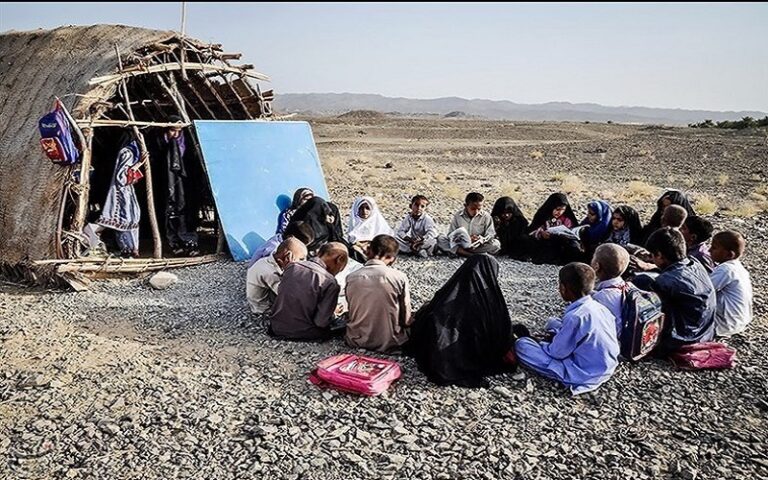
In an interview with the Madreseh Press website, Esmail Ola, a member of the faculty of Farhangian University, said, “The education system with about 15 million students and one million teachers is in a situation where teachers, students, and families, are not satisfied. Part of this dissatisfaction is the result of the political and economic conditions prevailing in the society, education has never been able to become one of the priorities of the policy-making, budgeting, monitoring, and decision-making system.”

According to official statistics, there are 935,000 students who have dropped out of school across Iran, children aged between 6 to 18 years who have had no choice but to abandon their education due to various problems.

The state of the country’s roads

According to the Central Insurance Research Institute, “Iran ranks second among 190 countries in the world in terms of unsafe driving accidents. Statistics show that 9 people are killed for every 10,000 cars in the world; While in Iran, this equation leads to the death of 37 people. This year, only in the first 9 months of the year, 13,142 people died in traffic accidents and 244,646 people were injured.”

The condition of hospitals and medical centers

Research has found that 477 hospitals in the country are not in good safe condition. Old, dilapidated, unsafe hospitals are endangering the safety of patients and medical staff; A problem that has been talked about for a long time after many catastrophic incidents that have taken place. This sector is often forgotten due to budget shortages and of course the lack of serious determination to correct it by the regime.

Housing situation

An expert of the Social Welfare Studies Office in the regime’s Ministry of Cooperatives, Labor and Social Welfare stated, “The most important challenge of housing poverty in urban areas is the lack of access to affordable housing and the most important challenge of housing poverty in rural areas is poor housing, the main cause of which is the type of ‘materials’ used for construction.”

They added, “Based on this, the rate of lack of access to affordable housing in urban areas is 49% (9.5 million households) and the rate of poor housing in rural areas is 40% (2.4 million households). Considering a family of four in each average household, nearly 50 million are living in housing poverty in Iran.”

Environmental crises

Looking at the environmental situation in Iran, it is apparent that all the environmental factors in this country are in crisis and turmoil. Over the last forty years, more than 20 million hectares of pastures have been changed, and many animal and plant species are now extinct.

Regardless of the ecological strength of the land, unbalanced and unsustainable agriculture has developed. More than 86 billion cubic meters of renewable water is harvested in the agricultural sector, while the yield gap is about 60%; meaning that only 40% of the yield potential of plants in Iran is converted into harvestable yield, and of this amount, about 30 million tons are turned into waste.

Unsettled agricultural conditions have caused the most damage to water resources, causing the drying up of wetlands, soil erosion, land subsidence, desertification, soil salinization, and the emergence of new fine dust centers. The use of poisons and chemical fertilizers in Iran’s agriculture is far beyond international standards, the neglect of the expiration date of poisons increases their shelf life and is now considered a factor in threatening people’s health.

Poverty line

The Social Security Organization of the regime reported a few months ago that, “At least 30% of Iran’s population now lives below the poverty line. However, unofficial statistics say that this part of Iran’s population reaches 50% of the country’s total population, which means something around 42 million Iranians.”

Unemployment

The regime’s Statistics Center published the results of the labor force census plan this spring (2022), according to which 2.13 percent of the university graduates of the country were unemployed. During this period, the graduates of higher education centers have equated to around 40% of the total unemployed people in Iran.

Hojjatollah Abdolmaleki, the regime’s Minister of Cooperatives, Labour, and Social Welfare, recently said, “According to official statistics, we have about 2.4 million unemployed people, 2.2 million people with partial or unstable employment, and about 2 million people who are desperate to find work in the country, who are not part of the active population.”

He further added, “Also, currently 9.7 million people are facing low-income employment and 4.5 million people have informal employment and do not have insurance.”

Addiction

The former director general of the research and training office in the regime’s anti-narcotics headquarters stated, “There are 4,4 million constant and non-constant drug users in the country, and with their families, about 15 million of the country’s population are affected by the consequences of the drugs.”

According to the General Department of Public Relations and International Affairs of the Forensic Medical Organization of Iran, the number of drug abuse deaths in 2021 increased by 15.2 percent compared to the previous year, and this year so far, addictions have killed 5,342 people.

Human Rights

On 16 December 2021, the regime was condemned in the United Nations General Assembly, the highest international authority, for the 68th time due to the violation of basic human rights and the high number of executions, especially the execution of teenagers and children, as well as torture and cruel treatment of inmates in Iranian prisons.

Tehran Confuses International Bodies With Mysterious Stats

On July 19, the Iranian state media launched a new wave of propaganda, claiming that Iran is among the world’s wealthiest states. The Jahan-e Sanat daily reported that “Recent statistic surveys show that Iran’s economy has been ranked as the 14th world’s great economy.”

They added, “According to the International Monetary Fund’s studies, Iran’s Gross Domestic Product’s value has reached $7.1 trillion in 2022. Iran’s $7.1-trillion economy is still far from the developing and welfare indicators; however, it has placed above countries like Mexico, Turkey, Spain, Sweden, and Saudi Arabia.”

This significant report attracted audiences spontaneously. Particularly, those economists and politicians who closely follow the financial news about Tehran, including the rampant inflation, unprecedented poverty, the government’s stellar debts to the banking system, systematic corruption, and massive budget deficits.

However, these reports fail to tell the whole truth about the current situation in Iran. In reality, citizens across the country are left to rummage through waste bins to make ends meet, families’ food baskets have shrunk, and many youths are forced to either sell their body organs to afford their relatives’ expenditures or are driven to commit suicide.

What the people of Iran are experiencing on a daily basis is completely different from the results of so-called ‘studies’. It begs the question, what is the source of these misleading reports? This distinction between reality and the stories from international bodies is rooted in Tehran’s mysterious banking system.

The government has officially declared that the USD trades for 42,000 rials. In reality, any USD is trading against 300,000 rials in the bazaar, showing a sharp depreciation in the Iranian national currency’s value.

In this respect, the mullahs have completely misguided the international bodies, including the IMF, in accounting for the GDP value. In other words, Iran’s real GDP should be calculated based on the rial’s valuation provided by experts, such as Prof. Steve Hanke, who offer a weekly #CurrencyWatchList.

The Iranian government has routinely refused to join the Financial Action Task Force in order to hide its corrupt and fraudulent stats. Due to the mullahs’ and Revolutionary Guards (IRGC) untransparent and tax-exempted institutions, it is impossible to obtain an actual estimation of Iran’s economy.

Aside from these facts, the state media has revealed Raisi’s massive budget deficit. On August 18, the Abrar daily wrote, “The Raisi government experienced a 200-trillion-rial budget deficit from March to June 2022.” Notably, this deficit only accounts for four months, not the whole year, indicating that the Raisi government’s deficit is far higher than this amount.

In a nutshell, the mullahs have tried to fish in muddy water, inspiring their disappointed forces about a ‘shiny future’. They can no longer defuse society’s volcanic situation and the ongoing socio-economic protests.

As the government faces financial dilemmas and has been entangled by public hatred, the mullahs are still funding extremist groups and proxy conflicts in the Middle East at the expense of Iranian citizens, as they sink society into further poverty and misery.

Iranians Call for Prosecution of Raisi, Instead of Welcoming Him at UN

In its damning report in October 2018, titled ‘Blood-Soaked Secrets’, Amnesty International declared, “Between late July and September 1988, the Iranian authorities forcibly disappeared and extrajudicially executed thousands of prisoners for their political opinions and dumped their bodies in unmarked individual and mass graves.”

In July 1988, the Iranian regime’s founder Ruhollah Khomeini issued a secret religious order (fatwa) for the execution of prisoners who steadfastly supported the opposition group, the People’s Mojahedin Organization of Iran (PMOI/MEK). The fatwa later engulfed other political dissidents when the regime cleansed the prisons of MEK members and supporters.

According to survivors and eyewitnesses, the regime formed commissions comprising judicial authorities, intelligence officers, and interrogators to purge dungeons of political prisoners. The regime claimed the commissions were established for ‘pardon’, while prisoners and rights activists and groups have since referred to them as ‘Death Commissions’.

For decades, the perpetrators of the 1988 massacre, including Iran’s current president Ebrahim Raisi, have enjoyed impunity. Not only do they enjoy this impunity for being off the hook for their atrocious crimes against humanity, but it has allowed and encouraged them to shed more blood to strengthen their authoritarian theocracy.

Khomeini’s successor, Supreme Leader Ali Khamenei awarded Raisi, infamous as the ‘Butcher of Tehran,’ and appointed him as the judiciary chief. During his tenure, Raisi upheld hundreds of death sentences against political activists, women, juvenile offenders, prisoners of conscience, followers of ethnic and religious minorities, and smugglers—contrary to the regime’s penal code.

Judicial authorities were also actively involved in a bloody crackdown on hundreds of thousands of peaceful protesters in November 2019. Following gas price hikes in mid-November, citizens took to the streets across the country, urging authorities to cancel the hikes. The regime then responded to people’s demands with violence, killing at least 1,500 defenseless demonstrators and bystanders. Authorities also detained thousands of protesters and subjected them to inhumane torture and ill-treatment by Raisi’s agents.

As Amnesty reported in September 2020, “Widespread torture including beatings, floggings, electric shocks, stress positions, mock executions, waterboarding, sexual violence, forced administration of chemical substances, and deprivation of medical care. Hundreds were subjected to grossly unfair trials on baseless national security charges. Death sentences issued based on torture-tainted ‘confessions.’”

As was expected, Raisi and his agents were awarded yet again. In a forged election in 2021, Khamenei’s affiliates paved the path for Raisi’s presidency. Even the regime’s official statistics show the 2021 Presidential election received extraordinary apathy in the regime’s age.

Khamenei appointed Raisi to counter domestic and foreign crises, including ongoing protests and anti-regime activities, breathtaking sanctions, and financial failures. However, Raisi has failed to strike fear into society despite his notorious background as an executioner.

In their socio-economic rallies and marches across Iran, citizens routinely chant slogans, such as: “Death to Raisi,” “Raisi; shame on you, let go of the country,” “Raisi is a liar,” and “The sixth-grader government [of Raisi] would collapse soon.”

Raisi has also lost significant numbers of Revolutionary Guards (IRGC) supporters, not because he fought ‘systematic corruption’, but because he has failed to satisfy the ‘mafia’ with adequate political-economic incentives. Today, not only do the people curse Raisi on the streets, but even Khamenei’s appointees in the Parliament and other government offices explicitly slam Raisi and his cabinet.

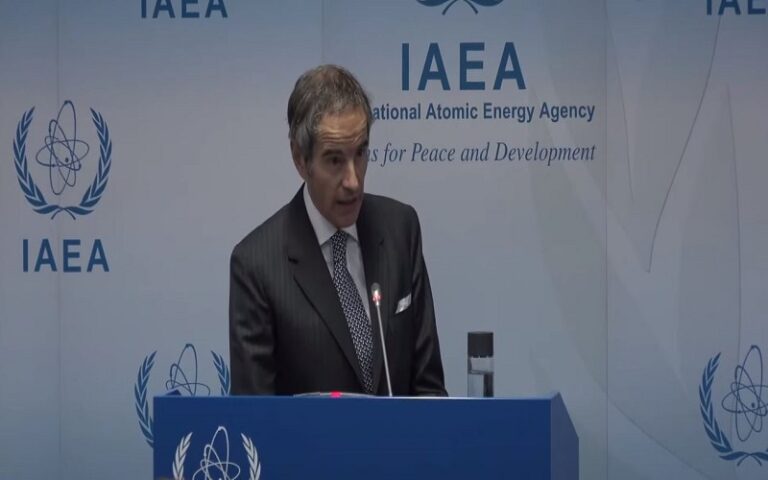
From the international standpoint, Raisi’s government has failed to push Tehran’s interests through a new nuclear deal with world powers. Instead, the regime has been forced to withdraw from some of the ‘red lines’, such as delisting the IRGC, closing the International Atomic Energy Agency’s probes, and lifting all sanctions.

In recent months, the U.S. Department of Justice has foiled the mullahs’ assassinating attempts against former White House National Security Advisor John Bolton and former Secretary of State Mike Pompeo, pushing the regime into an awkward corner and making new hurdles for engaging with it.

Raisi has been desperately trying to brag about his attendance at the UN General Assembly as a victory to ease domestic and foreign failures. On the other hand, Iranians around the world have warned the international community, particularly the U.S. administration, that they should take a firm approach toward Iran’s mass murdering, terrorist regime.

The Iranian people expect that the US will avoid granting a visa to Raisi and his IRGC lieutenants to prevent them from staining American soil, spreading hatred beliefs, and masterminding more terror attempts. They have launched a “#NoVisa4Raisi” campaign, backed by a long slate of dignitaries from the trans-Atlantic, to ensure that the Iranian delegation will be denied entry to the U.S next month.

Iran’s Regime Honors Terrorism and Protects Its Perpetrators

Famous for its support of global terrorism, the Iranian regime is continuing its threats and acts of blackmailing, without facing any serious firmness. The regime’s supreme leader often uses social media to represent the regime’s dangerous nature, as seen in a tweet about two weeks ago stating that the regime, with the help of its proxy forces, “is able to crush the enemy.” He has even publicly praised the slain mass murderer Qassem Soleimani, who was a prominent figure in the foreign wing of the regime’s global terrorism.

The regime’s support of terrorism is even worse than first thought. In an article published recently by Epoch times, Ms. Clare M. Lopez, a former career operations officer with the CIA, and Founder/President of Lopez Liberty LLC, revealed that the Iranian regime has significant ties with different terrorist groups.

In an exclusive interview with Epoch Times, she stated that “Ayman al-Zawahiri was Al-Qa’eda’s key contact with the Iranian regime since well before the 9/11 attacks in 2001. Documents captured in the Osama bin-Laden raid in Abbottabad, Pakistan, in May 2011 reportedly revealed much about the AQ-Iran-Taliban jihad alliance.”

Lopez also revealed that one of the Al-Qa’eda leaders, Seif al-Adl, is living under the regime’s protection, specifically the regime’s IRGC/Quds Force/MOIS.

It is no secret that the Al-Qa’eda has often led its operations mostly from Iran, but the strangest thing is the silence of the world, not only in regards to this fact but in reference to many other cases.

The Iranian regime has consistently shown that it has no fear of harming Iranian dissidents and the people of other nations on its soil. A clear example of this was the latest attack on Salman Rushdie in the U.S.

In a recent interview with Fox News, Alireza Jafarzadeh, the deputy director of the U.S. Office of the National Council of Resistance of Iran (NCRI), said that the regime in Tehran will go to any lengths to try to kill dissidents, even at American soil.

Jafarzadeh said, “Since the start of the uprisings in Iran in 2017, Tehran stepped up its terror plots abroad, particularly against our movement because of the increase in its appeal among the protesters.”

Shortly before this comment, on August 10, the US Justice Department announced charges against a regime operative named Shahram Poursafi, a member of the IRGC, who attempted to assassinate John Bolton, following many of the regime’s threats to kill Mike Pompeo, the former U.S. Secretary of Department of State.

The international community’s wrong policies of soothing the regime and turning a blind eye to the mullahs’ malign activities have created a culture of impunity for the regime, which allows them to continue to spread its acts of terrorism beyond its borders.

Basic common sense suggests that instead of inviting the regime’s contempt, the world should demonstrate a modicum of firmness.

The US government, therefore, must deny the regime’s president Ebrahim Raisi a visa to attend next month’s meeting of the United Nations General Assembly. Permitting his travel and turning a blind eye to this situation will only encourage the regime to scheme more terror plots.

In his latest visit with Sweden’s ambassador to Iran, the regime’s Foreign Minister Amir Abdollahian asked the Swedish government to release Iranian national Hamid Noury, a former prison official convicted by the Swedish court for his involvement in Iran’s 1988 Massacre. The sad part is that the Swedish ambassador instead, to express his firmness and defending justice and the independency of law, promised the regime’s foreign minister to deliver his message to his government, clearly highlighting a sign of weakness.

On August 22, in his latest press conference, the regime’s spokesman of the foreign ministry blatantly said that “in connection with Mr. Noury and Mr. Assadi, the same follow-ups continue at different levels and have never stopped. It is one of the priority cases and issues of the diplomatic system. It is necessary that both the government of Belgium and the government of Sweden act on their own responsibility in this regard.”

It is now a necessity that the Western powers need to intensify diplomatic, economic, and military pressure against the ranges of the regime’s malign activities.

The right message to the regime must be a firm policy, whether it will harm other people and nations, especially against Iran’s own people and their legitimate Resistance. This regime must feel the suffering and the higher costs of its terrorism, or else it will continue to expand its terrorism without mercy.

Iran’s Regime Allocate 50 Billion Tomans to Jamkaran Mosque While People Live in Poverty

Government corruption in Iran has looted around 80 percent of the national income and the Iranian people’s wealth. Unlike other countries where the free market has created a healthy economy, a ‘free market of corruption’ in Iran is devouring the national resources for the regime’s interests and at a heavy expense to the public.

Most people who attempt to confront this situation are threatened with prison and are introduced as the enemy of the people and God.

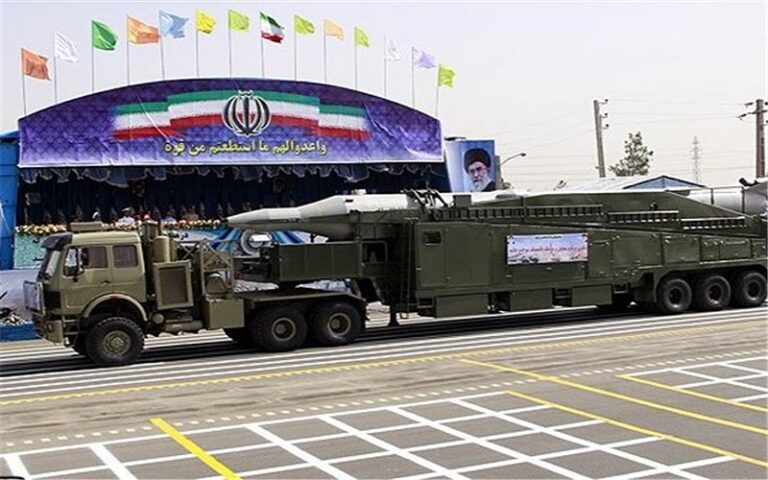
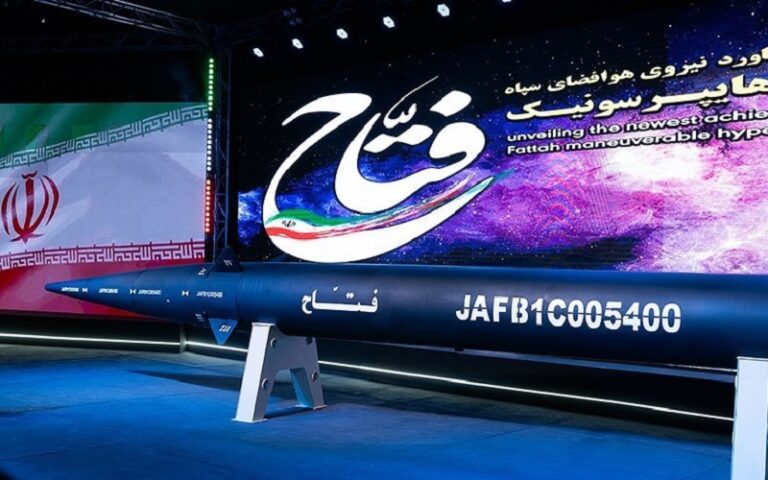
In the vision of the Iranian regime’s supreme leader Ali Khamenei, a ‘good government’ is the type of ruling that finances the regime’s interests from its malign activities in the Middle East to its missile and nuclear projects, and of course the regime’s propaganda apparatuses.

This has created a double standard, in politics as well as in the market. Money and influence play the main role, which is mostly controlled by the Revolutionary Guards and the institutions affiliated with the supreme leader’s office.

Evidence has shown that no part of the country’s economy, culture, or social life is exempted from this situation. Due to the vast expansion of governmental corruption, sometimes, regime officials and the state-run media are forced to expose part of it in the hope to prevent the people’s reactions and upheaval.

In an interview with the Ham Mihan newspaper, Babak Darabi, the social adviser of the regime’s Minister of Oil, confirmed that the Ministry of Oil was providing financial assistance for the Jamkaran Mosque, stating that this mosque is one of the bases of Shia and has deficiencies.

Before Darabi’s recent comment, he revealed in a letter that he had requested 50 billion rials from the ministry of oil to complete the construction of the building of the mosque.

The letter was sent to the regime’s ministry of oil to support the construction of the building of the Jamkaran mosque.

The Jamkaran Mosque, located six kilometers east of Qom, is one of the most famous mosques in Iran and has long been a sacred place.

Ruhollah Khomeini, the Iranian regime’s founder, tried to turn Jamkaran into a religious hub by allocating a large budget for the mosque and appointing a group of mullahs close to him to advance this project. This was the line followed by regime officials in the following periods.

As Hashemi Rafsanjani once quoted the regime’s current supreme leader Ali Khamenei saying, “Ahmadinejad (former regime president) came to me and requested that a highway be built from Jamkaran to Khomeini Airport so that if Imam Zaman (Leader of the Time, leading the whole world under the same religion) appears, he will not be stuck in Qom traffic!”

The same policy once founded by Khomeini, followed by Ahmadinejad, and now continued by the regime’s Ministry of Oil, is spending more than 50 billion rials advancing the project and is wasting the Iranian people’s wealth, while many of them are being pushed to poverty and are surviving on leftover food from piles of waste.

According to a report from the Ham Mihan newspaper, “The Ministry of Oil has allocated 50 billion Tomans for the reconstruction and development of the Jamkaran Mosque. It is also supposed to allocate funds for the construction of 700 houses for Jahrom clerics to help Salehiya Seminary in Kazerun and to help Shahcheragh Shrine in Shiraz. These are only part of the mentioned budget. A budget whose philosophy has been to spend in the less privileged and generally weak oil-rich regions of the country.”

Darabi’s explanation makes it clear that the Ministry of Oil’s social responsibility budget is more at the disposal of the regime and its programs than helping the well-being of oil regions. These regions have been involved in multi-dimensional problems for years, from drinking water and sewage issues to pollution and dust storms, along with the lack of basic infrastructure.

In its report, the state-run Ham Mihan newspaper revealed another letter in which the representative of Kazerun asked for financial support for the Salihiya Seminary in Kazerun, with the oil minister responding that “it should be proposed to the working group with a favorable opinion.”

If this 50 billion was spent on poor families, it would cover costs for more than 50,000 families and support the life of at least 200,000 people and save them from poverty. With the poverty line in Iran reaching around 10 million rials, many of the downtrodden in Iranian society are relying on much lower amounts than this to survive.

Iran’s Regime and Four Decades of Mistakes

Since the 1979 revolution in Iran, the country’s economy has witnessed a sharp decline. Two main factors play the primary role. One is the Iranian regime’s institutionalized corruption and monopolization of the economy by the regime’s Revolutionary Guards Corp (IRGC), and the second is the regime’s massive spending on its nuclear and missile projects.

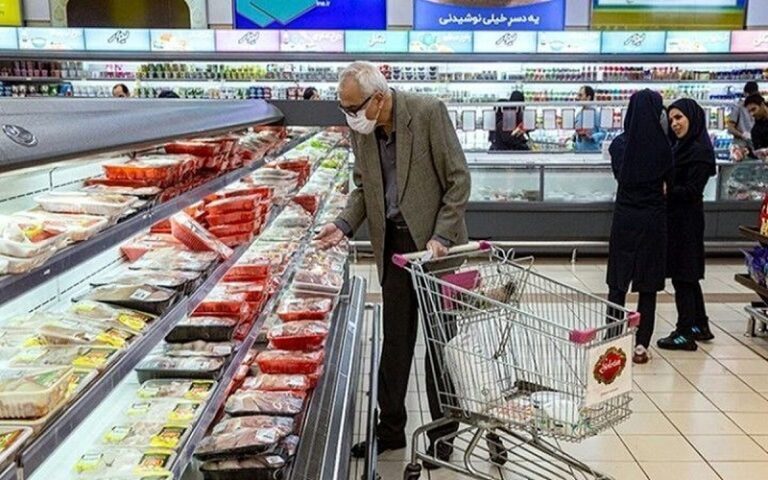
According to the regime’s media, Iran’s per capita income, based on the real global and regional inflation rate, dropped from ten thousand dollars in 1979 to about seven thousand dollars in 2021, and this year it has fallen even lower. Additionally, the people’s purchasing power has shrunk so dramatically that a family in 1978 could afford 74 kg of meat with its minimum wages but now the same family cannot even afford 20 kg. This shows just how sharply the people’s economic power has decreased.

In between some of the regime’s officials’ absurd claims that the Gini coefficient and the class gap have decreased, the reality of the situation is that this is because the richer people and the middle class of society have become poorer. Many of the regime’s social experts have even stated that the middle class has been completely wiped out.

At the same time, the number of people living below the poverty line in Iran has increased greatly over the past year and the intensity has quadrupled.

In 1979, twenty percent of the population lived below the poverty line, while after the end of the Iran-Iraq war, this increased to about forty percent. According to the inaccurate statistics of the regime, this figure has now reached 52 percent, while other figures have shown that about 80 percent of society is living below the poverty line.

As an example, regarding the per capita meat consumption, in 1978 each Iranian consumed about 16 kg of meat in a year, this shrunk to 12 kg in 1988 and now it is just 6 to 7 kg.

The consumption of dairy products has also decreased in the past few years, as with the gradual increase in the price of dairy products, Iranians have used fewer dairy products.

It should be noted that the average annual consumption of dairy products in the world is more than 150 kg per capita, and the World Food Organization (FAO) suggests that this should be around 300 kg for each person in a year. In Iran, according to the regime’s statistics, this was just 70 kg per capita in the past year and it has now reached 50 kg.

This will most definitely have significant side effects on the growth of the next generation. The impoverishment of the people has also had major social effects. In parallel with the decrease in the income level, the frequency of thefts has increased, and more children are being forced to steal in order to survive.

The remarkable thing about this is that among the increased thefts, the subject of the thefts has also changed. The tendency of thieves to steal valuable and protected goods such as gold and jewelry has decreased, with thieves now focusing on stealing low-priced and unprotected or less protected goods such as mobile phones, electrical canal covers, and cables.

Refuse to collect, especially among children has increased as people are desperate to make what little money they can, while the streets of the metropoles are full of street vendors and cardboard sleepers. Nearly all families have been forced to work at different places to be able to support their family members. In such a situation, forming a family and having children is very risky, so many young people are choosing not to get married.

Khayyam Satellite, Iran Regime’s New Tool To Back Up Global Terrorism

Last week, the Iranian regime’s media reported that the mullahs had been successful in launching a new satellite named ‘Khayyam’. From the regime’s officials to those loyal to the regime, many people expressed their happiness about this ‘homegrown masterpiece’, even before it was launched.

At the same time, the regime’s president Ebrahim Raisi rushed to the stage to praise this ‘Iranian project’, while the regime’s media praised the work of the ‘Young Hezbollahi government.’

In the hope of recovering its lost prestige, dominance, and credibility among the people in society, both in the region and globally, the regime has been constantly fabricating scientific and military successes. This time, however, the tumult surrounding this domestically created satellite did not last long.

Shortly after the regime’s hubbub, the embassy of Russia in Iran announced that the satellite had been built by them, after several requests from the regime.

This announcement was such a disgrace that the regime’s media, like the Fars news agency, were forced to edit their news and publications. To clear up this mess, Issa Zarehpour, the regime’s minister of communications, ridiculously claimed that “since the first day, we had said that the Khayyam satellite was created by Russia.”

The regime’s spokesman Ali Bahadori Jahromi later said that the regime is planning to order three more satellites from the same model as the Khayyam. On his Twitter account, he wrote, the “construction of three more Khayyam satellites in collaboration with Iranian scientists is on the regime’s agenda.”

The strange part of the story is that some of the state-run media outlets, like the Basirat newspaper, are brazen enough to claim that the regime is capable of sending a human into space. In the past, the regime’s media has reported many times about the launch of satellites of other countries, saying that these events are not a “scientific achievement” at all, so the recent contradictions have caused the regime’s jubilations to be senseless.

On March 22, 2021, the regime’s YJC news agency announced that “Russia launched satellites of 18 countries.” They clearly have no pride in asking and taking help from a developed country to launch their missile. This latest project explains the regime’s wasting of the country’s wealth and resources on warmongering, instead of boosting scientific and industrial development.

Alireza Naimi, the general director of space exploitation and operations of the regime’s Space Organization, announced that it will not be possible to use the images of this satellite for at least 4 months.

This is not the first time that the regime claimed that it has successfully sent a homegrown satellite into orbit. One was reportedly launched two years ago, and a second one earlier this year. The second satellite, Nour-2, was launched into space without any specific usage, but the regime claimed that it had been designed to execute civilian missions.

Neither Nour-1 nor Nour-2, are likely to become operational anytime soon, instead becoming a disaster and embarrassment for the regime. At that time of the launches, the Squadron, part of the new US Space Command, reported that they did observe that any of the satellites had reached orbit.

The more concerning part is while the regime claims that its space projects are in favor of civilian space projects, due to the regime’s nature, we should consider that the regime will likely use these satellites in favor of military operations, especially by supporting its proxy forces with images of their claimed enemies.

Last week, the Washington Post reported that the satellite was designed to expand the regime’s spy and military abilities. The report stated that the Khayyam satellite is based on a Kanopus-V surveillance satellite and includes a camera with a high 1.2-meter resolution.

A Tsunami of Malnutrition in Iran

The huge class gap in Iran is the result of the Iranian regime’s destructive policies. According to Mohammad Saleh Hashemi Golpaygani, the staff secretary of the regime’s ‘Enjoining good and forbidding wrong’ headquarters, more than 4,000 children of the regime’s officials are living abroad.

The regime’s plan centers on expanding the lives of their relatives into a luxury life conglomerate, comprising not only clothes and planes, but cars, yachts, helicopters, furniture, and real estate. At the same time, the majority of people in Iranian society are struggling for their daily bread, with many of them only being able to afford one meal portion a day. As a result, the luxurious life of the relatives of the regime’s officials is increasing the peoples’ hatred.

One of the main consequences of the increasing class gap is severe malnutrition. One of the ‘blessings’ of this “holy system” is the starvation of the people, who cannot afford to buy even basic food staples, what the regime’s state-run media have now referred to as “luxury food”.

On August 7, the state-run daily Gostaresh News, wrote about these ‘luxury foods’, stating, “One of the main consequences of heavy inflation has affected the nutritional basket of the people. Not only red and white meat but also rice, eggs, fruits, and vegetables, have gradually become luxury items in families’ shopping baskets.”

This daily added, “Point-to-point inflation of edibles reached 86 percent in July; This means that in July 2022, families have to spend 86 percent more than in July 2021 to buy a certain set of food products.”

According to the statistics presented by the regime’s media, with the increase in the price of meat, the meat consumption of the tenth decile of the society is 27 times more than the first decile. This subject has changed the eating habits of most people.

The change in eating habits in Iran is greatly endangering the children, so it is likely that the coming generation will also suffer from malnutrition. The bread consumption in Iran is currently 2 to 3 times more than other countries in the region as that is all many families can afford. That means that people are having to forego calories, along with protein and vitamins needed by the body. Even providing bread is a big challenge for most people, so they are forced to buy it at higher prices, according to the state-run daily Radar Eghtesad.

In July 27, the state-run Shargh daily reported the warnings of the regime’s ministry of health, writing, “Food inflation in Iran has become alarming and the statistical center has estimated the spot inflation rate of food in July to be over 90 percent. Heavy inflation in the food market has followed the warning of the Ministry of Health in Iran and has reported a doubling of malnutrition in some deprived provinces such as Sistan-Baluchistan, Kerman, Hormozgan, and South Khorasan.”

They added, “According to the activists of the food market, this incident has caused a sharp fall in the per capita consumption of the main food items in Iran, and on the other hand, it has led to an increase in the consumption of bread. Apart from this, food items have been removed one by one from the shelves of Iranian supermarkets and replaced by items such as packaged bones, chicken skeletons, and rice scraps.”

The lack of calcium, protein, and nutrients in children manifests itself in the form of osteoporosis, short stature, and other diseases. One of the regime’s nutritionists and diet therapists said, “During growth, especially in children under five and in children at puberty, the first deficiency is protein malnutrition, which causes a delay or decrease in growth, and this decrease in growth will have side effects, especially in later generations. Since growth, especially height growth, is related to the development of societies, the reduction of growth causes disturbance in the development of society.”

Literally, malnutrition has become a deadly tsunami that has engulfed Iran’s nation, especially among the youth and young children.

Iran’s Regime Punishes People With Poverty To Hide Its Crime

The Iranian regime’s state-run Kayhan daily, the mouthpiece of its supreme leader Ali Khamenei, recently wrote that the regime needs to deal with the enemy’s proxy media because they are pumping desperation and confusion into society.

In contrast, the reality of the situation is that the regime itself is pumping desperation and confusion into the society with the unbridled high prices of all commodities, the 12 million rial poverty line, and the increase in executions, as well as its repressive measures over the Iranian people.

To create a comprehensive conclusion of this reality, let us sum up the quotes of the regime’s officials and economic experts about the extreme poverty in Iran, which is creating despair across the country.

Farshad Momeni, one of the regime’s economic experts, said, “The population of the people below the poverty line has been doubled.”

The welfare deputy of the regime’s Ministry of Labor and Social Welfare stated, “Due to the increase of the prices, and the non-proportionate of the wages and the unemployment of two million people due to the pandemic, it has been estimated that until the end of this year the population of the people living below the poverty line will increase up to thirty million.”

Another of the regime’s economic experts, Morad Rahdadi, explained, “The proper wage of the family of four or the poverty line must be a least twelve million rial. If we count generally, you see that about seventy percent of the people live below the relative poverty line.”

Ebrahim Razaghi said, “Some of the numbers are concerning. As an example, the parliament has announced that sixty percent of the people live below the poverty line. Official numbers reveal that twenty to thirty million people live below the absolute poverty line.”

Finally, MP Ebrahim Neko expressed, “I believe that ninety percent of the people in Iran are engaged with poverty in different kinds. Even those who have an income of more than twelve million rials. But they are tasting poverty variously.”

With a comprehensive look at the increase in prices and poverty over the last year, the sheer reality of the situation becomes all too apparent. The price increases for everyday products, as percentages, are as follows: Iranian rice, 188%; liquid oil, 327.5%; solid vegetable oil, 285.8%; potatoes, 173.5%; pasta, 166%; watermelon, 20.1%; carbonated soft drinks, 20.2%; carrots, 20.8%; milk powder, 26%; mutton, 36.8%; beef, 51.1%; foreign rice, 56.5%; box of eggs, 102.6%; and finally, chicken, 103.7%.

Last year the poverty line was around ten million rials, but thanks to the regime’s new ‘Resistance economy’, it has reached now twelve million rials. As a result, close to thirty million people are now living in absolute poverty, while ninety percent of the population is struggling with livelihood problems.

Desperation and Unemployment Are Causing High Suicides Rates Among Youths in Iran

The sharp focus has recently been turned on Iran, once again, because of many bitter events. One such event is the high number of child suicides. As recent as August 7, news about two new suicides spread across the country.

9-year-old Amir Mohammad Abulofai and 12-year-old Farhad Khodayi, from Kohdasht city, Lorestan province, both committed suicide and put an end to their lives. Abulofai hanged himself, while Khodayi ended his life by using a gun.

According to analysis over the past decade, a total of around 250 children have committed suicide in Iran. It should be noted that this is just the number of the victims published by the Iranian regime’s media, so there is no exact number of the suicides of children in Iran, but it is likely to be higher than publicized.

The statistics of the regime’s National Organization for Civil Registration have stated that the fifth most common reason for the deaths of youths in Iran is a suicide, equating to 3.89 percent of the deaths. According to their investigation, 48 percent of the suicides that have become public were committed by boys, and 52 percent by girls. The higher number of suicides among girls is likely due to the regime’s misogyny and inequality against females, and double pressure and repression on the women in the country.

Of the statistics presented, around 45 percent of suicides were related to children between the ages of 9 and 14 years, with another 55 percent relating to the age range of 15 to 18 years.

Among the causes of these suicides: eight percent were attributed to poverty; 26 percent because of educational problems; 28 percent due to conflicts with family; five percent related to emotional relationships; eight percent as a result of rape; five percent were caused under the influence of movies and videos; and, a further 20 percent of suicides were due to forced marriages.

The cities of Tehran, Isfahan, and Hamadan had the highest number of suicides. The high number of suicides among the youths has serious consequences for society across Iran. Primarily, this will make suicide an ordinary behavior and habituation as the last solution for getting rid of the problems these children are facing.

The rate of despair among the country’s youths is high. The regime is not generating enough job opportunities needed to prevent the desperation and destruction of the country’s future, so the number of unemployed youths is increasing year after year.

According to the 2019 report of the Strategic Information and Statistics Center of the regime’s Ministry of Cooperation, Labor and Social Welfare, out of 10.5 million youths aged 15 to 24, 8.1 million of them were neither studying nor engaged in skill training nor employed.

While this is more than enough to push the youths to suicide, the regime has further intensified its repression and the executions of youths over the past few months. This has been executed by stricter laws of hijab against women, including teenage girls, and the spread of narcotics among the youths, especially the younger male population. The majority of the regime’s recent executions were, in fact, related to narcotics cases.

It should be noted that Iranian youths are among the most politically active in the 57 nations of the Islamic world. As the most disobedient segment of the society, they are representing a long-term threat to the regime’s theocracy.

Another question that should be responded to is where the youths and elites of Iran are going. Part of this question can be responded to by observing the participation of the youths in the entry exam of the universities, as reported by the state-run Fararu daily on July 25.

They wrote, “In this year’s exam, there is a 44% decrease in the number of candidates in the math group compared to the national exam in 2012. In addition, in 2019, 24.3% of all candidates entered the math group, but in this year’s exam, this number has decreased to 9.7%.”

Fararu added, “While the number of candidates in the foreign language group in the entrance exam of 2022 has increased by 1383.8 percent compared to 2012. It seems that part of the 1383% increase in the number of candidates in the foreign language group in this year’s national exam is elites who are taking the last steps to move to world-class universities.”