Home Blog Page 246

Tehran Still Hiding Its Crime on the Ukrainian Flight PS752

0

Judicial cases in Iran are mostly ignored or delayed deliberately, especially when it comes to cases in which the regime is involved in human rights issues or criminal inhuman cases in which the head of the regime is the main culprit. One of the most tragic cases in the past years is the case of the downing of the Ukrainian flight PS752. The passenger flight with 176 passengers was shot down by the regime’s Revolutionary Guards (IRGC) shortly after its takeoff from the Tehran Khomeini airport. All the 176 passengers and the crew were killed.

The Iranian government initially denied responsibility for the airplane’s destruction, but evidence showed that the regime had a decision to shoot down this airplane. And one of the most decisive pieces of evidence is the regime’s disregard to take any responsibility or be liable for this crime.

Previously the regime because of the huge international pressure and the struggle of the family members of the victims implemented a fake trial for the so-called culprits, without any result, to save the main perpetrators who are the regime’s heads.

In this regard, the Ukrainian website Ukrinform on December 23, 2021, about the regime’s rejection to cooperate with the countries of the victims wrote:

“Iran has not provided Ukraine access to the names and official positions of those accused in the case of the downing of the Ukraine International Airlines Flight 752 near Tehran.

“According to the Office of the Prosecutor General: ‘The names and positions of the accused and the actions of each of them are being thoroughly concealed. However, I’d like to assure you that we are moving forward in our criminal proceedings. And we are not alone in this fight for justice. Canada, Britain, and Sweden are our reliable partners in both the intergovernmental process and the criminal bloc of issues,” said Deputy Prosecutor General Maksym Yakubovsky, who met with relatives of the victims on the eve of the second anniversary of the PS752 crash to brief them on the progress in a pre-trial investigation.’”

And the website of Ukraine’s Office of the Attorney General wrote: “On the eve of the second anniversary of the tragedy of the plane crash of UIA flight PS 752, Deputy Prosecutor General Maksym Yakubovsky met with relatives of the dead citizens of Ukraine to inform about the state of the pre-trial investigation. The event was also attended by representatives of the Ministry of Justice of Ukraine, the Ministry of Foreign Affairs of Ukraine, and the management of UIA.

“The Deputy Prosecutor General said that the Iranian side recently again violated the agreements reached during the third round of interstate talks, which took place in June 2021. In particular, the promise to provide Ukrainian prosecutors with an opportunity to get acquainted with the materials of the Iranian criminal case, which has already been sent to court, has not been fulfilled.”

Iranian Teachers Continue Their Protests Across Iran Following Subpar Response From the Iranian Regime to Their Demands

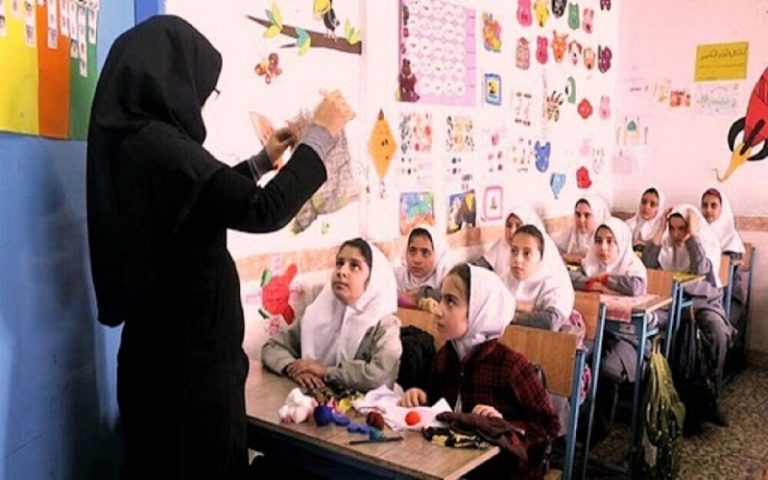
Iranian teachers and other educators across Iran took to the streets in over 100 cities on December 23 to protest the Iranian regime’s oppressive policies and the ‘teacher’s ranking’ bill that was hastily drafted by the Iranian parliament to appease the teachers’ previous demands.

Following the protests and demonstrations of teachers in more than 200 cities in recent weeks, on December 15, 2021, the clerical regime’s parliament drafted a bill entitled ‘teacher’s ranking’ which, even if implemented, would not have met the minimum demands of teachers. The teachers described the bill as a dagger to the ranking bill and vowed to continue their protests.

In Tehran, a large demonstration took place outside the Planning and Budget Organization, with other protests taking place outside of local Education Ministry offices in over 100 different cities across Iran, despite severe threats and repressive actions from the regime.

Protesters took to the streets chanting slogans such as, “We have heard too many promises, but no justice,” “Livelihood, dignity are our inalienable right,” and “teachers are awake, loathe discrimination.” Calls for the release of imprisoned teachers and political prisoners also rang out at the demonstrations.

Regime security forces charged at protesters in several cities, including Tehran, Mashhad, and Shiraz, in attempts to force them to disperse, but as the teachers resisted their suppression, the security forces soon retreated.

The concluding resolution of the teachers underscored that the teachers will not remain silent vis-à-vis so much injustice and oppression against teachers and educators. They demanded the unconditional release of all imprisoned teachers, the halt to summoning, interrogating, and fabricating cases in unjust courts against the teachers.

The President-elect of the NCRI, Maryam Rajavi addressed the protesters and praised them for standing strong against the suppressive forces of the regime. She said, “The first lesson of the arisen teachers of Iran is to be free and courageous in the face of the mullahs’ oppression. The teachers’ movement will carry on until their demands are met. The protests manifest the determination of the Iranian people to overthrow the clerical regime, which is the main cause of oppression, corruption, poverty, unemployment, and poverty.”

In other news, strikes took place in the cities of Sanandaj, Naqadeh, and Bukan, as bazaar and shop owners refused to open their businesses in protest of the criminal execution of Haidar Ghorbani, a Kurdish political prisoner.

Despite widespread domestic and international calls, Haidar Ghorbani was executed in Sanandaj on December 19, 2021. Large groups of people gathered in front of Haidar Ghorbani’s house in Kamyaran to protest the brutal execution.

As the anger and frustrations aimed at the regime have increased further in recent weeks, the terrifying regime has resorted to intensifying its repressive measures and ramping up executions to retain its power and create an atmosphere of terror. In just the space of a month between November 22 and December 21, around 39 people have been executed by the regime.

The Iranian Resistance continues to reiterate its calls to international powers, and human rights officials to condemn the rising number of executions in Iran and to take urgent action to prevent any more political prisoners from being executed.

Twenty-One U.S. Representatives Call on Sec. Blinken for a Decisive Approach to Iran

In a joint letter on December 15, 21 U.S. representatives issued a bipartisan letter calling on Secretary of State Antony Blinken for adopting a decisive approach to the theocratic government in Iran. They expressed their “growing concern with Iran’s advancing nuclear program and continued failure to cooperate with the International Atomic Energy Agency (IAEA) inspectors.”

Representatives include Henry Cuellar (D-TX), Jodey Arrington (R-TX), Ann Wagner (R-MO), Tom Cole (R-OK), Jim Costa (D-CA), Bill Johnson (R-OH), Darrell Issa (R-CA), Bill Posey (R-FL), Ronny L. Jackson (R-TX), Bryan Steil (R-WI), Bob Gibbs (R-OH), Josh Gottheimer (D-NJ), Brad Wenstrup (R-OH), Mariannette Miller-Meeks, M.D. (R-IA), Dan Bishop (R-NC), Andrew Clyde (R-GA), Ben Cline (R-VA), Ted Budd (R-NC), Chris Jacobs (R-NY), J. Luis Correa (D-CA), Mo Brooks (R-AL).

“As your administration continues to explore diplomatic options, Iran has been advancing its nuclear program to dangerous levels. At the same time, there is a strong bipartisan consensus in Congress that Iran must be prevented from ever acquiring a nuclear weapons capability,” representatives added.

For several months, authorities in Iran have crippled the IAEA’s monitoring capabilities by denying inspectors access to key nuclear sites, where Tehran is producing advanced centrifuges.

During recent weeks, IAEA Director-General Rafael Grossi has issued consistent warnings to the Board of Governors concerning Iran’s refusal to answer questions regarding previously undisclosed nuclear activity and overall failure to comply with its Nuclear Nonproliferation Treaty (NPT) obligations.

“As a result, stop-gap measures to monitor Iran’s nuclear activities are no longer “intact,” according to Grossi. Yet the U.S. led no effort, and the Board took no action, to press Iran to change policy,” U.S. lawmakers emphasized.

They also reminded the statement made by U.S. Chargé d’Affaires Louis L. Bono on November 25 at the IAEA Board of Governors meeting. “It is imperative that the Board break the current pattern of Iran’s eleventh-hour attempts to undercut Board unity and forestall Board action in the face of continued Iranian noncooperation,” Bono had stated.

Representatives also warned the U.S. Secretary of State about his administration’s eagerness for reviving the Joint Comprehensive Plan of Action (JCPOA) goes further the importance of the international conventions.

“Iran’s continuous efforts to degrade monitoring capabilities and refusal to answer questions on undisclosed nuclear activity undermine the authority of the IAEA and the legitimacy of the NPT. These issues go far beyond the JCPOA and speak directly to Iran’s compliance with the NPT and its safeguards agreement with the agency,” representatives mentioned.

In March, Grossi underscored the seriousness of Iran’s increased enrichment levels, noting that “a country enriching at 60 percent is a very serious thing — only countries making bombs are reaching this level.”

“Thus far, the new Iranian government has shown no willingness to cooperate with the international community and resolve these transgressions. It is vital that the United States lead the way in holding Iran accountable for its violations of international agreements and clearly demonstrate to the Iranians that there is a high price for intransigence,” lawmakers wrote.

“Without a show of resolve, Iran will likely assume that American desire to return to the JCPOA has outweighed its need to address the IAEA’s concerns. We appreciate the administration’s many statements expressing determination to ensure that Iran can never acquire nuclear weapons,” they underscored.

“The Administration must demonstrate clearly to the Iranians that there will be a high cost for continued refusal to cooperate with the IAEA,” they wrote in their letter.

No Doubt Iran’s Government Tries To Gain a Nuclear Bomb

The Iranian regime has been hiding until now its intention to build a nuclear bomb. And every time the Iranian Resistance mainly the People’s Mojahedin Organization of Iran (PMOI/MEK) exposed the regime’s purpose, it raised an excuse and with the help of the regime supreme leader’s fatwa that the regime will not gain any nuclear bomb and something like that is haram due to the religious morals.

“We do not believe in the atomic bomb; We do not believe in the atomic weapon; We will not try to reach it either. According to our beliefs, our religious principles, the use of such means of mass murder is strictly forbidden.” (Ali Khamenei, January 2010)

This statement was because that most parts of the regime’s nuclear case were implemented in secrecy and revealing the final goal of this project which was the nuclear bomb would create many obstacles for the regime, like moving under the Seventh Charter of the United Nations.

The purpose of the 2015 Joint Comprehensive Plan of Action (JPOCA) was to restrict and control the regime’s nuclear program. But until now this plan was not able to end the regime’s malign goals in its nuclear case and the regime is just a few steps away from becoming a nuclear power. Worth mentioning that the appeasement policy of the Western powers has helped the regime to reach its goals.

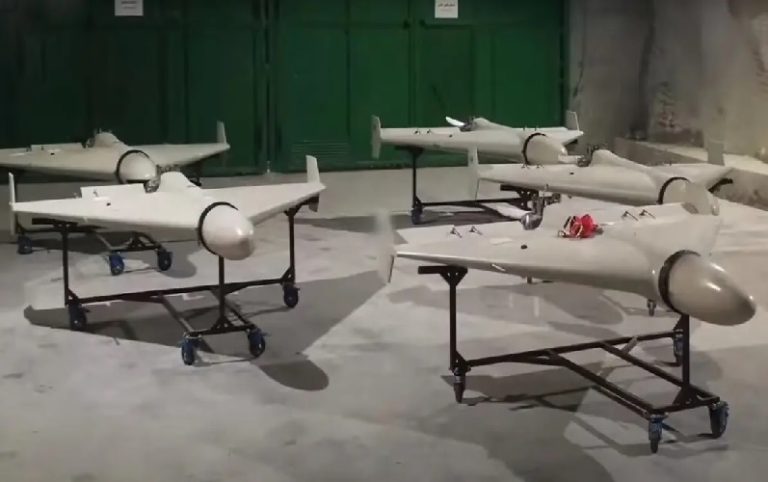
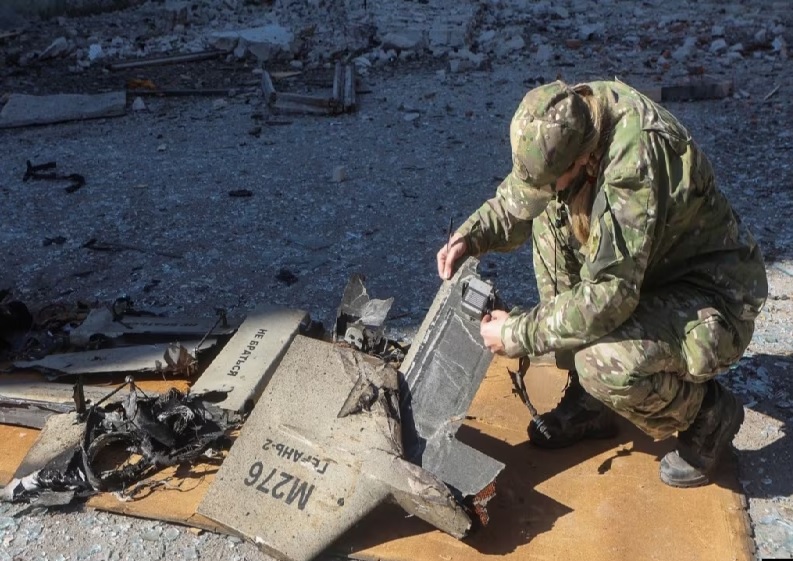
During this time and because of this policy the regime improved in UAV arsenal and increased the flying distance of its missiles. Now threatening far more nations.

A clerical regime with missiles, UAVs, and the nuclear bomb, with meddling in the Middle East and support of terrorism is much more dangerous than any other dictatorship in history. The truth is that until now the world has not experienced a clerical regime with mass destruction weapons in its hands.

Now amid the Vienna talks and the successive failures, suddenly the regime supreme leader’s mouthpiece the Kayhan is threatening the world and exposing its real goal:

“If all sanctions are not lifted, uranium enrichment will reach 90% and we will become a nuclear power.”

Before that Bijan Pirooz, a regime’s expert in a TV show said that the regime negotiating team has acted very weakly and the counterpart has the upper hand in the negotiations so that the regime nuclear case become evolved into a nuclear bomb case and that worsen the situation for the regime and closed many doors.

But finally, he accidentally revealed the regime’s real goal and said that the regime can have nuclear weapons but not in the dimension of mass destruction like the bombs that fell on Nagasaki and Hiroshima but, “10-ton mortars or missiles with plutonium warheads.”

It is recalled that before these masterminds of the regime, Mahmoud Alavi, the Minister of Intelligence of Rouhani’s government, said something that he should not say:

“The Supreme Leader explicitly stated in his fatwa that the production of nuclear weapons is against the Sharia and that the Islamic Republic does not go for it and forbids it. But if they corner a cat, it may behave in a way that a free cat does not.”

These claims are striking out the regime supreme leader’s fatwa about the good faith of the regime in its nuclear case.

And finally, Kayhan while trying very hard to keep up appearances, once again reveals the regime’s real goal as it said:

“Iran is the biggest winner of the Vienna talks, whether the talks are successful or fail. Because if the United States accepts the legal and legitimate conditions and demands of Iran for the complete lifting of sanctions, it means a great victory for the Iranian nation.

Otherwise, Iran will continue its nuclear program by easing sanctions and improving its economic situation, increasing its uranium enrichment from 60 percent to 90 percent if needed and becoming a global nuclear power.

Now it is up to the Western powers to decide to stop their failed appeasement policy or to save the world from a huge problem. The regime has expressed its main goal many times and the sad thing is that the Western Powers are closing their eyes and giving the regime the nod.

Stealing From the Poor To Give to the Rich Is the Basis of Raisi’s 2022–2023 Budget

The annual budget, in most countries across the world, is put together during a thorough process, involving a collaboration between politicians and economists, among many other professions. This budget is used to plan the country’s projected income and any expenses for the upcoming year and is created by balancing outsources of income against the country’s expenses.

A comprehensive and progressive budget is one in which its citizens’ welfare and wellbeing take priority and pave the way for advancements in technology, environment, education, medical, exploration, etc.

However, in Iran, the well-being of its citizens has never been one of the top priorities of the budget in any of the former and present governments. The way the budgets are created makes sure that the ones who benefit immensely from them are the regime’s Revolutionary Guards Corp (IRGC) and their affiliated companies and organizations, as well as many other regime-affiliated entities.

The latest government budget, presented last week to the Majlis by the regime’s president Ebrahim Raisi, consists of two parts. The first is the General Government Budget and this includes government expenditures, departments, salaries, and development budgets. The second is focused on the ‘non-governmental’ companies and foundations affiliated with the regime, which includes the IRGC and the military.

Through these companies and foundations, billions of dollars are generated and controlled which are used solely by the regime for exporting terrorism and oppressing the Iranian society. Not surprisingly, these foundations have tax exemptions and are never audited for their income and expenses.

In Raisi’s 2022-2023 budget draft bill presented to parliament on Sunday, the government proposed a 930 trillion rial budget for the Islamic Revolution Guard Corps, IRGC. Last year that number was 380 trillion rials, and the year before, 240 trillion.

The state-run Hamdeli daily wrote in their December 13 publication that the amount of the budget that has been allocated to the Broadcasting Organization of the Islamic Republic of Iran (IRIB) stands at 5,200 trillion rials. Compared to the amount that this organization had in the 2019-2020 budget, which was 3,300 trillion rials, the current amount has risen by 56 percent, over four times higher than the increase in Iran’s minimum wage which sits at 10 percent.

Only one-third of the regime’s budget for the upcoming Persian year (2022-2023) has been allocated to public expenses with ample ambiguities and non-transparencies.

In Raisi’s 2022-2023 budget, the demands of the Iranian people have been widely ignored. According to the state-run ILNA News Agency, the inflation rates of the past year have been completely ignored by the regime.

They said, “All these issues show that we will see rising inflation in 1401, and the expenses created in next year’s budget will be added to people’s living expenses.”

Also heavily increased in next year’s budget is the budget allocation of the military, which will only lead to further domestic oppression and the continued export of terrorism abroad. The regime’s malign activities will carry on as usual with the IRGC also receiving a hefty allocation of the budget.

All the while, budget plans have stipulated that the regime plans to impose further taxes on Iranian citizens, the majority of whom live way below the poverty line and must struggle daily to meet their needs and support their families. Also, the budget has wholly refused to address any of the current crises in Iran that are seriously impacting the lives of the Iranian people.

With the volatile situation of Iran’s society… Ebrahim Raisi’s budget and its implication will prove to become a driving force for the people of Iran to bury this regime for good and bring about a democratic government.

Iran’s Government Claims the End of Economic Recession

0

Last month we faced a very strange claim by Iran’s Central Bank. Right after that and with the use of the numbers published by the regime’s Central Bank and while all the economic statistics speak about the collapse of the country’s economy and while more than 60 million are living under the poverty line, the regime’s president Ebrahim Raisi admitted that the country is witnessing, ‘the appearance of signs of the end of the recession and the return of economic prosperity.’

Following these claims, some of the regime state-run dailies used it to divert the public opinion for the real situation in the country.

“The country’s economic growth is on the rise, and despite the effects of the coronavirus and sanctions, it has paved the way out of the recession. Controlling and directing liquidity to production, controlling inflation, lowering prices, and stabilizing various markets can bring a complete exit from the recession and bring the economy to the shore of calm.” (State-run news agency ILNA, October 24, 2021)

In mid-September, the head of Iran’s Program and Budget Organization also said: “In the 2022 plan, the main emphasis is on achieving economic growth. We can achieve 8 percent economic growth if we try, and it is possible.”

And the regime’s president in one of his latest expressions about the country’s economic situation and continuing to move towards economic growth and reducing inflation in the country said: “Positive steps have been taken in this regard.”

So, the regime is preparing for the public’s opinions for its demagogy that has been done over the past 42 years more than a hundred times.

For that, the Governor of the Central Bank, in a meeting with the CEO of the International Monetary Fund and the Ministers of Economy, and the heads of the regional financial institutions in the Manap constituency, which was held virtually, said:

“Iran is now on a solid path to economic recovery.” He pointed to the 6.2 percent growth of Iran’s GDP in the second quarter of 2021, “which indicates that the Iranian economy has significantly emerged from the recession and is moving towards recovery.” (State-run news agency ISNA, October 24, 2021)

But the reality of the country is not painting a wonderland about the country’s economy. Economic indicators also show that the investment trend has declined, and the country is suffering from capital depreciation.

This event has worrying consequences at both the economic macro and micro level of the country and threatens the well-being of families. In this regard, an economist said:

“Since the beginning of the 2000s, less investment has been formed in the country every year, and according to the report of the Tehran Chamber of Commerce, last year it showed a negative figure of 4.79 percent.

“With 100 trillion tomans ($3.5 billion) of investment in 2020, the lowest amount of investment is registered in the country and shows a significant decrease. The investment gap is so great that even if the annual investment in the country grows by 10 percent in this year, it will reach (the amount of) the 2000s in 2027.” (State-run website Tejarat News, October 14, 2021)

This economic variable is enough to show the depth of the crisis, that even with a huge amount of investment over the next few years, will just reach the situation of a decade ago. But this is just the tip of the iceberg of the country’s economic crisis.

This economic expert then added that the international investors have not anymore, the mood to invest in Iran, because of the regime’s many cases that have led to its sanctions. And the country’s economic substructures are moving rapidly to collapse.

But that is not all the scary story of Iran’s economy has more terrifying chapters. In this regard, Farshad Momeni, an economist, speaking about the quality and knowledge of Raisi’s economic team, said:

“The head of the Program and Budget Organization talks about the elimination of the 4,200 Tomans currency at very low quality. These justifications are enough to dismiss or voluntarily resign him because he showed he has no understanding of the Iranian economy. These absurd arguments even violate the reports of the Program and Budget Organization, the Central Bank, and the Statistics Center.” (State-run daily Tejarat, December 18, 2021)

Although the regime’s economic and monetary officials speak about the end of the recession, this will not detract from the real situation.

All the regime’s economic policies introduced by Raisi’s government are just the repetition of the failed policies over the past 42 years.

Iranian Society Becomes More Restive Amidst Worsening Poverty and Inequality

On December 19, the Iranian regime made an announcement acknowledging that the Omicron variant of the Covid-19 virus had entered Iran, which will most certainly increase the country’s already rising death toll. According to the Iranian opposition, this figure is fast approaching half a million people, with over 490,100 deaths recorded so far.

In the past few days, Iran’s state media have been discussing the depth of the problems faced by Iranian society, as well as the regime’s fear of the people retaliating to the worsening issues.

The Eghtesad-e Pouya media outlet acknowledged that the rising inflation in Iran is causing the prices of healthcare services and products to skyrocket, adding to the increase of the poverty line in the country.

They wrote, “The people’s declining purchasing power has now led to malnutrition, and thus, various physical, mental, and psychological diseases related to the lack of nutrients, vitamins, and minerals are dominating society. We could see this in the rising death toll and poverty.”

The Iranian people are suffering and struggling to make ends meet to provide for their families, and all the while regime officials continue to receive enormous salaries.

A report from the state-run Jomhuri-e Eslami on December 19, stated that the monthly salaries of regime officials are between 184 million tomans and 284 million tomans, while employees of the lower levels of the regime barely make 3 million tomans during the same time frame.

The state-run Arman Daily highlighted in their December 11 publication the dire state of the lives of Iranians under increasing levels of poverty.

They said, “Reports and statistics indicate people’s harsh living conditions. But the situation is even worse for poor Iranian families. Poverty now hurts people to the bone, and this is a serious issue. If the government does not take necessary measurements, people will be crushed under the high living costs.”

The Iranian regime has been adamant in promoting the false notion that the sanctions that have been placed upon them are the reason behind the worsening poverty levels and has suggested that the fate of Iran’s economy depends on the ongoing nuclear deal talks.

This issue was debunked by the Jahan-e Sanat daily over a week ago. They stated that most Iranians believe that the nuclear talks in Vienna are having no impact on the socio-economic problems in Iran and will not provide any solutions to resolve them. Only the Iranian regime is to blame for the problems because of their corrupt policies.

The major protests in Iran back in 2018, and the following year, have proved that the Iranian economic crisis does not stem from the regime’s sanctions, as they erupted three years after the nuclear agreement was made. The regime’s malign and corrupt activities set in motion the economic issues, which have now spiraled out of control.

The Jahan-e Sanat daily stated that “inflation and skyrocketing prices have crushed people, and they are unable to tolerate more pressure,” and posed the question, “So, why would a family that can hardly win its bread care about the Vienna talks?”

The Iranian people consider the regime as the real source of their problems. They witness how regime officials and their relatives receive astronomical salaries and live luxurious lives while people are living in absolute poverty. As a result, protests across Iran have increased, promising another nationwide uprising.

Iran Government’s Economic Suffocation

0

Since the new government in the US took over and has started its job and raised the issue of the negotiations about the Iranian regime’s nuclear case known as the Joint Comprehensive Plan of Action (JCPOA), the regime put two conditions on the table as the insurance of the continuation of the negotiations.

  1. All the sanctions related to the regime’s nuclear case, human rights, and weapon embargo must be lifted.
  2. The negotiating counterparts, especially the US government must ensure that the next US government will not cancel the JCPOA once again.

After two rounds of negotiations, the regime stepped back and accepted that only sanctions related to the JCPOA should be lifted and other sanctions related to other cases of the regime should be remain.

The regime’s foreign minister, Hussein Amir Abdollahian, told UN Secretary-General Antonio Guterres: “We have provided two texts on the issue of lifting sanctions and nuclear. These texts are following the JCPOA, and we have not made any demands beyond the JCPOA.” (State-run news agency IRNA, December 15, 2021)

Then the regime accepted that the IAEA install new surveillance cameras in the Karaj’s nuclear site. Right after this event, the regime government claimed that the budget of 2022 has been set, even if, not any of the sanctions would be removed. And added that it can save the country’s dying economy from a total collapse with the remaining sanctions, especially those that have restricted the regime’s oil sale. And put a step further and said that they have witnessed an 8 percent of economic growth in 2021.

Now the question is if the regime was able to create an economic boom in 2021 and has no need in the lifting of the sanctions, why did it accept that sanctions not related to its nuclear case remain, and accepted the IAEA’s new surveillance cameras?

The truth is that there is no other reason than economic suffocation. More important the regime fears the consequences of such a crisis which are the people’s protests.

It’s not without reason that the regime’s media and officials are speaking about the loss of the ‘People’s trust’ and warning each other about nationwide protests.

The state-run daily Arman in an article entitled ‘the people living is tied to the JCPOA’ wrote: “The 13th administration was forced to pursue nuclear negotiations” and “this administration is also taking steps in the same direction as the previous administration, and all it hopes is that by a new opening in the JCPOA, it can solve the problems of the people. Because “on the whole, the sanctions have taken any movement from the country’s economy.”  (State-run daily Arman, December 18, 2021)

The same paper in another article entitled ‘There is no choice but to agree on negotiations’, confessed that the regime’s government has no other way, but to accept the demands of the counterparts.

“The 13th government is trying to conclude negotiations. Because the only way is to negotiate the lifting of sanctions, and the lifting of sanctions is the only solution to improving the economic and livelihood situation and putting behind internal crises. The 2022 budget by Raisi’s government shows that Iran is seeking to revive the JCPOA and lift sanctions.” (State-run daily Arman, December 18, 2021)

Regarding the installation of surveillance cameras on the Karaj site, the state-run daily Jahan-e Sanat wrote:

“We saw that both Kamalvandi and Islami, even if they used to say that the Karaj site is not within the mandate of UN’s inspections because it does not do nuclear work, has retreated under pressure from the agency and allowed the agency’s experts to come and install their cameras.

“Of course, it was the right thing to do, because otherwise, the Board of Governors (of the IAEA) would have issued a resolution against us, and our case would go to the (UN’s) Security Council, and it would be difficult.” (State-run daily Jahan-e Sanat, December 18, 2021)

Failure of the Iran Nuclear Negotiations Will Likely Signal the End of the JCPOA

The Iranian regime’s spokesperson, Ali Bagheri-Kani spoke to international media over the weekend and stated that good progress had been made in the negotiations in Vienna to revive the 2015 Iran nuclear deal agreement, also known as the Joint Comprehensive Plan of Action (JCPOA).

While Bagheri-Kani’s remarks were optimistic, it seems that since the talks in Vienna resumed after a five-month delay, that optimism is said to be reflective of the regime’s hope that the Western signatories of the deal will give into their demands.

That position did not appear to have changed by Monday when those Western interlocutors unanimously contradicted Bagheri-Kani’s statements. The US, Britain, France, and Germany, all seem to be maintaining their brand of optimism, but only insofar as they are leaving open the door for serious progress at some point soon.

The Western powers have agreed that any chances of this progress weigh on whether the regime is willing to change their posture during the talks, which has hardened considerably since their new president Ebrahim Raisi was selected in June.

Bagheri-Kani has suggested that any term agreements from previous sessions of negotiations can be revisited in the presence of the regime’s new demands. However, these new proposals are inconsistent with not only the JCPOA but with the outcomes of previous talks.

As the talks resumed last month, Iranian representatives made it clear that their demand for sanctions relief extends to any that were re-imposed or newly imposed when the U.S. withdrew from the JCPOA in 2018.

These include not just those sanctions that were previously suspended under the terms of the agreement but also those that were later imposed for reasons unrelated to Iran’s nuclear activity.

At the regime’s request, the JCPOA is not addressing any other topic, regardless of whether it is connected to their nuclear program, so despite objections from many policymakers, the U.S. and the European signatories of the agreement have honored the regime’s restrictions. However, the regime has now demanded that the U.S. should remove sanctions from other things, unrelated to the nuclear issues, like their brutal crackdown of the November 2019 uprising in Iran.

While the regime’s representative has stated that the U.S. is near succumbing to their demands, the U.S. has vehemently denied this position. Before the talks resumed, officials of the U.S. State Department held meetings with their British, French, and German counterparts to discuss how to place additional pressure on the Iranian regime if they continued to obstruct the resumption of the negotiations.

Each of the Western participants in the JCPOA is currently more willing to entertain the possibility of that failure than they ever were before.

Back in early 2020, the regime announced that they would no longer abide by any of the deal’s terms. As a result, a dispute resolution process was triggered by the European JCPOA signatories, which could have re-imposed United Nations sanctions on the regime’s nuclear activities, but the top officials of the European Union decided to draw out the resolution process indefinitely rather than recognize that the deal was failing and to let go of it.

A joint statement was made by the European signatories on Monday which acknowledged that “Time is running out,” to resolve and rekindle the nuclear deal, and “Without swift progress, in light of Iran’s fast-forwarding of its nuclear program, the JCPOA will very soon become an empty shell.”

The fact is that the JCPOA has been an ‘empty shell’ for a long time and the Iranian regime has been buying time to pursue its nuclear project. Now that the E3 finally join in declaring the JCPOA as an ‘empty shell’, it is time to trigger the long-overdue snapback mechanism and re-impose the United Nations sanctions on the Iranian regime’s nuclear program.

Iran’s Water and Soil Crisis Will Destroy the Country

Prediction of a long-term hydrological drought in the early 2011s by NASA was not accepted by the Iranian government. In addition, the warnings of four decades of water resource mismanagement by water and environmental experts were also neglected by the regime’s officials too and finally, climate change and the occurrence of meteorological and climatic droughts and the reduction of rainfall and increase of the temperature exacerbate the effects of the regime’s mismanagements.

The most important and harmful axis of water resources mismanagement in Iran was investing in food self-sufficiency, which led to unregulated and unsustainable agricultural development.

This unwise policy has led to the uncontrolled abstraction of surface and groundwater resources and the development subsidence and has led to the destruction of a large part of the country’s renewable water resources.

However, a review of official statistics and information shows that in recent years, not only the regime has not achieved food and agricultural self-sufficiency, but also due to the spread of poverty and inflation, and unemployment, people’s purchasing power has decreased sharply, and food security is jeopardized more than ever.

The devastating effects and consequences of endangering food security in any country are far more dangerous and tragic than the lack of food self-sufficiency.

The crisis of quantitative and qualitative water resources is almost nothing compared to the crisis of quantitative and qualitative soil resources.

Because the crisis of water quantity and quality can be solved by spending an exorbitant amount of money and importing water or desalination of seawater and many other solutions, but very valuable soil resources that are lost due to the regime’s mismanagement every year is suffering a severe erosion. And the soil that remains is being severely salted, and cannot be compensated under any circumstances, and in the long run, it will destroy the land, civilization, and life.

International authorities emphasize that to achieve sustainable development, it is necessary to pay balanced attention to all economic, political, and social aspects in the form of good governance. However, the regime considers only its destructive economic goals which are in the favor of themselves, which has led to unbalanced development.

The failed policy of agricultural self-sufficiency, improving agriculture with lower water consumption, ignoring the natural potentials of the country, creating stable job opportunities to decrease the pressure on the country’s water resources, plans to increase the country’s population, inattention to the settlement of the population in regions with low or critical water resources, expansion of the metropoles, the establishment of high-water consuming industries on wrong places, ignoring water loss in the distribution network, the existence of the laws in contradiction with the nature, has led the country to a water source failure, so the that the regime is forced to think about the import of water with high expenses, transfer of water between water basins, seawater desalination and its transfer to the central plateau of the country, which will have many environmental consequences.

In addition to technical and specialized difficulties, water import has special complexities in legal, diplomatic, political, environmental, economic, social, and even security aspects. Normally, importing water is not economical. Even water desalination in the country is not economical.

The worst effect is that now after 42 years the mullahs are making the country dependent on other countries, because water is a vital necessity, and the regime cannot ignore it, and projects will add a huge amount of expenses to the country’s broken economy.

For example, to transfer water into the country from the south, at least about 500 kilometers of a pipeline is needed, which imposes very heavy costs on the country and prolongs the implementation time of the project.

Seawater desalination projects should be done using renewable energy to minimize environmental damage, but Iran is far behind the southern Gulf countries in terms of renewable energy development.

According to the regime’s fifth and sixth five-year development plans, they were supposed to launch about 10,000 megawatts of renewable electricity in the country, but during the last ten years, the total amount of renewable energy generated has not reached even 1,000 megawatts.

Which is a sign of the regime’s capital waste in its nuclear project, which is growing skepticism about the regime’s ambitions to gain nuclear weapons.

One of the biggest future crises in the country, which has not been considered so far, is the consequences associated with a sharp drop in groundwater levels and the development of subsidence.

Currently, the Ministry of Energy is making every effort to provide the water resources needed for drinking, agriculture, and industry in the crisis-hit areas of the country and is not thinking of balancing aquifers and supplying groundwater reservoirs to reduce the rate of subsidence.

Finally, if the regime continues its 42 years policy, we will see the destruction of Iran and its civilization.