Home Blog Page 26

The Iranian Regime’s Clandestine Influence and Infiltration Networks in Europe

Based on a comprehensive investigative report published by the French outlet “Le Diplomate” a sprawling and highly structured network of clandestine influence operated by the Iranian regime has deeply penetrated European societies, elites, and decision-making centers. The detailed exposé reveals how Tehran, particularly since the 2013–2015 nuclear negotiations, has seamlessly blended traditional diplomacy with covert infiltration tactics, utilizing academic circles, think tanks, cultural associations, and parliamentary friendship groups to shape Western policy. This strategic maneuvering comes at a critical juncture; with Iran’s regional proxies severely weakened following the geopolitical shifts of the summer of 2025, and the regime facing unprecedented internal isolation following the bloody massacre of protesters during the massive nationwide uprisings of December 2025 and January 2026, Tehran is increasingly relying on its European networks to break its diplomatic isolation, circumvent sanctions, and legitimize its grip on power.

The IRGC is Trying to Wipe Traces of its Crimes During Nationwide Protests

The foundation of this influence operation was starkly exposed by recent international leaks, most notably the thousands of emails from Mostafa Zahrani, a former director at the Iranian Foreign Ministry, obtained by Semafor. These communications unveiled the “Iran Experts Initiative” (IEI), a coordinated effort orchestrated by Iranian diplomats, including Saeed Khatibzadeh, to cultivate a core group of “second-generation” Iranians living in the West. These individuals were strategically placed within prestigious Western think tanks and government institutions to echo Tehran’s narratives under the guise of independent academic analysis. Prominent figures implicated in this network include Ariane Tabatabai, who secured high-level, security-cleared positions at the Pentagon and within Robert Malley’s nuclear negotiation team, as well as Dina Esfandiary and Ali Vaez at the International Crisis Group. Their primary function, according to the report, has been to subtly steer Western capitals toward accommodating Tehran’s demands regarding the nuclear program and sanctions, while systematically disseminating the false narrative that no credible, organized democratic opposition exists against the clerical regime.

The institutional mapping of this infiltration is further corroborated by the “Friends of a Free Iran” (FoFI) report presented to the European Parliament in November 2023, and notably by an exhaustive 86-page investigation titled “The Infiltration of the Islamic Republic of Iran in France,” directed by Gilles Platret for the “France 2050” think tank in the fall of 2025. This latter report identifies France as a primary laboratory for Tehran’s operations, pointing to the Iranian Embassy in Paris as the central continental hub for these activities. The strategy relies heavily on “hybrid actors” who operate at the intersection of diplomacy, academia, and civil society. A prime example cited is Alireza Khalili, who simultaneously serves as the chief of staff to the Iranian Ambassador in Paris, the president of the Franco-Iranian Centre (CFI), and a university professor of geopolitics. This calculated overlap allows Iranian operatives to infiltrate French academic, media, and political circles, using ostensibly benign cultural events as platforms for recruiting influential voices and advancing the regime’s strategic agenda. The report also serves as a grim reminder that this “soft power” is intrinsically linked to state-sponsored terrorism, recalling the case of Assadollah Assadi, an Iranian intelligence officer operating under diplomatic cover who was convicted in Belgium for orchestrating a foiled bomb plot against the Iranian opposition gathering in Paris in 2018.

Iran Marks 100 Executions in One Week, 241 Executions in Three Weeks

One of the most vulnerable and under-regulated vectors of this foreign interference lies within European parliamentary institutions, particularly the “friendship groups.” The report casts a critical eye on the France-Iran friendship group in the French National Assembly, recently reactivated under the presidency of Socialist MP Ayda Hadizadeh. The investigation highlights a troubling lack of transparency and geopolitical vetting within these parliamentary bodies, which can easily be transformed into Trojan horses for foreign state lobbying. Hadizadeh herself has sparked controversy with proposals that align remarkably well with Tehran’s official rhetoric. At a time when French diplomacy is actively working to free its citizens held hostage in Iran, she suggested inviting the Iranian ambassador for a media exchange at the Assembly. Furthermore, in an interview with Le Figaro, she proposed facilitating a dialogue between democratic forces that included the son of the former Shah—a figure associated with a deposed dictatorship—while explicitly excluding the main organized resistance, the MEK (Mujahedin-e Khalq). This systematic exclusion perfectly mirrors the Iranian regime’s intense animosity and propaganda campaigns against its most structured opposition.

The academic and media spheres are equally targeted, with universities often unwittingly providing a veneer of legitimacy to Tehran’s proxies. The report scrutinizes a June 11, 2025, colloquium held at the prestigious Sorbonne University, which was quietly co-organized by “Asre Goftego Qalam,” a Tehran-based institute directly linked to the Iranian Ministry of Culture and recently praised by Iran’s cyber police, alongside “Ferdossi Legal.” Such events are designed to lobby for the lifting of international sanctions under the guise of pluralistic intellectual debate. The fallout of this infiltration was visible on French television, where individuals like Kevan Gafaïti, another colloquium participant, appeared on networks like LCI to downplay and minimize the sheer scale of the regime’s brutal massacres of protesters in January 2026. The investigative report explains that Tehran enforces this loyalty not necessarily through ideological alignment, but through a sophisticated system of blackmail and “hostage diplomacy.” By controlling visa access for dual nationals, journalists, and researchers who desperately need to visit Iran for family or professional reasons, the regime coerces them into compliance, forcing them to parrot state narratives and attack the opposition—a tactic heavily documented by German domestic intelligence (BfV) and independent journalists alike.

Ultimately, “Le Diplomate” warns that Europe suffers from a dangerous structural blindness, having concentrated its anti-interference mechanisms almost entirely on Russia and China while leaving a massive blind spot regarding Iran. The report concludes that a purely moral or legal response is insufficient; Europe must adopt a stance of absolute “Realpolitik.” This requires the immediate implementation of specific registries for foreign-funded entities, strict oversight and transparency mandates for parliamentary friendship groups, and rigorous security audits of academic partnerships with Iranian institutions. By failing to recognize this meticulously orchestrated infiltration as a low-cost, high-yield weapon of asymmetric warfare, Western democracies are essentially granting the Iranian regime unchecked leverage to manipulate public opinion, neutralize opposition voices, and shape the very policies intended to contain it.

Amnesty International warns of execution risk for 30 protesters in Iran

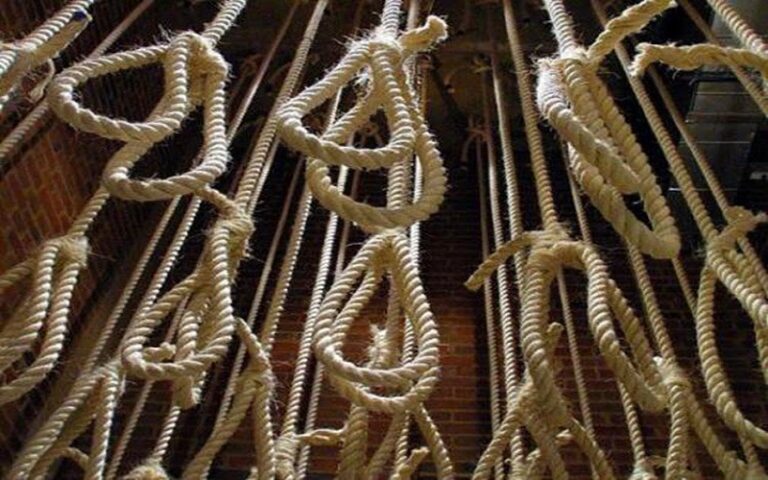
Amnesty International announced that at least 30 people, including several children, are at risk of execution following the nationwide protests of January 2026 and called for the immediate halt of executions and the overturning of the convictions.

Amnesty International said on Friday, February 20, 2026, that officials of Iran’s regime must immediately stop the execution of eight individuals who have been sentenced to death in connection with the January 2026 protests.

The organization also called for the annulment of the convictions and an end to the rushed and grossly unfair judicial proceedings against at least 22 others.

The United Nations Children’s Fund (UNICEF) also called on February 19, 2026, for the immediate release of all children detained during the protests in Iran and stressed that the detention of children in all forms must end.

Expressing concern over the continued detentions, the UN agency called for independent access to the children and for Iran’s regime to uphold its obligations under the Convention on the Rights of the Child.

Risk of execution for at least 30 people

According to information compiled by Amnesty International, at least 30 people are facing the death penalty in connection with the protests that took place in January 2026.

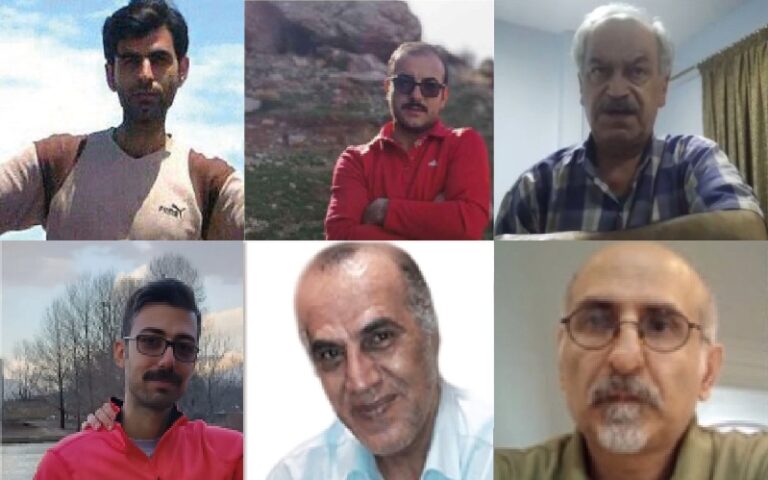
Eight of them, who were sentenced to death in February within weeks of their arrest, are 18-year-old Saleh Mohammadi, 19-year-old Mohammadamin Biglari, Ali Fahim, Abolfazl Salehi Siavoshani, Amirhossein Hatami, Shahin Vahedparast Kolour, Shahab Zahedi, and Yaser Rajaeifar.

At least 22 others, including two 17-year-old teenagers, are currently on trial or awaiting trial.

Amnesty International stated that these individuals have faced confessions extracted under torture and other serious violations of their right to a fair trial, including being denied access to a lawyer during the investigation phase and the refusal to accept independent lawyers chosen by their families.

Diana Eltahawy, Amnesty International’s Middle East and North Africa Deputy Director, said:

“The Iranian authorities are once again laying bare the depth of their disregard for the right to life and justice by threatening expedited executions and imposing death sentences in fast-tracked trials, only weeks after arrest.

“Children and young adults form the bulk of those caught in the machinery of state repression following the January protests,” she added

The organization said the actual number of people at risk of execution is likely much higher, as authorities prevent families from speaking out and hold detainees in incommunicado detention.

Amnesty International urged UN member states and regional and international bodies to take immediate and coordinated diplomatic action to overturn the death sentences of Mohammadi and Biglari and to prevent further death sentences from being issued.

The organization also called for UN special rapporteurs, the UN fact-finding mission on Iran, and embassy representatives to be granted access to detention centers and allowed to attend court proceedings.

Show trials and forced confessions

Mohammadi, 18, was arrested on January 5, 2026, and on February 4, 2026, was sentenced to death by Branch one of the Criminal Court of Qom province on charges of involvement in the killing of a security officer, an accusation he has denied.

Amnesty International said that he retracted his “confessions” in court and stated they had been obtained under torture, but the court dismissed the claim without investigation.

Nineteen-year-old Biglari and six others were also sentenced to death on February 9, 2026, by Branch 15 of the Revolutionary Court of Tehran, presided over by Abolghasem Salavati, on charges of “enmity against God” and for “setting fire to a Basij base.” The Basij is a paramilitary force affiliated with the Islamic Revolutionary Guard Corps (IRGC).

EU Designates IRGC as Terrorist Organization Amid Escalating Repression in Iran

According to an informed source who spoke with Amnesty International, Biglari was subjected to enforced disappearance for weeks and was denied access to a lawyer during the investigation phase.

Amnesty International stated that these two teenagers are facing charges punishable by death despite the explicit prohibition of executing individuals who were under 18 at the time of the alleged offense.

The organization emphasized that since 2022, following nationwide protests, the use of the death penalty in Iran has increased, and in 2025 the highest number of executions since 1989 was recorded.

Amnesty International called for the situation in Iran to be referred to the Prosecutor of the International Criminal Court and for the prosecution of responsible officials under the principle of universal jurisdiction.

Fortieth-Day Memorials in Iran Turned into Nationwide Protests

Simultaneously with the holding of the fortieth-day ceremonies (marking the 40th day after the death of the uprising’s martyrs) for several victims of the January uprising, various cities across Iran witnessed large public gatherings. In Fars Province, in the city of Nurabad Mamasani, a large number of citizens gathered to commemorate two individuals killed during the protests, Mehdi Ahmadi and Abolfazl Heydari Mouselou.

In the city of Qir, also in Fars Province, the fortieth-day ceremony for Abolfazl Heydari Mouselou was held at his gravesite with the participation of thousands. The crowd commemorated him by chanting slogans such as “Death to the dictator,” “Abolfazl, may your soul be happy,” “This fallen flower has sacrificed himself for the homeland,” and “An Iranian dies but does not accept humiliation.” According to local reports, the atmosphere of the مراسم was marked by a large public presence and explicit protest slogans.

Iran: 1,100 Executions Over Three Months; An Ongoing Massacre

At the same time, the fortieth-day ceremony for Mehdi Ahmadi was held in Nurabad Mamasani. Participants kept his memory alive by chanting slogans including “Death to the IRGC”—referring to the Islamic Revolutionary Guard Corps, a key military and security force of the Iranian regime—and “Death to Khamenei,” referring to regime supreme leader Ali Khamenei. Images and reports published on social media indicate that a significant crowd attended the ceremony, and the event turned into a protest against the Iranian regime.

In a similar development, in Golestan Province, a fortieth-day ceremony was also held for martyr Nahayat Rahimi Dashti, a young woman who, according to reports, was shot in the neck and killed on Thursday, January 8, at Kakh Square in the city of Gorgan. During the ceremony, her mother addressed the attendees with moving words, saying: “My child was not a passerby; she was a fighter! She went for her homeland!”

These ceremonies were held as the fortieth-day commemorations of the January protest victims in recent weeks have increasingly become venues for expressing public anger and renewing the protesters’ demands. The broad public participation and the repetition of political slogans at these events indicate the continuation of a tense social atmosphere in several cities.

The simultaneous holding of these ceremonies in several cities—from Qir to Nurabad Mamasani and Gorgan—once again demonstrated that the fortieth-day mourning rituals for those killed are not merely memorial services but have become platforms for expressing protest and social solidarity.

Iran: 1,100 Executions Over Three Months; An Ongoing Massacre

Following a new wave of executions in Iran, the National Council of Resistance of Iran (NCRI), the main Iranian opposition coalition, announced in a statement that between Saturday, February 14, and Tuesday, February 17, at least 58 prisoners were executed in various prisons across the country, including two women. According to the report, the implementation of death sentences continues at an unprecedented pace, and in recent days dozens more prisoners have lost their lives.

Iran Marks 100 Executions in One Week, 241 Executions in Three Weeks

According to the figures provided, 12 people were executed on Tuesday, February 17; 15 on Monday, February 16; 15 on Sunday, February 15; and 16 on Saturday, February 14. Earlier, 34 prisoners had been executed on February 9 and 10, and another 12 on February 12. These figures indicate a sharp rise in the implementation of death sentences over a short period of time.

Another part of the report refers to the death of a 22-year-old man named Nima Jafari in a detention center run by the Intelligence Ministry in Bandar Abbas, a city in southern Iran. He had been arrested on February 6, and a few days later his body was returned to his family. Authorities declared the cause of death to be suicide, a claim that has been met with serious doubts and questions.

At the same time, statistics published by human rights organizations show that the execution trend has risen alarmingly this year. According to the published data, the total number of executions from March 21, 2025 (the beginning of the Persian year), to February 20, 2026, has so far reached 2,555 cases.

Since mid-2024, during the tenure of Iranian regime president Masoud Pezeshkian, 3,522 executions have also been reported.

According to statistical data, there were 375 executions in December 2025 and 375 executions in January 2026, coinciding with a nationwide uprising, bringing the total number of these executions so far to over 1,100.

The increase in executions in recent months has been met with widespread human rights reactions and has once again brought the issue of the death penalty in Iran to the forefront of attention by international bodies and human rights advocates.

Three Iranians Arrested for Transferring Google Trade Secrets to Iran

The FBI announced that two Iranian sisters and the husband of one of them, who previously worked at Google, were arrested in the United States on Thursday, February 19, 2026, on charges of stealing technical information related to the search engine and other technologies and transferring this information to Iran.

Samaneh Ghandali, 41, and her husband, Mohammad Javad Khosravi, 40, along with her sister Sarvar Ghandali, 32, a resident of San Jose, were arrested on Thursday.

All three previously worked at Google and were active in the field of mobile computer processors.

Political Prisoners from Ghezel Hesar and Yazd: Voices from Behind Bars

The three are accused of transferring trade secrets related to processor security, encryption, and other technologies from Google and other technology companies to unauthorized third-party and personal locations, including work devices associated with each other’s employers, and to Iran.

According to the report, after Google’s internal security systems detected Samaneh Ghandali’s activities, her access to company resources was terminated in 2023.

In another example of such activities, Swedish media reported about one month ago on the arrest of two Iranian-born brothers on suspicion of industrial espionage for Iran’s regime in Sweden.

This case involves high-level industrial espionage targeting a sensitive company in the field of medical and healthcare technology.

The prosecutor in the case said the company produces products related to medical treatment.

According to him, the company detected suspicious behavior by the two Iranian-born brothers, who are suspects in the case, and filed a complaint with the police.

They were arrested about five months ago.

Swedish outlet TV4 News reported that the investigation into the highly confidential case is ongoing in cooperation with Sweden’s Security Service.

The two Iranian-born brothers have lived in Sweden for several decades, and the older brother has been under investigation for high-level espionage since the beginning of the current calendar year.

The other brother is also suspected of theft in the same high-profile case. He was recently released from detention on conditional bail.

In the fall of 2022, two Iranian brothers in Sweden were charged with spying for Russia.

According to reports published in Sweden, Iranian students and researchers abroad are participating in a program aimed at acquiring knowledge that could be used by the military industries of Iran’s regime.

Political Prisoners from Ghezel Hesar and Yazd: Voices from Behind Bars

0

In February 2026, two political prisoners held in Iran’s prison system—one under a sentence of death—sent messages from prison describing intensifying repression, secret detentions, and what they characterize as crimes against humanity. From Ghezel Hesar Prison and Yazd Prison, they warned of escalating abuses while expressing unwavering belief in the ultimate victory of the Iranian people.

“The Main Earthquake Is Still Ahead”

From Ghezel Hesar Prison, political prisoner Shahrokh Daneshvar Kar, currently on death row, wrote that the nationwide uprising was neither unexpected nor over.

“It had been completely clear for months that an uprising in Iran was on the way,” he stated. Referring to the January events, he described them as “only a pre-earthquake,” adding: “The main earthquake that will bring down the throne of Khamenei’s rule lies ahead of us and is inevitable.”

According to Daneshvar Kar, once protests gained momentum, efforts were made to manipulate their direction. He argued that what was “entirely an internal uprising” was portrayed as externally driven in order to serve the interests of the ruling establishment.

He placed responsibility for the crackdown on regime Supreme Leader Ali Khamenei.

“Khamenei, the executioner, ordered that the protesters be put in their place,” he wrote. “The repression apparatus labeled freedom-seeking people as ‘terrorists’ and, with full brutality, began killing, committing ‘crimes against humanity,’ and carrying out mass arrests.”

While public attention has focused on images of violence in the streets, Daneshvar Kar stressed that many abuses remain hidden.

“Young people and many citizens have been arrested, and there is no news or trace of them,” he warned, noting that detainees range “from minors under 18 to elderly women and men” who are being held in secret detention centers or official prisons.

Drawing on his own experience within the judicial and security system, he described what he says detainees now face: “brutal physical torture,” “false promises,” and “repeated threats by interrogators.” He explained the purpose of such treatment: “All this pressure is solely aimed at extracting forced confessions and fabricating cases to justify unjust and baseless sentences.”

Facing execution himself, Daneshvar Kar issued an appeal beyond Iran’s borders.

“I call on awakened consciences, human rights institutions and international bodies responsible for protecting human dignity and preventing human rights violations and genocide to move beyond verbal ‘condemnations’ and mere ‘expressions of concern’ and take concrete and decisive action.”

He urged immediate measures to secure the release of detainees, conduct prison inspections, and hold authorities accountable. “Even today is late,” he warned. “Many lives are in danger.”

Addressing families of detainees, he encouraged them not to yield to pressure or deception by intelligence agents and to publicize arrests and deaths “as quickly as possible and with details.”

“Remember,” he wrote, “the very foundation of solitary confinement is to cut the detainee off from the outside world so that they imagine there is no option but to believe the interrogators. With the silence of families, the hand of repression becomes freer and the solitary cell tighter.”

His message was dated February 2026 from Ghezel Hesar Prison.

“We Are the Change We Have Been Waiting For”

In a separate statement dated February 15, 2026, political prisoner Parisa Kamali wrote from Yazd Prison, honoring those killed in the struggle for freedom and affirming hope in the face of repression.

“Greetings to the martyrs of the path of freedom and their families,” she began.

Reflecting on years of injustice, she wrote: “For years we have mourned the absence of justice and freedom. But for our sisters and brothers—our daughters and sons—who gave their lives like butterflies on this path, we do not wail or despair. We take pride in them.”

Kamali pledged that the struggle would continue.

“We will never let this flag fall to the ground until the day our homeland Iran is free,” she wrote. “We believe that this blood-stained path will end in victory, and that this blood will cleanse our homeland of these sinister criminals.”

In one of the most striking lines of her message, she emphasized collective responsibility:

“We are exactly the ones we have been waiting for. We are the change we are seeking.”

British Couple Imprisoned in Iran Sentenced to 10 Years in Prison on Espionage Charges

0

The family of Lindsay and Craig Foreman, a British couple imprisoned in Iran, announced that the two have been sentenced to 10 years in prison on charges of espionage. The verdict was issued by Branch 15 of the Revolutionary Court in Tehran, a court under the Iranian regime that typically handles political and security-related cases. The couple were arrested at the beginning of 2025 while traveling through Iran by motorcycle.

Five months earlier, the Foremans had appeared in a three-hour session before the Islamic Revolutionary Court in Tehran. They were not permitted to defend themselves.

The UK foreign secretary described the 10-year prison sentence for the couple as completely shocking and unacceptable.

Yvette Cooper said she would pursue the Foremans’ case relentlessly until the couple return safely to the United Kingdom.

In recent days, Joe Bennett, Lindsay’s son, said that the conditions of the British couple imprisoned in Iran have deteriorated and are worse than ever.

He called on the British government to make greater efforts to secure their release.

Bennett had previously criticized what he described as inaction by the British government, stating that despite repeated promises that the case was a priority, no decisive action had been taken to free them.

He had said that the couple had been threatened with execution and left in conditions of malnutrition without access to medical treatment.

It has also been reported that they have been subjected to psychological torture through staged releases and deceptive tactics by security agents.

On January 7, The Telegraph newspaper reported, citing the couple’s family, that officials had told Lindsay and Craig Foreman they had been released and were returning to Britain. However, after their flight from Kerman landed in Tehran, the couple were separated and transferred to prisons in the capital.

According to the report, the couple were arrested more than one year ago by forces of the Islamic Revolutionary Guard Corps (IRGC), a powerful military and security organization of the Iranian regime.

The IRGC is Trying to Wipe Traces of its Crimes During Nationwide Protests

During a round-the-world motorcycle journey in January of last year, they entered Iran from Armenia and, after staying in the cities of Tabriz, Tehran, and Isfahan, intended to travel to Kerman. However, on February 3, 2025, they were arrested en route to that city on charges of “espionage”—an accusation both have categorically denied.

The Telegraph, quoting Bennett, wrote that six months after their arrest, Iranian authorities promised them release and, during their transfer from Kerman to Tehran, placed them on a commercial flight and assured them they were returning home.

Despite this, after the plane landed, the couple were blindfolded and handcuffed and transferred to separate prisons: Lindsay to Qarchak Prison and Craig to Evin Prison, both facilities in Tehran known for holding political and foreign detainees.

The Telegraph, citing Bennett, emphasized that this incident was one of several instances of psychological abuse inflicted on the couple.

According to Bennett, his mother is being held in a ward housing violent local prisoners, while Craig Foreman is being held among political prisoners.

Bennett said that daily fights occur in the ward where his mother is being held, and she feels extremely unsafe. He stated that this situation is not a neutral administrative decision but poses a real danger to prisoners’ lives.

The UK Foreign Office has previously warned all British and dual nationals to refrain from traveling to Iran.

Trace of Mojtaba Khamenei in A Multi-Hundred-Million-Euro Deal in Vienna

The Austrian newspaper Der Standard reported in an investigative article on Wednesday, February 18, that Mojtaba Khamenei, the 56-year-old son of Iranian regime supreme leader Ali Khamenei, had engaged in negotiations in 2024 through a Vienna-based company that operated the Spar supermarket chain in Iran.

According to a draft contract obtained by the newspaper, the proposed price of the deal was 706 million euros—an enormous sum indicating efforts to transfer vast amounts of capital out of Iran.

Director of Tehran’s Largest Cemetery Confirms ‘Coup De Grâce’ Shots to Wounded Protesters

Mojtaba Khamenei is regarded as the economic and political mastermind of the Khamenei family and is considered his father’s favorite son. He is widely viewed as a potential successor to Ali Khamenei—unless the Iranian regime collapses as a result of the ongoing protests.

The newspaper emphasized that this sensitive transaction was handled at the highest levels of Iran’s ruling establishment and was part of a risk-averse strategy to move assets abroad amid internal crisis.

While the regime has plunged the Iranian people into poverty and repression, the supreme leader’s children are transferring massive assets to Europe to secure a safe haven in the event of the regime’s downfall.

Director of Tehran’s Largest Cemetery Confirms ‘Coup De Grâce’ Shots to Wounded Protesters

Javad Tajik, the head of Behesht-e Zahra Organization, the authority overseeing Tehran’s largest cemetery—officially acknowledged for the first time at a press conference the presence of coup de grâce gunshot wounds on the bodies of those injured during the January 2026 protests. However, he blamed the crime on “terrorists.”

He said: “Certainly terrorists and those who were armed delivered coup de grâce shots to the people and to more than 70% of the bodies; the terrorists fired.”

The IRGC is Trying to Wipe Traces of its Crimes During Nationwide Protests

This unusual claim comes despite numerous accounts from eyewitnesses, bereaved families, and forensic reports indicating that coup de grâce shots were fired directly at the heads and chests of the wounded by security forces and the Basij militia, a paramilitary force under the Iranian regime, to ensure that no witnesses remained alive. The high rate of coup de grâce wounds—reported in more than 70% of the bodies—itself points to the systematic nature of this crime, rather than the actions of “unknown terrorists.”

Children Detained During Iran’s January Uprising in Alarming Conditions

There are still no precise statistics on the number of children detained. The justice minister of the Iranian regime has stated that a number of teenagers aged 16 to 18 are being held in juvenile detention and rehabilitation centers.

However, received reports indicate that many of these children and teenagers have been held in Tehran Greater Prison (Fashafouyeh), Amol Prison, Vakilabad Prison in Mashhad, as well as in secret detention centers in Kerman and Mashhad—facilities where, according to accounts, they have been subjected to various forms of physical and psychological torture and abuse.

The families of some of these teenagers have still not been able to secure lawyers for their children and are deeply concerned about their condition.

Iran’s Regime Increases Student Suppression with Body Searches in Schools

Held in general crime wards and risk of assault

Some reports from inside Fashafouyeh Prison and Amol Prison indicate that detained children are being held in wards designated for ordinary crimes. According to informed sources, in some halls overcrowding is so severe that it is impossible to ensure the protection of these children.

Some prisoners have also spoken about the risk of sexual assault and abuse against these children; an issue about which prison officials have reportedly been informed, yet no action has been taken to prevent it.

According to the account of a non-political prisoner from Fashafouyeh Prison, between January 10 and February 4 the number of children in the ward had increased to such an extent that, unfortunately, some inmates convicted of violent crimes sexually abused these children, while prison authorities practically took no action to protect them.

Release on heavy bail and signing unknown documents

In Amol Prison, the number of detained children during the first two weeks was reportedly so high that, according to visitors, on one day in early February, after the prison gates were opened, around 20 to 25 children aged 13 to 16 were handed over to their families in disheveled and poor condition.

According to the families, all of these children were required to sign documents before their release, the contents of which were unknown to them. Only after signing these papers were they freed on bail amounts ranging from several hundred million tomans to one billion tomans—equivalent to several billion to 10 billion rials (approximately 62,500 U.S. dollars).

Lack of information about the detainees’ condition

A lawyer in Kerman Province, expressing concern about the situation of detained children, said: “We practically do not have much information, unless a family comes forward.”

According to him, some families have been advised to file missing person reports.

The father of a 17-year-old teenager who was recently released approached this lawyer to follow up on his son’s legal status. He said the teenager had been beaten repeatedly, had two broken ribs, and had dislocated fingers.

According to him, his son is severely distressed and recounted: “They sat us in a room without windows and urinated on us. They kept mocking us and laughing loudly at us. I think they kept us there like that for several days. Then they brought a hose and sprayed us with ice-cold water at high pressure.”

The lawyer emphasized that families are under pressure and that informing the public under such circumstances is of great importance.

In another case, according to the father of one of the detained children in Amol, officials told him: “You were given the chance to raise your child; now we will make them into proper people ourselves.”

Accounts of unofficial detention centers in Mashhad

The issue of detaining and abusing children has previously drawn the attention of human rights organizations. During the nationwide protests of 2022, Human Rights Watch reported that Iranian security forces, in suppressing the protests, had killed, tortured, and in some cases subjected children to sexual assault and enforced disappearance.

Iran’s Solution: Foreign War or Popular Uprising?

A relative of the family of a 16-year-old teenager in Mashhad said that for two weeks there was no information about the child’s condition. The family was initially told that he was in a juvenile detention center, but follow-ups yielded no results.

A financial crimes prisoner who was recently released from Vakilabad Prison contacted the family and said that the child had been held for some time in an unofficial detention center and, prior to his release, had been transferred to a general crimes ward.

According to this source, cigarette burn marks were clearly visible on the teenager’s wrist and arm, and he had difficulty walking. The teenager has not provided many details about what happened to him, but his family suspects that he may also have been sexually abused.

According to this former financial prisoner, the child was told: “You will not see your family again, and we will throw your corpse away.”

He was also forced to sign a document which, according to him, was required in order to stop the torture.