Home Blog Page 37

Day 15 of Iran Uprising – Strikes Expand, Security Forces Flee, More Martyrs Identified

Sunday, January 11, 2026

The nationwide uprising against Iran’s clerical regime has entered its fifteenth day, with citizens across the country continuing to defy the authorities despite brutal crackdowns and a near-total internet blackout. What began as protests against economic hardship has evolved into a full-scale political movement demanding the overthrow of the regime.

Tehran: Security Forces Flee
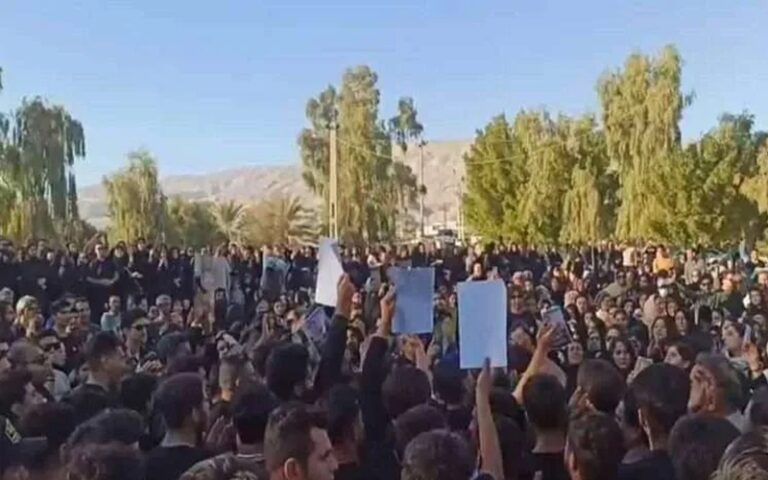
In the capital, signs of the regime’s weakening grip were evident in the Sadeghiyeh district, where security forces failed to suppress demonstrations and were forced to retreat. Protesters seized the moment to destroy abandoned regime vehicles, signaling a rare public display of defiance in the heart of Tehran. Night rallies also continued in districts such as Punak, marking 15 consecutive nights of anti-regime gatherings.

Western and Southern Cities: Mourning and Resistance
The violence extended to western and southern Iran. In Abdanan, security forces attacked mourners at the funeral of 16-year-old Alireza Seidi, one of the latest martyrs of the uprising. Meanwhile, in Kermanshah, protesters set fire to a regime facility used for suppressing dissent, demonstrating a direct attack on the machinery of state repression.

Strikes in Shiraz and Shahr-e Kord
Civil resistance continued on the economic front. Merchants in Shiraz and Shahr-e Kord kept their shops closed, joining nationwide strikes that paralyzed commerce in major urban centers. These actions underscore the solidarity of Iran’s middle class with the ongoing protests, despite the risks posed by regime retaliation.

Digital Blockade Intensifies
The Iranian regime has escalated its efforts to control information. Forbes reports that military jammers have been deployed to block Starlink satellite internet, while NetBlocks confirms that internet connectivity remains at roughly 1% of normal levels. The blackout, now entering its fourth day, aims to prevent protesters from communicating and to obscure the scale of repression from the outside world.

New Martyrs and Calls for Accountability
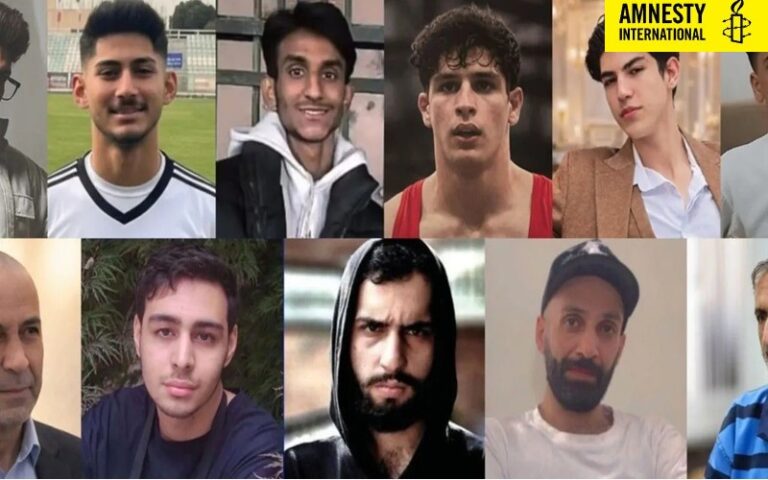
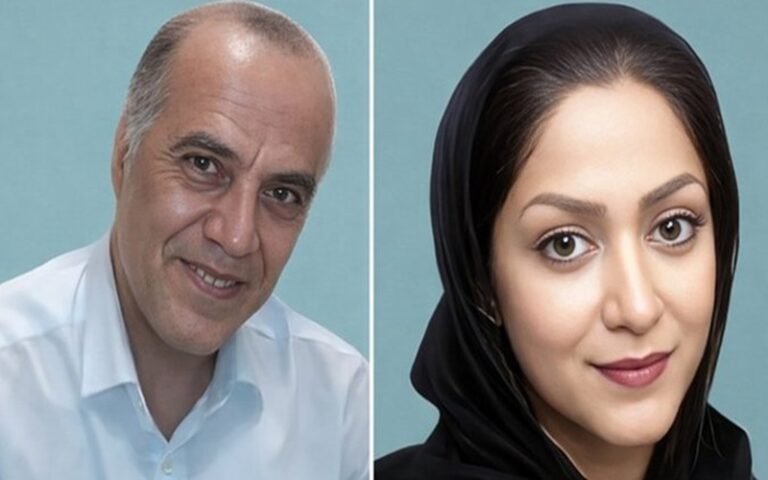
The People’s Mojahedin Organization of Iran (PMOI/MEK) announced the identities of 10 additional martyrs, including Alireza Seidi and a woman, many of whom were killed in Tehran and Kermanshah. Most of the victims were shot in the head, pointing to a shoot-to-kill policy by regime forces.

Mrs. Maryam Rajavi, President-elect of the National Council of Resistance of Iran (NCRI), condemned the regime’s actions, declaring: “They cannot escape public accountability. A future democratic Iran will bring to justice those responsible for grave crimes.” She also called on the international community to designate the IRGC as a terrorist organization, shut down the regime’s embassies, and expel its agents.

As Iran enters the third week of nationwide unrest, the resilience of its people continues to challenge the regime’s authority. Despite the regime’s brutal tactics, economic disruption, and digital blackout, the protests show no signs of abating.

UN Fact-Finding Mission Calls for End to Crackdown in Iran

The United Nations Fact-Finding Mission, expressing grave concern over the escalation of violence against protesters, called on the Iranian regime to immediately end the suppression of protests, fully restore internet and mobile communications, and respect citizens’ fundamental rights, including the right to peaceful protest.

In a statement published on Saturday, January 10, the United Nations Fact-Finding Mission said it had received credible reports indicating that security forces had been ordered to confront protesters without restraint and in a “decisive” manner, as nationwide protests entered their third week.

According to the statement, on the evening of January 8, internet and mobile communications in Iran were cut off, a move that, alongside rising violence, has severely restricted citizens’ access to information.

The statement said the protests began on December 28 following the sudden collapse in the value of Iran’s national currency.

According to a statement by the National Council of Resistance of Iran, the protests have since spread to at least 192 cities across Iran and 120 locations in Tehran.

The Fact-Finding Mission said that as of January 7, more than 40 people, including at least five children, had been killed in provinces such as Qom, Yasuj, Kermanshah, Ilam, and Lorestan. At the same time, Iran’s parliament has also reported the deaths of a number of security forces.

The statement, reads in part:
“The Fact-Finding Mission reiterates that Iranian women, men, and children deserve to live safely, with dignity, and with full respect for their rights, including the right to peacefully protest, and to do so without oppressive violence, intimidation or repression by the State.”

The Fact-Finding Mission also emphasized that threats or acts of unilateral military intervention by other governments are contrary to international law and, according to the body, should not be used as a pretext for violating citizens’ rights or escalating violence inside Iran.

The Mission further called on officials of the Iranian regime to respect freedom of expression and peaceful assembly and to unconditionally release all individuals who have been arbitrarily detained solely for exercising their legal rights.

The Fact-Finding Mission said it is reviewing videos and images circulated from Iran that show security forces opening fire on protesters.

Iran Protests Reach Fourteenth Day Amid Internet Blackout and Nationwide Clashes

At the same time, the body also pointed to images showing some individuals setting fire to buildings and vehicles in public areas.

Another area of concern for the Mission is the widespread use of force in regions inhabited by ethnic minorities, where, according to reports, security forces’ responses have been particularly violent.

In one reported case, security forces raided a hospital in Ilam, used tear gas, and assaulted patients and medical staff.

The Fact-Finding Mission stressed that the current pattern of repression closely resembles the crackdown on protests in 2022, which erupted after the death of Jina Mahsa Amini, a 22-year-old Kurdish woman.

Those protests were accompanied by widespread reports of serious human rights violations and the systematic impunity of those responsible for the repression.

The body recalled that the Fact-Finding Mission was established by the United Nations Human Rights Council in 2022 and is mandated to investigate human rights violations related to protests in Iran, particularly those involving women and children.

The Mission’s mandate was extended for another year in April 2025 to also investigate new and ongoing cases of serious human rights violations in Iran.

Internet Shutdown in Iran and Disruption of Starlink; Concerns Over Repression Amid Expanding Protests

At the same time as the nationwide internet shutdown in Iran, signs of widespread disruption in the Starlink satellite internet service have also been observed; a move that has severely limited citizens’ access to the outside world and heightened concerns about the violent suppression of the nationwide uprising.

Shortly after 8 p.m. on Thursday, January 8, Iran’s regime cut internet and telephone communications, effectively disconnecting about 85 million people from the global information network.

This action follows a pattern that the Iranian regime has previously employed both during domestic protests and in wartime conditions; a pattern described as aiming to sever citizens’ communication with Iranians abroad in the United States, Europe, and other regions.

Until now, even amid severe sanctions related to Iran’s nuclear program, citizens were able to access blocked applications and websites by using VPNs.

However, the new decision has sharply reduced the ability to publish images and firsthand accounts from the nationwide protests linked to the economic crisis; protests that observers say have become the biggest challenge facing the Iranian regime in recent years.

The internet shutdown could pave the way for intensified repression, especially as the U.S. government has warned about the consequences of the continued killing of protesters.

This situation, coinciding with a warning by the Iranian regime’s prosecutor general who labeled participants in the protests as “mohareb,” has caused deep concern among the families and relatives of protesters abroad.

This marks the third time Iran’s regime has carried out a widespread internet shutdown. The first was in 2019, alongside protests over gasoline price hikes, which resulted in the killing of hundreds of people.

The second occurred in 2022, following the death of Mahsa Amini in the custody of the police; protests whose suppression left more than 750 people dead.

During the 2022 protests, Starlink played an important role in the transmission of information. Now as well, despite the use of this service being considered “illegal” in Iran, the number of its receivers has reached tens of thousands of devices.

Many of these receivers are in the hands of merchants and individuals who need connections abroad for economic activity, but some of them are now being used to send images and videos of the protests.

However, experts report serious disruptions in Starlink’s performance. In addition to interfering with GPS signals, the Iranian regime is likely using more advanced methods, including mobile jammers, to weaken satellite communications; a method that has previously been used to disrupt satellite receivers.

Although using Starlink carries serious risks for Iranian citizens, including arrest and harsh punishment, cutting off this communication channel could mean silencing the voice of protests at one of the most critical junctures in Iran’s developments.

Iran Protests Reach Fourteenth Day Amid Internet Blackout and Nationwide Clashes

January 10, 2026

Iran’s nationwide protest movement entered its fourteenth day on Saturday as demonstrations continued across multiple regions despite a prolonged internet blackout and an intensified security presence in major cities.

According to reports from inside the country, clashes between protesters and security forces were recorded in several cities, including Tehran, Tabriz, Rasht, and Kazerun. In southern Iran’s Kazerun, security forces were reported to have fired indiscriminately at shops and residential buildings, heightening fears among local residents.

In the capital, Tehran, security forces maintained a heavy presence throughout the day amid concerns over renewed protests. Despite these measures and the continued disruption of internet access, large nightly demonstrations were reported across numerous districts, including Heravi, Chitgar, Ekbatan, Qeytarieh, Punak, Sattarkhan, Jannat Abad, and several major intersections. Protesters chanted slogans calling for the removal of the country’s leadership and the end of clerical rule.

In the northwest, Tabriz witnessed fresh clashes between protesters and security forces as large crowds gathered for another night of demonstrations. Protesters were heard chanting slogans emphasizing unity across ethnic lines, including calls for cooperation between Turkic- and Persian-speaking communities. Nightly rallies were also reported in Rasht, where demonstrators continued to chant anti-government slogans despite the security crackdown.

Internet monitoring organization NetBlocks reported that Iran had remained offline for approximately 48 hours, confirming the continuation of a nationwide internet blackout. The group noted that while ordinary citizens remained largely cut off from communication, state officials continued to publish statements online, deepening concerns about information suppression.

Opposition figures abroad commented on the ongoing unrest, stating that protests had spread to nearly 190 cities nationwide over the past two weeks. They reported continued confrontations in major urban centers, including Tehran and Mashhad, as well as in provincial cities such as Isfahan, Shiraz, Karaj, Zahedan, Kerman, Kermanshah, and Yazd.

As Iran’s protest movement completes its second week, demonstrations continue to defy security measures and communication restrictions. Authorities have not released official casualty figures or addressed reports of property damage, live fire, or the scope of the internet shutdown. With protests persisting across the country, the situation remains volatile and unresolved.

Tasnim Admits Death of Seven Basij Forces in Razavi Khorasan

The state-run Tasnim news agency, affiliated with the terrorist Quds Force of the Islamic Revolutionary Guard Corps (IRGC), reported on Friday, January 9, the death of seven forces affiliated with the Basij paramilitary organization and the intelligence apparatuses of the Iranian regime in Razavi Khorasan Province in northeastern Iran.

According to Tasnim, the so-called “Martyr” Foundation, a regime-affiliated body that handles affairs related to killed regime forces, announced that these individuals were killed during what the Iranian regime calls “the recent unrest,” coinciding with the nationwide uprising of the Iranian people, in the cities of Mashhad and Joghtay.

According to the report, the names of six of those killed in Mashhad are: Mohammad Hadi Sobhani-Far, Mehdi Aliabadi, Asghar Niazi, Hadi Yazdani, Farajollah Shooshtari, and Amir Sadegh Javanshiri.

The state-run Tasnim news agency also reported the killing of another individual named Mostafa Keyvanloo Shahrestanki in recent days in Joghtay County.

This report was published as, in recent days, alongside the expansion of public protests and demonstrations across various parts of the country, numerous reports have emerged of clashes between protesting citizens and the regime’s repressive forces.

Iran Uprising Enters Day 13 as Protests Persist Amid Live Fire and Internet Blackout

Tehran, January 9 — The nationwide uprising against Iran’s religious dictatorship entered its thirteenth day on Friday, January 9, 2026, as protests continued across multiple cities despite a deadly crackdown, live fire by security forces, and a near-total internet blackout.

Following a turbulent twelfth day marked by general strikes in western Iran and the killing of eight protesters in Lordegan, demonstrations spread further on Friday, with significant developments reported in Sistan and Baluchestan, Tehran, Karaj, Mashhad, Shiraz, and several central provinces.

In Zahedan, large crowds gathered near the Makki Mosque after Friday prayers, defying heavy security deployments and severe internet disruptions. Protesters chanted slogans including “Down with the dictator,” “Down with Khamenei,” and “Death to the dictator.” Security forces responded by firing live ammunition, birdshot, and tear gas at demonstrators. Reports confirmed injuries among protesters, though the exact number of casualties remained unclear due to the internet blackout and tight security cordons.

Women played a prominent role in the Zahedan protests, chanting “From Zahedan to Tehran, my life for Iran,” signaling solidarity with demonstrators nationwide. Despite the crackdown, protests continued throughout the day and into the evening.

In Tehran and Karaj, residents returned to the streets despite reports of a massacre carried out by security forces the previous night. Protesters erected roadblocks, lit fires, and in some areas forced security units to retreat. In Tehran’s Sa’adat Abad district, youths overwhelmed security forces, causing them to flee. Demonstrations also resumed in Shariati, Yousef Abad, Janat Abad, Zafaraniyeh, Moshiriyeh, Andarzgoo, Ekbatan, Chitgar, and eastern districts of the capital, where at least one regime building was reportedly burned down.

Chants heard in Tehran included “This is the year of blood, Seyyed Ali [Khamenei] will be overthrown,” “Down with the dictator,” “Don’t be afraid, we are all together,” and “Neither Gaza nor Lebanon, my life for Iran.”

In Karaj’s Fardis district, where a violent crackdown had reportedly occurred just one day earlier, nightly protests resumed. Demonstrators confronted Basij and IRGC forces with chants such as “Basij, IRGC, to us, you are ISIS,” and “We won’t have a country until the mullahs are gone.” Protests were also reported in Golshahr.

In Mashhad, the uprising escalated further as protesters set fire to seminaries used as staging grounds for Basij paramilitary forces. Large crowds chanted “Down with Khamenei” and “Down with the dictator” as fires engulfed regime-linked buildings.

In Shiraz, protesters established roadblocks and set fires, chanting slogans including “This is the year of blood, Seyyed Ali [Khamenei] will be overthrown!” and “Down with the dictator!” Similar nighttime rallies were reported in Isfahan, Qom’s Zanbil Abad district, and Fuladshahr.

As protests spread, regime officials issued explicit threats. The governor of Tehran warned that weapons would be used against demonstrators if protests escalated into what authorities label as “confrontation,” justifying violence by distinguishing protests from what he termed “riots.”

Alongside the crackdown, the regime imposed a nationwide digital blockade. NetBlocks confirmed that Iran had been offline for at least 12 hours, with national internet connectivity dropping to approximately 1% of normal levels. The blackout coincided with the escalation of protests and the use of live fire against demonstrators, particularly in Zahedan.

Opposition leader Maryam Rajavi saluted the protesters and rebellious youth, praising their resilience and honoring those killed during the uprising. She emphasized the continuation of protests until the overthrow of the clerical regime.

As night fell on the thirteenth day, demonstrations continued across Iran, underscoring persistent public defiance despite lethal force, mass security deployments, and efforts to isolate the country from the outside world.

January 9, 2026

Iran: Deadly Crackdown and Nationwide Internet Blackout as Uprising Enters Thirteenth Day

Tehran, January 9 — Reports from across Iran indicate an escalation in violence and repression as the nationwide uprising entered its thirteenth day, marked by deadly attacks on protesters, mass arrests, and a near-total shutdown of internet access ordered by the Iranian regime.

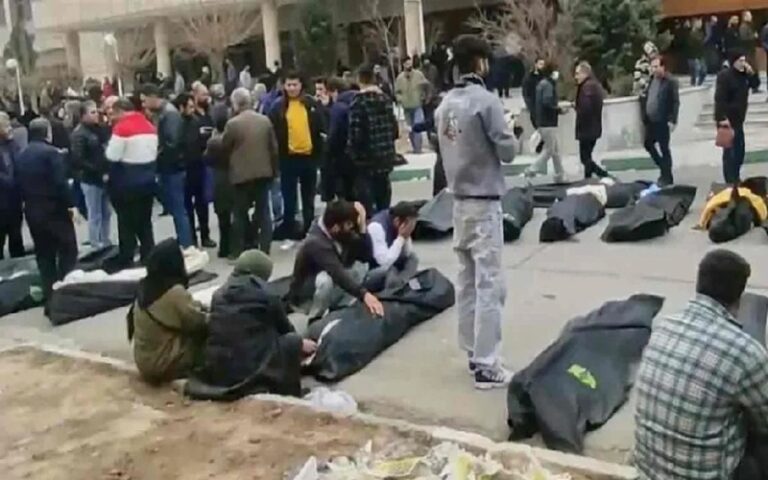
According to reports released today, repressive forces killed and wounded numerous protesters on the night of January 8, particularly in Tehran and surrounding areas. One of the most severe incidents occurred in Fardis, Karaj, in the Siah-Noush neighborhood, where security forces opened direct fire on demonstrators. At least ten youths were reported killed or wounded, with their bodies left at the scene. Authorities imposed a complete communications blackout in the area in an apparent effort to conceal the scale of the incident. The identities of those killed are to be announced after verification.

On the morning of January 9, amid fears of the uprising’s expansion, regime’s Supreme Leader Ali Khamenei issued a statement describing protesters as “vandals” and declaring that the regime would “not back down.” Shortly afterward, the Secretariat of the Supreme National Security Council announced that security and judicial forces would show “no leniency” toward protesters.

Ali Salehi, the governor of Tehran, reinforced this stance in remarks carried by state media, warning that anyone participating in protests was acting “in the enemy’s court” and would be dealt with “decisively and as quickly as possible.” He confirmed the deployment of military, State Security Force (SSF), and security units across the capital.

Despite the crackdown, protests continued. On January 9 in Zahedan, Baluch men and women took to the streets chanting “Death to Khamenei” and “From Zahedan to Tehran, my life for Iran.” Security forces responded with tear gas and pellet rounds, injuring several participants.

Leaked SSF radio communications, disclosed by the People’s Mojahedin Organization of Iran (PMOI/MEK), reveal growing strain within the security apparatus. During an attack by protesters on the state broadcasting center in Isfahan, SSF commanders were reportedly heard shouting, “We have no forces,” and calling for reinforcements. In Borujerd on January 7, an SSF commander ordered forces to retreat to rooftops and to shoot directly at protesters, instructing them not to hesitate.

The uprising has spread extensively. On the evening of January 8, protests erupted for a third consecutive night in Tehran and across the country, reaching at least 173 cities and involving clashes in more than 330 locations. In several areas, protesters set fire to or seized government and regime-linked centers. In Isfahan province, clashes were described as resembling a war. In Fouladshahr, protesters reportedly took control of the city, forcing security forces to flee. The state broadcasting building in Isfahan was set ablaze, while Basij bases were torched in Vilashahr and Pirbakran.

In Tehran, multiple neighborhoods—including Ekbatan, Narmak, Sattar Khan, Sadeghieh, and Tehranpars—witnessed hit-and-run clashes. Protesters set fire to IRGC vans, special unit vehicles, and motorcycles. Similar actions were reported in Andimeshk, Shiraz, Gorgan, Bijar, Islamabad-e-Gharb, Dorud, Malayer, Yazd, Qorveh, and Lumar, where banks, police stations, intelligence centers, and government buildings were attacked or burned.

Chants such as “Death to the oppressor, be it the Shah or the Leader” were heard in Tehran, Tabriz, Sanandaj, and Kermanshah. In Urmia, demonstrators chanted, “Azerbaijan is honorable, Pahlavi is dishonorable.” Alongside street protests, merchants in Kurdistan, Kermanshah, Azerbaijan, Tehran, Isfahan, Razavi Khorasan, Ilam, Lorestan, and other provinces went on strike despite threats from authorities.

As repression intensified, the regime imposed nationwide internet shutdown beginning Thursday, January 8. Internet observatory NetBlocks confirmed that connectivity across Iran dropped to around 5 percent, describing the situation as a “digital blackout.” Data from Cloudflare Radar showed a 98.5 percent collapse in IPv6 traffic just before 13:00 local time, indicating an abrupt and coordinated shutdown rather than a technical failure.

The Iranian Resistance described the blackout as a violation of fundamental rights and international standards, citing Article 19 of the Universal Declaration of Human Rights and UN Human Rights Council resolutions condemning such actions. It called on the United Nations, the Human Rights Council, and the International Telecommunication Union to condemn the “cyber siege” and take immediate steps to restore free internet access.

Meanwhile, reports indicate that thousands have been detained in recent days. Detention centers run by the IRGC, SSF, Ministry of Intelligence, and various safe houses are reportedly overcrowded. As of two days ago, legal cases had been filed for 650 detainees in Tehran, with many others held in legal limbo under harsh conditions.

January 9, 2026

Iran Protests Enter Twelfth Day as Deadly Crackdown, Internet Blackout, and Nationwide Strikes Intensify

January 8, 2026

Iran’s nationwide protest movement entered its twelfth day on Thursday amid an escalating crackdown by security forces, widespread strikes across major cities, and a near-total internet blackout, as authorities struggled to contain the most sustained unrest in years.

The demonstrations, which began on December 28, 2025, following the sharp collapse of the national currency and soaring inflation, have since evolved into a broader political uprising calling for the overthrow of the ruling establishment. On Thursday, clashes intensified in multiple regions, particularly in western Iran, where reports described deadly confrontations and significant civilian casualties.

In the western city of Lordegan, security forces opened fire on protesters during overnight and early-morning clashes, killing at least eight people, according to local reports. Demonstrators reportedly blocked major roads in an attempt to prevent reinforcements from reaching the city, while clashes continued throughout the day. Authorities have not released official casualty figures.

As unrest spread, internet monitoring organization NetBlocks confirmed a nationwide internet blackout, with particularly severe disruptions reported in Kermanshah province. The shutdown appeared aimed at limiting communication and restricting the flow of information as protests expanded and casualties mounted.

Despite the blackout, demonstrations continued across the country. In Tehran, crowds gathered in several districts, chanting anti-government slogans and clashing with security forces. Protesters reportedly set fire to Basij bases and vehicles linked to the Islamic Revolutionary Guard Corps (IRGC) in multiple neighborhoods, including Mehrabad, Sattarkhan Bridge, and Naziabad.

Kermanshah remained one of the main flashpoints, with reports of live ammunition being used against protesters in districts such as Dareh Deraz. Demonstrations persisted despite injuries, as crowds marched through the city chanting slogans calling for the removal of the country’s leadership. Local reports also indicated the presence of Arabic-speaking forces alongside Iranian security units.

In other parts of the country, protests escalated into attacks on government buildings. Demonstrators set fire to the headquarters of the state broadcaster in Isfahan, as well as the governorate building in Gorgan. Similar incidents were reported in cities including Bijar, Qorveh, Lumar, and Rasht.

Meanwhile, large-scale strikes continued to paralyze economic activity. Markets and shops remained closed across Kurdistan province, including in Sanandaj, Mahabad, Marivan, and Baneh. Strikes were also reported in Tabriz, Bandar Abbas, Ilam, Neyshabur, Sabzevar, and several other cities, signaling growing participation from merchants and shopkeepers nationwide.

Protests were reported across all major regions of Iran, from Mashhad in the northeast to Shiraz and Ahvaz in the south, and from Ardabil and Urmia in the northwest to Karaj near Tehran. Demonstrators continued to chant slogans rejecting both the current system and alternative forms of authoritarian rule.

Opposition figures abroad condemned the use of lethal force and praised the persistence of protesters, while Iranian authorities have yet to issue a comprehensive public response addressing the scope of the unrest, the internet shutdown, or the reported deaths.

As night fell on January 8, demonstrations continued in dozens of cities despite heavy security deployments, signaling that the crisis remains unresolved and that Iran faces a prolonged period of instability.

Iran’s Regime Imposes Widespread Internet Outages And Disruptions Amid Nationwide Uprising

As the widespread uprising of people in Iran continues and intensifies, reports indicate that the internet in many cities has faced severe slowdowns, disruptions, and in some cases complete outages.

NetBlocks, an organization that monitors internet access worldwide, wrote in a message on the social media platform X on Thursday, January 8: “Live network data show #Tehran and other parts of Iran are now entering a digital blackout, as connectivity falls on multiple providers; the new incident follows regional shutdowns, and is likely to severely limit coverage of events on the ground as protests spread.”

NetBlocks added that this occurred simultaneously with the spread of protests across the country on their twelfth day, at a time when the number of victims is rising and signs of disruption are also being observed in several other regions.

At the same time, some media outlets in Iran reported on Thursday that fixed-line and mobile internet services in various cities have been experiencing severe slowdowns, instability, and repeated disconnections.

The Citna news website wrote: “Disruption or deactivation of IPv6 in the country’s internet network leads to increased latency, unstable connections, and problems in services such as internet calls, online games, and some cloud services.”

Reports circulating on social media also confirm widespread outages and disruptions to the internet in Iran.

On January 5, Sattar Hashemi, the Iranian regime’s minister of communications and information technology, confirmed internet restrictions and outages due to nationwide protests in Iran.

Hashemi added: “People have demands and protests, but at the same time there is serious concern about businesses being harmed in the event of internet disruption or outages, and this concern is completely understandable.”

Earlier, the Persian-language account of the U.S. Department of State on X, referring to widespread internet shutdowns and severe communication disruptions—especially in cities where national uprising protests are underway—wrote that even VPNs and other censorship-circumvention tools have been blocked, cutting off many Iranians’ connection to the outside world.

During the 12-day war, telecommunications and internet services in Iran were widely cut off, a measure implemented by the Iranian regime’s security authorities under the pretext of “protecting national security.”

The Iranian regime had previously disrupted and shut down the internet multiple times during protests.

During the 2019 protests, known as the Bloody November, Iran’s government cut off the internet for one week and began the killing of protesters in a media blackout.

In 2023, on the fourth anniversary of that massacre, the internet in Iran was again disrupted and, in some areas, completely shut down.

Nationwide Protests in Iran Enter Eleventh Day as Strikes and Clashes Intensify

Iran’s nationwide protests entered their eleventh consecutive day on Wednesday, January 7, 2026 expanding in scale and intensity as strikes spread across key economic sectors and confrontations between demonstrators and security forces escalated in dozens of cities.

What began on December 28 as protests over worsening economic conditions has evolved into a broad political movement calling for the overthrow of the ruling establishment. On Wednesday, markets, universities, industrial centers, and even prisons became focal points of unrest, signaling a widening challenge to state authority.

Major bazaars in Tehran, Tabriz, Shiraz, Rasht, Qazvin, and several other cities remained closed, deepening economic disruption. A significant development came as workers at the South Pars gas refineries—central to Iran’s energy industry—joined the nationwide strike, raising concerns over potential long-term impacts on government revenues.

At Least 31 Killed, over 2,000 Arrested in Iran Protests

Street demonstrations intensified throughout the day and into the night. In cities including Abadan, Borujerd, Bojnurd, and Qazvin, large crowds reportedly forced security forces to retreat from public areas. In Lordegan and parts of Kermanshah province, security forces opened fire with live ammunition, leaving several protesters critically injured, according to reports. Despite the use of lethal force, demonstrations continued.

Western cities such as Gilan-e Gharb and Mehran saw organized marches toward government buildings, with demonstrators chanting slogans in solidarity with victims of recent crackdowns. In Shiraz, protesters erected barricades to counter water cannons and tear gas deployed by security forces, turning several neighborhoods into scenes of prolonged standoffs.

Universities across the country also emerged as centers of resistance. Students in Tehran, Zahedan, Urmia, Qom, Zanjan, and Kermanshah held rallies and night-time protests, denouncing mass arrests and chanting slogans linking student activism to the broader uprising. One slogan widely reported was, “Evin has become a university, Tehran has become a prison,” referencing the detention of student activists.

Public defiance appeared to grow as ordinary citizens intervened in attempted arrests in cities such as Kerman and Kermanshah, helping injured protesters and blocking security forces. Observers noted these incidents as signs of a diminishing atmosphere of fear.

In a rare display of prison-based protest, political prisoners in Tehran’s Evin Prison and Ghezel Hesar Prison reportedly joined the uprising by chanting slogans, singing the national anthem, and issuing statements supporting demonstrators outside the prison walls.

Opposition figures abroad responded to the events by condemning the use of force against protesters and praising the persistence of demonstrators. Meanwhile, authorities have not issued comprehensive official casualty figures or statements addressing the breadth of the unrest.

As night fell on January 7, protests were reported in cities stretching from Rasht in the north to Zahedan in the southeast, underscoring the nationwide scope of the movement. With strikes expanding and confrontations continuing, Iran faces one of its most sustained and geographically widespread waves of unrest in recent years.