Home Blog Page 4

Trump Leaves Advisors’ Meeting Without Reaching a Final Decision

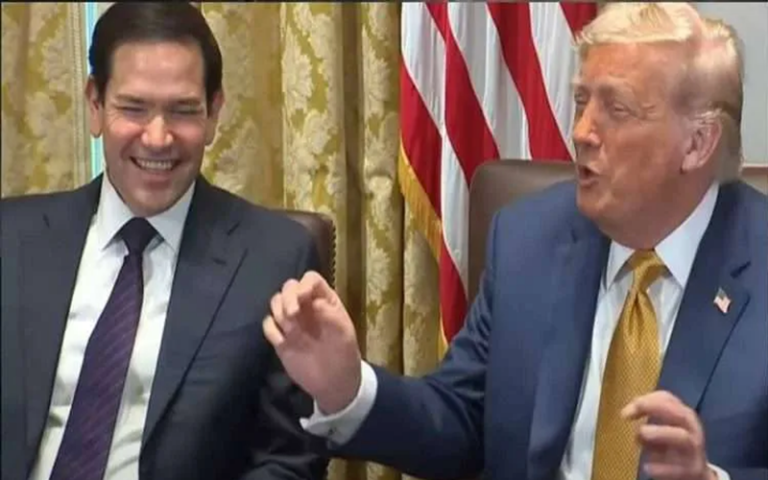
A meeting between U.S. President Donald Trump and his senior national security and political team regarding the course of negotiations with the Iranian regime ended after more than two hours of consultations without reaching a final decision.

The New York Times reported early Saturday, May 30, citing a senior U.S. administration official who spoke on condition of anonymity, that Trump was unable to reach a definitive conclusion during the meeting regarding the proposed memorandum of understanding with the Iranian regime.

Before the meeting began, Trump had said that the Friday session in the White House Situation Room was intended to make a final decision regarding the outcome of several weeks of negotiations with Tehran. He also emphasized that any agreement aimed at reducing tensions must include a commitment by the Iranian regime to keep the Strait of Hormuz open and to eliminate its stockpiles of enriched uranium.

Meanwhile, hours after Trump’s remarks, a spokesperson for the Iranian regime’s Foreign Ministry also stated that no final understanding had yet been reached between the two sides and that negotiations were still ongoing.

This comes as conflicting reports have emerged in recent days regarding the fate of the talks between Washington and Tehran, and uncertainty about the possibility of reaching a final agreement continues to persist.

Iran’s Regime Grudgingly Backs Down from its Longest Internet Shutdown

0

The widespread shutdown of international internet access, which began in January 2026 alongside the escalation of the nationwide uprising, has finally forced the Iranian regime into retreat after months of social pressure, economic crisis, and political isolation. The government of Iranian regime president Masoud Pezeshkian has now ordered the full reopening of international internet access while society remains gripped by severe political and economic unrest.

According to a resolution approved on Monday, May 25, during a meeting of the regime’s cyberspace headquarters chaired by Mohammad Reza Aref, the Ministry of Communications has been instructed to restore international internet access to its status prior to the January massacre. The decision came after months of severe restrictions and the near-total disconnection of Iran from the global internet network.

Netblocks: Iran’s Internet Faces Heavy Filtering Despite Restored Connectivity

The Purpose of the International Internet Shutdown Was to Conceal the IRGC’s January Massacre

The shutdown of international internet access in Iran began during the first days of the nationwide uprising. The Iranian regime attempted to halt the flow of information about the protests by completely cutting communications. As internal crises intensified, the scope of the blockade expanded further. With the launch of the U.S. military operation called “Epic Fury,” the regime raised the level of restrictions to its highest point.

Reports published by international organizations indicate that this blockade has been the longest digital siege imposed by a dictatorship in modern history. The international organization NetBlocks stated in several reports that Iran experienced one of the most severe cases of international internet shutdown in recent months. This situation deprived millions of citizens of free access to information.

In recent months, the economic pressure caused by the international internet shutdown increased to an unprecedented level. Thousands of online businesses were effectively destroyed. Technology companies, online stores, and digital sector activists faced a widespread financial crisis. Many users were also forced to rely on expensive and unsafe tools to gain limited access to the global internet.

At the same time, social protests against restrictions on international internet access intensified. Students, media activists, business owners, and even parts of the regime’s own establishment had warned against the continuation of this situation. Nevertheless, the regime insisted for months on maintaining its policy of blockage.

International Internet and the Regime’s Fear of a Social Explosion

The new decision by Pezeshkian’s government has been announced at a time when political and economic crises in Iran have reached a critical stage. Soaring inflation, the collapse of the national currency, expanding strikes, and growing public protests have created an extremely volatile political atmosphere in the country.

The Iranian regime is facing a series of simultaneous crises and no longer has the ability to continue the complete siege of international internet access. Many observers describe this decision not as a policy change, but as a forced retreat under societal pressure.

In recent weeks, numerous reports had emerged regarding rising public dissatisfaction. Social media users had also repeatedly reported the gradual restoration of some access. Now, with the official implementation of this resolution, the regime has effectively abandoned part of its nationwide blockage policy.

Despite this, many internet freedom activists believe that the structure of censorship and control remains intact. They say the regime has merely been forced into a temporary retreat under the pressure of crises, and the possibility of renewed restrictions still exists.

The shutdown of internet access in recent months was not merely a security tool. It became a symbol of the regime’s fear of the spread of protests and the free flow of information. The cracking of this wall of censorship is now viewed as a clear sign of the severity of the crisis within the ruling political structure.

While Iranian society remains in turmoil, the reopening of international internet access appears less a sign of stability than a reflection of a regime retreating under the pressure of protests, economic crisis, and widespread isolation, temporarily setting aside part of its digital repression policy.

20,000 Iranian Cargo Containers Stranded in Pakistani Ports

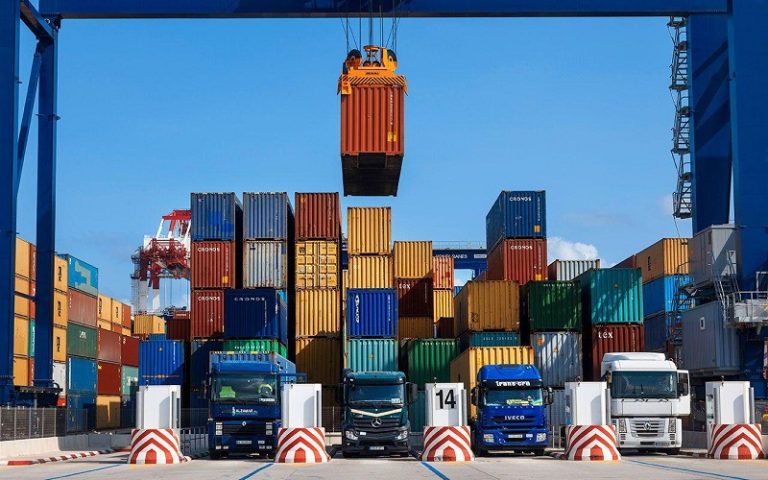
Ehsan Malekzadeh, chairman of the board of the Iranian regime’s Association of International Transportation Companies, reported a large accumulation of imported goods in regional ports and said that around 20,000 containers belonging to Iran are stranded in Pakistani ports, with no stable and low-cost route yet available for transferring them into the country.

In an interview with the state-run Mehr news agency, Malekzadeh referred to conditions following the recent war and stated that some goods being transported to Iran were unloaded at the first safe transit ports due to wartime conditions and international maritime transportation regulations. According to him, this has caused Iranian shipments to become stranded in ports such as Karachi, Jebel Ali, Khor Fakkan, Jeddah, and several ports in India.

U.S. Treasury Sanctions Shamkhani Oil Network

He added that in the case of Pakistan, due to domestic laws and international restrictions, no secure and clearly defined route has yet been established to transfer this volume of containers to Iran. According to him, in the United Arab Emirates as well, despite a significant portion of the goods being unloaded at Jebel Ali port, restrictions and high costs have prevented their direct transfer to Iran, and only a limited number of shipments have entered the country through Oman and Iraq.

Malekzadeh warned that if the current situation continues, many of these shipments could be considered abandoned goods, especially in Pakistan, where the storage period is limited to 60 days. He also reported a sharp rise in demurrage, warehousing, and so-called war risk costs, which have imposed significant pressure on importers and ultimately consumers.

Referring to efforts to resolve the crisis, Malekzadeh said that Iran’s International Transportation Association is in talks with domestic institutions, neighboring countries, and embassies to establish stable transportation routes.

In another part of his remarks, he pointed to structural problems in the country’s transportation fleet and said that restrictions on fleet modernization, difficulties in obtaining visas for Iranian drivers, and the failure of some domestic trucks to meet international standards are among the main obstacles to Iran’s foreign trade.

According to him, while around 500,000 trucks are operating in the country, a significant portion of the fleet remains outdated, and trucks manufactured or assembled domestically largely do not meet the standards required for travel on European routes.

Malekzadeh concluded by emphasizing that without restructuring the transportation fleet and removing international transportation obstacles, the cost of Iran’s foreign trade will continue to rise.

US Imposes New Restrictions on Iranian Airlines

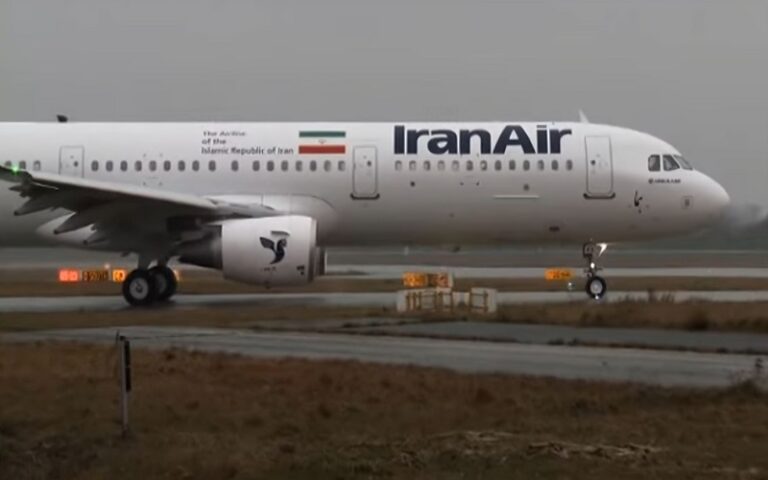
The Wall Street Journal, quoting U.S. Treasury Secretary Scott Bessent, reported that Washington has warned that any cooperation by companies with Iranian airlines could expose them to U.S. sanctions.

According to the report, Bessent emphasized that foreign companies and governments must refrain from providing services such as fuel supply, airport services, ticket sales, and other operational support to Iranian airlines; otherwise, they may face punitive measures by the United States.

The U.S. Treasury Secretary also reposted the report on his X account and wrote that, within the framework of severe economic pressure, the U.S. Treasury Department will implement its maximum pressure policy against Iran and will not hesitate to take action against any third party that trades with Iranian entities or facilitates such trade.

He also announced on X:

This warning comes as part of Washington’s ongoing economic pressure campaign against Iran and amid intensified sanctions targeting the transportation and energy sectors.

The report also stated that, alongside rising tensions in the region and discussions regarding the situation in the Strait of Hormuz, the United States is seeking to further restrict financial and operational networks connected to Iran.

Bessent also warned in separate remarks that only reaching a satisfactory agreement in negotiations can prevent the continuation of this pressure and sanctions campaign.

These remarks come as political and security tensions in the Persian Gulf region and the Strait of Hormuz continue, while discussions regarding the course of negotiations between Iran and the United States are also ongoing.

The Vicious Cycle of Poverty in Iran

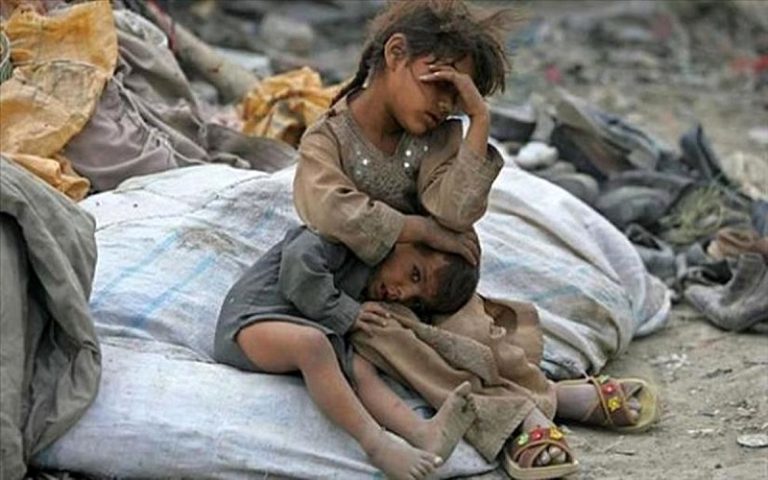
Over the past more than a decade, Iran’s economy has been trapped in chronic stagnation, structural inflation, and a continuous decline in purchasing power. Reports from the World Bank, the International Monetary Fund, and even domestic media indicate that Iranian society has entered a stage of persistent poverty. In this situation, households have neither the ability to save nor the possibility to invest, nor hope for a sustained improvement in their living conditions.

What makes this crisis more dangerous is the transformation of poverty into a self-reinforcing cycle. In Iran’s vicious cycle of poverty, rising costs of housing, food, healthcare, and transportation reduce purchasing power. The decline in purchasing power, in turn, destroys effective demand.

Urban Poverty in Iran: The Collapse of the Economy of Life in Major Cities

According to published data, the population living below the poverty line has increased at an unprecedented rate over the past two decades. If around 9 million people were below the poverty line in the mid-2000s, now tens of millions are either in poverty or at risk of absolute poverty. Even state-run media in Iran have spoken of a sharp rise in absolute poverty; a phenomenon once limited to deprived regions but now affecting the urban middle class as well.

Rent-based economy and the continuous reproduction of poverty

One of the main reasons for the formation of the vicious cycle of poverty in Iran is the economy’s dependence on oil revenues and rent-seeking policies. Rather than leading to sustainable development, the oil-based economy has become a tool for expanding corruption, opaque distribution of resources, and strengthening unaccountable institutions within the Iranian regime. In such a structure, productive investment has been replaced by speculation, brokerage, and non-productive activities.

In recent years, a large portion of social capital has shifted toward non-productive markets such as foreign currency, gold, land, and housing. The reason is clear: production in the economy controlled by Iran’s regime lacks security and returns. Independent investors face constant uncertainty, systemic corruption, and a lack of legal protection. As a result, capital is diverted from production into activities that only generate more inflation and inequality.

The housing market is a clear example of this crisis. Over recent years, housing prices have multiplied several times, while household incomes have never kept pace. The result of this gap has been the gradual exclusion of millions of people from the housing market. Many families have been forced to move to city outskirts, live in smaller homes, or spend a large portion of their income on rent.

Sanctions have also played an important role, but the current crisis cannot be reduced solely to sanctions. Many countries have been under external pressure, yet transparent and accountable economic structures have prevented the collapse of people’s livelihoods. The main problem in Iran is the combination of sanctions with mismanagement, institutionalized corruption, and the prioritization of political and security objectives over the economic interests of society.

Erosion of the middle class and the expansion of social insecurity

The vicious cycle of poverty in Iran is not limited to declining incomes; it has now led to widespread social erosion. The middle class, once the pillar of economic and cultural stability in society, is gradually collapsing. Families that previously could afford housing, proper education, and healthcare are now facing crises in meeting basic living expenses.

Official statistics show that the share of food expenses in household budgets has sharply increased. This means people are spending a larger portion of their income simply to survive. At the same time, nutritional quality has declined and consumption of essential goods has fallen. Reduced caloric intake alongside rising food prices is a clear sign of expanding food poverty in the country.

The labor market situation has become even more critical. The expansion of informal employment, temporary contracts, and lack of insurance has turned millions of workers into precarious labor. Many workers and employees, despite being fully employed, live below the poverty line. This phenomenon, known as the “working poor,” is one of the most dangerous signs of economic collapse.

Rising internal migration is another part of this crisis. Households migrate to smaller cities or outskirts to escape the high cost of living in major metropolitan areas. However, this relocation often means lower quality of life, weaker public services, and the expansion of informal settlements. As a result, poverty shifts from city centers to the periphery, creating a broader social crisis.

The reality is that Iran’s economy is no longer merely facing a period of recession or inflation. What has emerged is a stable structure to produce poverty. A structure in which social inequality is reproduced, economic opportunities become more limited, and the gap between a small, privileged minority and the majority of society grows wider every day.

The World Bank has referred to Iran’s “lost decade” of economic development; a decade in which millions of people fell below the poverty line. However, the main issue is not only the decline in incomes. The deeper crisis is the gradual destruction of the possibility of economic recovery within the current framework. When a political and economic structure is built on monopoly, corruption, and repression, poverty is no longer a temporary crisis; it becomes part of the governing system itself.


Netblocks: Iran’s Internet Faces Heavy Filtering Despite Restored Connectivity

NetBlocks, the global internet monitoring organization, says that Iran’s internet, despite being reconnected, is still subject to severe filtering.

NetBlocks announced on the social media platform X that three months ago on this day, Iran cut off access to the global internet.

“Three months ago today #Iran shut off access to the global internet. While connectivity has now largely returned, metrics indicate that users still face heavy filtering, similar to the interim period between the January protests and the start of the war.”

The organization is referring to the period after the January protests, when internet access was briefly restored.

Following the gradual restoration of global internet access in Iran, data from Kentik shows that international internet traffic, after weeks of severe restrictions, had reached 53% of its pre–January 2026 protest levels by 7:30 a.m. today.

Iranian Media Report Approval of Resolution to Restore International Internet Access

According to Kentik, this trend is somewhat similar to the partial reconnection of the internet after December–January protests.

At that time, despite partial access to the global internet, the connection was highly unstable and accompanied by intermittent disruptions.

It is unclear whether access will return to its previous state or remain in this unstable condition.

Ahmad Rastineh, spokesperson for the Cultural Commission of the Iranian regime’s parliament, reacting to decisions by regime president Masoud Pezeshkian regarding the review of the internet situation, said that some of the duties and responsibilities of this taskforce overlap with those of the Supreme Council of Cyberspace.

He says that the ruling of the Administrative Court of Justice to suspend the activities of this taskforce is, from a legal standpoint, “correct and precise.”

According to this member of parliament, reopening the internet is “against the law.”

Following the internet shutdown since the start of the war in Iran in February, Masoud Pezeshkian formed the “Taskforce for Organizing and Strategic Management of Cyberspace” to review the return of international internet access.

The taskforce’s decision regarding the reopening of the internet has faced strong reactions from its opponents.

After that, the Administrative Court of Justice announced that “following complaints requesting the annulment of the document establishing this taskforce, the Specialized Board for Industries and Commerce, having recognized the urgency of the matter, has issued an order to suspend the implementation of the resolution until a final review is conducted.”

Despite this measure, international internet access has been restored for users since two days ago, after more than 80 days.

Iran’s Regime Confirms Death Sentence of Political Prisoner Amin Farahavar

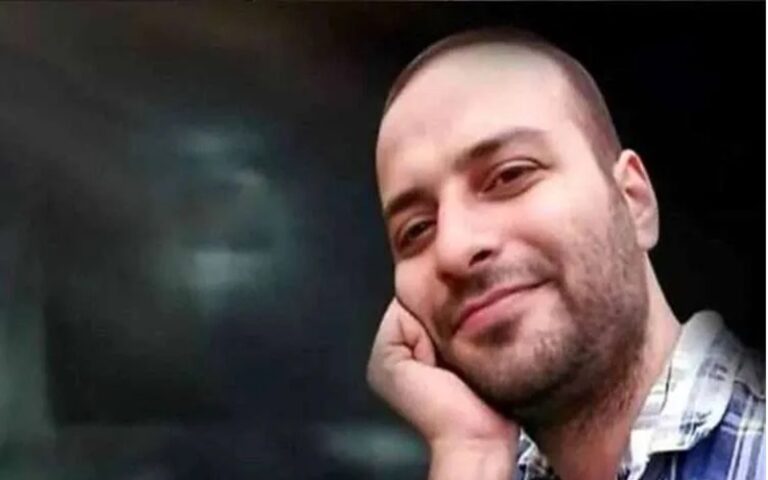
The death sentence of Amin Farahavar, supporter of PMOI and political prisoner held in Lakan Prison in Rasht, has once again been confirmed by the Supreme Court of the Iranian regime, a development that has increased concerns about the imminent risk of his execution.

Amin Farahavar, 38, a poet from Gilan province, had previously been sentenced to death by a branch of the Revolutionary Court of Rasht on charges of “rebellion against the state” (baghi) and “enmity against God” (moharebeh). Reports now indicate that his lawyer’s request for a retrial has also been rejected by one of the branches of the Supreme Court, effectively bringing the judicial process of his case to an end.

According to published information, the hearing of his case was held on May 1, 2025, in a branch of the Revolutionary Court of Rasht presided over by Judge Ahmad Darvish-Goftar. It is reported that the trial was conducted without the presence of a defense lawyer, and the death sentence was issued afterward.

The issued sentence was upheld in late 2025 by Branch 39 of the Supreme Court, and in early May 2026 the request for a retrial filed by his lawyer was also rejected; a decision that has further deepened the critical condition of this political prisoner.

Reports also indicate the poor physical condition of Amin Farahavar. Due to complications from gallbladder surgery and severe pain in the surgical area, he is facing serious health problems. Human rights sources say that he suffered internal bleeding during interrogation but has been deprived of adequate access to medical care.

Following the reconfirmation of the sentence, the National Council of Resistance of Iran (NCRI) has called for urgent action by international bodies to prevent the execution of this political prisoner. The council has also warned about the increasing pressure on political prisoners and the issuance of harsh sentences in recent months.

Political Prisoner Bijan Kazemi Sentenced to 37 Years and Six Months in Prison

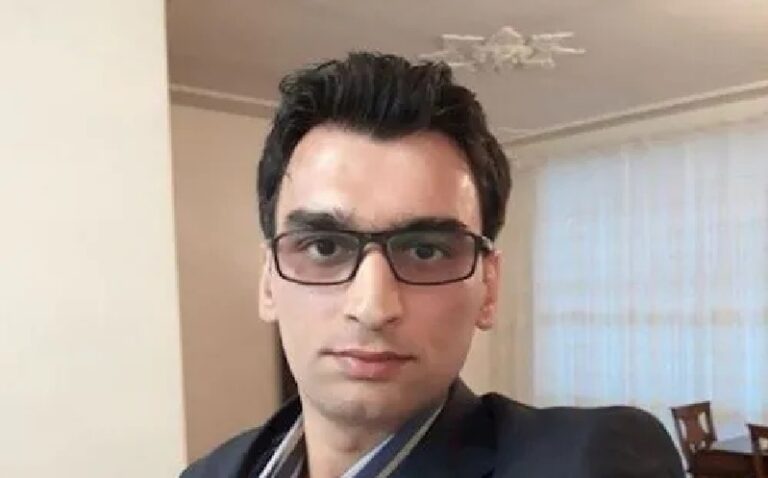
Bijan Kazemi, a political prisoner held in Tehran’s Evin Prison, was sentenced by Branch 15 of Tehran’s Revolutionary Court to a total of 37 years and six months in prison. Kazemi was arrested in the city of Kuhdasht after the killing of Mohammad Moghiseh and Ali Razini, two Supreme Court judges, on January 19, 2025.

Shahnaz Khosravi, the mother of political prisoner Bijan Kazemi, reported that he had been transferred to one of the Ministry of Intelligence’s safe houses outside Tehran Province. Kazemi has been detained since January 2025, and security agents have reportedly tried to force him to confess that he supplied the weapon used in the attack on Razini and Moghiseh.

High-Ranking Iranian Regime Judges Mohammad Moghiseh and Ali Razini Killed

Kazemi’s mother stated that her son, along with other detainees, is being held in separate cells in groups of three or four at one of the Ministry of Intelligence’s safe houses outside Tehran Province. She wrote that the lives of Bijan and other political prisoners are in danger.

Addressing the people of Iran, Khosravi wrote: “Let us turn the freedom of political prisoners not merely into a demand, but into the shared cry of a nation; a national demand for dignity, justice, and humanity.”

Following Israel’s attack on Evin Prison in June 2025, security agencies of the Iranian regime transferred hundreds of recently detained individuals and prisoners held in Evin’s security wards to safe houses and a newly established security detention facility inside Greater Tehran Penitentiary.

One of those transferred was Bijan Kazemi, who was arrested after several security agents raided his home in Kuhdasht County, searched the house, and confiscated all electronic devices belonging to him and his family members.

Kazemi, who had also been arrested in 2020 and imprisoned for two years, has been deprived of his legal rights as a political defendant during his latest detention.

Security agents arrested Kazemi on charges related to the killing of Ali Razini and Mohammad Moghiseh, two Supreme Court judges involved in mass executions of dissidents, and are attempting to force him to confess that he supplied the attacker’s weapon.

Moghiseh and Razini were shot and killed at their workplace inside the Supreme Court on January 18, 2025.

Iranian Regime Judiciary Announces ‘Harshest Punishment’ for Defendants in Ekbatan Case

The Mizan News Agency, affiliated with the judiciary of Iran’s regime, reported that Tehran’s Revolutionary Court sentenced a number of defendants in the Ekbatan case to the harshest punishments on charges including “corruption on earth,” collusion and assembly to commit crimes against the national security, and propaganda activities against the regime.

Mizan News Agency, affiliated with the judiciary of the Iranian regime, wrote that Tehran’s Revolutionary Court sentenced several defendants in the Ekbatan case to the harshest punishments on charges of “corruption on earth,” assembly and collusion to commit crimes against the country’s internal security, and propaganda activity against the regime.

Iran: The “No to Executions Tuesdays” Campaign Warns of Possible Death Sentences for “Ekbatan” Case Defendants

In a brief report published on the evening of Sunday, May 24, Mizan wrote: “According to the issued verdict, a number of the defendants in the case were sentenced to the harshest punishment on charges of corruption on earth, and the other defendants, based on the nature of their actions and the extent of their involvement, were sentenced to prison terms and supplementary punishments.”

The report did not mention the names of the defendants or the type of punishments and emphasized that since the verdict is not final, it is not possible to provide details about the case.

At the same time, HRANA, the news outlet of the Human Rights Activists in Iran organization, quoted a source familiar with the case as saying that Milad Armon, Navid Najaran, Mehdi Imani, and Seyed Mohammad Mehdi Hosseini — defendants in the case known as the Ekbatan Township case who were arrested during the nationwide 2022 protests — were sentenced to death by Branch 15 of Tehran’s Revolutionary Court on charges of moharebeh (“waging war against God”). The court was presided over by Judge Abolqasem Salavati.

According to the report, Amir Mohammad Khosh-Eghbal, Alireza Barmerz Pournak, Alireza Kafaei, and Hossein Nemati, other defendants in the case, were each sentenced to seven years in prison along with supplementary punishments.

According to the informed source, the ruling was verbally communicated to the defendants on Sunday without the presence or knowledge of their lawyers, and by the time the report was published, the attorneys had still not been informed. As a result, the lawyers were unable to file appeals.

Previously, all six defendants in the case had been sentenced to death, but the ruling was overturned by the Supreme Court, and the case was referred to Branch 13 of Tehran Criminal Court for retrial.

In this part of the case, Branch 13 of Tehran Province Criminal Court No. 1 convicted Milad Armon, Alireza Kafaei, and Amir Mohammad Khosh-Eghbal on charges of participating in the intentional killing of Arman Aliverdi, a member of the Basij paramilitary force. Each of them was sentenced to pay an equal share of the full blood money compensation for one person and to five years in prison.

The Ekbatan Township case dates back to the nationwide protests of 2022. On October 26, 2022, Arman Aliverdi, a member of the Basij paramilitary force, was injured in Ekbatan Township while sent to suppress anti-regime protest rallies. He died two days later of his injuries.

Following his death, security agencies arrested more than 50 young residents of Ekbatan Township, and indictments were issued against a number of them.

Currently, hundreds of political prisoners and citizens detained during the protests are facing political and security-related charges in Iran’s prisons.

Human rights activists have warned that some of these prisoners are at risk of receiving, having confirmed, or facing the implementation of death sentences.

In one of the latest developments, Manouchehr Fallah, a political prisoner held in Lakan Prison in Rasht, was sentenced to death for a second time by Branch 1 of the Revolutionary Court of the city. He had previously been sentenced to death in January 2025 on charges of moharebeh and supporting the People’s Mojahedin Organization of Iran (PMOI/MEK).

Power Struggle, An Endless Crisis at the Top of Iran’s Regime

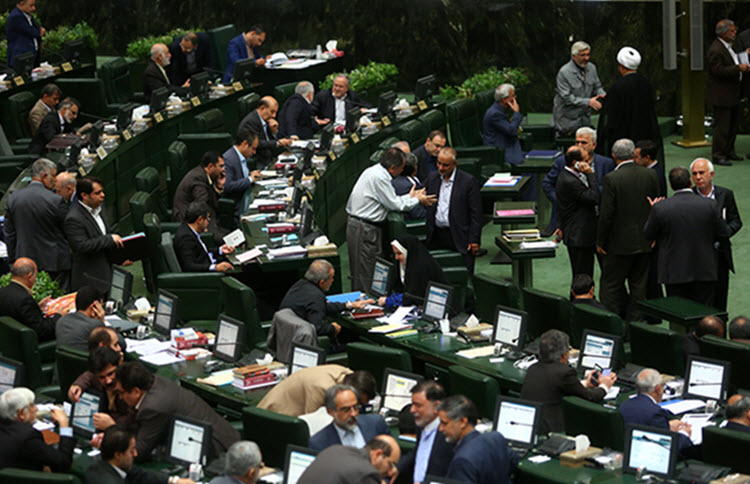
As Iran’s economic crisis deepens and social discontent increases, new signs have emerged of an intensifying power struggle within the ruling establishment. While regime officials in recent months repeatedly invoked slogans such as preserving unity and wartime conditions in an attempt to suppress any social protests, they are now themselves entangled in internal rivalries and political score-settling. The latest example of this power struggle has surfaced in the election of the presidium of the 12th Majlis (parliament).

The state-run Jahan-e Sanat newspaper reported: “On Monday, May 25, the election for the presidium of the third session of the 12th Majlis will be held; an election in which the country’s special circumstances have not prevented the usual factional maneuvering seen in such political events. However, the manner of holding the presidium election remained shrouded in ambiguity due to the parliament’s closure.”

Exposing the Paydari Front’s Operation to Bring Down Ghalibaf

In its report, the state-run Jahan-e Sanat newspaper exposed what it described as an operation by the hardline Paydari Front faction to weaken Mohammad Bagher Ghalibaf, the current speaker of parliament. The report shows that despite the regime’s official propaganda about the necessity of internal unity; different regime factions remain occupied with rivalry and struggles for a greater share of power.

The state-run Jahan-e Sanat newspaper explicitly stated in its report that hardliners are fully aware that their political weight is not comparable to that of Ghalibaf, but they are trying to prevent him from gaining full control of parliament through a strong vote. Although Ghalibaf’s faction succeeded in securing him the position of speaker of the Majlis of the anti-human regime for the seventh time, factional infighting and disputes continue.

This power struggle has not been limited to the position of parliament speaker. The report by the state-run Jahan-e Sanat newspaper also points to extensive efforts to remove Ghalibaf’s allies from deputy speaker and secretary positions within the presidium.

Power Struggle and Fear of the Future

Recent developments in parliament are being viewed as a reflection of a deeper crisis within the power structure of Iran’s regime. At the same time as, economic pressures increase and social protests reemerge; regime factions are feeling greater insecurity about their political future. Each faction is trying to consolidate its position and weaken internal rivals before any possible future developments.

In recent months, alongside intensifying inflation, the collapse of the national currency’s value, and the spread of labor and livelihood protests, regime leaders repeatedly emphasized the need for internal unity. Nevertheless, revelations about heavy lobbying and behind-the-scenes competition in the parliament’s presidium election have further exposed the deep divisions within the regime’s power structure.

Regime analysts have also reported growing tensions among various factions. Some media outlets close to the regime have warned that the continuation of this power struggle could deepen internal divisions. However, signs indicate that competition for a larger share of power has overridden any form of political cohesion.

A notable point is that even domestic media outlets are no longer able to conceal the dimensions of this crisis.

Social Protests and the Intensification of Divisions and Factional Infighting

At the same time as this power struggle, a new wave of social protests is unfolding in various Iranian cities. Retirees, workers, teachers, and other protesting groups have repeatedly demonstrated in recent weeks against the economic situation, rising prices, and the severe decline in purchasing power. Many observers believe that the increase in these protests has intensified regime factions’ fears about the future.

Under such circumstances, the regime’s internal conflicts have become more visible than ever. Each regime faction is trying to preserve its position and prevent being pushed out of the power structure. This power struggle has now become one of the most significant signs of the regime’s internal crisis.