Home Blog Page 6

Sixty-two Members of the Iranian Regime’s Assembly of Experts Call for Keeping the Strait of Hormuz Closed

0

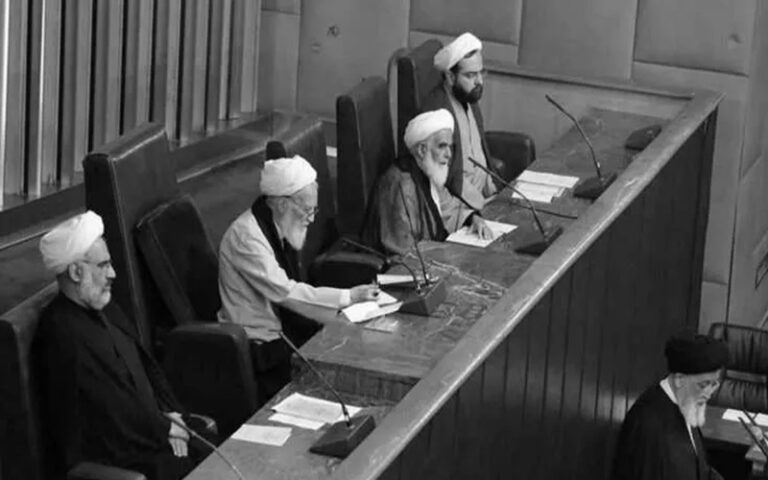
As signs of divisions and rivalry at the highest levels of the Iranian regime have become increasingly apparent, 62 of the 88 members of the Assembly of Experts, the body responsible for appointing and overseeing the supreme leader, issued an unprecedented statement calling for the continuation of confrontational policies, including keeping the Strait of Hormuz closed and the assassination of U.S. President Donald Trump and Israeli Prime Minister Benjamin Netanyahu.

In the 10-point statement, the signatories described U.S. President Donald Trump and Israeli Prime Minister Benjamin Netanyahu as “Mahdur al-Dam” (one whose blood may be shed with immunity) and claimed that killing them “is obligatory for every obligated Muslim who gains access to them.”

European Union Sanctions Against Iran’s Regime and the Strait of Hormuz Crisis

The signatories also referred to Israel’s continuing military operations in Lebanon and the presence of Israeli forces in southern Lebanon, claiming that this constitutes a violation of understandings between Iran and the United States. On that basis, they described reopening the Strait of Hormuz as “a strategic mistake,” arguing that doing so would make “the enemy even bolder.”

The statement also reaffirmed the positions announced by Mojtaba Khamenei, the new leader of the Iranian regime, regarding negotiations with the United States, calling for Iran’s nuclear program to be excluded from the agenda of any talks with Washington. The signatories further emphasized the need to pursue the “consolidation of control over the Strait of Hormuz,” obtain compensation, secure the release of frozen assets, and bring about the withdrawal of U.S. forces from the region.

In another section of the statement, officials were warned to refrain from making any remarks or taking any actions that could be interpreted as showing “the country’s weakness or inability.” It also stressed that Mojtaba Khamenei’s positions should be treated as the “final word” and that negotiations with the United States should not be allowed to drag on.

Deepening Divisions at the Top of the Ruling Establishment

Regardless of the statement’s unusually hardline content, its publication can be viewed as a sign of intensifying rivalry and divisions among different power factions within the Iranian regime. The signatories’ repeated insistence that Mojtaba Khamenei’s positions constitute the “final word,” along with their warning to officials not to deviate from them, may, in the view of some political observers, indicate that there is no complete consensus within the ruling structure on how to deal with domestic and foreign crises and that Mojtaba Khamenei’s directives do not command broad acceptance.

From this perspective, when dozens of members of the Assembly of Experts feel compelled to issue a public statement emphasizing the need to follow the positions of a particular center of power, it may itself indicate the existence of resistance, hesitation, or disagreement within other parts of the ruling establishment.

In addition to reflecting the increasingly hardline positions of part of the regime’s political establishment, the statement may also be interpreted as evidence of intensifying internal struggles at the highest levels of power. The unprecedented emphasis on following Mojtaba Khamenei’s positions is not necessarily a sign of strength but may instead reflect concerns about the extent of his influence and his ability to impose his preferred policies under the current crisis conditions. If these internal disagreements persist, this could come to be viewed as one indication of a weakening of his political position within the regime’s power structure.
Workers and Retirees in Iran Once Again Protest Over Living Conditions

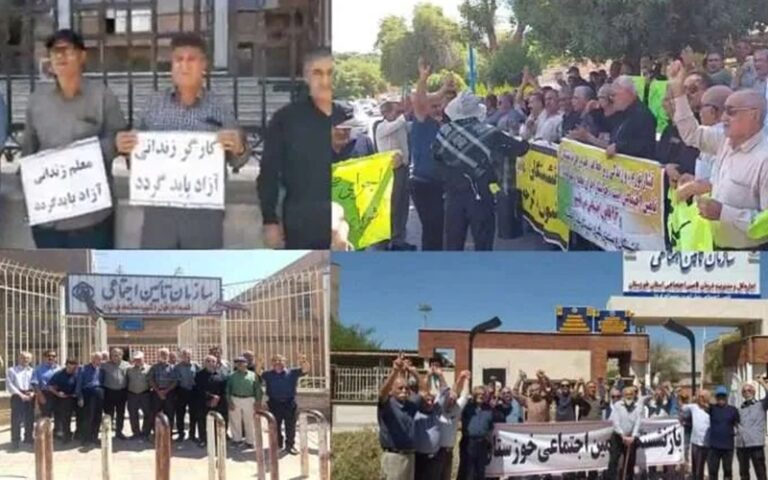
Retirees and workers held protest gatherings and marches in several cities across Iran on Sunday, June 28, once again demanding that their labor-related and livelihood grievances be addressed.

In the city of Shush, a group of Social Security retirees held a protest march and rally, emphasizing that they would continue pursuing their demands through street protests. Protesters chanted slogans including “Only in the streets will we win our rights” and “The street is our trench; the struggle continues until our demands are achieved,” calling for action to address their living conditions and legal rights.

New Wave of Protests Across Various Iranian Cities

The gathering took place as temperatures in Khuzestan Province exceeded 50 degrees Celsius, but despite the extreme heat, the protesting retirees continued their demonstration.

At the same time, in Ahvaz, a group of workers and retirees staged a protest outside the Social Security Organization building in the Farhangshahr district at Kargar (worker) Square. The demonstrators demanded that officials be held accountable and that their labor-related and livelihood demands be addressed.

In Isfahan, retirees from the steel and iron industries gathered outside the Governor-General’s Office to protest living conditions and the suspension of health insurance services. Reports indicate that protesters also blocked parts of the roads surrounding the provincial government building during the demonstration.

Retirees Protest in Kermanshah and Dezful

In Kermanshah, Social Security retirees gathered outside the Social Security Organization building as part of the nationwide protests. Speakers at the rally stressed the need for unity and solidarity to confront what was described as “the normalization of poverty, war, and destructive sanctions,” while chanting, “Until we get our rights, we will come every Sunday.”

In Dezful, a group of Social Security retirees also gathered outside the organization’s building, demanding that their grievances be addressed. The protest was part of an ongoing series of labor-related demonstrations by retirees in cities across the country.

The protests on Sunday took place after months of repeated demonstrations by retirees and workers in cities across Iran over living conditions, health insurance, retirement benefits, and broader economic conditions, with participants calling for their demands to be addressed without delay.

Bread Prices Rise Again in Tehran; Fresh Pressure on Household Budgets

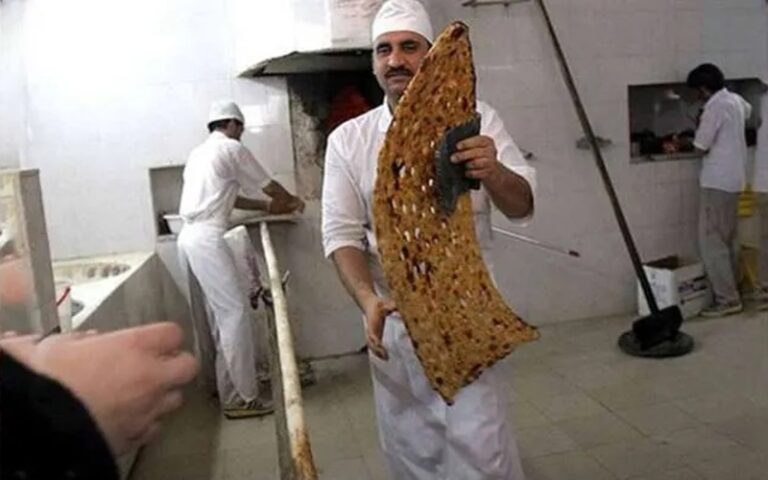
With the implementation of new bread prices in Tehran on Saturday, June 27, a new wave of concern has emerged over increasing economic pressure on low-income households and the working class. As bread is considered the primary staple food for a large segment of society, higher prices could have a direct impact on food security and the livelihoods of millions of Iranian citizens.

Hamidreza Rastgar, head of the Tehran Chamber of Guilds, announced the implementation of new bread prices for both subsidized bakeries and those selling bread at market prices, stating that the new rates would take effect on Saturday. However, many citizens say they have experienced higher bread prices at bakeries since late June, despite the absence of any prior official announcement from the government.

Rationing and Sharp Increases in Bread Prices Across Iran

Mohammad Javad Karami, head of the Flour and Bread Working Group, announced last Tuesday that, under a decision by the Tehran Governorate, the price of bread made with government-subsidized flour had increased starting on the evening of June 22.

However, field reports indicate that at many bakeries, actual prices are even higher than the officially announced rates, forcing customers to purchase bread at prices above the approved levels.

Economic experts believe that, unlike many other goods, rising bread prices have a direct and widespread impact on low-income households because bread remains the primary—and in many cases the cheapest—source of calories for millions of Iranian families.

Particular attention has focused on the increase in the price of lavash, the most common and widely accessible bread consumed by workers and low-income families. The price of this type of bread has increased by approximately 440% over the past two years.

During the same period, workers’ wages have increased by only slightly more than 100%, a gap that observers say reflects the continued decline in purchasing power and the shrinking ability of working-class households to afford basic necessities.

The increase in bread prices comes as many families were already facing serious financial hardship due to rising housing, healthcare, transportation, and food costs. Now, the higher price of a food item that holds a fundamental place in the Iranian diet has further intensified concerns about worsening poverty and food insecurity.

When even bread, the most basic consumer staple, is subjected to such significant price increases, the consequences extend far beyond a simple price adjustment. It is a sign of mounting economic pressure on the daily lives of millions of Iranians, many of whom spend a large share of their income on meeting only their most basic living needs.

Economics and Ethics in Iran; From Poverty to the Commodification of the Human Body

The economy affects more than people’s income, employment, or purchasing power; it can also penetrate the deepest layers of social and ethical life. When economic pressures drive people toward choices they would never have accepted under normal circumstances, economics and ethics can no longer be treated as separate domains.

Economists such as Alvin Roth have, in recent years, sought to explain the concept of “repugnant transactions”—transactions that both parties voluntarily accept but that society views with moral disgust or ethical concern. Markets for human organs, prostitution, and certain forms of assisted death fall into this category. Iran’s experience has become one of the frequently discussed cases in the global literature on the ethics of markets.

Inflation in Iran and the Limits of What an Agreement with the United States Can Achieve

The expansion of unconventional markets, the sale of human organs, the growth of transactions driven by economic desperation, and the decline in social capital demonstrate that the economic crisis is not merely a financial issue but one that has also affected the ethical foundations of society.

The Political Economy of Iran’s Ethical Crisis

The relationship between economics and ethics in Iran cannot be analyzed separately from the country’s ruling political structure. Widespread poverty, chronic inflation, and declining economic opportunities are not the result of temporary policy decisions. Rather, they are the outcome of decades of concentrated political power, lack of accountability, and prioritizing political interests over public welfare.

In democratic systems, civil society organizations and independent media can debate the ethical boundaries of markets and establish shared norms. In authoritarian systems, however, decisions about public ethics also become political tools. As a result, the government claims to defend moral values while simultaneously creating the economic conditions that undermine those very values.

Iran’s kidney market is a clear example of this contradiction. A large proportion of sellers are individuals who have made this decision under severe financial hardship and economic pressure. Under such circumstances, speaking of “free choice” without considering the underlying economic conditions presents an incomplete picture of reality.

Michael Sandel and Debra Satz also emphasize this point. They argue that poverty can severely restrict freedom of choice and transform certain transactions into forms of economic exploitation. Therefore, the ethics of markets cannot be judged solely by the consent of the two parties involved; the broader structure of power and the distribution of opportunities must also be considered.

Unusual Markets; A Product of a Dysfunctional Economy

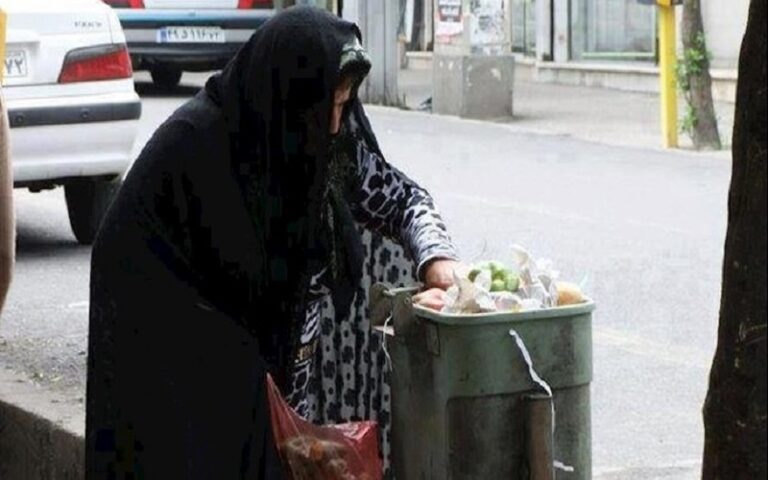
In recent years, the relationship between economics and ethics in Iran has been marked by the emergence of markets that either do not exist or remain marginal in many other countries. From the sale of human organs to various unconventional contractual arrangements, these markets reflect society’s adaptation to severe economic pressures.

Such adaptation is not necessarily a sign of success. Societies under pressure develop survival strategies that often carry significant ethical costs. When people are forced to sell parts of their own bodies to pay for medical treatment, rent, or outstanding debts, the issue cannot be reduced to a simple economic transaction.

Economic authoritarianism has further intensified this trend. Widespread monopolies, institutionalized corruption, and the absence of equal opportunity have restricted social mobility. As a result, segments of society are pushed into markets that were once confined to the margins.

An important point is that outright prohibition does not necessarily eliminate these markets. Global experience shows that simple suppression often leads to the expansion of underground markets. This reality, however, does not imply acceptance of the status quo. The central issue remains the economic and political conditions that give rise to such markets.

Rebuilding Public Ethics Is Impossible Without Structural Change

The relationship between economics and ethics in Iran ultimately leads to a fundamental question: Can public ethics be rebuilt when the political structure itself produces poverty, corruption, and inequality?

Many political economy analysts answer this question in the negative. Social ethics do not develop in a vacuum. Public trust, social solidarity, and civic responsibility require accountable institutions and transparent governance. In the absence of these elements, society is forced to make painful compromises between survival and ethical values.

What is unfolding in Iran today is not merely an economic crisis but also a crisis of the moral legitimacy of the ruling power structure. A system that cannot provide economic security and equal opportunity inadvertently pushes its citizens toward choices that they themselves do not view as ethically acceptable.

WSJ: A Cryptocurrency Exchange at the Heart of Iran’s Regime’s Financial Transactions

The Wall Street Journal reported in an investigative article that Iran’s regime has used the cryptocurrency exchange CoinEx in recent years as one of its most important channels for connecting to the global cryptocurrency market and circumventing U.S. sanctions.

CoinEx denied the allegations, saying it has never knowingly provided services to entities affiliated with Iran’s regime or to sanctioned individuals.

Citing blockchain data analysis by TRM Labs, the Wall Street Journal reported that entities linked to Iran’s regime have conducted more than $3.84 billion in cryptocurrency transactions through CoinEx since 2019. According to the newspaper, the exchange has become one of the Iranian regime’s primary channels for accessing the global cryptocurrency market and evading U.S. economic sanctions.

Iran’s Economic Growth Decline Accelerates

According to the report, blockchain experts began their investigation with two wallets attributed to the Central Bank of Iran’s regime. The analysis found that some of the assets in those wallets originated from cryptocurrency stolen from the Bybit exchange in an attack attributed to North Korean hackers, during which approximately $1.5 billion in digital assets was stolen.

Repeated Transfers and Conversion of Digital Assets

According to the Wall Street Journal, after entering wallets attributed to the Central Bank of Iran’s regime, these funds were routed through a complex chain of transfers across multiple blockchain networks, repeated cryptocurrency conversions, and the use of decentralized finance (DeFi) protocols before ultimately reaching accounts at CoinEx.

TRM Labs’ analysis indicates that approximately $67 million of these assets were ultimately transferred to CoinEx deposit accounts and then to the exchange’s treasury wallet. After being mixed with other deposits and withdrawals, the funds could no longer be traced.

The newspaper wrote that CoinEx, founded in 2017 by former Tencent engineer Haipo Yang and now based in the Seychelles, has in recent years replaced Binance as the primary foreign partner of Nobitex, Iran’s largest cryptocurrency exchange.

According to TRM Labs’ analysis, more than $763 million in cryptocurrency was transferred between Nobitex and CoinEx during the past year alone.

The Wall Street Journal reported that the volume of asset transfers from Nobitex to CoinEx exceeded transfers in the opposite direction, suggesting that Iranian users rely on CoinEx as a gateway to the global cryptocurrency market and exchanges such as Binance.

Earlier this month, the U.S. government also sanctioned Nobitex on allegations of supporting Iran’s regime.

The newspaper also reported financial transactions between CoinEx wallets and the Zedcex exchange, which has been linked to convicted economic criminal Babak Zanjani.

Zanjani has previously described himself as a strategist for the Islamic Revolutionary Guard Corps’ (IRGC) sanctions-evasion operations.

The U.S. Department of the Treasury sanctioned Zanjani and Zedcex in January. However, the Wall Street Journal emphasized that all of the transactions referenced in its report took place before those sanctions were imposed.

Researchers estimate that about 13% of Iran’s population owns cryptocurrency assets and that the country’s cryptocurrency market was valued at between $8 billion and $10 billion in 2025.

The report also referred to the recent war and the widespread internet shutdown in Iran.

According to the Wall Street Journal, although many Iranian users lost access to CoinEx during the internet shutdown, TRM Labs’ analysis shows that the average value of transactions between CoinEx and Nobitex increased during the same period. The company said this could indicate greater use of the route by larger actors, although it stressed that this conclusion is not definitive.

In response to the report, CoinEx denied all allegations that it had cooperated with Iran’s regime or facilitated sanctions evasion.

The exchange also criticized TRM Labs’ analytical methodology, saying that assets passing through a platform do not necessarily mean that the platform was aware of or involved in illegal activities.

The company also announced that it will shut down its Persian-language social media accounts.

Iran’s Statistical Center: Year-on-Year Inflation Reached 88.6% in June

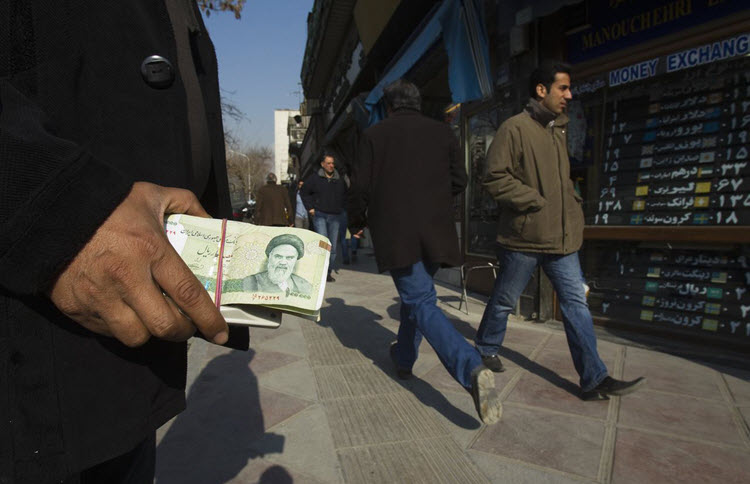
The Statistical Center of the Iranian regime announced that the year-on-year inflation rate in June reached 88.6%. The annual inflation rate for June was also reported at 62%, representing an increase of 4.3% compared with May.

Year-on-year inflation refers to the percentage change in the consumer price index compared with the same month of the previous year. Accordingly, in June 2026, households across the country spent an average of 88.6% more than they did in June 2025 to purchase the same basket of goods and services.

Iran’s Economic Growth Decline Accelerates

While the nationwide year-on-year inflation rate was reported at 88.6%, the Statistical Center said that year-on-year inflation in rural areas exceeded 108% in June.

For food, beverages, and tobacco products, the nationwide year-on-year inflation rate reached 134.6%.

Iran was involved in a 12-day war with Israel during the summer of last year and, in January 2026, experienced nationwide January protests and a 40-day war with the United States and Israel. These factors, along with severe international sanctions and widespread corruption within the country’s economic system, may be among the reasons for the country’s sharp economic slowdown.

In mid-June, a senior official from the Iranian regime’s Interior Ministry said that “60%” of Iran’s citizens could no longer endure additional economic pressure and were not “hopeful about improving conditions in the future.”

IRGC: We Attacked U.S. Military Positions in the Region

In a statement issued on the morning of Saturday, June 27, the public relations office of the Islamic Revolutionary Guard Corps (IRGC) announced that the IRGC Navy had targeted U.S. military positions in the region in response to what it described as U.S. “aggression and breach of commitments.”

The IRGC did not specify which locations were targeted in the attack.

The statement accuses the United States of violating the ceasefire and claims that after Israel breached the ceasefire in southern Lebanon, the United States also “violated its commitments.”

The IRGC public relations office wrote in its statement: “Under Article Five of the Islamabad Memorandum of Understanding, arrangements for controlling transit through the Strait of Hormuz are the responsibility of the Islamic Republic of Iran; however, the United States sought to violate this commitment through various provocations, and it received the necessary response. The same will occur in the future.”

The IRGC also threatened that it would deliver a broader response if the United States carries out further attacks.

CENTCOM Releases Footage of Strikes on Iran’s Missile and Drone Facilities

Meanwhile, the United States Central Command (CENTCOM) posted a video on X on Saturday morning showing U.S. fighter jets striking Iranian missile depots, drone storage facilities, and coastal radar sites.

In a statement, CENTCOM said the strike was carried out after Iran attacked a Singapore-flagged cargo ship with a suicide drone on Thursday, June 25, as it was leaving the Strait of Hormuz near the coast of Oman.

According to CENTCOM, the attack constituted a clear violation of the ceasefire and posed a threat to freedom of navigation along one of the world’s most important trade routes. The command also stated that it will continue supporting the safe passage of commercial vessels through the Strait of Hormuz and will maintain its presence in the region to ensure full implementation of the agreement with Iran.

Fox News, citing a senior U.S. official, reported that the U.S. military used six aircraft to strike four targets along Iran’s coastline and on Qeshm Island.

This marks the first time the United States has carried out military strikes against IRGC targets since signing the ceasefire with the Iranian regime.

Global Torture Index: Iran Is Among the World’s Highest-Risk Countries for Torture

The latest Global Torture Index identifies Iran as one of the world’s highest-risk countries for torture, impunity, and state violence. It warns that the intensification of repression following last year’s military conflict has increased the risk of torture, ill-treatment, arbitrary detention, and other serious human rights violations.

The World Organisation Against Torture (OMCT) and partner organizations published the second edition of the Global Torture Index on Thursday, June 25. The index assesses the risk of torture in 39 countries across different regions of the world.

The report was released on the eve of June 26, the United Nations International Day in Support of Victims of Torture, which the UN designated to emphasize the absolute prohibition of torture and support for its victims and survivors.

Volker Türk: At Least 40 People Executed on Security-Related Charges in Iran

According to the Iran data, compiled in cooperation with the Impact Iran coalition, torture is deeply embedded in the laws, policies, and official practices of Iran’s regime.

The report also states that the escalation of military conflict, including Israeli attacks in June 2025 and subsequent U.S. and Israeli attacks on Iran’s regime, has increased the risk of torture, ill-treatment, arbitrary detention, and other serious human rights violations.

According to the index, Iran’s regime was assessed at the highest risk level in six of the seven main evaluation categories: political commitment, police and state violence, impunity for perpetrators, victims’ rights, the right to defend human rights, and protection for all individuals.

The condition of detention facilities was also assessed as presenting a “high risk.” The index’s findings indicate that torture in Iran’s regime is not an exception but rather a tool of governance.

Torture, Executions, and Groups at Risk

The report says that Iran’s regime has still not acceded to the United Nations Convention Against Torture and does not recognize torture as a distinct criminal offense under its laws.

According to the report’s authors, the legal framework of Iran’s regime continues to permit punishments such as flogging and amputation, while the judicial system allows convictions based solely on confessions. They say this creates an incentive to use torture and ill-treatment to obtain confessions, including those later broadcast by state-run media.

The report states that Iran has one of the highest execution rates in the world. According to the report’s estimates, at least 1,639 people were executed in Iran in 2025, including individuals who were under the age of 18 at the time of the alleged offense.

The report also states that perpetrators of torture in Iran’s regime enjoy near-total impunity. It adds that no independent body is responsible for investigating allegations of torture or deaths in custody, and detention facilities operate with very limited or no external oversight.

According to the assessment, women and girls, ethnic minorities, human rights defenders, journalists, and lawyers are at greater risk than others of torture, arbitrary detention, and other forms of human rights violations.

The World Organisation Against Torture called on Iran’s regime to halt executions and judicial corporal punishments, accede to the United Nations Convention Against Torture, criminalize torture under its domestic laws, end the use of forced confessions, and allow the UN Fact-Finding Mission unrestricted access to Iran.

The organization also called on the international community to support efforts to hold perpetrators of human rights violations accountable, provide the necessary resources for these efforts, and protect torture survivors and their families.

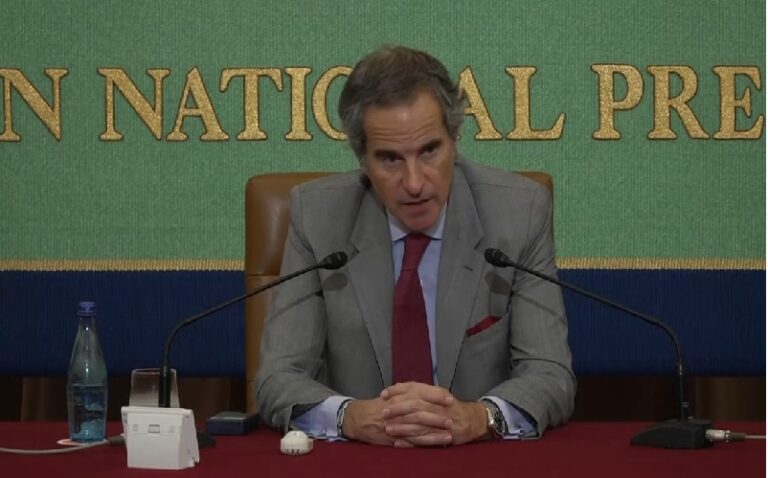
Grossi: A Very Robust Verification System is Needed for Iran’s Nuclear Program

Rafael Grossi, Director General of the International Atomic Energy Agency (IAEA), said that a very robust verification system is needed to ensure that nuclear weapons are not developed in Iran.

Speaking to reporters in Japan on Friday, June 26, Grossi said, that he thinks the objective of this recent agreement between the United States and Iran is to ensure that nuclear weapons are not developed in Iran. Iran’s regime has also clearly stated that it has no such intention.”

Grossi continued, but merely declaring an intention is not enough. IAEA must establish a very robust verification system as soon as possible, whenever it is practically feasible.

Rafael Grossi also announced that the memorandum of understanding between Washington and Tehran allows IAEA inspectors access to Iran’s nuclear facilities.

At his press conference in Japan, Grossi said that an agreement exists and that, to implement it, the IAEA must have access to Iran and conduct inspections. He expressed hope that he would be in Iran soon.

The IAEA chief’s remarks came after officials from Iran’s regime had previously stated that access to some key nuclear sites would not be possible until a final agreement with the United States is concluded and sanctions are lifted.

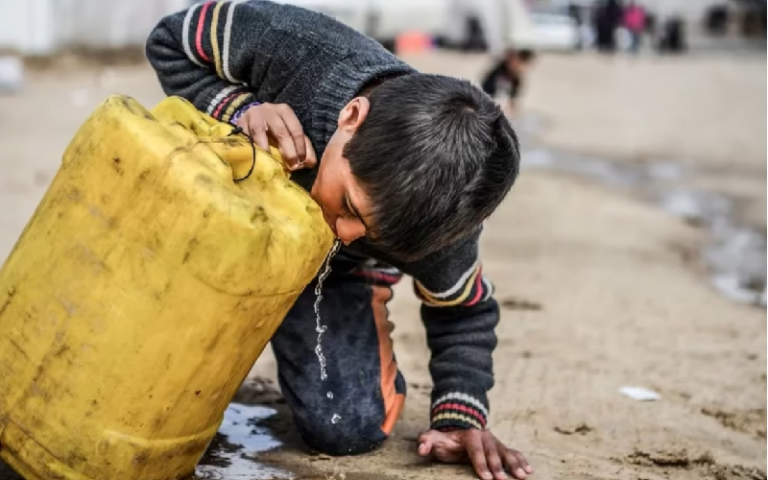
Renewable Water Per Capita in Iran Falls To 1,200 Cubic Meters Per Year

0

Reports from Iranian regime government institutions show that the “renewable water per capita” indicator for each Iranian citizen has declined from about 7,000 cubic meters in past decades to less than 1,200 cubic meters.

Iran’s water industry spokesperson announced this on Friday, June 19, adding that population growth alongside declining rainfall and the consequences of climate change has placed unprecedented pressure on the country’s water resources.

Issa Bozorgzadeh, Iran’s water industry spokesperson, said regarding the status of this indicator in Iran compared with global standards: “This figure in earlier years, when the country received more rainfall, was about 130 billion cubic meters per year and has now fallen to less than 103 billion cubic meters per year.”

The Iranian Plateau Is Turning into a Desert

According to him, in the 1950s and 1960s, each Iranian had access to nearly 7,000 cubic meters of water per year, but this figure has now declined significantly.

Renewable water per capita, measured in cubic meters per person per year, represents each citizen’s share of the country’s natural water resources and is considered one of the most important global indicators for assessing national water security.

This indicator refers to the total renewable freshwater resources of a country or region, including surface water and groundwater that are replenished annually through rainfall and the natural water cycle, divided by the population of that country or region.

The minimum desirable per capita level for sustainable water resources is 1,700 cubic meters per person per year, and countries with a lower figure enter the category of “water stress.”

Experts emphasize the importance of this indicator for evaluating a country’s water security, planning sustainable water management, enabling fair comparisons among countries, and protecting resources for future generations.

Iran has faced severe drought for years, but in addition, water waste, excessive extraction from underground aquifers, structural weaknesses including inefficient or overly interventionist water management, and the expansion of agriculture have intensified the crisis in the country.

However, Iran’s water industry spokesperson described population growth as the “main reason” for the sharp decline in per capita water availability in Iran and said: “The country’s population has increased, and these resources are divided among more people, therefore each person receives a smaller share.”

According to Bozorgzadeh, part of this decline is also due to climate change and reduced rainfall.

Previously, average rainfall in Iran was about 250 millimeters, but it has now decreased. “Different studies show different figures, but climate change has caused the country’s average rainfall to decline by about 10%, although in some regions the decrease has been greater.”

The impact of rising temperatures on increased evaporation and transpiration, higher water consumption by plants and other living organisms, and changes in the geographic distribution and type of precipitation were also among the factors cited by the official as affecting the renewable water per capita indicator.

According to global standards, renewable water availability of more than 1,700 cubic meters per person per year indicates a favorable condition without water stress; between 1,000 and 1,700 cubic meters indicates water stress; between 500 and 1,000 cubic meters indicates severe water scarcity; and less than 500 cubic meters per person per year indicates absolute water scarcity (water crisis).

On this scale, values above 5,000 cubic meters per person per year indicate very abundant water resources. The figure of 1,700 cubic meters per person per year is regarded as the minimum globally acceptable threshold.

However, renewable water per capita differs from the amount of water each individual consumes. This indicator shows how much water nature provides to each citizen annually, not how much water each citizen uses.

Official statistics show that water inflow into Iran’s dams during the first 243 days of the current water year, from September 22, 2025, to May 23, 2026, increased by 72% compared with the previous year.

However, 33% of the country’s dam reservoir capacity remains empty, and experts say the uneven distribution of rainfall continues to pose challenges for water resource management.