Home Blog Page 6

77 Days of Internet Shutdown, A Tool of Control and a Sign of Tehran’s Real Fears

The crisis of internet shutdowns in Iran has entered a new phase. 77 days of internet cuts, widespread disruptions, a sharp decline in access quality, and the implementation of restrictive policies have now become one of the main sources of public dissatisfaction. At the same time as economic and social pressures increase, many users, business owners, and media activists believe that the regime is trying to exert greater control over the public sphere by continuing its policy of internet shutdowns.

In this regard, Qader Bastani Tabrizi, a communications professor and board member of the Journalists’ Trade Association, warned about the widespread consequences of internet shutdowns in an interview with the government-affiliated ILNA news agency on May 13, 2026. ILNA is a labor-focused media outlet in Iran that is generally considered close to state institutions. He stressed: available data and people’s daily experience show that the state of the internet in recent months has created a wave of anger and social dissatisfaction.

Bastani Tabrizi said: despite being aware of the consequences of the crisis, the government continues its policy of blocking access. Ignoring public opinion is either a sign of complete disregard for society or a sign of inability to make decisions.

Internet shutdown and the failure of government promises

Bastani Tabrizi then referred to the election promises of the government of Iranian regime president Masoud Pezeshkian. He said: despite earlier slogans, the government has not made any real change in the state of internet access. He added that merely expressing dissatisfaction by officials does not solve the problem. If the government does not have decision-making authority, it should state this clearly, so the public knows which institution is actually responsible for the internet shutdown policy.

Behind the Internet Shutdown: The Iranian Regime’s Black Market

He also referred to the continuation of restrictions after a ceasefire was established and said: people do not accept that the internet is cut for weeks without any clear explanation. During this period, many online businesses were destroyed and severe damage was inflicted on people’s livelihoods.

At the same time, the implementation of a tiered internet policy and the provision of special internet access for select groups at several times higher prices has triggered widespread anger among users. Bastani Tabrizi described this policy as contrary to media justice and said the government has chosen a path of digital discrimination instead of expanding free access.

Accountability crisis and growing distrust

The board member of the Journalists’ Trade Association said ambiguity in digital rights is one of the main roots of the crisis. He stated that no specific institution takes responsibility for internet shutdowns, and this has intensified public distrust.

Bastani Tabrizi stressed that the decision-making structure regarding the internet is controlled by a narrow group that does not value public demand. According to him, in this view, the internet is seen not as a development infrastructure but as a permanent threat. He also pointed to the failure of official media in representing social diversity. He said state media continue to operate in a monolithic manner, deepening the gap between society and the official structure.

In response to the question of whether the internet is the cause of unrest, he stated that the roots of social crises lie in the economy, unemployment, inflation, and livelihood pressures. The internet is merely a reflection of these crises, and it is not possible to hide social realities by shutting it down.”

The internet shutdown crisis has now become a symbol of a deeper crisis in the ruling structure of the clerical regime in Iran. A government that fears protest, awareness, and the free flow of information is trying to contain a dissatisfied society through blocking and controlling the online space. However, experience from past years has shown that internet shutdown policies have neither created stability nor lasting security. This policy has only increased public anger, social distrust, and the gap between the people and the government.

Targeted Repression of Iranian Women, From Mass Arrests to Death Sentences

Women in Iran have faced a wave of widespread arrests and targeted repression; a wave that indicates a planned intensification of control amid the crisis. Features of this period include mass arrests, the issuance of heavy judicial sentences, and increased harassment and pressure on the families of political prisoners, those executed, and those killed during the January 2026 uprising.

This report presents a picture of the situation of women in conditions where political crises and restrictions on information have further obscured the true scale of violations of their rights.

Iran’s regime has once again exploited the atmosphere of tension and war crisis it has imposed on the Iranian people to intensify domestic repression. While public attention was partly focused on regional developments and war, security apparatuses systematically expanded the scope of control and suppression inside the country.

Iran Intensifies Pressure on Families of PMOI Prisoners Amid Expanding Crackdown

Field reports indicate that a wave of daily arrests, including among women and young girls, has been underway. These arrests are often carried out under vague security charges and without transparent judicial procedures. In many cases, these women and girls are arrested together with their husbands or other family members.

These arrests are part of a deliberate policy to create fear and intimidation and to prevent the formation of an uprising.

On April 19, 2026, Ahmadreza Radan, the commander-in-chief of the regime’s State Security Forces, announced in a televised interview the arrest of 1,800 people. Of this number, 700 were detained for activity on social media networks. (Fars News Agency, April 19, 2026, a state-run Iranian news agency) He did not specify the timeframe of these arrests, but it is believed they occurred either since the beginning of the war or after the January uprising.

Iran’s judiciary system typically justifies these arrests under charges such as collaboration with the enemy, moharebeh (enmity against God, an accusation that can carry the death penalty), or propaganda against the system, framing them as national security cases. Due to widespread internet shutdowns or severe restrictions and tight control over information flow, exact arrest figures are not available; however, estimates indicate the arrest and imprisonment of many women and girls.

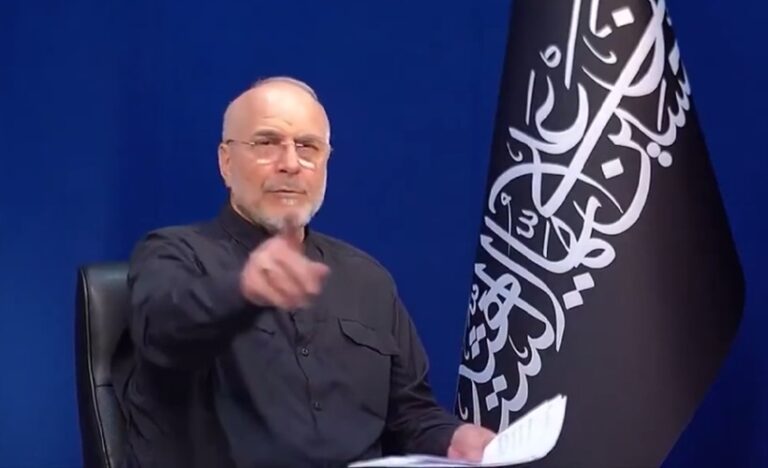
Mohammad Bagher Ghalibaf, speaker of the Iranian regime’s parliament, in this regard urged government forces, saying: “Do not abandon the street choke point.” (Tasnim News Agency, March 30, 2026, a media outlet close to the Islamic Revolutionary Guard Corps) Media outlets close to security institutions have also emphasized the importance of continuous street presence by forces to control protests.

Meanwhile, the National Council of Resistance of Iran announced in a statement that during nationwide protests from December 28, 2025 to January 14, 2026, more than 50,000 people were arrested. Among them are a significant number of women, youth, and students, many of whom have been forcibly disappeared and are now under torture and facing unfair trials and death sentences. So far, nine detained protesters from the Dey (January) uprising have been executed.

Previously, Masoumeh Ebtekar, former head of the Iranian regime’s Vice Presidency for Women and Family Affairs, stated in a note that 77% of those arrested in the January nationwide protests were under 30 years old, including 17% school students and 6% university students. (Etemad newspaper, April 15, 2026, a state-run newspaper)

Execution as a tool of intimidation; women facing death sentences

The death penalty continues to be used as one of the regime’s main tools to create fear and prevent the expansion of social protests. Between March 19 and April 25, 2026, eight political members of the People’s Mojahedin Organization of Iran (PMOI/MEK), the regime’s main opposition, and nine young protesters arrested during the January uprising were executed.

The Voice They Could Not Silence: Vahid Bani Amerian’s Final Testament

Among them, dozens of female protesters have either been sentenced to death or are facing severe charges that could lead to execution.

Mahboubeh Shabani, 33, from Mashhad, is being held in Vakilabad prison on charges of moharebeh. This charge, which can lead to a death sentence, is related to assisting in transferring injured protesters to medical centers during the January uprising.

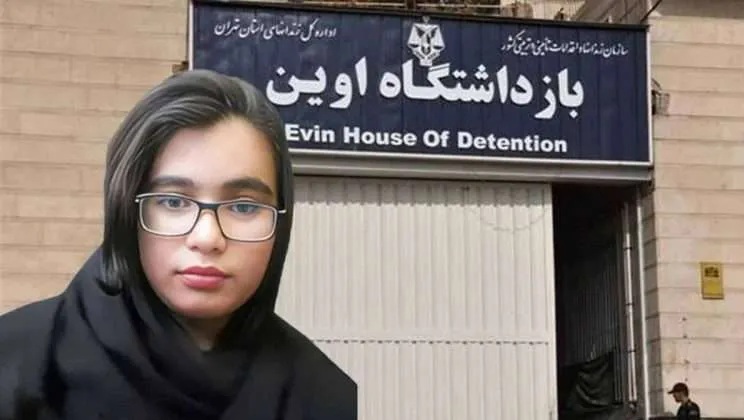
Fatemeh Abbasi, 34, and the mother of a 13-year-old girl, who was arrested along with her father during the January nationwide protests, was recently transferred to the women’s ward of Evin Prison after weeks of torture and interrogation for forced confessions. Fatemeh has been sentenced to 25 years in prison, and her father, who was sentenced to death, was executed two days ago.

Families are deprived of holding mourning and memorial ceremonies.

These measures indicate a systematic effort to prevent the formation of any justice-seeking movement and social solidarity around the victims. Such behavior not only violates the basic rights of families but also imposes severe emotional and psychological pressure on surviving women, especially mothers.

Ali Akbar Daneshvarkar’s Final Letter Offers a Personal Account from Iran’s Death Row

Iran’s regime tries to shut the voice of dissidents through brutal executions. But in the case of Ali Akbar “Shahrokh” Daneshvarkar, the regime utterly failed. In late 2025, after his death sentence was confirmed, Shahrokh sent a lengthy message, tracing his political evolution over decades.

On March 30, 2026, Iranian authorities executed Daneshvarkar alongside Mohammad Taghavi, both members of the People’s Mojahedin Organization of Iran (PMOI/MEK). According to reports surrounding the case, the executions followed months of detention, interrogations, and legal proceedings.

Iranian Political Prisoner Mohammad Abbasi Hanged in Ghezel Hesar Prison

Daneshvarkar’s final message, written after his death sentence was reaffirmed in November 2025, presents itself as both a memoir and a political statement. In the letter, he recounts his childhood, his early support for the Islamic Republic after the 1979 revolution, his gradual disillusionment with the political system, and ultimately his decision to support the PMOI.

“I am Shahrokh Daneshvar,” the letter begins. “Born on September 4, 1966, in Tehran. I studied civil engineering at Khajeh Nasir University, and right now, I am under a death sentence.”

Throughout the text, Daneshvarkar frames his life as a search for justice and opposition to oppression. He recalls his parents as people who taught him “to be sensitive to oppression and to seek to help others.” He also describes periods spent in rural areas, including villages in Bashagard and near Konarak in Sistan and Baluchestan province.

His account moves between personal memories and political turning points. As a young man, he says, he participated in activities associated with the Iranian regime during and after the revolution. He attended mosques and Islamic seminary classes, worked with literacy campaigns, and joined activities connected to the Iran-Iraq war.

Yet he describes a growing sense of conflict as he witnessed violence and repression.

“That truth-seeking and anti-oppression drive inside me did not allow me to indifferently walk past the slaughter of prisoners,” he wrote.

Daneshvarkar says this period led him to question the principle of Velayat-e Faqih, the doctrine of clerical rule that forms the ideological foundation of the Islamic Republic.

“What does Velayat-e Faqih mean?” he asked in the letter. “It means I am a sheep and the Supreme Leader must be my shepherd.”

The letter also provides insight into the frustrations experienced by some Iranians who once supported reformist politics within the existing political framework. Daneshvarkar describes the election of former president Mohammad Khatami in 1997 as a moment when he believed gradual reform might be possible.

“It seemed like a beautiful idea—that with step-by-step reforms, the regime could be reformed,” he wrote.

According to his account, that belief eventually collapsed after years of disappointment. He describes reform efforts as a “dead end” and says he ultimately concluded that the political system itself could not be changed from within.

Daneshvarkar’s reflections repeatedly return to moments of national unrest, particularly the nationwide protests of December 2017 and November 2019, where security forces killed at least 1,500 civilians.

He contrasts those events with the positions of opposition figures outside the regime. In his message, he criticizes Reza Pahlavi for advocating “non-violent struggle” after the 2019 crackdown, arguing that such an approach did not correspond to the level of force used by state authorities.

Daneshvarkar writes that by that stage he believed there were few opposition groups openly advocating the overthrow of the government. He says this realization led him toward the PMOI, despite what he describes as years of hearing negative portrayals of the organization.

“I had heard so many bad things about the Mojahedin that I was terrified to even get close to them,” he wrote.

The letter lists several questions he initially had about the PMOI, including its years in Iraq, its ideological positions, and its internal structure. According to his account, his perception changed after examining speeches and political positions associated with the organization and its leaders, Massoud Rajavi and Maryam Rajavi.

Daneshvarkar repeatedly references Maryam Rajavi’s Ten-Point Plan, describing it as a political platform that addressed concerns about freedom and governance. He also highlights statements by Mrs. Rajavi emphasizing commitment to “the freedom of the Iranian people.”

One of the recurring themes in the text is Daneshvarkar’s distinction between political movements centered on power and those he viewed as centered on freedom.

“Khatami, with his ‘national dialogue,’ is still seeking a share of power with Khamenei,” he wrote. “Reza Pahlavi issued an ‘emergency booklet’ in which he made all appointments and dismissals subject to his own royal opinion.”

By contrast, he described the PMOI as focused on “the freedom of the people.”

The final sections of the letter take on a more personal and reflective tone. Daneshvarkar describes his political journey as “the path of evolution” and writes that each stage of his life pushed him further toward confrontation with what he saw as oppression.

“Every day that passes, I become prouder, more steadfast, and more resolute in the path I have taken,” he wrote.

He closes with a declaration that echoes slogans historically used by opponents of both the monarchy and the mullahs’ rule.

“Death to the oppressor, be it the Shah or the Supreme Leader,” he wrote.

In the final lines of the statement, Daneshvarkar says he would once again “give my life for the freedom” of the Iranian people and vowed to “stand until the end.”

Iranian Political Prisoner Mohammad Abbasi Hanged in Ghezel Hesar Prison

In the early hours of Wednesday, May 13, the judiciary of the Iranian regime executed Mohammad Abbasi, a 55-year-old prisoner arrested during the January uprising, in Ghezel Hesar Prison. Regime officials accused him of participating in the killing of a Law Enforcement Force commander and taking part in nationwide protests.

According to published reports, Mohammad Abbasi was arrested during the January uprising in the Sar Asiab area of Malard. The regime’s judiciary claimed that he was involved in the attack on Shahin Dehghan, a colonel in the regime’s State Security Forces who had played a role in suppressing protests.

Iran’s Regime Ramps Up Execution of Baluch Political Prisoners to Control Society

According to human rights sources, after his arrest, Mohammad Abbasi spent a period in solitary confinement in Ward 209 of Evin Prison under interrogation and pressure. Without access to an independent lawyer, he was sentenced to death by Branch 15 of the Tehran Revolutionary Court, presided over by the notorious judge Abolghasem Salavati. The sentence was later upheld by the regime’s Supreme Court, while his family’s request for a retrial was ignored.

It has also been reported that Fatemeh Abbasi, Mohammad Abbasi’s daughter, who was arrested alongside her father, has been sentenced to 25 years in prison and is currently being held in the women’s ward of Evin Prison.

In reaction to the execution, Maryam Rajavi, the president-elect of the National Council of Resistance of Iran (NCRI), stressed that the regime’s daily brutal executions above all reflect its fear of the growing public anger and the prospect of uprising. However, she said, a storm of protest and uprising lies ahead, and the religious fascism ruling Iran cannot escape overthrow.

She also called on the United Nations Secretary-General, the UN Human Rights Council, and the UN High Commissioner for Human Rights to take immediate action to stop executions in Iran.

Iran’s Employment Crisis: The Increase in Unemployment Insurance Registrations

The increase in unemployment insurance applicants reflects the chaotic condition of workers following the warmongering policies of the clerical regime. While officials of the Iranian regime speak of managing wartime conditions, statistics published by state-run media and members of parliament present a very different picture of the labor market. The sudden rise in the number of unemployment insurance applicants, the closure of economic units, and the collapse of online jobs are only part of the consequences of war and economic crisis in Iran. Official reports now indicate that hundreds of thousands of people have registered to receive unemployment insurance, statistics that reveal the depth of recession and the expansion of poverty.

205,000 people register for unemployment insurance

The state-run Eghtesad News website reported on May 12, citing Meysam Zohourian, a member of the regime’s parliament, that since the beginning of the war, around 205,000 people have registered to receive unemployment insurance. Zohourian presented these figures after a meeting with Ahmad Meydari, the regime’s minister of cooperatives, labor, and social welfare.

Food Inflation and the Erosion of the Middle Class in Iran’s Economy

He said that according to the Labor Ministry’s report, some individuals who have lost their jobs may enter the informal sector, but the cost of their unemployment insurance will still remain the government’s responsibility. This issue shows that even regime officials admit to the expansion of informal employment and the collapse of job security.

During the same meeting, damage to several companies affiliated with the Labor Ministry was also discussed. Jam Petrochemical Company and the national shipping company were among the enterprises that, according to regime officials, were damaged during the war. These losses have directly reduced the revenues of pension funds and deepened their financial crisis.

Unemployment insurance and the widespread wave of job destruction

At the same time as the increase in demand for unemployment insurance, other reports have also revealed the vast scale of unemployment in the country. Alireza Mahjoub, secretary-general of the Workers’ House labor organization, announced that more than 700,000 jobs have been lost during the war. According to him, around 130,000 people have become directly unemployed, while nearly 600,000 others have lost work indirectly. If each unemployed worker is calculated as supporting at least six family members, the lives of millions of people have consequently been endangered.

In other remarks, Mohammadi, deputy minister of cooperatives, labor, and social welfare, reported the destruction of more than one million direct jobs. He also emphasized that in total, around 2 million people are facing direct and indirect unemployment. The discrepancy between these figures is a sign of the economic structure’s disorder and the lack of transparency in official reporting.

The increase in applicants comes while the unemployment insurance fund covered only around 180,000 people before the war. Reports now indicate that approximately 750,000 people have been referred to this fund. This massive surge has imposed enormous financial pressure on a fund that has faced budget deficit crises for years.

Crisis in the online labor market

The employment crisis has not been limited to factories and industries. The online labor market is also facing an unprecedented wave of unemployment. The JobVision employment platform announced that in just one day, more than 318,000 job applications were registered on the platform. This figure represents an increase of around 50% compared to the pre-war period.

Economic experts attribute this situation to prolonged internet shutdowns, reduced startup activity, market recession, and a sharp decline in investment. Many private companies in recent months have either halted operations or laid off part of their workforce.

Meanwhile, regime officials continue speaking about “reforming the Social Security Law.” In part of his remarks, Zohourian referred to a proposal under which the average of the entire insurance contribution period would become the basis for retirement pensions. However, this proposal is still under review, and no legislation regarding it has been approved.

Many workers and retirees view these promises as a continuation of the regime’s exhausting policies, policies that for years have postponed people’s livelihood crisis through empty promises.

Unemployment insurance: a symbol of the collapse of people’s livelihoods

The explosive increase in unemployment insurance requests is not merely an economic figure. These statistics directly reflect the collapse of job security, the expansion of poverty, and the inability of the ruling structure to manage the crisis. War, sanctions, systemic corruption, and mismanagement have now placed millions of Iranian families at risk of unemployment and instability.

At a time when the regime of velayat-e faqih has proven incapable of offering practical solutions, workers and wage earners are paying the highest price for the political and economic crises. The long unemployment insurance lines have today become one of the clearest signs of the Iranian regime’s economic deadlock.

Message from a Political Prisoner Inside Iran’s Prisons

Imprisoned student Amirhossein Moradi, responding to an offer by the Iranian regime’s judiciary to grant him a pardon, declared that he does not want their disgraceful pardon. According to reports, during the past three weeks, elite imprisoned student Amirhossein Moradi was repeatedly summoned to the office of Evin Prison to receive an official notice, but the political prisoner refused to appear and accept it. According to received reports, following rumors about the possibility of Moradi’s release under the title of a pardon, he reacted by publishing a letter. It should be noted that two elite students from Sharif University of Technology, Amirhossein Moradi and Ali Younesi, were each sentenced to 16 years in prison on charges of supporting the People’s Mojahedin Organization of Iran (PMOI/MEK).

Full text of Amirhossein Moradi’s letter

In response to the letter from the judiciary of massacre and repression claiming a pardon for the remainder of my sentence:

The smiling faces of my dearest friends (Vahid, Pouya, Babak, Mohammad, Shahrokh, and Abolhassan) at the moment of their separation and transfer from Evin Prison to the execution site of Ghezel Hesar Prison—who until the final moment of their lives never surrendered in humiliation before your vile government—remain before my eyes, and I think of their mothers and fathers.

As I clearly stated in September 2024, I now repeat again that I neither asked for nor want your disgraceful pardon. In response to the bloody killings of December-January protests and the recent criminal executions, it is certainly we, the oppressed people of Iran, who are in the position to forgive you. But be certain that we neither forgive nor forget.

Until the people of Iran are freed from you, I will not even think about my own release from prison, nor will I beg it from you.

Amirhossein Moradi

May 12, 2026

Record Number of Imprisoned Writers Worldwide. Iran Ranks Second with 53 Jailed Writers

PEN America announced in its latest annual report on the state of freedom of expression worldwide that the number of imprisoned writers in 2025 has surpassed 400 for the first time since the index began publication in 2019.

The report also highlights a significant increase in the arrest of writers and cultural activists in Iran.

The report, published on Tuesday, May 12, states that in 2025 a total of 401 writers were imprisoned in 44 countries, compared to 375 writers in 40 countries the previous year.

PEN America emphasized in its Freedom to Write Index that over the past seven years, the number of imprisoned writers worldwide has increased by 68%, reflecting the continued intensification of repression against freedom of expression and the silencing of critical voices in various countries.

Increasing Pressure on Female Political Prisoners in Iran’s Evin Prison

According to the report, China remains the world’s largest jailer of writers with 119 cases, ranking first on the list. Iran ranks second with 53 imprisoned writers, and according to PEN America, the sharpest increase in arrests over the past year occurred in Iran.

The organization says officials of the Iranian regime carried out at least 17 new arrests in 2025, bringing the number of imprisoned writers close once again to the levels seen during the nationwide protests of 2022.

Karin Deutsch Karlekar, director of PEN America’s Writers at Risk program, said Iranian regime authorities have launched an especially brutal campaign against independent voices compared to other countries around the world.

She added that poets, translators, researchers, songwriters, online commentators, human rights defenders, and columnists have all been targeted for arrest and repression because Iran’s regime is attempting to silence debate and dissent.

The report states that the latest wave of repression in Iran intensified following the 12-day war between Iran’s regime and Israel in June 2025, targeting not only well-known critics but also groups of researchers and translators.

PEN America also referred to the re-arrest of Narges Mohammadi, the Nobel Peace Prize laureate, and Sepideh Gholian, who according to the organization were violently arrested during a memorial ceremony in November of last year.

Another section of the report notes that Iran was one of three countries simultaneously engaged in war while also ranking among the top 10 jailers of writers.

PEN America says that in all three countries, writers who expressed anti-war views in their works, writings, or public statements were targeted with arrests and prosecution.

Karin Deutsch Karlekar concluded the report by warning that attacks on writers are not limited to one individual or one country but rather represent a broader threat against freedom of thought, creativity, and the right to dissent worldwide.

IRGC Members Arrested in Kuwait, Woman Sentenced to Life in Prison in Bahrain for Cooperation with IRGC

As the Iranian regime continues its destabilizing activities against countries in the region, Kuwait announced the arrest of four members of the Islamic Revolutionary Guard Corps (IRGC) who were attempting to enter the country. In Bahrain, a woman was also sentenced to life imprisonment on charges of cooperating with the IRGC.

Kuwait’s Interior Ministry announced in a press statement on Tuesday, May 12, that it had arrested four infiltrators affiliated with the IRGC who were attempting to enter the country by sea.

Kuwait’s Interior Ministry added that during interrogations, the four admitted to being affiliated with the IRGC of the Iranian regime. They had planned to travel aboard a rented fishing boat to Kuwait’s Bubiyan Island, where they intended to carry out sabotage and terrorist operations.

As part of Kuwait’s strong response to the hostile actions of the Iranian regime, the regime’s ambassador to Kuwait was summoned to the Kuwaiti Foreign Ministry on Tuesday, May 12.

During the summons, Mohammad Totonchi, the Iranian regime’s ambassador to Kuwait, received an official protest note from Kuwait’s Foreign Ministry concerning the entry of an armed group of IRGC operatives onto Bubiyan Island and their clash with Kuwaiti armed forces.

According to the Kuwaiti Interior Ministry’s statement, the individuals engaged in a confrontation with Kuwaiti armed forces immediately after entering Kuwaiti territory. During the armed clash, one of the attackers was wounded and two others managed to escape. One Kuwaiti armed forces member was also injured in the exchange of fire.

The incident had taken place on May 3, but Kuwait’s Interior Ministry announced it only after the investigation and interrogations were completed and the detainees confessed to their ties with the IRGC.

In the press statement issued by Kuwait’s Interior Ministry, the detainees were identified as Navy Colonel Amirhossein Abdolmohammad Zaraei, Navy Colonel Abdolsamad Yadollah Ghanavati, Navy Captain Ahmad Jamshid Gholamreza Zolfaghari, and First Lieutenant Mohammad Hossein Sohrab Foroughi Rad. However, two others identified as Mansour Ghanbari and Abdolali Kazem Siamari, described as the boat’s leader, managed to escape.

Kuwait’s Interior Ministry also stated, based on the suspects’ confessions, that their mission began on Friday, May 1, under orders from IRGC commanders, with the objective of infiltrating Bubiyan Island in Kuwait and carrying out sabotage and terrorist acts.

Following the incident, the Kuwaiti government strongly condemned the Iranian regime’s actions in entering Kuwaiti territory and carrying out sabotage and terrorist activities.

In the statement, the Kuwaiti government called on the Iranian regime to immediately stop such hostile actions, which undermine regional stability and security and damage regional and international efforts aimed at reducing tensions.

In this regard, Kuwait’s Foreign Ministry stressed that the Iranian regime bears full responsibility for these hostile acts and that Kuwait reserves its full and inherent right to self-defense under Article 51 of the United Nations Charter, as well as the right to take any measures it deems appropriate under international law to defend its sovereignty and protect its citizens and residents within its territory.

Meanwhile, Bahrain’s criminal court sentenced a woman to life imprisonment on charges of cooperating with the IRGC of the Iranian regime, sending sensitive information about Bahrain’s security and civilian facilities, and carrying out hostile acts against the country. The investigation and interrogation process, which dates back to March, showed that the defendant, Bodour Abdulhamid Ali, had direct contact with IRGC operatives and was involved in transmitting coordinates and images of facilities described as important and strategic within Bahrain through encrypted messages.

Over the past two months, multiple reports have emerged regarding the arrest of individuals and groups linked to the IRGC in Persian Gulf countries. The primary focus of these actions has been in the United Arab Emirates, Bahrain, and Kuwait. In the UAE, security measures have been intensified, and in addition to the arrest of numerous suspects accused of cooperating with the IRGC, a significant number of workers employed in the country, mainly Pakistani Shiites, have been deported for various reasons.

The Iranian regime’s missile and drone attacks over the past two months against Persian Gulf countries, particularly the UAE, Kuwait, and Bahrain, have led these countries to impose strict security measures within their territories and to implement severe security actions against anyone suspected, even minimally, of cooperating with the Iranian regime.

Food Inflation and the Erosion of the Middle Class in Iran’s Economy

Iran’s market no longer experiences stability. Prices are rising at a pace that wages cannot even begin to match. Food inflation has surpassed 110%, and many essential goods have multiplied in price in less than a year. Under such conditions, a collapsed economy is not merely a media expression; it is an accurate description of a reality that millions of Iranians experience every day.

For years, the Iranian regime concealed the economic crisis through manipulated statistics, repetitive promises, and staged meetings, but now the gap between the official narrative and the reality of people’s lives has become too deep to deny. Even media outlets close to the power structure have been forced to speak about record-high inflation and the collapse of living standards. When essential food items rise in price by 148% within a single year, the issue is no longer merely “high prices”; the issue is the collapse of the ability to live.

Aftermath of the War: Iranian Workers’ Lives in Grip of a Livelihood Crisis

Food inflation; the gradual elimination of normal life

Inflation in Iran is no longer limited to the currency, automobile, or housing markets. The crisis has now reached the heart of the household dining table. Bread, rice, oil, dairy products, and meat, which are considered the foundations of daily nutrition, have become difficult goods to purchase. This situation has targeted lower-income groups and the middle class more than anyone else.

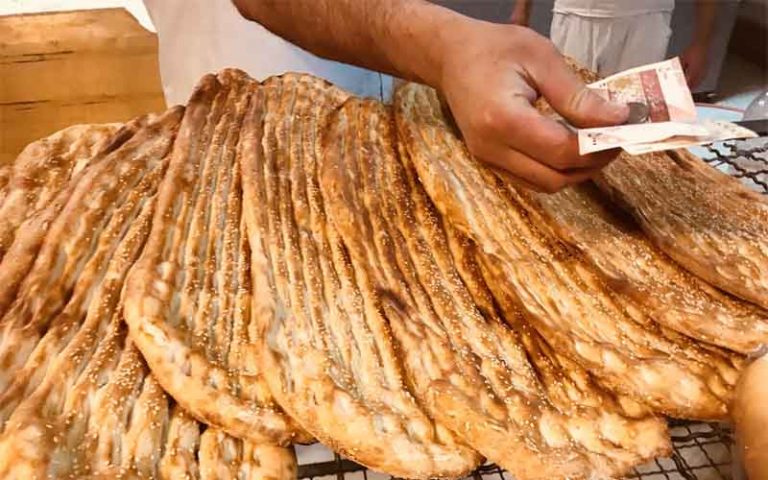
According to published data, liquid cooking oil has increased in price by more than 300% over one year, while Iranian rice has become about 173% more expensive. Even products such as eggs and chicken, once considered cheaper substitutes for meat, are now beyond the reach of many families. The result of this trend is the gradual removal of protein and essential food items from people’s tables.

A collapsed economy does not only mean declining welfare; it also means the forced transformation of lifestyles. Families that until a few years ago could maintain a minimum level of food security are now trapped between paying rent and buying food. Many households have reduced meat consumption to limited occasions, and some have even given up purchasing fruit and dairy products.

Meanwhile, official propaganda and the statements of regime officials have deepened the gap of distrust rather than bringing reassurance. When the agriculture minister speaks of the absence of “excessive overpricing” while the prices of oil and rice have multiplied, society sees such remarks not as economic analysis but as an insult to its lived experience. The regime tries to explain the crisis through word games, but the reality of people’s dining tables does not change with words.

The erosion of the middle class and the economy of survival

One of the most dangerous consequences of a collapsed economy is the gradual destruction of the middle class. A class that in any society is considered the pillar of social stability and the engine of economic development is now collapsing in Iran under the pressure of inflation, unemployment, and job insecurity.

Employees, teachers, workers, and small business owners work harder every day, yet gain less. Wage increases are effectively swallowed by inflation before they are even paid. The official minimum wage covers only a limited portion of household food expenses, and a large share of people’s income is spent on survival rather than living.

In such an environment, psychological insecurity is also spreading. People are not only worried about today’s prices; they fear a future in which no clear horizon can be seen. The collapse of the rial’s value, soaring rents, the medicine crisis, and instability in the labor market have pushed society into a state of permanent anxiety. This situation creates a silent erosion whose effects go beyond the economy and damage social relations, mental health, and collective hope.

The reality is that Iranian society no longer trusts promises and meetings. People are becoming poorer every day, and the gap between income and expenses is widening at an unprecedented speed. When 66% of the minimum wage is spent on securing the most basic food items, it is no longer possible to speak of “economic management.” These conditions present the image of a collapsed economy in which survival has replaced living.

Historical experience shows that societies left for long periods under the pressure of inflation, poverty, and instability sooner or later enter a phase of social and political crisis. A society that loses its hope can no longer be calmed by official statistics or regime meetings. The removal of meat from the table, the inability to pay rent, and permanent anxiety are realities that cannot be hidden behind any chart.

Today, millions of Iranians live in an economy that can no longer provide the minimum requirements of a normal life. This is the point at which a collapsed economy goes beyond an economic concept and turns into a human and social crisis; a crisis that grows deeper every day and casts a heavier shadow over the country’s future.

Infighting Intensifies Among the Iranian Regime’s Factions

0

Infighting among the Iranian regime’s ruling factions has entered a new phase. At a time when economic crisis, social discontent, and international isolation placed the regime under pressure, the power struggle among regime factions is now more visible than ever. The Tehran Prosecutor’s Office filing charges against Abbas Abdi and Sadegh Zibakalam is a new example of this deep rift within the regime’s structure.

Mizan news agency, affiliated with the Iranian regime’s judiciary, announced that charges had been filed against the two regime-affiliated figures because of an article by Abbas Abdi published in Etemad newspaper and an interview by Sadegh Zibakalam with ANA news agency. The move is not limited to individuals alone. The prosecutor’s office has also opened cases against the media outlets that published the materials. This shows that infighting among the regime’s factions has moved beyond hidden disputes.

Infighting among regime factions over war and crisis

In his article, Abbas Abdi referred to the role of hardline factions. He wrote: “Some forces close to power, without a real understanding of the country’s situation, are pushing for the continuation of tension-producing policies. The people are no longer willing to pay the price for the decisions of a rent-seeking minority.”

On the other hand, Sadegh Zibakalam, in an interview with ANA, a state-run news agency affiliated with Islamic Azad University, referred to the existence of organized pressure in regime-organized gatherings. He described some of these gatherings as attempts to push the regime toward extremist policies. Zibakalam also told the state-run ANA news agency: “Your indictment against America is always one-sided; meaning you only look at the ugly things Americans have done … You say the Americans shot down the Airbus, but you never ask why the Airbus was shot down?” These remarks angered hardline factions and once again brought infighting among regime factions into the media spotlight.

The escalation of these conflicts is not unrelated to the Iranian regime’s political and economic deadlocks. As crises deepen, power factions turn against one another to preserve their own share of influence. In recent years, regime figures have repeatedly exposed one another. Now, however, the severity of the crisis has reached a point where even longtime regime insiders no longer enjoy political security.

A rift that deepens every day

Infighting among the regime’s factions is not merely a simple political dispute. These conflicts are signs of the structural decay of a regime that for decades has been built on repression, censorship, and the elimination of opponents. Today, that same mechanism of elimination has also engulfed forces within the regime itself.

Today, infighting among the regime’s factions has become one of the clearest signs of crisis within the rule of the Supreme Leader. A regime that for years preserved its survival through repression of society is now embroiled in an internal war among power factions; a conflict that every day exposes deeper fractures in the decaying structure of the regime of oppressive mullahs.