Home Blog Page 67

More Than 1000 Executions in Iran Over Past Nine Months

Between August 23 and September 23, Iran’s regime judiciary executed at least 178 people, bringing the total to at least 1,000 executions in the first nine months of 2025. This figure shows that the number of executions has reached the highest level in the past 30 years and is on the verge of setting a new record.

On Tuesday, September 23, Iran Human Rights Organization reported that at least 64 executions took place just in the past week, confirming that from January 1, 2025, until today, it has been able to verify 1,000 executions in the country.

The human rights organization estimated the average number of executions per day during this period at nine, noting that this is a minimum figure, and due to reporting limitations from Iran, the actual number is likely higher.

Among those executed, 50% were convicted on drug-related charges, 43% for “premeditated murder,” 3% for “enmity against God and corruption on earth,” 3% for “rape,” and 1% for “espionage.”

Furthermore, only 11% of all executions were reported by Iranian media, while the rest were carried out secretly without public announcement.

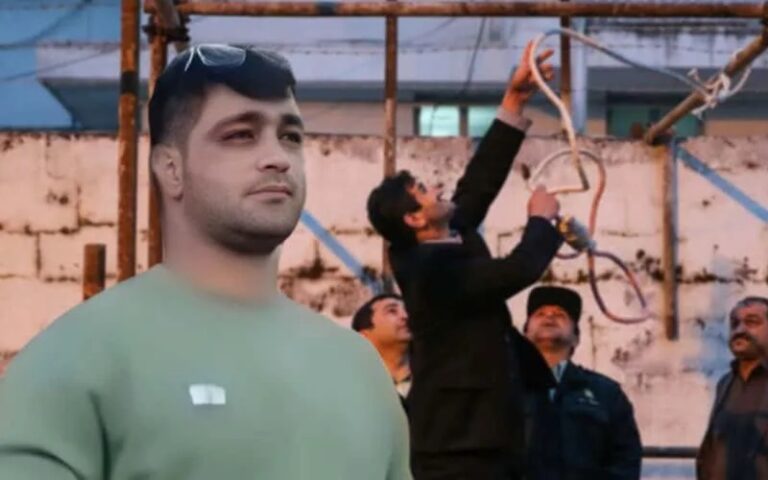
Iran’s Regime Executes Political Prisoners Mehdi Hassani and Behrouz Ehsani

242% increase in executions compared to September 2024

In other news, the human rights website HRANA, in its latest monthly report on the human rights situation in Iran, wrote that at least 178 people were executed in prisons across the country between August 23 and September 23 of this year.

In its September 23 report, HRANA stated that over the past month it had recorded at least eight new death sentences and four confirmations of execution sentences for prisoners in Iran.

These statistics show that over the past month, Iran’s regime executed on average six people per day—one person every four hours.

The figures reveal that the number of executions increased by 126 cases, or 242%, compared to the same period last year.

Arbitrary executions without fair trials constitute crimes against humanity, and the execution crisis in Iran must be placed at the top of the global community’s agenda in dealing with Iran’s regime.

No dialogue between countries committed to human rights principles and Iran’s regime is acceptable without addressing the execution crisis in Iran.

Continuation of protests against execution sentences

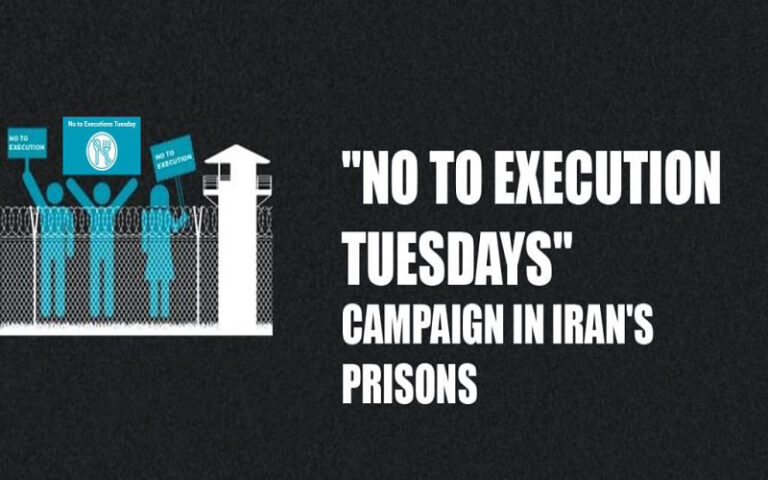
These developments come as the “No to Executions Tuesdays” campaign, in its 87th weekly statement on September 23, addressed the freedom-loving people of Iran and all human rights supporters, declaring that silence in the face of such violent and inhumane policies is unacceptable.

The 87th Week Of ‘No To Execution Tuesdays’ Campaign In 52 Prisons

The campaign described life as a fundamental human right and executions as unjustifiable violence against this right, declaring: “Our voice must be louder than any repression and injustice. Every week, every Tuesday, we rise in memory of the victims of execution, for justice and defense of life.”

Prisoners involved in the ” No to Executions Tuesdays” campaign began a hunger strike on January 29, 2024, demanding a halt to the issuance and implementation of execution sentences. By its 87th week, inmates in 52 prisons across Iran were on hunger strike.

In recent months, this campaign has become one of the key protest movements inside Iran’s prisons, with weekly hunger strikes and sit-ins by inmates keeping alive the voice of opposition to execution sentences and unjust judicial processes.

NCRI Supporters Rally In New York For Second Day To Protest Pezeshkian’s Presence At UN General Assembly

0

Thousands of Iranian Americans and NCRI supporters gathered outside the UN headquarters in New York on September 24, 2025, denouncing regime president Masoud Pezeshkian’s appearance at the General Assembly and affirming support for Maryam Rajavi and the NCRI. The crowd’s central slogan rang out: “No to the Shah, no to the mullahs—yes to a democratic republic.”

Maryam Rajavi addressed the rally in an audio message, hailing participants as the “true voice of the Iranian people before the United Nations.” She said the protests in New York mirrored those in Tehran, Mashhad, Ahvaz, Tabriz, Zahedan, and even inside prisons. “The message is very simple and clear: Overthrow and democratic change—a democratic republic, with freedom and democratic rights,” she declared. Rajavi highlighted 1,817 executions in just 14 months, calling the regime guilty of crimes against humanity. She urged an end to appeasement, insisting: “The seat of the Iranian people at the United Nations must not be given to a regime of executions and massacres.” Stressing Tehran would never abandon nuclear ambitions, she credited the NCRI’s 133 revelations with preventing a bomb and closed with: “We want neither a mullah nor a Shah. The era of all forms of dictatorship, whether religious or monarchical, is over. Our message for Iran’s future is simple: the sovereignty of the people—the people’s republic.”

Former U.S. Attorney General Judge Michael Mukasey described the regime as weaker than ever: “I don’t think it’s an overstatement to say that conditions are more favorable now for the collapse of the regime than they have been in decades.” He dismissed Pezeshkian as “simply a mouthpiece for the mullahs” and urged preparation for accountability: “We should be compiling testimony and documentation of what they did — the massacres, the phony trials, the executions — so that the evidence is at hand.” Rejecting claims for a return to monarchy in Iran, he said only Rajavi’s Ten-Point Plan offered a credible democratic vision.

Soona Samsami, NCRI’s U.S. Representative, told the rally: “We are here for one reason: to reject the president of a regime that massacres prisoners, suppresses women and youth, and races for nuclear weapons. But this is also a message of hope because there is an alternative. There is an organized resistance and a leader with a vision: Mrs. Maryam Rajavi.”

Former Congressman Judge Ted Poe echoed that message, framing freedom as “a God-given right, not a gift from dictators.” Quoting America’s Declaration of Independence, he added: “Whenever any government becomes destructive to these ends, it is the right of the people to alter or abolish that government. That sounds like something y’all would say.” He praised the Resistance’s roots in opposing dictatorship: “It didn’t start with the mullahs. It started with removing another dictator, the Shah.” Poe warned against monarchy’s return: “You gave your lives to get rid of a dictator because you wanted to be free. Now some are talking about replacing that dictator with one of his family members. That is not a good idea.” Highlighting women and youth, he said: “So many young women have given their lives just for what you’re standing here for today. Woe be to the mullahs — they do not know what they’re dealing with.”

Former U.S. Ambassador to Morocco Marc Ginsberg reflected on decades of support: “I have stood against the mullahs, inspired by the democratic ideals of the people’s resistance and Madam Maryam Rajavi, who I respect and admire so much as a friend and as a leader.” He praised Resistance Units inside Iran: “Thanks to the Resistance Units of Iran who have sacrificed under Maryam Rajavi, your friends and your family, that axis of resistance is no longer.” On monarchist claims, he said Iranians would not “turn back the clock to the days of kings doling out little bits and pieces of democracy while they rule from the throne.” Ginsberg credited the MEK’s intelligence for blocking Tehran’s nuclear weapons and described Ashraf 3 as “not just a place, it is an ideal. It is an aspiration for freedom and justice.” He warned that the regime fears Rajavi as “an iron lady whose network inside Iran has chipped away piece by piece at the edifice of this regime.”

Young Iranian Americans also voiced personal connections. Maryam Hosseini, said: “Even in the darkest prisons, they cannot extinguish the light of freedom. No to the Shah. No to the mullahs. Yes to a democratic republic.” Emma Vali Beigi, relative to a political prisoner executed during the 1988 massacre, declared: “The Shah’s regime was also a repressive force. We cannot afford to choose between one dictatorship and another. Iran deserves better.” She recalled nine uprisings since 2018 where protesters shouted: “‘Down with the dictator! Down with the oppressor! Be it the Shah or the mullahs!’”

Mani Mansourpour, holding a photo of his uncle executed in 1988, said Pezeshkian represents “Khamenei and all the crimes associated with him for over four decades,” urging UN action against executions and in favor of the Iranian people’s right to overthrow the regime.

Hadi Shakibanejad condemned normalization of tyranny: “Our beloved Iran is under occupation by a murderous regime that calls itself the Islamic Republic. But this regime is neither Islamic nor a Republic.” He ended with the rally’s chant: “No to the Shah, no to the mullahs! Our choice, Maryam Rajavi.”

Two British Tourists Arrested In Iran to Stand Trial on Charges of Espionage

Lindsay and Craig Foreman, a British couple who were arrested in Iran nearly nine months ago on charges of “espionage,” are scheduled to be tried at Tehran’s Revolutionary Court on Saturday, September 27, 2025. They are being held in Evin Prison and Qarchak Prison in Varamin.

The British couple are expected to appear in court for their final hearing while their family remains “completely in the dark” about the upcoming session.

Joe Bennet, the couple’s son, said they are living in horrific conditions and facing repeated human rights violations. He called on the British government to take action.

This news comes about a month after the two British citizens were suddenly transferred to a court in Tehran, an event that their relatives said they had no prior knowledge of, and to this day no details have been provided to them.

Iranian Regime Confirms Arrest of French-German Tourist Lennart Monterlos

Sky News reported on August 29, 2025, that the couple appeared in court in Tehran on August 27, accompanied by a state-appointed lawyer they had only recently met.

At that time, their son expressed deep concern about the judicial process.

It is reported that they were pressured and tortured by security agents to extract forced confessions, including being held in solitary confinement for long periods and subjected to sleep deprivation.

Lindsay and Craig Foreman, both 52 years old, had previously lived in East Sussex, England, but moved in 2019 to Andalusia in southern Spain. Lindsay worked as a life coach, and Craig was a carpenter.

During their travels to different countries, they carried out a research project in which they asked people about the meaning of a “good life” and documented diverse experiences and cultures.

The couple entered Iran from Armenia as part of a world motorcycle trip. After staying in the cities of Tabriz, Tehran, and Isfahan, they planned to head to Kerman, but on January 3, 2025, they were arrested on charges of “espionage.”

The Foreman family are not the only Europeans imprisoned in Iran. European officials and human rights activists consider the Iranian regime’s arrests of Western citizens as “state hostage-taking.”

They believe that the Iranian regime uses these individuals as leverage to pressure the West in order to gain concessions.

Iraq’s National Systems Affected by Trader Accused of Smuggling Oil for Iran’s Regime

0

Kurdistan 24 TV channel reported that Salem Ahmed Saeed, an Iraqi trader accused of smuggling oil for Iran’s regime, has dealt a “serious blow” to Iraq’s national systems.

The channel, referring to Saeed’s case which was recently sanctioned by the U.S., said that this development has forced the Iraqi government to conduct a “review and transparent, forceful investigations.”

According to the report, Iraq’s Integrity Committee discovered that contracts exist between Salem Ahmed’s company and VS Oil Terminal.

The role of Iraq’s State Oil Marketing Organization (SOMO) in transporting oil tankers, as well as the actual revenues of these contracts compared to the officially announced figures, has also been called into question.

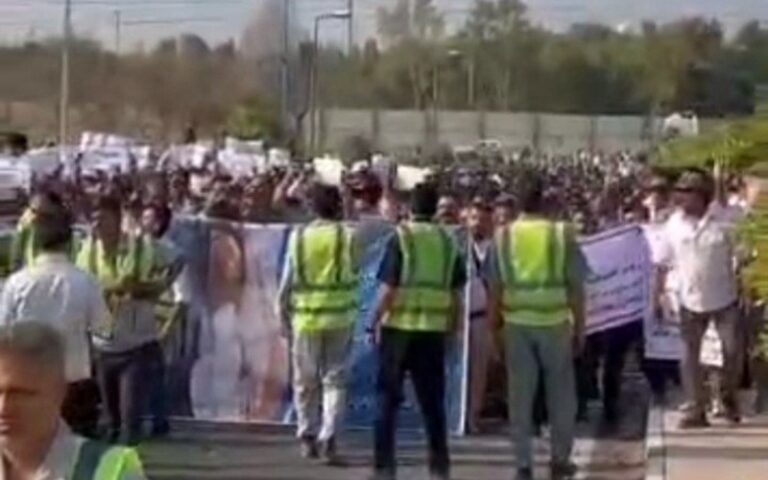
Border Residents of Sistan and Baluchestan Prevent IRGC Fuel Smuggling

On September 2, SOMO issued a statement denying any smuggling or mixing of crude oil or petroleum products in Iraqi ports or territorial waters.

Kurdistan 24 stressed that the business case recently sanctioned by the U.S. is a “full reflection of political corruption and mismanagement” in Iraq’s oil sector since 2003.

On July 3, the U.S. Treasury Department imposed sanctions on networks that transported and purchased billions of dollars worth of Iranian regime oil, with part of the proceeds benefiting the Quds Force of the Islamic Revolutionary Guard Corps (IRGC). Among these entities was a network of companies managed by Ahmed Saeed, which profited from smuggling Iranian oil by disguising or mixing it with Iraqi oil.

A month later, on September 2, the department also sanctioned Waleed Khalid Hamid al-Samarrai, a UAE-based trader, along with seven companies and nine oil tankers, for their role in smuggling Iranian oil and evading sanctions against the regime.

At the time, U.S. Treasury Secretary Scott Bessent said this action was based on the sanctions related to Saeed’s network.

Iraq’s reaction to oil smuggling for Iran’s regime

On September 22, Zafer Hosseini, Director General of Iraq’s Energy Police, announced in a statement that 49 people had been arrested on charges of oil smuggling in the country.

A New Oil Smuggling Scandal Involving Iranian Regime Leaders

He said that in just the past three weeks, 38 tankers and vehicles of various sizes prepared for smuggling oil from all Iraqi provinces except those in the Kurdistan Region were seized.

About two weeks ago, following the revelation of new details about Iranian oil smuggling disguised as Iraqi-origin oil and the extensive U.S. sanctions on a wide network involved in this process, Iraqi Prime Minister Mohammed Shia al-Sudani ordered the formation of a high-level committee to investigate suspicions of corruption in the mixing and smuggling of crude oil and petroleum products.

On September 6, al-Sudani’s office announced a thorough review of reports related to “corruption and suspicious operations” in Iraq’s ports and territorial waters, warning that there will be no leniency in this case.

Iran’s Regime Begins Rebuilding Destroyed Missile Production Facilities

Satellite images analyzed by the Associated Press show that Iran’s regime has begun rebuilding its missile production sites that were targeted during the 12-day war. However, experts say one key component is still missing: large mixers needed for producing solid rocket fuel.

On Wednesday, September 24, 2025, the Associated Press reported that rebuilding missile capabilities is vital for the Iranian regime, as Tehran anticipates the possibility of another round of war with Israel in the near future.

According to the report, missiles are one of the few deterrence tools left for Iran after its air defense systems were heavily destroyed in the recent war. Iranian officials have repeatedly emphasized that these systems will never be subject to negotiations with the West.

Iran–China Cooperation in the Missile Field Is on the Rise

Missile experts say that acquiring solid-fuel production mixers is Tehran’s main goal, especially given the likelihood that UN sanctions, which also target Iran’s missile program, may be reinstated at the end of this month.

So-called “planetary” mixers, which have blades rotating around a central axis, are essential for evenly blending solid rocket fuel. Iran has previously purchased certain components and materials related to missile fuel from China, and experts say it may turn to this route again.

The AP wrote that satellite images from this month show construction underway at two sites: Parchin and Shahrud.

It is said that the buildings specifically used for fuel mixing are now under repair after the Israeli strike.

The Israeli strikes on these areas apparently targeted precisely these facilities and equipment.

Iran maintains solid-fuel missile production bases in Parchin, Khojir, and Shahrud, which were targeted by Israeli strikes even before the recent war in October 2024.

The speed of reconstruction at these facilities highlights the central role of the missile program for Tehran, in contrast to damaged nuclear sites where no such activity has been observed.

According to reports, Iran’s regime fired 574 ballistic missiles at Israel during the 12-day war, in addition to 330 missiles launched in earlier limited exchanges.

The Israeli military had previously estimated Iran’s missile arsenal at about 2,500 missiles, meaning that more than one-third of these reserves have now been used.

Carl Parkin, a summer fellow at the James Martin Center, told the AP that before the war, the Iranian regime had been on track to produce over 200 solid-fuel missiles per month—a capacity that made its missile production facilities prime targets.

Aziz Nasirzadeh, the regime’s defense minister, said more than a month ago: “The 12-day war with Israel has changed some of our priorities. Now the focus is on producing equipment with higher accuracy and operational capability.”

The Iranian regime may rely on China to obtain mixers and missile fuel—similar chemicals are believed to have played a role in the massive explosion at Rajaei Port in Bandar Abbas, which killed at least 70 people.

A few days later, the United States sanctioned Chinese companies linked to the sale of propellant materials to Iran.

Reports indicate that the IRGC previously transferred a planetary mixer to underground missile production facilities in Masyaf, Syria.

The Israeli military earlier released images showing that the device at this facility closely resembled products made by Chinese companies.

Experts say that in addition to fuel, Beijing could also provide Iran with guidance systems and microprocessors necessary for its missiles.

A Hudson Institute analyst believes that if the Iranian regime uses its ties with China to strengthen its military capabilities, the 12-day war will amount to only a short pause, not a decisive defeat.

NCRI Supporters and Global Leaders Unite at UN, Reject Dictatorship in Iran

0

Thousands rallied in New York on September 23, 2025, outside the United Nations to demand democratic change in Iran, organized by supporters of the National Council of Resistance of Iran (NCRI). The gathering — which included Iranian Americans, international dignitaries, human-rights advocates and young activists — was in solidarity with uprisings inside Iran and an affirmation of the NCRI’s organized Resistance and Maryam Rajavi’s Ten-Point Plan for a secular, democratic, non-nuclear republic. Speakers condemned the regime’s executions (citing nearly 1,800 since Masoud Pezeshkian took office), regional aggression, and alleged nuclear deception, while rejecting both clerical rule and monarchy as alternatives.

Moderator Amir Emadi emphasized the Resistance as a people’s option: “the third option as presented by President-elect Maryam Rajavi is regime change by the people of Iran and their organized Resistance.” He pressed the crowd against return to past autocracies and declared, “The people’s resounding message is clear: No to the Shah, no to mullahs, yes to a democratic republic.”

A message from Maryam Rajavi was read to the rally. She praised attendees’ persistence as mirroring protests inside Iran: “perseverance of my compatriots, who gather here every year in protest,” and asserted their legitimacy before the UN: “With your powerful presence in front of the United Nations, the world sees that you represent the people of Iran; you are the voice of the Iranian people before the United Nations, not the president of the Supreme Leader.” Rajavi reiterated the Resistance’s nuclear revelations as service to global security and praised internal Resistance Units as “the most awake and vigilant fighters of Iran,” concluding: “Our message for Iran’s future is simple: the sovereignty of the people. We want neither a mullah nor a Shah.”

Several high-profile former officials and activists voiced support. General Tod Wolters said, “This regime exports terrorism and crushes civil life,” and urged Iranians: “to the 90-plus million citizens of Iran: You deserve this change, and you deserve it soonest.” Carla Sands credited the movement with exposing Iran’s nuclear program: “It was the MEK that first exposed Tehran’s secret nuclear weapons program,” and warned the regime fears the organized opposition because “they know this movement is their existential threat.” She added, “The people will not trade a turban for a crown. Reza Pahlavi’s plan is not democracy, it’s dictatorship.”

Samuel Brownback labeled the government “a terrorist regime, a nuclear weapon-seeking regime, a regime of slavery,” described the uprising as youth-driven and “one of the first, if not the first, women-led revolutions in world history,” and praised young demonstrators: “As I see all these young people in front of me here, this is a youth-led movement in Iran for change.” Linda Chavez declared, “Thousands of you have come to New York to demand an end to the Khamenei regime,” called the Shah “a murderous dictator,” and warned against returning to monarchy: “The Shah was a murderous dictator. Iran’s future does not lie in giving power to his son, who even boasts of his relationship with the IRGC.” She concluded to the regime: “Change is coming.”

Voices from activists and victims’ families reinforced themes of women’s leadership, youth activism, and the cost of resistance. Saba Rezaii denounced monarchist claims: “Those who call themselves king embody the tyranny and misogyny of yesteryear. Incapable is the head that wears the crown,” and rallied: “Forward to revolution! Death to the oppressor, be it the shah or the supreme leader.” Moslem Eskandar Filabi described repression and urged UN action, noting that “every voice raised for freedom, every voice raised for justice, is met with imprisonment, torture, and the gallows,” and called the Resistance “the hope of the oppressed people of Iran for liberation from the clutches of this criminal, corrupt, and dictatorial regime,” ending with a vow to “send the criminal mullahs and their mercenaries to hell.”

Speakers also linked Iran’s repression to regional violence and international solidarity — notably Ukraine’s Svitanok founder Oleks Taran, who compared mass mobilizations and urged joint pressure on Tehran. The rally called on the world to enforce UN resolutions, recognize the Iranian people’s right to choose their government, and reject appeasement while backing the NCRI’s democratic alternative.

Iranian Regime Supreme Court Upholds Death Sentence of Poet Peyman Farahavar

The death sentence of Peyman (Amin) Farahavar, a poet from Gilan imprisoned in Lakan Prison in Rasht, has been upheld by Branch 39 of Iran’s Supreme Court. He had previously been sentenced to death by Branch One of the Revolutionary Court of Rasht.

The death sentence of Peyman (Amin) Farahavar, a poet from Gilan who is currently detained in Lakan Prison in Rasht, was confirmed by Branch 39 of the Supreme Court. He had previously been sentenced to death at the initial stage by Branch One of the Revolutionary Court of Rasht.

Ramin Safarnia, the defense attorney of this political prisoner, announced in a statement that Branch 39 of the Supreme Court rejected the appeal and confirmed Mr. Farahavar’s death sentence. He added that a request for retrial will be submitted to the highest judicial authority in the country.

The 87th Week Of ‘No To Execution Tuesdays’ Campaign In 52 Prisons

Mr. Farahavar had earlier been sentenced to death by Branch One of the Revolutionary Court of Rasht, presided over by Judge Ahmad Darvish Goftar, on charges of “armed rebellion against the state” (baghi) and “enmity against God” (moharebeh).

A source close to the family of this political prisoner confirmed the news to HRANA (Human Rights Activists News Agency), stating: “These accusations were raised against Mr. Farahavar based on his poetry and protest activities in the fields of social justice and civil rights.”

The trial session addressing the charges against this poet from Gilan was held on May 1, 2025, in the mentioned court branch.

Mr. Farahavar was arrested by security forces in September 2024 and transferred to the detention center of the Intelligence Ministry. After the interrogation process was completed, he was moved to Lakan Prison in Rasht.

Peyman (Amin) Farahavar, a poet from Gilan, is the father of a 10-year-old son. He had previously been arrested in connection with his activities.

Iran’s Regime Leader: Negotiation Is Useless and Uranium Enrichment Will Continue

On Tuesday, September 23, Iranian regime supreme leader Ali Khamenei began his speech marking the anniversary of the eight-year Iran-Iraq war by focusing on “social unity.” He expressed satisfaction that the street protests had not occurred during the recent conflict, revealing his fear of the explosive state of society.

He tried to show he was in control, claiming that the enemy’s goal as “disrupting the system” and creating “street sedition,” while noting that military commanders were replaced quickly and the armed forces continued “with higher morale.”

Nuclear case: “60% enrichment” without “nuclear weapons”

The regime leader described Iran’s current nuclear activities as “advanced” and claimed Iran is among the ten countries capable of uranium enrichment, but with the difference that Iran “does not have and will not have a nuclear bomb.”

He said Iran is enriching uranium up to 60% and justified it as necessary for “certain national needs.” Referring to attacks on nuclear facilities, Khamenei stressed that “nuclear knowledge” cannot be destroyed by “bombing,” citing the work of “dozens of professors” and “thousands of researchers” in the nuclear field.

Rejection of “negotiation” with the U.S.

Khamenei said that under current conditions, “negotiation” with the U.S. government “has no benefit” and “removes no harm” from Iran. He claimed the American side has already predetermined the outcome, demanding the “complete elimination of enrichment” and even the suspension of Iran’s missile capability. He warned that accepting talks under “threat” means creating “permanent vulnerability” and added: “This is no longer negotiation, it is dictation, it is imposition.”

Referring back to the 2015 nuclear deal (JCPOA), Khamenei claimed the regime fulfilled all its commitments but “sanctions were not lifted,” and later the U.S. withdrew from the agreement. He added that Iran’s case at the International Atomic Energy Agency (IAEA) did not become “normal” as expected and instead “additional problems” were created. Within this framework, he dismissed any new negotiations as futile and stressed that Iran’s regime will not “surrender” under pressure.

Inevitable reinstatement of sanctions?

The regime leader once again emphasized the continuation of “national unity” and urged his domestic audience to “maintain cohesion” against the “enemy.”

Is The Iranian Regime Ready to Reduce Uranium Enrichment Levels To 3.67%?

In conclusion, his message reaffirmed commitment to continuing “enrichment,” rejecting “negotiation” with the U.S. under current conditions, and highlighting “unity” as the political-social shield.

These remarks by Khamenei, made before the upcoming speech by Iranian regime president Masoud Pezeshkian at the UN General Assembly, are seen as dashing any hopes for potential side negotiations to prevent the reinstatement of pre-JCPOA sanctions. If Iran and European countries fail to reach an agreement on resolving the nuclear dispute by September 28, the snapback mechanism will be activated, and all six previous UN sanction resolutions will be reimposed.

Political Prisoner Bijan Kazemi on Hunger Strike in Protest to Violence of Intelligence Ministry Agents

Bijan Kazemi, a political prisoner who was arrested eight months ago by agents of the Intelligence Ministry, has been on hunger strike for five days in protest against the violent behavior of security agents at the Intelligence Detention Center in Qom.

Shahnaz Khosravi, the mother of this political prisoner, announced in an Instagram post on Monday, September 22, that her son had informed her in a phone call that he has been on hunger strike since Thursday, September 18.

Khosravi stressed that neither she as a mother nor Kazemi’s lawyer has any information about the reason for his arrest or the charges against him.

She criticized the continued detention of Kazemi in a facility affiliated with the Intelligence Ministry in Qom, writing that according to the law, a detainee should be “under the custody of the Prisons Organization” and “held within the judicial district of their residence or where the alleged crime occurred.”

Khosravi added: “This means [Kazemi] has been held for months in an unofficial detention center without the right to meet his family or access a lawyer.”

Many prisoners in Iran are forced to resort to hunger strikes as their last means to have their demands heard, putting their lives at serious risk.

They often go on hunger strike in protest against the authorities’ failure to address their demands, such as delays in their cases and the violation of their rights as prisoners.

Kazemi’s interrogation session was held in August without the presence of his defense lawyer at Branch 5 of the Prosecutor’s Office in District 33 of Tehran.

On August 5, Khosravi said that at the end of this session, a bail of 40 billion rials (about $40,000) was set for her son, but the case officer opposed his release. She wrote: “I went to the prosecutor’s office to post the bail, but I was told that your son will not be freed that easily.”

On January 19, 2025, Kazemi was arrested after several security agents raided his home in Kuhdasht, searched the house, and confiscated all electronic devices belonging to him and his family members.

High-Ranking Iranian Regime Judges Mohammad Moghiseh and Ali Razini Killed

Kazemi, who had previously been arrested in 2020 and imprisoned for two years, has been denied his legal rights as a political detainee in his latest arrest. Over the past eight months, he has been held in various detention centers, including Ward 209 of Evin Prison (controlled by the Intelligence Ministry), a newly established security detention center at the Greater Tehran Prison, and the Intelligence Ministry’s detention facility in Qom.

Security agents arrested Kazemi on charges of being linked to the killing of Ali Razini and Mohammad Moghiseh, two Iranian regime Supreme Court judges notorious for human rights violations. They are trying to coerce a forced confession from him, alleging that he supplied the shooter with a weapon.

Moghiseh and Razini, two of the most notorious judges of Iran’s regime who had issued death sentences for thousands of people, were killed on January 18 at their workplace in the Supreme Court. The person who killed these two human rights–abusing judges was Farshid Asadi, a janitor at the court complex, who then shot himself and died.

In recent months, the Intelligence Ministry has arrested more than 20 citizens in connection with this case.

All Engines of Iran’s Economic Growth Have Stopped Working

0

The state-run daily SAMT News published a report on the dire situation of Iran’s economy, writing that “all engines of economic growth” in the country have stopped working.

On Monday, September 22, the newspaper wrote: “Economic growth requires conditions such as a suitable business environment, proper economic governance, access to technology, financing, etc., each of which can be likened to an engine driving this indicator; but the issue is that at present, none of these engines are operating.”

According to this report, in the Seventh Development Plan, achieving 8% economic growth has been set as one of the key goals, but this target will not be attainable without a series of fundamental reforms.

Iran’s Economy After Snapback Sanctions: Doubled Inflation, Threat to Build an Atomic Bomb

SAMT News listed “increasing domestic and foreign investment,” “improving productivity in production sectors,” and “reforming the budget structure” as essential prerequisites for Iran’s economic growth, warning that “without addressing energy imbalances, reforming the banking system, and reducing policy risks,” this goal will not be achievable.

In recent weeks, runaway inflation, pressure on industries, and the rising exchange rates of foreign currencies have increased concerns about the worsening state of Iran’s economy—a trend that has intensified following the activation of the “snapback mechanism” and the possibility of harsher international sanctions.

On August 27, Iran’s Chamber of Commerce published a report assessing the economic outlook of the country until the end of 2025, presenting three scenarios: optimistic, probable, and pessimistic.

In the pessimistic scenario, the exchange rate is projected to soar to 1.65 million rials per US dollar (currently about 1.05 million rials per US dollar), and inflation would rise to 90%. Moreover, in all scenarios, Iran’s economic growth is forecasted to be negative.

“Negative economic growth is itself an achievement”

Continuing its report, SAMT News quoted economist Vahid Shaghaghi-Shahri, who said that the “engines of economic growth” in Iran are working in reverse. It wrote that under such conditions, achieving 8% growth—or even less—is not only out of reach, but “avoiding negative growth should itself be considered an achievement.”

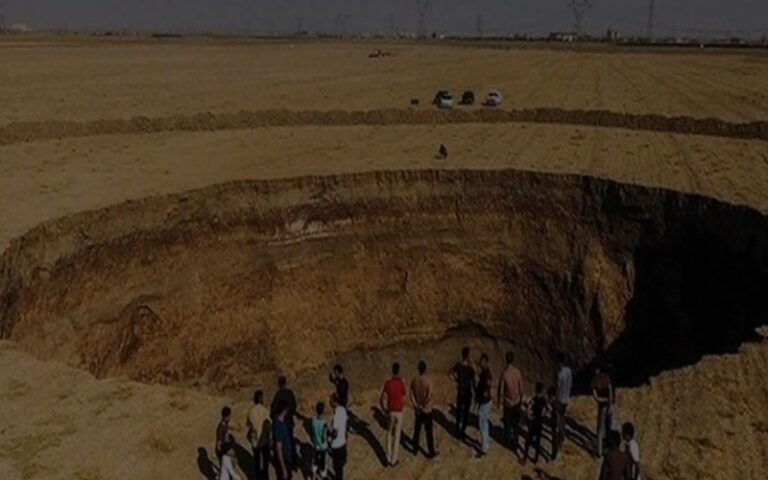
Shaghaghi-Shahri considered the housing sector as one of the indicators of economic growth, stating that in recent years this sector has faced “complete stagnation” due to factors such as political instability, declining purchasing power, water shortages, land subsidence, and population decline.

He added that the oil sector has also been facing unfavorable conditions due to sanctions and falling prices and has been unable to play its “driving” role.

Earlier, in May, the International Monetary Fund (IMF) had predicted Iran’s economic growth in 2025 to be nearly zero, with inflation at 43.3%.

In another part of his interview with SAMT News, Shaghaghi-Shahri listed the dominance of quasi-state actors and the weakness of the private sector, the challenge of securing around $200 billion annually to achieve 8% growth, the intensification of sanctions, and the rise in investment risks as among the main obstacles facing Iran’s economy.

The economist added: “With the current trend, it does not seem that we will have growth above 1% this year, and if there is no movement to activate the engines of economic growth, negative growth in the years 2026 and 2027 is not out of the question.”