Home Blog Page 68

The 87th Week Of ‘No To Execution Tuesdays’ Campaign In 52 Prisons

The 87th week of the “No To Execution Tuesdays” campaign was held on Tuesday, September 23, in 52 prisons across the country. Prisoners in these 52 facilities participated in the campaign by going on hunger strike.

In part of the statement for the 87th week of “No To Execution Tuesdays,” referring to the execution of Babak Shahbazi, it read:
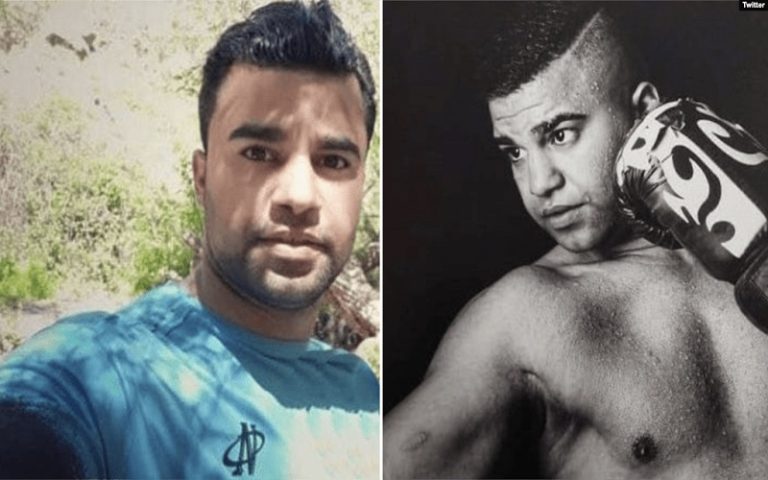
“In this context, the brutal execution of another member of ‘No To Execution Tuesdays,’ Babak Shahbazi, on the anniversary of the 2022 popular uprising and without a final meeting with his family, is a bitter symbol of the inhumane behavior and human rights violations by this murderous regime. The abduction of Babak Shahbazi from his ward for his secret execution led to protests and sit-ins by his fellow inmates in Ghezel Hesar prison.”

Iran’s Regime Lays Groundwork for Expanded Executions

The full statement of the 87th week of the “No To Execution Tuesdays” campaign is as follows:

Continuation of the “No To Execution Tuesdays” campaign in the 87th week across 52 prisons

The 87th week of the “No To Execution Tuesdays” campaign takes place as the shadow of fear and repression weighs heavier than ever on the lives of the Iranian people. In recent months, there has been an unprecedented rise in executions. From September 16 until now, at least 46 executions have been reported, including two women and six Baluch compatriots. Between August 23 and September 23, 186 executions were carried out, including seven women.

In this context, the brutal execution of another member of “No To Execution Tuesdays,” Babak Shahbazi, on the anniversary of the 2022 popular uprising and without a final meeting with his family, is a bitter symbol of the inhumane behavior and human rights violations by this murderous regime. The abduction of Babak Shahbazi from his ward for his secret execution led to protests and sit-ins by his fellow inmates in Ghezel Hesar prison.

A regime that on the one hand boasts of “pardoning” prisoners, on the other hand, exposes its bitter and inhumane reality week after week by increasing the number of executions.

This year, coinciding with the reopening of schools, once again, aware and progressive teachers and students are at the forefront of the struggle for freedom and equality. Iran’s teenagers and youth are the nightmare of this regime, and in every school and university, activists are standing firm to turn these institutions into centers of resistance and voices opposing the inhumane death sentences of their fellow citizens.

The “No To Execution Tuesdays” campaign calls out to the freedom-loving people of Iran and all human rights defenders, proclaiming that silence in the face of such violent and inhumane policies is not acceptable. Our voice must be stronger than any repression and injustice. Every week, every Tuesday, we rise up in memory of execution victims, seeking justice and defending life.

Life is a fundamental right of every human being, and execution is an unjustifiable act of violence against this right.

On Tuesday, September 23, 2025, during the 87th week, members of the “No To Execution Tuesdays” campaign in 52 prisons across the country are on hunger strike.

Maritime Industry Journal: The Return of Sanctions Will Seriously Target Iranian Shipping

The Maritime Executive, a specialized publication in the shipping industry, reported that the new sanctions imposed against Iran’s regime under the snapback mechanism will be much stricter than the current restrictions and will seriously impact the regime’s shipping industry.

In a report published on Sunday, September 21, Maritime Executive wrote that if United Nations Security Council sanctions return as expected on September 26, the commercial fleet of the Islamic Republic of Iran Shipping Lines (IRISL) and its subsidiaries will come under pressure. According to The Maritime Executive, this fleet consists of 115 ships.

The journal added that 38 very large crude carriers (VLCCs) owned by the National Iranian Tanker Company (NITC) will also face new restrictions, putting Iranian oil stored in floating tankers and ship-to-ship (STS) transfers at greater risk.

On Friday, September 19, the United Nations Security Council voted against attempts to delay the reinstatement of sanctions that were suspended in 2015 following the nuclear deal known as the JCPOA.

Iraq Informed the U.S. About Iranian Tankers Using Fake Iraqi Documents

This decision paved the way for the reimposition of sanctions under the snapback mechanism. French President Emmanuel Macron stressed on Friday, September 19, that the return of sanctions against the Iranian regime is certain.

The UN Security Council’s decision to continue the snapback process sparked strong reactions from Iranian regime officials. The Supreme National Security Council announced the suspension of cooperation with the International Atomic Energy Agency (IAEA), while several members of parliament called for withdrawal from the Non-Proliferation Treaty (NPT) and even for the development of a nuclear bomb.

Currently, the Iranian regime is under unilateral sanctions imposed by the United States and some Western countries. However, the return of UN Security Council sanctions will force countries such as China, India, Malaysia, and the United Arab Emirates, which continue to trade with Iran under the pretext of lacking international legitimacy for the sanctions, to comply with them.

UN sanctions cover the areas of oil and gas exports, shipping and insurance, banking and access to the international financial system, and the production and import of weapons and sensitive technologies.

The Maritime Executive concluded its report by stressing that with the return of UN sanctions, Iran’s regime will face a new wave of international pressure in the fields of energy, trade, and finance—a pressure that could further cripple the regime’s economy and bring wide-ranging political consequences both domestically and internationally.

Global Trade Review also reported on September 1 that U.S. President Donald Trump, in line with his administration’s “maximum pressure” policy against the Iranian regime, had promised to reduce Tehran’s oil exports to zero. According to this report, one-third of U.S. sanctions specifically target Iran’s shipping sector.

The Global Trade Review wrote that the White House has specifically focused on weakening Iran’s “shadow fleet” and its energy revenues. One-third of all sanctions target Iranian shipping. Now, the scope of sanctions has expanded beyond ships to include Chinese refineries and crude oil storage operators.

Earlier, on August 21, the U.S. Treasury Department sanctioned 13 shipping companies and eight oil tankers linked to the Iranian regime in an effort to counter Tehran’s attempts to circumvent Washington’s sanctions.

EU Sanctions Hossein Shamkhani: A Blow to the Oil and Weapons Network of Iran’s Regime and Russia

On the same day, the British government, in coordination with the United States and the European Union, sanctioned Hossein Shamkhani, the son of Ali Shamkhani (a senior adviser to regime supreme leader Ali Khamenei and a key figure in the sale of Iranian and Russian oil), along with his affiliated companies.

In addition to Shamkhani himself, his Dubai-based companies, including Admiral Shipping Group and Milavos Group, have also been targeted by the new sanctions.

Additionally, Ocean Leonid Investments, a London-based firm, has been sanctioned by the UK. This investment fund plays an important role in Hossein Shamkhani’s economic empire.

Iran’s Economy After Snapback Sanctions: Doubled Inflation, Threat to Build an Atomic Bomb

The activation of the “snapback” mechanism not only makes the return of sanctions possible, but by simultaneously striking market confidence, financial channels, and supply chains, it quickly and multifront intensifies economic effects. Warnings about capital flight and disruption in money circulation, the risk to imports, and some parliamentarians’ calls to accelerate nuclear programs together present a fuller picture of how this external shock could affect Iran’s economy.

Alireza Kiani, head of the Money and Capital Market Commission of the Tehran Chamber of Commerce, told the state-run daily Ettelaat that the new wave of sanctions due to the activation of the snapback will create doubled inflationary pressure.

Iran’s Regime: UN Sanctions Are Illegal and Misuse of JCPOA Dispute Resolution Mechanism

He added, “If the snapback is activated, the government must seriously reconsider its currency policies. Because with the continued suppression of the exchange rate, more traders and producers will be pushed out of the market and capital flight will increase.”

The head of the Money and Capital Market Commission of the Tehran Chamber of Commerce emphasized, “One of the most important features of the recent crisis is the intensification of disruption in the circulation of money and capital in the country. In clearer terms, not only does the private sector lack adequate access to resources, but there is also no incentive for reinvestment.”

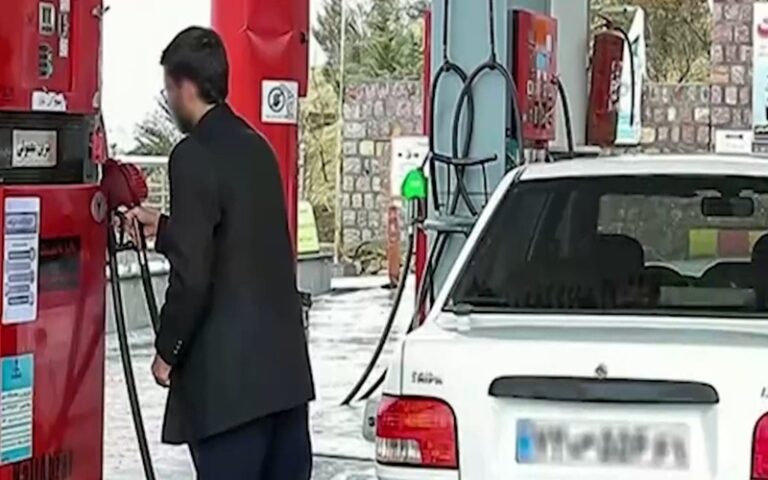
Union of Petroleum Products Exporters: the snapback may block gasoline imports

Hamid Hosseini, spokesperson for the regime’s Union of Petroleum Products Exporters, said regarding the possible impact of the “snapback” mechanism on gasoline imports to Iran that these imports may face obstacles due to U.S. tightening.

He said, “Petroleum products such as super gasoline are not on the United Nations sanctions list and the issue mainly concerns missile and arms sanctions. However, there is a possibility that the American side will use this as a pretext for stricter enforcement.”

Hosseini added, “The Ministry of Petroleum has so far approved five private companies to import premium gasoline. Most likely, the first shipment of premium gasoline will enter the country this week.” He continued, “This shipment is supplied from India and will be sent to Iran via the United Arab Emirates.” The spokesperson for the Union of Petroleum Products Exporters emphasized that if the “sanctions intensify, money transfers will become more difficult and it will not be easy.”

Member of the regime’s National Security Commission of parliament: we should move toward building a nuclear weapon as soon as possible

Ahmad Bakhshaish Ardestani, a member of the National Security Commission of parliament, told the state-run website Didban Iran, “It is better to move toward building a nuclear weapon as soon as possible.” He added, “Testing an intercontinental missile does not mean that we want to strike Europe.”

The National Security Commission member threatened, “If Israel and America try again to seize our skies, we will respond to them through missile attacks and will not surrender.”

According to the state-run website HamMihan Online, Ahmad Naderi, a member of the presidium of the regime’s parliament, wrote on the social network X:

“Failure to pass a resolution to permanently lift sanctions activates the snapback mechanism and exposes Iran to the return of Security Council sanctions.

“I have said it many times and now repeat it more plainly: the only way to preserve Iran’s territorial integrity and national security is to obtain a nuclear weapon.

“Withdrawal from the NPT, adopting a policy of opacity and ultimately testing an atomic bomb is the only option that can spare Iran from the fate of Iraq and Libya. Experience has shown that countries lacking nuclear deterrence eventually become victims of invasion or regime change.

“A policy of ambiguity allows us to create deterrence while simultaneously managing international pressures.

“The time has come to make hard but necessary decisions.”

The COVID-19 Pandemic Claimed The Lives of About 700,000 People in Iran

Mohsen Mansouri, the former vice president of the Iranian regime under Ebrahim Raisi, said that by the end of Hassan Rouhani’s administration, the COVID-19 pandemic had claimed the lives of nearly 700,000 people in Iran. This comes while the Iranian regime officially reported only about 140,000 deaths during the pandemic.

From the very beginning of global COVID-19 vaccinations, the Iranian regime delayed the vaccination rollout in Iran under the pretext of producing domestic vaccines, but government-affiliated companies failed to meet their commitments in this regard.

Additionally, a directive from Ali Khamenei, the supreme leader of the Iranian regime, banning the import of American, British, and French vaccines, faced widespread protests.

While the regime restricted the import of COVID-19 vaccines approved by the international community, it distributed vaccines that were not widely recognized or approved by other countries, creating problems for Iranians traveling abroad.

In mid-February 2020, after the death of two patients with respiratory complications at Kamkar-Arabnia Hospital in Qom, rumors emerged that they had died from COVID-19. However, Qom University of Medical Sciences denied the rumors and announced that no diagnostic evidence of COVID-19 had been observed in the deceased patients.

Subsequently, then-health minister Saeed Namaki stated that two patients whose lung fluid samples had been taken on February 17, 2020, tested positive on February 19. He said the news was announced publicly within 45 minutes.

On September 10, 2021, then-health minister Bahram Einollahi compared the death toll of the Iran-Iraq war with the COVID-19 crisis, saying that in the eight-year war about 240,000 people were killed, whereas in the 18 months of the pandemic, around 113,000 people had died. Referring to the victims, he added: “We should not sleep easy.”

At that time, the government had officially reported 136,000 deaths. These discrepancies once again highlight the issue of statistical cover-ups by the regime during the pandemic.

However, at the end of Rouhani’s presidency, the regime’s Ministry of Health announced: “The total number of COVID-19 fatalities has reached 91,785.” (State media – August 3, 2021)

Now, the figure of 700,000 deaths, revealed by Raisi’s deputy with emphasis that it was “documented,” is more than seven and a half times the official tally at the end of Rouhani’s term in August 2021.

on March 3, 2020, Khamenei described COVID-19 as an opportunity, saying: “In our view, this calamity is not such a great disaster. There have been and are greater calamities. We ourselves have witnessed some in this country… It is a passing matter… This can be a gain. If we can achieve those gains, calamity will turn into blessing; threat will turn into opportunity.”

On January 8, 2021, Khamenei declared: “The import of American and British vaccines is forbidden.”

On the same day, Mrs. Maryam Rajavi, the president-elect of the National Council of Resistance of Iran (NCRI), said: “Khamenei, the criminal, banned the purchase of COVID-19 vaccines—a crime against humanity. He is responsible for the slaughter of thousands of deprived and oppressed compatriots in the COVID-19 slaughterhouse. The international community must strongly condemn this crime and compel the regime to remove obstacles to vaccine imports.”

Iranian Retirees Are Giving Up on Medical Treatment

0

While retirees are forced to forego treatment due to their inability to afford the costs, supplemental health insurance has reduced its level of coverage, creating dire conditions for retirees.

On Sunday, September 21, the state-run ILNA news agency published a report on the problems retirees face in using supplemental health insurance.

According to this report, neither basic nor supplemental insurance is able to meet retirees’ medical needs.

Retirees Return to the Streets Across Iran Chanting “We Refuse to Live Under Oppression”

ILNA quoted a retired worker who pointed to the poor services of the supplemental insurance company “Atieh Sazan Hafez,” saying that due to his illness, he must undergo periodic tests every six months.

This retiree recently paid 30 million rials (about $30) for one of these periodic tests, of which only 5 million rials were reimbursed by his supplemental insurance.

He said: “Every month, money is deducted from our account for supplemental insurance, but we don’t get the services we should. Neither the basic insurance nor the supplemental insurance meets our needs. 5 million rials (about $5) doesn’t even cover a doctor’s visit.”

In addition to general inflation affecting all sectors, the removal of subsidized foreign exchange for medicine and medical equipment has had an even greater impact on the rise of medical costs.

Mohammadreza Zafarghandi, the regime’s health minister, announced in November 2024 the elimination of subsidized foreign exchange for medicine and medical equipment.

From January 2025, pharmaceutical companies increased the prices of their products by up to five times.

In February 2025, Shahram Ghaffari, deputy director of treatment at the Social Security Organization, announced price increases for more than 400 types of medicine covered by the organization and added that the price hikes ranged from 10–20% to several times higher.

The removal of state foreign exchange allocations for medicine and medical equipment in the 2025 budget bill began to show its effects in April.

On April 13, amid reports of a new wave of rising healthcare costs in Iran, Mehdi Pir-Salahi, head of the Food and Drug Organization, announced that eliminating state foreign exchange for importing medical equipment meant that the exchange rate for medical equipment imports would increase sevenfold.

The effects of these changes extended to other areas of healthcare as well. Now, while the prices of medicine and healthcare services have risen, supplemental insurance providers are unable to cover the costs for their insured.

Even Atieh Sazan Hafez supplemental insurance, which operates in a single sector and is affiliated with the Health Ministry’s Health Organization, has not performed satisfactorily.

ILNA quoted a retiree covered by basic insurance and Atieh Sazan Hafez supplemental insurance who said: “The pension is meager and the healthcare services are weak. The Social Security Fund, into which we paid from our wages for many years, now in our old age does not support us as it should.”

Critical Condition of Political Prisoner Somayeh Rashidi; On the Verge of Death in Qarchak Prison

Somayeh Rashidi, a 42-year-old political prisoner, was transferred to the hospital in critical condition after several severe seizures and neglect by the authorities of Qarchak Prison in Varamin. According to informed sources, her level of consciousness has dropped to “4,” and she is in a coma. Doctors have almost lost hope for her recovery.

Rashidi, who had struggled with epilepsy for years, repeatedly complained during her detention of severe headaches and sudden seizure attacks. However, the prison infirmary staff and the prison doctor dismissed her symptoms as “malingering” and denied her specialized treatment. According to one of her cellmates, “Somayeh collapsed and had seizures many times in front of other inmates, but the prison doctor told her she was faking it. Only when her condition became critical did they transfer her to the hospital, and even then with delay.”

67 Political Prisoners at Risk of Execution; At Least 110 Executed Last Month

In May 2025, Somayeh was arrested while writing slogans in Javadieh, a neighborhood in south Tehran. Immediately after her arrest, she was transferred to the Shapour Police Investigation Center, located on 15 Khordad Street in Tehran. Shapour Investigation Center is notorious as one of the most infamous police facilities in Iran.

Transfer to hospital and critical condition

On Tuesday, September 16, the seizures became so severe that authorities were forced to transfer her to Mofatteh Hospital in Varamin. Doctors at the hospital described her condition as “critical and unpredictable.” Rashidi’s family has faced severe restrictions in accessing information about her treatment and visiting her.

Arrested for writing slogans

She was initially held in Evin Prison, but after an Israeli missile strike on the prison and the mass transfer of inmates, she was moved to Qarchak Prison in Varamin. Her official charge has been announced as “propaganda against the regime.”

“Pay for Treatment” in Iran’s Notorious Qarchak Prison

Dire conditions in Qarchak Prison

Qarchak Prison is known as one of the most notorious women’s prisons in Iran. The lack of sanitary facilities, shortages of medicine, and severe overcrowding have repeatedly drawn criticism from human rights organizations. Rashidi’s cellmates have emphasized that even before her condition deteriorated, she needed help from others to carry out daily tasks.

Iran’s Regime: UN Sanctions Are Illegal and Misuse of JCPOA Dispute Resolution Mechanism

0

Shortly after the UN Security Council meeting ended, the foreign ministry of Iran’s regime called the move by three European countries to reinstate UN sanctions illegal and a misuse of the JCPOA dispute resolution mechanism and Resolution 2231.

In the statement, which was published on Friday, September 19, and condemned the actions of Britain, Germany, and France, it was said: “The full responsibility for the consequences of this action, if it leads to the reinstatement of previously terminated Security Council resolutions against Iran, lies with the United States and the three European countries who, by distorting facts and making baseless claims, also pressured some non-permanent members of the Security Council to side with them.”

At the same time, Saeed Iravani, Iran’s regime representative at the United Nations, told reporters after the Security Council meeting that Abbas Araghchi, the regime’s foreign minister, will hold several meetings with European counterparts during the UN General Assembly.

U.S. Sanctions 13 Shipping Companies and 8 Tankers to Counter Iran’s Regime

Iravani: “We will not accept any precondition before negotiations.”

Meanwhile, Iran’s proposed resolution at the International Atomic Energy Agency (IAEA) calling for a ban on attacks against safeguarded nuclear facilities, including Iran’s nuclear sites, was not discussed in the current General Conference session, and a decision on it was postponed until next year’s meeting.

Security Council against Iran’s regime

On Friday evening, members of the UN Security Council blocked the adoption of a resolution that was intended to extend the suspension of sanctions on Iran, with four votes in favor, two abstentions, and nine against.

China, Russia, Algeria, and Pakistan were the only countries that supported Iran’s regime’s nuclear positions in this meeting.

As a result, the implementation process of the snapback mechanism continues, and if no agreement is reached in the coming days, all UN sanctions will automatically be reinstated on September 28, less than two weeks from now.

Iran’s Regime Supreme National Security Council: Cooperation with IAEA Will Be Suspended

On Saturday, September 20, Iran’s regime Supreme National Security Council announced that following the move by three European countries to reinstate UN Security Council sanctions against Tehran, “in practice, the path of cooperation with the [International Atomic Energy] Agency will be suspended.”

The council’s statement did not provide further details but described the activation of the “snapback” mechanism as “reckless actions by the three European countries regarding Iran’s nuclear issue.”

The statement came one day after the UN Security Council voted against a resolution to lift sanctions on Iran. In Friday’s session, nine member states voted against a resolution presented by South Korea, the rotating president of the Security Council, which had called for lifting sanctions against Iran.

Iran’s Atomic Energy Organization Set Conditions For Full Resumption Of IAEA Inspections

The Security Council’s rejection means that under the snapback mechanism, sanctions against Iran over its nuclear program will automatically be reinstated on September 28.

The Supreme National Security Council also announced on Friday that it had tasked the foreign ministry with continuing its consultations “to safeguard the country’s national interests” in line with the Council’s decisions.

Earlier the same day, Iran’s regime president Masoud Pezeshkian declared that European countries “cannot stop us” by activating the snapback mechanism.

In a speech, Pezeshkian referred to the rejection of the resolution to lift sanctions against Iran’s regime at the Security Council, saying: “Last night they held a session to bring back the snapback. Do they close the road? Minds and ideas are what either find a way or create one.”

He also referred to Israeli and American attacks on Iran’s nuclear facilities during the 12-day war, saying: “They can hit Natanz and Fordow, but they forget that it is people who build Natanz and more important than Natanz, and they will continue to build.”

Dorothy Shea, the U.S. Ambassador to the UN, said after Friday’s vote that while the United States voted against the resolution to lift sanctions on Iran, this move “does not prevent the possibility of real diplomacy” and that the reinstatement of sanctions against Iran “will not prevent their removal in the future through diplomacy.”

Meanwhile, on September 18, French President Emmanuel Macron said in an interview, when asked whether the return of the snapback was inevitable, that he thought it was, because “the latest news we have received from the Iranians shows that they are not serious.”

Iran’s regime is threatening to suspend cooperation with the International Atomic Energy Agency (IAEA), despite having reached an agreement in Egypt on September 9 with this UN watchdog to allow inspectors access to all of its nuclear facilities. Regime officials later declared that if UN sanctions return, Iran will consider cooperation with the Agency “terminated.”

A few days later, Rafael Grossi, Director General of the IAEA, called on Iran’s regime to implement the framework of cooperation with the Agency.

According to the latest IAEA report, Iran’s stockpile of enriched uranium had reached 440 kilograms before the war.

The process of reinstating UN sanctions against Iran, known as the “snapback,” is designed to be non-vetoable within the United Nations.

This process will take effect at the end of September unless the UN Security Council agrees to halt it.

Iran Stock Market and Currency Plunge After UN Sanctions Vote

One day after the UN Security Council rejected a resolution aimed at preventing the reimposition of sanctions on Iran, Tehran’s stock market dropped by more than 50,000 points, while the price of the U.S. dollar and other foreign currencies surged in the unofficial market.

The resolution, proposed by South Korea in its capacity as the rotating president of the Security Council, was rejected on Friday with nine opposing votes, paving the way for the activation of the “snapback” mechanism that reinstates UN sanctions on Iran.

On Saturday, September 20, Iranian media reported on the “heavy shock” of the approaching sanctions snapback deadline for Iran’s financial markets.

Tensions in Iranian and global markets following Israeli attack; sharp rise in currency and gold prices

According to these reports, on the first trading day after the resolution’s rejection, the main index of the Tehran Stock Exchange fell by 50,666 points, dropping to 2,542,000.

The equal-weight index also fell by 8,891 points, dropping back to 781,000, while 13.48 trillion rials were withdrawn from the stock market by individual investors on Saturday.

The state-run daily Etemad quoted experts warning that if this trend continues and the snapback mechanism is activated with UN sanctions reinstated, the main index could fall further to as low as 2,000,000.

Meanwhile, by Saturday noon, the price of the U.S. dollar in Iran’s free market exceeded 1,030,000 rials. Unofficial websites tracking the free market exchange rate even showed 1,034,500 rials per U.S. dollar on Saturday.

On Saturday, the price of the euro also climbed above 1,210,000 rials.

Earlier that day, the state-run ISNA news agency quoted the head of Tehran’s Gold and Jewelry Union as saying there had been a “significant increase in prices” in the domestic gold and coin market.

France, Britain, and Germany, the European parties to the JCPOA who have activated the snapback mechanism, have warned Tehran that time is running out to reach a diplomatic solution before next week’s annual UN General Assembly of world leaders.

In reaction to the rejection of the sanctions-lifting resolution on Friday and the role of France, Britain, and Germany in this matter, Iran’s regime foreign ministry warned that “responsibility for this action, if it leads to the reinstatement of terminated Security Council resolutions against Iran, lies with the United States and the three European countries.”

Meanwhile, Iran’s regime representative to the UN announced that regime president Masoud Pezeshkian and foreign minister Abbas Araghchi will meet with European officials in New York next week.

Amir Saeed Iravani, Iran’s regime ambassador to the UN, told reporters Friday evening after the Security Council session on extending Iran sanctions that these meetings would take place during the visit of senior Iranian officials to New York.

If no agreement is reached between Iran and the West in the coming days, all UN sanctions will be reinstated on September 27.

The Rise in Stationery Prices Ahead of the New School Year in Iran

Reports from media outlets in Iran indicate an unprecedented surge in stationery prices ahead of the new school year.

The state-run ILNA news agency wrote on Tuesday, September 16: “The high cost of stationery, the rise in uniform prices, and mandatory payments during registration have caused complaints from students’ parents.”

The agency quoted parents of students saying: “The increase in stationery prices is so severe that purchasing basic school supplies is no longer easily possible.”

A mother of a student in West Azerbaijan province told the agency: “Last year, with 10 million rials (about $10), we could buy a bag, notebooks, and stationery, but this year, even with 20 million rials (about $20), I cannot meet all my child’s needs.”

The state-run Moj News Agency also reported: “Even stationery purchases have become installment-based.”

950,000 Iranian Children Deprived of Education

Meanwhile, the rising cost of school uniforms has added to parents’ difficulties. According to ILNA, the price of one uniform now exceeds 10 million rials.

The state-run website “Neshane Tejarat” also pointed out the surge in stationery prices, reporting that on average, stationery costs this year have risen by about 30% compared to September last year.

The state-run Tasnim news agency, quoting Mohammadreza Etesami, head of the Book and Stationery Sellers’ Union in Isfahan, reported a 35% increase in the price of imported stationery and a 10% rise in domestic products.

Fars News Agency, affiliated with the Islamic Revolutionary Guard Corps (IRGC), wrote in a report that middle- and low-income families are facing serious challenges in providing for their children’s needs.

Referring to the rising prices of bags and shoes, the agency added: “This has forced some families to resort to buying cheaper or even second-hand items.”

According to the state-run Mehr News Agency, these conditions have left stationery sellers dissatisfied with the current situation because “the high cost of stationery and school supplies, due to low purchasing power, especially among workers and low-income groups, has led to stagnation. As these sellers put it, their livelihood has been destroyed.”

A father of three children in Hormozgan province told Fars News Agency: “The Ministry of Education always claims educational equality, but when families cannot afford even the most basic school needs, how is this equality achieved?”

At the same time, news agencies quoted officials of Iran’s regime promising action against profiteers. However, in recent years, the rising prices of essential goods and necessities have been accompanied by official government approval.

The rise in school transportation fees has also sparked protests among students’ parents.

In addition, numerous reports have emerged about cash payments being demanded during student registration in public schools.

This practice has also drawn protests in recent years from teacher activists and unions, who cite Article 30 of the constitution and demand free education for students.