Home Blog Page 8

WSJ: A Cryptocurrency Exchange at the Heart of Iran’s Regime’s Financial Transactions

The Wall Street Journal reported in an investigative article that Iran’s regime has used the cryptocurrency exchange CoinEx in recent years as one of its most important channels for connecting to the global cryptocurrency market and circumventing U.S. sanctions.

CoinEx denied the allegations, saying it has never knowingly provided services to entities affiliated with Iran’s regime or to sanctioned individuals.

Citing blockchain data analysis by TRM Labs, the Wall Street Journal reported that entities linked to Iran’s regime have conducted more than $3.84 billion in cryptocurrency transactions through CoinEx since 2019. According to the newspaper, the exchange has become one of the Iranian regime’s primary channels for accessing the global cryptocurrency market and evading U.S. economic sanctions.

Iran’s Economic Growth Decline Accelerates

According to the report, blockchain experts began their investigation with two wallets attributed to the Central Bank of Iran’s regime. The analysis found that some of the assets in those wallets originated from cryptocurrency stolen from the Bybit exchange in an attack attributed to North Korean hackers, during which approximately $1.5 billion in digital assets was stolen.

Repeated Transfers and Conversion of Digital Assets

According to the Wall Street Journal, after entering wallets attributed to the Central Bank of Iran’s regime, these funds were routed through a complex chain of transfers across multiple blockchain networks, repeated cryptocurrency conversions, and the use of decentralized finance (DeFi) protocols before ultimately reaching accounts at CoinEx.

TRM Labs’ analysis indicates that approximately $67 million of these assets were ultimately transferred to CoinEx deposit accounts and then to the exchange’s treasury wallet. After being mixed with other deposits and withdrawals, the funds could no longer be traced.

The newspaper wrote that CoinEx, founded in 2017 by former Tencent engineer Haipo Yang and now based in the Seychelles, has in recent years replaced Binance as the primary foreign partner of Nobitex, Iran’s largest cryptocurrency exchange.

According to TRM Labs’ analysis, more than $763 million in cryptocurrency was transferred between Nobitex and CoinEx during the past year alone.

The Wall Street Journal reported that the volume of asset transfers from Nobitex to CoinEx exceeded transfers in the opposite direction, suggesting that Iranian users rely on CoinEx as a gateway to the global cryptocurrency market and exchanges such as Binance.

Earlier this month, the U.S. government also sanctioned Nobitex on allegations of supporting Iran’s regime.

The newspaper also reported financial transactions between CoinEx wallets and the Zedcex exchange, which has been linked to convicted economic criminal Babak Zanjani.

Zanjani has previously described himself as a strategist for the Islamic Revolutionary Guard Corps’ (IRGC) sanctions-evasion operations.

The U.S. Department of the Treasury sanctioned Zanjani and Zedcex in January. However, the Wall Street Journal emphasized that all of the transactions referenced in its report took place before those sanctions were imposed.

Researchers estimate that about 13% of Iran’s population owns cryptocurrency assets and that the country’s cryptocurrency market was valued at between $8 billion and $10 billion in 2025.

The report also referred to the recent war and the widespread internet shutdown in Iran.

According to the Wall Street Journal, although many Iranian users lost access to CoinEx during the internet shutdown, TRM Labs’ analysis shows that the average value of transactions between CoinEx and Nobitex increased during the same period. The company said this could indicate greater use of the route by larger actors, although it stressed that this conclusion is not definitive.

In response to the report, CoinEx denied all allegations that it had cooperated with Iran’s regime or facilitated sanctions evasion.

The exchange also criticized TRM Labs’ analytical methodology, saying that assets passing through a platform do not necessarily mean that the platform was aware of or involved in illegal activities.

The company also announced that it will shut down its Persian-language social media accounts.
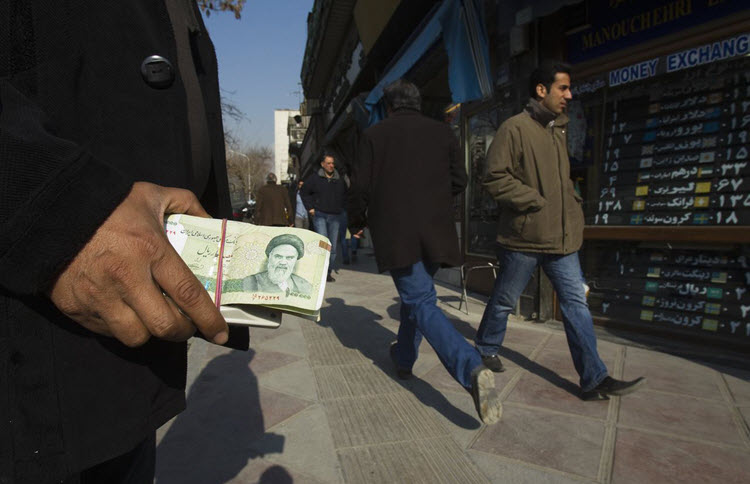
Iran’s Statistical Center: Year-on-Year Inflation Reached 88.6% in June

The Statistical Center of the Iranian regime announced that the year-on-year inflation rate in June reached 88.6%. The annual inflation rate for June was also reported at 62%, representing an increase of 4.3% compared with May.

Year-on-year inflation refers to the percentage change in the consumer price index compared with the same month of the previous year. Accordingly, in June 2026, households across the country spent an average of 88.6% more than they did in June 2025 to purchase the same basket of goods and services.

Iran’s Economic Growth Decline Accelerates

While the nationwide year-on-year inflation rate was reported at 88.6%, the Statistical Center said that year-on-year inflation in rural areas exceeded 108% in June.

For food, beverages, and tobacco products, the nationwide year-on-year inflation rate reached 134.6%.

Iran was involved in a 12-day war with Israel during the summer of last year and, in January 2026, experienced nationwide January protests and a 40-day war with the United States and Israel. These factors, along with severe international sanctions and widespread corruption within the country’s economic system, may be among the reasons for the country’s sharp economic slowdown.

In mid-June, a senior official from the Iranian regime’s Interior Ministry said that “60%” of Iran’s citizens could no longer endure additional economic pressure and were not “hopeful about improving conditions in the future.”

IRGC: We Attacked U.S. Military Positions in the Region

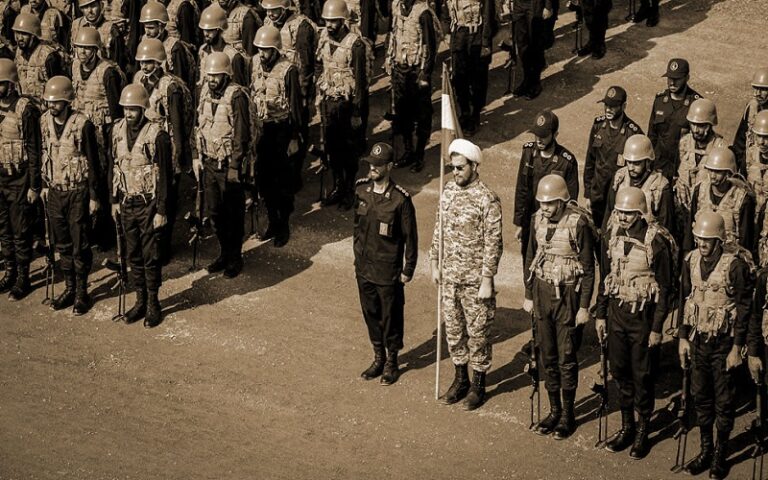
In a statement issued on the morning of Saturday, June 27, the public relations office of the Islamic Revolutionary Guard Corps (IRGC) announced that the IRGC Navy had targeted U.S. military positions in the region in response to what it described as U.S. “aggression and breach of commitments.”

The IRGC did not specify which locations were targeted in the attack.

The statement accuses the United States of violating the ceasefire and claims that after Israel breached the ceasefire in southern Lebanon, the United States also “violated its commitments.”

The IRGC public relations office wrote in its statement: “Under Article Five of the Islamabad Memorandum of Understanding, arrangements for controlling transit through the Strait of Hormuz are the responsibility of the Islamic Republic of Iran; however, the United States sought to violate this commitment through various provocations, and it received the necessary response. The same will occur in the future.”

The IRGC also threatened that it would deliver a broader response if the United States carries out further attacks.

CENTCOM Releases Footage of Strikes on Iran’s Missile and Drone Facilities

Meanwhile, the United States Central Command (CENTCOM) posted a video on X on Saturday morning showing U.S. fighter jets striking Iranian missile depots, drone storage facilities, and coastal radar sites.

In a statement, CENTCOM said the strike was carried out after Iran attacked a Singapore-flagged cargo ship with a suicide drone on Thursday, June 25, as it was leaving the Strait of Hormuz near the coast of Oman.

According to CENTCOM, the attack constituted a clear violation of the ceasefire and posed a threat to freedom of navigation along one of the world’s most important trade routes. The command also stated that it will continue supporting the safe passage of commercial vessels through the Strait of Hormuz and will maintain its presence in the region to ensure full implementation of the agreement with Iran.

Fox News, citing a senior U.S. official, reported that the U.S. military used six aircraft to strike four targets along Iran’s coastline and on Qeshm Island.

This marks the first time the United States has carried out military strikes against IRGC targets since signing the ceasefire with the Iranian regime.

Global Torture Index: Iran Is Among the World’s Highest-Risk Countries for Torture

The latest Global Torture Index identifies Iran as one of the world’s highest-risk countries for torture, impunity, and state violence. It warns that the intensification of repression following last year’s military conflict has increased the risk of torture, ill-treatment, arbitrary detention, and other serious human rights violations.

The World Organisation Against Torture (OMCT) and partner organizations published the second edition of the Global Torture Index on Thursday, June 25. The index assesses the risk of torture in 39 countries across different regions of the world.

The report was released on the eve of June 26, the United Nations International Day in Support of Victims of Torture, which the UN designated to emphasize the absolute prohibition of torture and support for its victims and survivors.

Volker Türk: At Least 40 People Executed on Security-Related Charges in Iran

According to the Iran data, compiled in cooperation with the Impact Iran coalition, torture is deeply embedded in the laws, policies, and official practices of Iran’s regime.

The report also states that the escalation of military conflict, including Israeli attacks in June 2025 and subsequent U.S. and Israeli attacks on Iran’s regime, has increased the risk of torture, ill-treatment, arbitrary detention, and other serious human rights violations.

According to the index, Iran’s regime was assessed at the highest risk level in six of the seven main evaluation categories: political commitment, police and state violence, impunity for perpetrators, victims’ rights, the right to defend human rights, and protection for all individuals.

The condition of detention facilities was also assessed as presenting a “high risk.” The index’s findings indicate that torture in Iran’s regime is not an exception but rather a tool of governance.

Torture, Executions, and Groups at Risk

The report says that Iran’s regime has still not acceded to the United Nations Convention Against Torture and does not recognize torture as a distinct criminal offense under its laws.

According to the report’s authors, the legal framework of Iran’s regime continues to permit punishments such as flogging and amputation, while the judicial system allows convictions based solely on confessions. They say this creates an incentive to use torture and ill-treatment to obtain confessions, including those later broadcast by state-run media.

The report states that Iran has one of the highest execution rates in the world. According to the report’s estimates, at least 1,639 people were executed in Iran in 2025, including individuals who were under the age of 18 at the time of the alleged offense.

The report also states that perpetrators of torture in Iran’s regime enjoy near-total impunity. It adds that no independent body is responsible for investigating allegations of torture or deaths in custody, and detention facilities operate with very limited or no external oversight.

According to the assessment, women and girls, ethnic minorities, human rights defenders, journalists, and lawyers are at greater risk than others of torture, arbitrary detention, and other forms of human rights violations.

The World Organisation Against Torture called on Iran’s regime to halt executions and judicial corporal punishments, accede to the United Nations Convention Against Torture, criminalize torture under its domestic laws, end the use of forced confessions, and allow the UN Fact-Finding Mission unrestricted access to Iran.

The organization also called on the international community to support efforts to hold perpetrators of human rights violations accountable, provide the necessary resources for these efforts, and protect torture survivors and their families.

Grossi: A Very Robust Verification System is Needed for Iran’s Nuclear Program

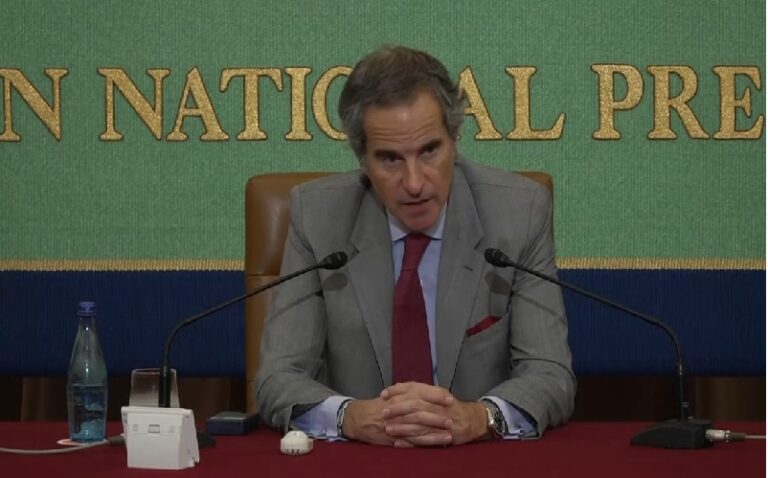
Rafael Grossi, Director General of the International Atomic Energy Agency (IAEA), said that a very robust verification system is needed to ensure that nuclear weapons are not developed in Iran.

Speaking to reporters in Japan on Friday, June 26, Grossi said, that he thinks the objective of this recent agreement between the United States and Iran is to ensure that nuclear weapons are not developed in Iran. Iran’s regime has also clearly stated that it has no such intention.”

Grossi continued, but merely declaring an intention is not enough. IAEA must establish a very robust verification system as soon as possible, whenever it is practically feasible.

Rafael Grossi also announced that the memorandum of understanding between Washington and Tehran allows IAEA inspectors access to Iran’s nuclear facilities.

At his press conference in Japan, Grossi said that an agreement exists and that, to implement it, the IAEA must have access to Iran and conduct inspections. He expressed hope that he would be in Iran soon.

The IAEA chief’s remarks came after officials from Iran’s regime had previously stated that access to some key nuclear sites would not be possible until a final agreement with the United States is concluded and sanctions are lifted.

Renewable Water Per Capita in Iran Falls To 1,200 Cubic Meters Per Year

0

Reports from Iranian regime government institutions show that the “renewable water per capita” indicator for each Iranian citizen has declined from about 7,000 cubic meters in past decades to less than 1,200 cubic meters.

Iran’s water industry spokesperson announced this on Friday, June 19, adding that population growth alongside declining rainfall and the consequences of climate change has placed unprecedented pressure on the country’s water resources.

Issa Bozorgzadeh, Iran’s water industry spokesperson, said regarding the status of this indicator in Iran compared with global standards: “This figure in earlier years, when the country received more rainfall, was about 130 billion cubic meters per year and has now fallen to less than 103 billion cubic meters per year.”

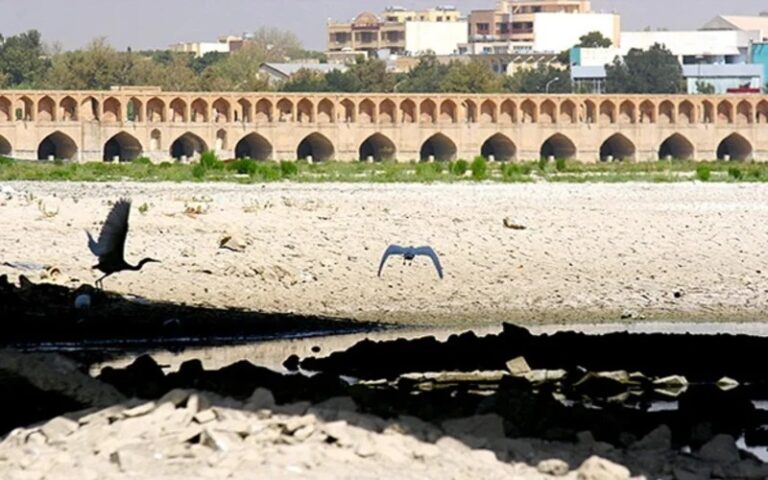
The Iranian Plateau Is Turning into a Desert

According to him, in the 1950s and 1960s, each Iranian had access to nearly 7,000 cubic meters of water per year, but this figure has now declined significantly.

Renewable water per capita, measured in cubic meters per person per year, represents each citizen’s share of the country’s natural water resources and is considered one of the most important global indicators for assessing national water security.

This indicator refers to the total renewable freshwater resources of a country or region, including surface water and groundwater that are replenished annually through rainfall and the natural water cycle, divided by the population of that country or region.

The minimum desirable per capita level for sustainable water resources is 1,700 cubic meters per person per year, and countries with a lower figure enter the category of “water stress.”

Experts emphasize the importance of this indicator for evaluating a country’s water security, planning sustainable water management, enabling fair comparisons among countries, and protecting resources for future generations.

Iran has faced severe drought for years, but in addition, water waste, excessive extraction from underground aquifers, structural weaknesses including inefficient or overly interventionist water management, and the expansion of agriculture have intensified the crisis in the country.

However, Iran’s water industry spokesperson described population growth as the “main reason” for the sharp decline in per capita water availability in Iran and said: “The country’s population has increased, and these resources are divided among more people, therefore each person receives a smaller share.”

According to Bozorgzadeh, part of this decline is also due to climate change and reduced rainfall.

Previously, average rainfall in Iran was about 250 millimeters, but it has now decreased. “Different studies show different figures, but climate change has caused the country’s average rainfall to decline by about 10%, although in some regions the decrease has been greater.”

The impact of rising temperatures on increased evaporation and transpiration, higher water consumption by plants and other living organisms, and changes in the geographic distribution and type of precipitation were also among the factors cited by the official as affecting the renewable water per capita indicator.

According to global standards, renewable water availability of more than 1,700 cubic meters per person per year indicates a favorable condition without water stress; between 1,000 and 1,700 cubic meters indicates water stress; between 500 and 1,000 cubic meters indicates severe water scarcity; and less than 500 cubic meters per person per year indicates absolute water scarcity (water crisis).

On this scale, values above 5,000 cubic meters per person per year indicate very abundant water resources. The figure of 1,700 cubic meters per person per year is regarded as the minimum globally acceptable threshold.

However, renewable water per capita differs from the amount of water each individual consumes. This indicator shows how much water nature provides to each citizen annually, not how much water each citizen uses.

Official statistics show that water inflow into Iran’s dams during the first 243 days of the current water year, from September 22, 2025, to May 23, 2026, increased by 72% compared with the previous year.

However, 33% of the country’s dam reservoir capacity remains empty, and experts say the uneven distribution of rainfall continues to pose challenges for water resource management.

The Iranian Plateau Is Turning into a Desert

0

Every year on June 17, the World Day to Combat Desertification serves as an opportunity to focus on one of the world’s greatest environmental threats. For Iran, however, this day is not merely an international observance; it is a reminder of a crisis whose effects are visible every day in the lives of millions of people, from dust storms and the drying of farmland to rural migration and threats to the country’s food security.

Iran has long been located within the world’s arid belt, but what is being witnessed today is not merely the result of climatic conditions. Many experts believe that a significant part of the current crisis is the product of decades of mismanagement, unscientific decision-making, and the Iranian regime’s destructive policies in the fields of water and the environment.

Iran’s Water Crisis: Women on the Front Lines of a Silent Disaster

According to official statistics, of Iran’s 164 million hectares of land area, about 32 million hectares consist of desert lands, and half of that area is in a critical condition and has become a source of dust storms.

Studies by the University of Tehran and Iran’s Ministry of Energy also show that about 88% of the country’s territory has been affected by desertification.

Iran on the path to desertification

Researchers have stated that Iran ranks fifth in the world in terms of desert expansion, with about 40 hectares of land turning into desert every day.

In addition, about 100 million hectares of Iran’s land are affected by water erosion, while more than 20 million hectares face wind erosion. Soil erosion in some parts of the country has been estimated at up to six times the global average.

The main question, however, is why a country with such extensive natural resources has reached this point.

Experts have repeatedly warned that excessive extraction of groundwater, extensive dam construction without environmental assessments, unscientific water transfer projects, the destruction of wetlands, unregulated mining, and the conversion of rangelands into agricultural fields have been among the main factors intensifying desertification in Iran. Many of the country’s wetlands, including Hoor al-Azim, Gavkhouni, Bakhtegan, and Jazmourian, have faced severe drying in recent years, and these areas have now become major sources of dust storms.

Alongside this mismanagement, structural corruption has also played a significant role. Many infrastructure and water projects have been carried out not based on environmental needs but on the economic and political interests of powerful factions.

The ruling establishment’s neglect of this problem is evident in the fact that the budgets allocated to combat the phenomenon are not even equal to the price of a domestically manufactured car. For example, according to the governor of Dehloran County, only 30 billion rials (about $17,000) from government development funds were allocated last year for desertification control projects in the county.

According to a report by Iran’s Natural Resources and Watershed Management Organization, the direct damage caused by wind erosion and the expansion of deserts is estimated at no less than 30 trillion rials (approximately $17 million) annually. This figure represents only part of the economic losses and does not include damage to agricultural lands, rangelands, roads, railway lines, industrial facilities, or the costs of treating respiratory illnesses caused by dust storms, unemployment, poverty, and widespread rural migration.

The real cost of these policies is ultimately paid by the Iranian people through declining agricultural production, the destruction of rangelands, rising respiratory diseases, unemployment, poverty, and the widespread migration of rural populations.

Iran’s Economic Growth Decline Accelerates

The Statistical Center of Iran, a government agency of Iran’s regime, announced in its latest report that the country’s economic growth in the past year, including oil revenues, was only 0.2%, a figure that shows a significant decline compared to the 3.1% growth recorded in 2024.

According to the report, if oil revenues are excluded from the calculations, economic growth falls to negative 0.3%, meaning that Iran’s economy effectively contracted during the past year.

The data show that key sectors of the economy experienced declines. Agriculture contracted by 2.9%, industry by 1.5%, and the water and electricity sector by 6.5%—areas that directly affect employment, people’s livelihoods, and the energy crisis. In contrast, oil and gas extraction grew by 1.8%, making it the only factor preventing overall economic growth from turning negative.

In the services sector, although overall growth was reported at 0.3%, the real picture of the economy is different. While financial activities expanded by 8.4%, sectors tied to people’s daily lives, such as wholesale trade, retail trade, hotels, and restaurants, shrank by 1.8%.

Meanwhile, under the expenditure-based method of calculation, economic growth was reported at nearly 0%. At the same time, household consumption declined by 1.4% and fixed investment fell by 2.8%, indicating weaker demand and reduced investment in the economy.

Another important finding of the report is the 20% decline in imports of goods and services. Although this has prevented economic growth from appearing negative from an accounting perspective, experts say the decline is primarily the result of foreign currency shortages, weaker demand, and restrictions on imports of raw materials, rather than any improvement in economic conditions.

The Statistical Center’s report also shows that investment in machinery declined by 5.8%, a development that points to reduced production capacity in the coming years.

Meanwhile, economic growth in the winter of 2026 was recorded at negative 2.2%, a figure indicating that Iran’s economy had entered a contractionary phase by the end of the past year.

The Statistical Center of Iran emphasized that these figures are still preliminary and may be revised after the annual accounts are finalized.

New Wave of Protests Across Various Iranian Cities

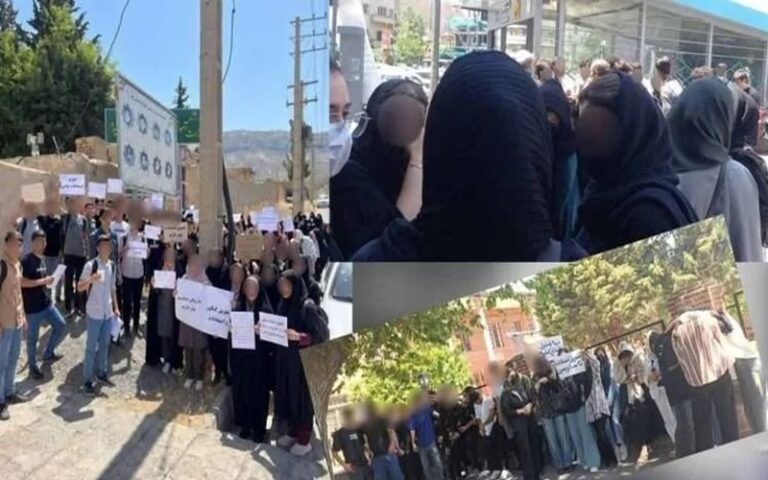
On June 21 and 22, a new wave of protest gatherings emerged across various cities in Iran. Students, university students, retirees, and employees from different government and service sectors took to the streets and gathered in front of administrative offices to protest educational, livelihood, and employment-related problems and to demand that their grievances be addressed.

Widespread Student Protests in Several Cities

Students in the cities of Ilam, Khorramabad, Shahrekord, Urmia, Kerman, Tehran, Yazd, Shiraz, and several other cities held protest gatherings to express their opposition to the decision to postpone final examinations until after Arbaeen and to increase the intervals between exams.

The protesters described the decision as a cause of confusion, increased psychological pressure, and educational difficulties for students, and called for its cancellation.

University Students Gather Outside Shahrekord Governorate

On June 22, a group of university students gathered outside the Shahrekord Governorate building, calling on officials to address their educational and student-related demands.

The students participating in the gathering emphasized the need for accountability from officials and practical action to address student concerns.

Telecommunications Retirees Protest in Kurdistan Province

Retired telecommunications workers in Kurdistan Province also held a protest gathering, demanding payment of overdue claims, full implementation of a legislation dating back to 2010, and improvements in supplemental insurance services.

Renewed Protests Erupt in Iran

They also protested what they described as the Iranian regime officials’ disregard for their professional and livelihood-related demands.

Telecommunications Retirees Hold Protest in Tehran

Telecommunications retirees also staged a protest gathering in Tehran on Monday, June 22, 2026.

The protesters cited the non-payment of overdue claims as the main reason for the gathering and directed their criticism toward the Execution of Imam Khomeini’s Order (EIKO) and the Etemad-e Mobin Consortium, which is affiliated with the Islamic Revolutionary Guard Corps (IRGC).

Khuzestan Regional Electricity Employees Protest

Employees of the Khuzestan Regional Electricity Company also held a protest gathering over salaries, benefits, and the payment structure.

They called for reforms to the payment system, the elimination of wage discrimination, and fairness in employee compensation.

Kermanshah Medical Sciences Employees Continue Protests

Employees of Kermanshah University of Medical Sciences gathered for the nth time outside the city’s Governorate building.

The employees protested the 20% salary increase and argued that, given the rising cost of living, the increase was inadequate. They called for a review of the government’s decision and for adjustments to employee salaries and benefits.

126th Week of ‘No to Executions Tuesdays’ Campaign in 57 Prisons

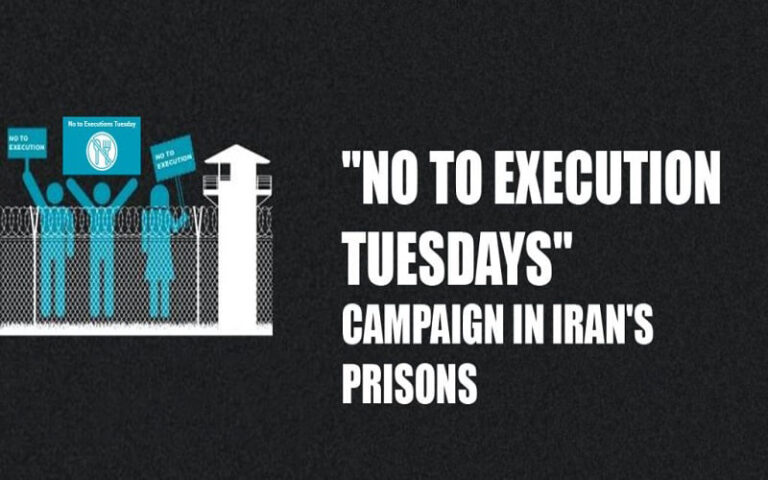
In the 126th week of the protest campaign “No to Executions Tuesdays,” political prisoners in 57 prisons across Iran once again expressed their opposition to the continued issuance and implementation of death sentences through a hunger strike on Tuesday, June 23. With Kerman Prison joining this protest movement, the number of prisons participating in the campaign has reached 57, a figure that reflects the expansion and growing influence of this demand among prisoners in different parts of the country.

Over the past nearly three years, the “No to Executions Tuesdays” campaign has become one of the most enduring and widespread protest movements inside prisons. Despite security pressure, threats, communication restrictions, and the potential consequences of hunger strikes, participants continue to insist on maintaining their protests. They believe that the death penalty not only violates the fundamental right to life but has also become a tool for intensifying an atmosphere of fear and silencing critical voices.

UN Officials Call for a Halt to Executions and Repression in Iran

The full text of the “No to Executions Tuesdays” campaign statement is as follows:

Kerman Prison joins the “No to Executions Tuesdays” campaign

Continuation of the “No to Executions Tuesdays” campaign in its 126th week across 57 different prisons

At a time when human dignity should be the foundation of law, justice, and governance, the killing and execution machine of Iran’s executioner regime continues to operate at full speed. According to reports received, on June 7, two women aged 28 and 32, identified as Asieh Farahmand and Zeynab Zarini, were hanged in Qazvin Prison. Due to the lack of transparent reporting, news of their executions has only recently reached us.

Also, on June 16, two political prisoners arrested during the January protests in Shahroud, Abolfazl Saeedi and Javad Zamani, were executed. Accordingly, the number of prisoners executed between May 22 and June 22 has reached 134.

The death penalty in Iran is not a tool for achieving justice but rather a mechanism for spreading fear, silencing dissenting voices, and strengthening the authoritarian structure of power.

On the other hand, after months of military conflict and the costs imposed on the lives of the Iranian people, the Iranian regime and the United States reached a preliminary understanding in recent weeks. According to the published terms, no attention was given to human rights, repression, or the horrific executions in Iran. This demonstrates that the people of Iran must rely on themselves to bring about change.

Amnesty International and Ms. Mai Sato, the United Nations Special Rapporteur, along with a number of UN experts, warned in separate statements about the neglect of human rights violations in Iran and the continued impunity of those responsible for violating the human rights of the Iranian people from international accountability and prosecution.

We declare to all awakened consciences, international institutions, human rights advocates, and opponents of the death penalty:

We, the prisoners participating in the “No to Executions Tuesdays” campaign, who for 126 consecutive weeks have protested every Tuesday in prisons across Iran through hunger strikes and every means available to us against medieval-style executions in Iran, once again declare that the human rights of the Iranian people, especially prisoners, are not negotiable. Together with the people of Iran, we will defend freedom, equality, and the abolition of the death penalty until our last breath and final ounce of strength.

We call on all honorable and aware people of Iran, as well as the awakened consciences of the world and international human rights organizations, not to remain indifferent to the growing wave of executions in Iran and to take responsible and effective action to stop this organized crime carried out by the religious fascism ruling Iran.

History has shown that no tyranny has endured through reliance on violence, and no government has been able to permanently silence people’s demands for justice. What will endure are the ideals of freedom, equality, and respect for the right to life and human dignity—values for which the people of Iran have paid a heavy price and continue to uphold.

The “No to Executions Tuesdays” campaign informs the public that a group of prisoners in Kerman Prison has joined the campaign in protest against death sentences and participates in hunger strikes every Tuesday alongside other prisoners.

Prisoners participating in the “No to Executions Tuesdays” campaign are on hunger strike on Tuesday, June 23, during the campaign’s 126th week in 57 prisons across the country.