A sick political system inevitably produces a sick economy. In an absolute dictatorship where political and social freedoms are suppressed, independent institutions have been dismantled, the rule of law has been replaced by the will of those in power, and the country’s resources are directed towards preserving political rule, the emergence of a healthy, transparent and development-oriented economy is virtually impossible. The profound crisis now engulfing Iran’s economy is not merely the result of one mistaken decision, the incompetence of a particular administration, or a single period of sanctions. It is the direct product of a totalitarian structure that, for nearly five decades, has placed the preservation of its rule above freedom, public welfare and the country’s development.
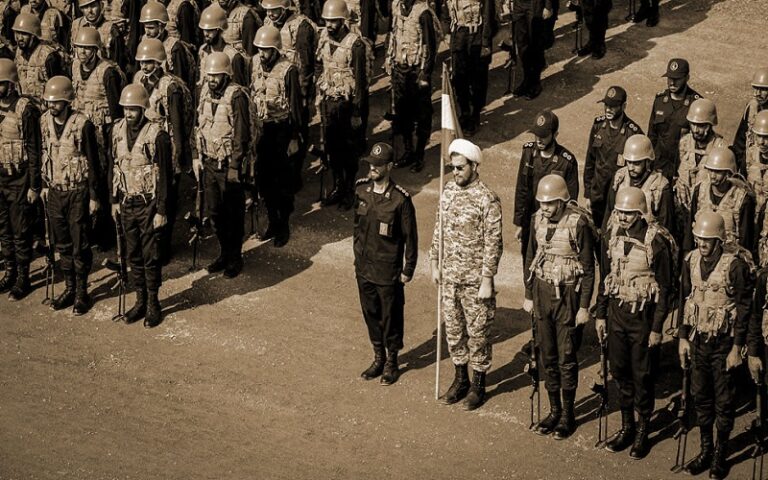
Within this structure, Iran’s economy has not been managed according to the needs of society, free competition, productive investment and long-term planning. Instead, it has been shaped by the regime’s political and security priorities. A substantial share of public resources, oil revenues, the state budget and the country’s economic capacity has been diverted away from infrastructure, job creation, productivity, public services and higher living standards, and placed at the disposal of military and security institutions, regime-controlled foundations, and regional and weapons programmes. At the centre of this structure stand the Islamic Revolutionary Guard Corps, the Office of the Supreme Leader and a vast network of unaccountable and opaque institutions that control a large part of the economy.
In most countries, politics influences the economy. Under the Islamic Republic, however, Iran’s economy has effectively become a hostage to the regime’s policies. Economic decisions are made not primarily to serve the public interest, but to meet security requirements and preserve the ruling system. For this reason, the economy has remained close to crisis for much of the past two decades, and successive administrations have failed to resolve its fundamental problems. Without changing the underlying structure, each government has merely replaced one set of short-term measures with another, ultimately adding to the budget deficit, public debt, liquidity, corruption and instability.
The central problem is therefore not simply the replacement of governments or executive officials. It lies with the principal policymaker and the structure that determines the broad direction of the economy, the budget, foreign policy and the distribution of resources. The scale of the crisis has become so evident that even regime-affiliated media and experts have been forced to acknowledge it. On 10 June 2026, the state-run Jahan-e Sanat daily published the striking headline, “Treating Iran’s sick economy by changing the policymaker.” Such an admission shows that even within the official establishment, the political roots of the economic crisis can no longer be concealed indefinitely.
For years, Iran’s economy has resembled a half-living body on an autopsy table. Despite their differences, state-affiliated and independent experts increasingly agree on one essential point: the ruling structure places its own survival above the basic needs of the population. Over the past four decades, public welfare, sustainable employment, economic security and the protection of purchasing power have been subordinated to the regime’s security, military and regional objectives. The result has been a state-dominated command economy marked by expanding monopolies, institutionalised corruption, rent-seeking, capital flight, declining investment and the gradual destruction of productive sectors.
One of the clearest consequences of this structure is a chronic and expanding budget deficit. When genuine government revenue cannot cover expenditure, and the regime is unwilling to reduce its non-productive and security-related spending, it resorts to borrowing, expanding the monetary base and drawing directly or indirectly on central bank resources. This increases liquidity, weakens the national currency and drives a continuous rise in prices. A vicious cycle is created: budget deficits lead to money creation, money creation fuels inflation, inflation erodes purchasing power, and falling purchasing power deepens poverty, stagnation and social discontent.
On the other side of this cycle, parts of the ruling establishment and their associates use preferential access to foreign currency, commercial monopolies, privileged information and public resources to accumulate immense wealth. At the same time, ordinary people watch the value of their wages and savings decline day by day, while groups close to power use the crisis itself to enrich themselves further. Inflation in Iran is therefore not merely a monetary or statistical phenomenon; it also operates as a mechanism for transferring wealth from the majority of society to a small minority connected to power.
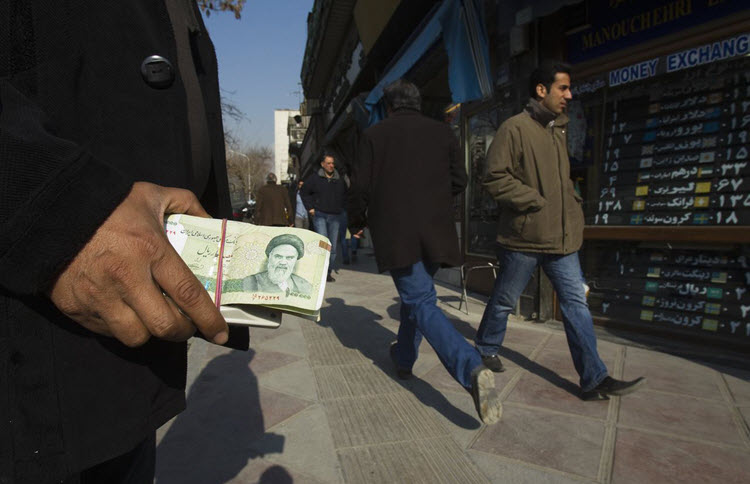
Among the many consequences of this structure, inflation is the most visible and pervasive crisis affecting the daily lives of millions of Iranians. The continuous rise in the cost of food, housing, medicine, transport, education and other basic needs has widened the gap between household income and expenditure and pushed a large part of society below, or close to, the poverty line. Chronic inflation has also deprived households and businesses of the ability to save, plan and invest, making uncertainty a permanent feature of economic life.
This study examines the scale of inflation in Iran, its structural causes and its effects on living standards, wages, employment, housing and quality of life. To avoid exaggeration, and to ensure that the findings can be assessed even against the regime’s own stated criteria, the analysis relies exclusively on official figures published by institutions of the Iranian regime, including the Statistical Centre of Iran, the Central Bank of Iran, the Supreme Labour Council and other official bodies.
Reliance on official figures, however, does not mean that those figures are accepted as accurate or complete. The Iranian regime has a long record of concealing economic realities, releasing data selectively, changing calculation methods, delaying reports and understating the scale of crises. The lack of independence among statistical institutions, discrepancies between figures published by the Statistical Centre and the Central Bank, the absence of public access to detailed datasets, the exclusion or neglect of much of the informal economy, and political pressure on data-producing bodies all raise serious questions about the credibility and completeness of the official numbers.
The figures presented in this report should therefore not be treated as a full reflection of economic reality. They are better understood as the minimum scale of a crisis that the regime itself can no longer completely hide. The true extent of inflation, poverty, unemployment and the loss of purchasing power—particularly among low-income groups, workers, pensioners, rural communities and residents of deprived regions—is likely to be considerably worse than official reports suggest. With this limitation in mind, the following analysis examines inflation and its economic and social consequences using the Islamic Republic’s own published data.
Abstract
Official data for May 2026 show that Iran’s economy has entered a period of extremely high and accelerating inflation. The Statistical Centre of Iran reported monthly inflation of 8.8 per cent, year-on-year inflation of 83.9 per cent and twelve-month average inflation of 57.7 per cent. Using a different methodology and geographical coverage, the Central Bank reported corresponding urban figures of 8.5, 77.2 and 53.9 per cent. The gap between the two official institutions itself demonstrates the need for caution when interpreting the figures.
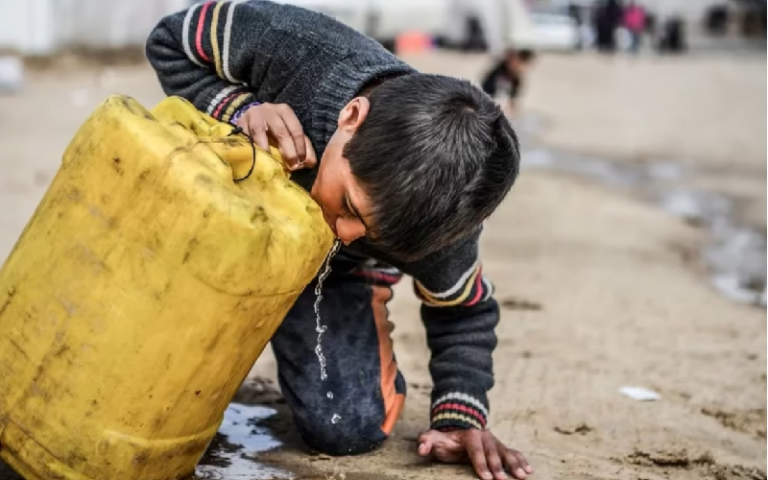
Inflationary pressure has not been distributed evenly. Year-on-year inflation for food, beverages and tobacco reached roughly 130 per cent. The corresponding rate was 101.8 per cent in rural areas and 80.8 per cent in urban areas, while annual inflation for the second-lowest expenditure decile exceeded that of the wealthiest decile. Low-income households, which spend a larger share of their budgets on food and basic necessities, have consequently borne the greatest pressure.
The central finding of this study is that a possible agreement with the United States could reduce the pace of inflation in the short term by lowering inflation expectations, bringing relative stability to the foreign-exchange market, increasing oil exports, reducing transaction costs and improving access to foreign currency. It would not, however, be sufficient to resolve the crisis on a lasting basis. Without budgetary discipline, control over liquidity growth, reform of banking imbalances, stronger investment, greater public confidence and statistical transparency, external relief would probably function more as a temporary painkiller than as a cure.
Research Question and Method
The central questions of this report are: how severe is Iran’s current inflation, which groups are most heavily affected, what are the principal causes of its persistence, and to what extent could an external agreement alter its course? To address these questions, the study distinguishes between three official measures: monthly inflation, year-on-year inflation and twelve-month average inflation. Data from the Statistical Centre and the Central Bank are then compared with official information on wages, the cost-of-living basket and the labour market.
This is a descriptive and scenario-based analysis, not an econometric estimate of causal relationships. Whenever the possible effects of an agreement, sanctions, war or exchange-rate policy are discussed, the conclusions are stated conditionally. Expert statements are also kept separate from official data and presented as scenarios or expert assessments rather than firm predictions.
The Official Inflation Picture in May 2026
According to the Statistical Centre of Iran, the consumer price index for Iranian households rose by 8.8 per cent in May 2026 compared with April and by 83.9 per cent compared with May 2025. The average index during the twelve months ending in May was 57.7 per cent higher than in the preceding twelve-month period. For urban areas, the Central Bank reported monthly inflation of 8.5 per cent and twelve-month average inflation of 53.9 per cent, while reports based on Central Bank data placed year-on-year inflation at 77.2 per cent.
Official Inflation Indicators for May 2026
| Institution |
Coverage |
Monthly Inflation |
Year-on-Year Inflation |
Twelve-Month Average |
| Statistical Centre of Iran |
All households nationwide |
8.8% |
83.9% |
57.7% |
| Central Bank of Iran |
Urban areas |
8.5% |
77.2% |
53.9% |
The index levels published by the two institutions are not directly comparable because their base years and coverage differ. The discrepancies do not necessarily mean that one institution has simply made an error. The statistical population, base year, weights assigned to goods and services, geographical coverage and timing of price collection may all differ. Nevertheless, when two official institutions report figures several percentage points apart, a research article must identify the source of each number clearly and avoid combining indicators without attribution.
Understanding the Indicators and Avoiding Common Misinterpretations
Monthly inflation measures the change in the price level compared with the previous month. Year-on-year inflation compares the price of the same basket with the corresponding month a year earlier. Twelve-month average inflation compares the average index during the most recent twelve months with the average during the preceding twelve months. Year-on-year inflation is therefore an official statistical measure and should not simply be described as “the inflation people feel”. A household’s experienced inflation depends on its consumption pattern, location, income and the prices of the goods and services it purchases most frequently.
When prices are accelerating, twelve-month average inflation usually rises with a delay because earlier, lower-inflation months remain within the average. The gap between year-on-year inflation of 83.9 per cent and twelve-month average inflation of 57.7 per cent is therefore less a contradiction than a sign that the inflationary wave has intensified sharply in recent months.
Food Inflation, Geographical Inequality and Pressure on Low-Income Households
The most important feature of the current wave is its concentration in essential goods. According to figures attributed to the Statistical Centre, year-on-year inflation for food, beverages and tobacco reached approximately 130 per cent in May 2026. In other words, the price level for this group more than doubled in a single year. Twelve-month average inflation for the same group was reported at about 83 per cent, again demonstrating the recent acceleration in food prices.
The geographical burden has also been uneven. Year-on-year inflation was recorded at 80.8 per cent for urban households and 101.8 per cent for rural households. This difference may reflect variations in the composition of household consumption, the greater share of food in rural budgets, transport costs, more limited access to competitive markets and differences in local prices.
Across the income distribution, annual inflation ranged from 55.9 per cent for the wealthiest expenditure decile to 63.2 per cent for the second-lowest decile, producing an inflation gap of 7.3 percentage points. This pattern highlights the regressive nature of inflation: the larger the share of food, rent and energy in a household budget, the greater the proportion of income absorbed by rising prices.
A national average is therefore insufficient for assessing living standards. Two households with different incomes and locations may experience very different inflation rates. For a low-income rural household, the disaggregated official indicators are closer to lived reality than the national average, although even those indicators do not necessarily capture every change in local markets.
Wages, the Food Basket and the Loss of Purchasing Power
The Supreme Labour Council increased the basic minimum wage for the Iranian year 1405, which began in March 2026, by 60 per cent to approximately 16.625 million tomans[1] per month. The minimum gross monthly income of a single worker with no prior service was announced at about 21.826 million tomans, while that of a married worker with two children was approximately 26.151 million tomans. During the same negotiations, the workers’ cost-of-living basket was estimated at 42.9 million tomans per month.
An estimate based on the Ministry of Welfare’s subsidised-goods basket and average prices published by the Statistical Centre placed the cost of a limited food basket for a family of four at 21.212 million tomans in May 2026. This basket did not include rent, transport, healthcare, education, clothing or communications.
On this basis, the limited food basket alone consumed about 81 per cent of the minimum income of a married worker with two children. For a single worker, its cost was almost equal to the entire monthly income. The minimum income of the four-person household covered only about 61 per cent of the cost-of-living basket agreed by the Supreme Labour Council. These ratios are calculated before insurance and other deductions and exclude housing rent.
Minimum Wage and Estimated Living Costs in 2026
| Indicator |
Monthly Amount |
| Basic minimum wage |
16.625 million tomans[2] |
| Minimum income of a single worker |
21.826 million tomans |
| Minimum income of a married worker with two children |
26.151 million tomans |
| Limited food basket for a family of four |
21.212 million tomans |
| Cost-of-living basket agreed by the Supreme Labour Council |
42.900 million tomans |
A nominal wage increase of 60 per cent may initially appear substantial. Yet when overall year-on-year inflation is 83.9 per cent and food inflation is around 130 per cent, the purchasing power of wages for basic necessities still falls. The problem is not only the level of pay but also the timing gap between wage adjustment and continuous price increases. Wages are generally revised once a year, while prices change every month.
Why Has Inflation Become Chronic?
Growth of Liquidity and the Monetary Base
Recently released Central Bank data show that twelve-month liquidity growth reached approximately 47.3 per cent in February 2026, while the monetary base grew by 54.7 per cent. When money and near-money expand more rapidly than real output, the potential pressure on prices increases, although the strength and timing of the transmission to inflation depend on the velocity of money, expectations and production conditions.
Budget Deficits and Banking Imbalances
Structural budget deficits, government debt, off-budget obligations and imbalances within the banking system can lead to an expansion of the monetary base and credit. The Iranian Parliament’s Research Centre had already warned, before the latest surge, about worsening fiscal and banking imbalances. When current expenditure is not supported by sustainable revenue, financing the deficit through the banking network or central bank resources strengthens the monetary foundations of inflation.
The Exchange Rate, Sanctions and Transaction Costs
Iran’s economy depends heavily on imported intermediate goods, raw materials, medicine, animal feed and equipment. Depreciation of the rial, restrictions on money transfers, higher insurance and transport costs and difficulty obtaining foreign currency all raise the cost of imports and domestic production. Empirical studies of Iran have also found that stronger sanctions, operating partly through the exchange rate, are associated with higher inflation and lower output.
Removal of the Preferential Exchange Rate and War-Related Shocks
Changing the exchange-rate policy for essential goods can reduce the gap between official and market prices. If implemented without targeted support, adequate competition, sufficient reserves and exchange-rate stability, however, it can trigger an abrupt rise in the prices of basic necessities. Using official rates, economist Mohammad-Taghi Fayyazi calculated that average monthly inflation rose from about 3.6 per cent before January 2026 to approximately 7.34 per cent afterwards. He identified the removal of the preferential exchange rate and the subsequent war-related shock as important intensifying factors. These figures represent an expert interpretation of official data rather than an independent estimate by this study.
Expectations and Declining Confidence in the National Currency
In an inflationary economy, businesses and households do not respond only to present costs. Expectations of future increases in the exchange rate and prices also alter behaviour. Bringing purchases forward, reducing holdings of rials, pricing with wider safety margins and shortening the duration of contracts can accelerate the transmission of shocks. In such an environment, even news of an agreement or the failure of negotiations may influence exchange rates and prices before the actual supply of foreign currency changes.
Is Iran Approaching Hyperinflation?
In the classical literature, hyperinflation is generally defined as an increase of more than 50 per cent in the price level within a single month. Monthly inflation of 8.8 per cent in May was extremely severe and destructive, but by this definition it was not yet hyperinflation. Triple-digit annual inflation is also not the same as hyperinflation: a country may record annual inflation above 100 per cent without prices rising by 50 per cent every month.
To illustrate the severity of the monthly figure, if an 8.8 per cent monthly increase were repeated unchanged for twelve months, the compounded annual rate would be about 175 per cent. This is only a mathematical scenario, not a forecast, because base effects, economic policy, the exchange rate, the supply of goods and political developments will change over subsequent months.
Valiollah Seif, a former governor of the Central Bank, has likewise distinguished between “very high chronic inflation” and “classical hyperinflation”. He identifies liquidity growth, budget deficits, exchange-rate volatility, geopolitical shocks and falling confidence in the national currency as a combination of risks that must be taken seriously. The analytical value of this assessment lies in its warning about a dangerous trajectory, not in a claim that hyperinflation has already begun.
The Labour Market and the Social Consequences of Inflation
For the winter of 2025-26, the Statistical Centre reported an unemployment rate of 7.6 per cent among people aged 15 and over and an economic participation rate of 39.7 per cent. The population aged 15 and over was approximately 66.5 million, while the economically active population was close to 26.4 million. This means that more than 40 million people of working age were outside the labour force.
A relatively low unemployment rate alone is not evidence of a healthy labour market because it measures only those unemployed people who are actively seeking work within the labour force. A fall in participation can keep the unemployment rate low even when the economy is failing to create sufficient opportunities. An analysis of inflation and living standards must therefore also consider underemployment, withdrawal from the labour market, job quality and real wages.
High inflation changes patterns of employment. Holding several jobs, compulsory overtime, the entry of more family members into the labour market and the expansion of informal work all become means of compensating for lost purchasing power. These strategies may increase nominal household income, but they do so at the cost of less rest, greater exhaustion and increased employment insecurity.
In housing, rising rents can force families to accept smaller homes, move to cheaper areas or share accommodation. In healthcare and education, inflation can lead people to postpone medical appointments, buy less medicine, withdraw from private education and reduce household investment in skills. These effects are not captured fully in headline inflation figures, but their long-term consequences for human capital and inequality are serious.
Psychological pressure is also part of the economic cost of inflation. When prices change rapidly, planning even a few months ahead becomes difficult. Savings held in rials lose value, contract horizons shorten, and major life decisions—from marriage and having children to buying a home and emigrating—are made under far greater uncertainty.
What Effect Could an Agreement with the United States Have?
Short-Term Channels of Influence
An agreement that effectively reduces restrictions on oil, banking, insurance and transport could help restrain inflation through several channels: increasing the supply of foreign currency, reducing import and transaction costs, improving access to raw materials, lowering risk and inflation expectations, and facilitating the supply of essential goods. Even before full implementation, a change in expectations could affect the exchange rate and asset prices.
The release of frozen assets would not necessarily have a single, uniform effect. If the funds were used for essential imports, repayment of foreign obligations and strengthening reserves, they could reduce pressure on supply and the exchange rate. If, however, they were converted into higher rial expenditure without fiscal discipline, part of their anti-inflationary effect could be lost. How the resources are used is therefore as important as their total value.
Kamal Seyed-Ali, a former deputy governor of the Central Bank for foreign-exchange affairs, has proposed an optimistic scenario in which oil sales of 2.5 million barrels per day, combined with 35 billion dollars in non-oil exports, could reduce inflation to around 20 per cent. This should be treated as an expert scenario rather than an official forecast. Its realisation would depend on genuine access to revenues, exchange-rate stability, budgetary control and the reaction of public expectations.
The Post-JCPOA Experience: Real but Unsustainable Improvement
The experience following the Joint Comprehensive Plan of Action shows that the claim that external relief had no effect on inflation is inconsistent with official data. According to the Central Bank’s annual series, inflation fell from 34.7 per cent in the Iranian year 1392 (2013-14) to 9.0 per cent in 1395 (2016-17) and 9.6 per cent in 1396 (2017-18). This decline was not caused by the agreement alone; monetary policy, exchange-rate conditions and weak demand also played a role. Nevertheless, reduced risk and a degree of external opening contributed to the more favourable environment of that period.
After the United States withdrew from the JCPOA in 2018 and sanctions were restored, inflation rose again. During six of the eight Iranian calendar years from 1397 to 1404, the official Central Bank rate exceeded 40 per cent. This experience supports two conclusions at once: an agreement can produce a meaningful and genuine reduction in inflation, but if it lacks political durability and is not accompanied by domestic reform, its gains will remain fragile.
Why an Agreement Alone Is Unlikely to Reduce Inflation Significantly
Even under a scenario in which an agreement with the United States leads to higher oil exports, the release of frozen assets and improved access to foreign currency, a significant and lasting decline in inflation would remain highly unlikely without a fundamental change in the regime’s economic and political priorities.
Chronic inflation can be brought under control only if government spending and the budget deficit are restrained, the banking system is prevented from creating undisciplined credit, the Central Bank is able to pursue a coherent and independent monetary policy, and the business environment becomes sufficiently predictable to encourage productive investment. Additional oil revenue may temporarily ease pressure on the currency and provide resources for economic reform, but it cannot substitute for reform itself.
The more fundamental problem, however, lies in the nature of the ruling system. The regime has consistently placed the preservation of its own power above the economic welfare of the Iranian people. Its primary priorities have long been the security and repressive apparatus, the Islamic Revolutionary Guard Corps, nuclear and missile programmes, and the financing and arming of proxy groups across the region. Economic development, public welfare, employment, healthcare, housing and the protection of people’s purchasing power have repeatedly been treated as secondary concerns.
Past experience reinforces this conclusion. Whenever the regime has gained access to greater oil revenues or previously restricted financial resources, there has been no guarantee that these funds would be directed towards productive investment or improving living standards. A substantial share of available resources has instead been channelled towards military, security, nuclear, missile and regional projects, as well as opaque institutions that operate beyond meaningful public oversight. For this reason, the release of frozen assets or an increase in oil income would not automatically translate into lower prices or greater economic security for ordinary citizens.
There is also a risk that new foreign-currency revenues would be used primarily to stabilise the exchange rate temporarily or to suppress prices through short-term market intervention. Such measures may create a brief period of relative calm, but they can deplete reserves and pave the way for another currency shock if the underlying causes of inflation remain untouched.
A sustainable anti-inflation policy would have to address monetary expansion, the budget deficit, banking imbalances, production, trade, investment and social protection simultaneously. Support for low-income households would also need to be targeted and adjusted to the actual inflation of essential goods. Yet the regime’s record gives little reason to expect that it would place such reforms above the financial needs of its security apparatus and strategic projects.
Therefore, even if an agreement with the United States were to reduce external pressure and generate a temporary improvement in the currency market, it is doubtful that inflation would fall substantially or remain low. As long as the regime continues to prioritise its own survival, repression, nuclear and missile programmes, and regional proxy networks over the economy and the welfare of the population, any improvement is likely to be limited, temporary and vulnerable to reversal.
All figures used in this study are drawn from official Iranian institutions or state-reported data. Calculated figures have been rounded to one decimal place where appropriate. As explained at the outset, these official figures should be regarded as a minimum indication of the crisis rather than a complete account of economic reality.
[1] At the free-market exchange rate on 17 June 2026, one million tomans was equivalent to approximately US$6.50.
[2] At the free-market exchange rate on 17 June 2026, one million tomans was equivalent to approximately US$6.50.